This checklist is for anyone planning to restore tile and grout and looking for a practical way to organize the work. It covers tools and products for scrubbing, cleaning, sealing, and wiping down floors, with each slot tied to the supplied pick. Start with your surface and the work you expect to do.

Get cleaning gear delivered free with Prime
- Fast, free delivery on millions of items
- Prime Video, Amazon Music and more included
- Member-only deals all year
The sections follow the restoration workflow: scrub and clean, consider steam, seal, then mop. Protective gloves appear as a separate checklist slot. Match each item to its intended role before adding it to your plan.
Use the look-for points to compare fit, handle reach, pad format, and product compatibility with your tile and grout. Check labels and manufacturer guidance for surface suitability and directions, especially before using cleaners, steam, or sealer. Test a small area first when guidance calls for it.
Heavy-Duty Scrub Brush
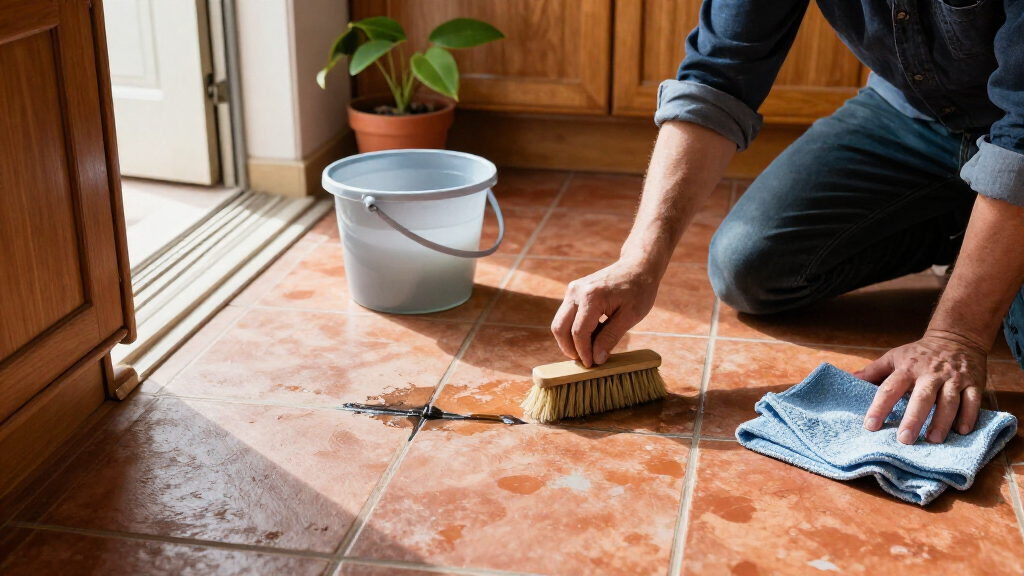
A scrub brush is useful for hands-on work along grout lines and on tile surfaces where a mop alone may not reach. The listed pick combines stiff bristles, a rubber squeegee, and a 55-inch handle, so consider whether that configuration suits your floor and the areas you need to clean. Reach and control matter when you are working across a larger floor or around edges.
A common buying mistake is choosing stiffness without considering the surface or grout condition. Check product guidance for compatible surfaces, and avoid assuming that more pressure or harder bristles will improve results. Confirm the handle length feels manageable for your reach and storage space, and consider whether the squeegee is useful for your cleanup routine. Surface compatibility should guide the choice.
Before beginning, clear loose debris and follow cleaner directions if using a solution with the brush. Work in a small area first and inspect the result. Steady, controlled passes help you assess whether the brush fits the task before continuing across the floor.
What to look for:
- Bristle stiffness suited to your tile and grout guidance
- Handle length that fits your reach and storage
- A head size that can access grout lines and corners
- A squeegee if it suits your cleanup routine
- Manufacturer surface-compatibility instructions
Stiff Bristle Deck Brush with Rubber Squeegee and 55-Inch Handle

This heavy-duty deck brush features stiff bristles for effective scrubbing of grime and dirt on various surfaces. It includes a rubber squeegee for water removal and a long handle for reaching high or low areas, making it versatile for outdoor and indoor cleaning tasks.
Pros:
- Durable stiff bristles for heavy-duty scrubbing
- Long handle reduces need to bend or strain
- Includes rubber squeegee for quick water removal
- Versatile for indoor and outdoor cleaning
Cons:
- Heavy-duty design may be overkill for light cleaning
- Long handle might be cumbersome in small spaces
- No mention of adjustable handle length
Best for: People who want a long-handled brush with a squeegee
Not ideal for: Anyone whose surface guidance rules out stiff bristles
Bottom line: Check surface compatibility and handle fit before using this brush across the floor.
Oxygen Bleach Powder
A powdered cleaner can be part of a grout and tile cleaning plan, but the right choice depends on product directions and the surfaces involved. The listed pick is an oxygen laundry booster powder described as fragrance free, so do not assume its laundry labeling establishes suitability for tile or grout. Read the intended-use label before deciding whether it belongs in this restoration checklist.
A frequent mistake is treating different oxygen-based products as interchangeable or guessing at dilution and contact time. Follow the package instructions, and check whether the manufacturer identifies the intended surfaces and use. Consider ventilation, nearby materials, and any cleaning products already in use; do not combine products unless their labels explicitly allow it. Use only stated directions and keep the powder stored as directed.
Test a small, inconspicuous area only if the product guidance supports that use, then assess the surface before expanding the task. If the label does not cover your tile or grout, select a product that does. Compatibility comes first when adapting a product from another cleaning category.
What to look for:
- An explicit label covering the intended tile or grout use
- Directions for mixing and contact time
- Surface restrictions and warnings
- Storage and handling instructions
- Guidance on use around nearby materials
Oxygen Laundry Booster Powder, 60 Loads, Fragrance Free

This oxygen laundry booster powder helps detergent tackle tough stains, odors, dirt, and residue while brightening whites and colors. It is compatible with standard and high-efficiency washing machines and can be added to laundry with regular detergent.
Pros:
- Helps remove tough stains and odors
- Brightens whites and colors
- Compatible with standard and high-efficiency washers
- Fragrance, chlorine, and dye free
Cons:
- Availability can vary
Best for: Shoppers whose intended surfaces are covered by its label
Not ideal for: Anyone seeking a cleaner labeled specifically for tile and grout
Bottom line: Use this powder only when its directions clearly cover your surface and task.
Steam Cleaner
A steam cleaner may fit a restoration plan when its instructions approve the floor material and the work you intend to do. The listed pick is the Dupray Neat Steam Cleaner Essential Pack. Check the surface guidance before making steam part of your routine, since tile, grout, and surrounding materials may have different care requirements.
A common mistake is assuming steam is appropriate for every tile installation or that it replaces brushing and product-specific cleaning. Review the cleaner’s instructions for setup, included accessories, operating steps, and approved surfaces. Consider whether the pack provides attachments suited to the areas you need to reach, and whether the unit’s handling and storage fit your space. Accessory fit matters for corners and grout lines.
Follow the manufacturer’s preparation and operating directions, including any cautions for grout condition or nearby finishes. Start in a limited area if the instructions support it, then inspect the result before continuing. Let guidance set the limits rather than relying on assumptions about what steam can safely clean.
What to look for:
- Approved surface and grout guidance
- Included accessories suited to your cleaning areas
- Setup and operating instructions
- Cautions for nearby finishes and materials
- Handling and storage fit for your space
Dupray Neat Steam Cleaner Essential Pack

This portable steam cleaner uses water to produce steam up to 275°F (135°C) for cleaning and deodorizing surfaces around the home. It includes 17 accessories and provides up to 50 minutes of continuous steam per fill, with a long hose and extension tubes for reaching floors, walls, and tight spaces.
Pros:
- Cleans with steam and water without harsh chemicals
- Includes 17 accessories for a range of surfaces
- Up to 50 minutes of continuous steam per fill
- Hose and extension tubes help reach tight spaces
Cons:
- Requires refilling after the steam runtime
- The description does not specify the cleaner’s weight
Best for: People whose surface guidance permits steam cleaning
Not ideal for: Anyone whose floor or grout instructions restrict steam
Bottom line: Confirm the approved surfaces and attachments before using this steam cleaner.
Grout Sealer
Sealing belongs in the plan only when the grout and surrounding surface are ready and the product is suitable for them. The supplied pick is a water-based penetrating concrete sealer identified as silane siloxane. Verify grout suitability with the product directions; a concrete label alone does not establish that every tile installation is an approved use.
Common mistakes include applying sealer before cleaning and drying are complete, overlooking nearby tile compatibility, or skipping the stated preparation steps. Check the label for approved surfaces, application method, drying or curing guidance, and any restrictions. The one-gallon size also calls for a practical plan for storage and use according to label instructions. Preparation and compatibility should determine whether this pick fits.
Follow the manufacturer’s instructions for ventilation, application, and cleanup, and protect adjacent areas as directed. If the label does not explicitly cover your grout or installation, choose a product that does. Do not infer coverage from the product category alone; confirm it before applying sealer to the floor.
What to look for:
- Explicit approval for your grout and tile installation
- Preparation and surface-drying requirements
- Application and cleanup directions
- Drying or curing guidance
- Storage instructions for the container
Penetrating Concrete Sealer, 1 Gallon Water-Based Silane Siloxane

This water-based concrete sealer penetrates porous surfaces like driveways, patios, and masonry to reduce water absorption while preserving the natural appearance. It is breathable, allowing moisture vapor to escape, and is suitable for indoor and outdoor use on various mineral surfaces.
Pros:
- Provides water and moisture resistance while maintaining a natural look
- Breathable formula prevents moisture buildup inside the concrete
- Easy to apply without mixing or dilution
Cons:
- Not suitable for non-absorbent surfaces like glazed tile or vinyl
- Coverage varies depending on surface porosity
- Not intended for crack or gap filling
Best for: People whose surfaces are explicitly covered by its label
Not ideal for: Anyone without confirmed grout compatibility
Bottom line: Confirm the product covers your grout before preparing to seal.
Microfiber Mop
A mop is useful for routine floor cleanup after scrubbing or other approved cleaning steps. The listed pick is an 18-inch professional floor mop with washable pads. Match the mop to your floor area and cleaning routine, including whether the pad format suits the spaces you need to reach.
A common buying mistake is focusing on the mop head width without considering edges, furniture, storage, or how the pads are washed and replaced. Check the product details for the included pad arrangement and care instructions. Confirm that the mop and pad use align with your floor manufacturer’s guidance, especially if a particular cleaner or dampness level is restricted. Pad care and floor guidance affect everyday usability.
Consider whether an 18-inch head can move comfortably through your rooms and around obstacles. Follow the pad washing instructions and use a cleaning solution only when approved for both the mop and your floor. Fit the tool to the space before relying on it for the whole restoration cleanup.
What to look for:
- Head width that fits your room and obstacles
- Washable pad care instructions
- Pad availability and attachment details
- Floor-care compatibility guidance
- Storage space for the mop and pads
Microfiber Wholesale 18-Inch Professional Floor Mop with Washable Pads

This professional flat mop has an 18-inch head and an adjustable stainless steel handle for cleaning hardwood, tile, laminate, and vinyl floors. It includes washable microfiber pads for dusting and wet mopping, and its bucket-free design helps it glide under furniture and through tight spaces.
Pros:
- Washable pads support both dusting and wet mopping
- Wide head covers more floor area per pass
- Works on hardwood, tile, laminate, and vinyl
- Bucket-free design can reach under furniture
Cons:
- No customer feedback details are provided beyond the rating
- The text gives conflicting item counts for the pads and kit
Best for: People who want an 18-inch mop with washable pads
Not ideal for: Anyone needing a smaller head for tight spaces
Bottom line: Check room access, pad care, and floor guidance before choosing this mop.
Protective Gloves
The supplied pick for this slot is a heavy-duty generator enclosure with ventilation and an exhaust kit. That product name describes an enclosure, not protective gloves, so it does not fulfill the stated checklist role. Do not treat it as hand protection or use the slot as evidence that gloves are covered.
A common checklist mistake is allowing a mismatched item to stand in for protective equipment. For cleaning and restoration work, consult the labels and safety guidance for every product and tool to identify the hand protection required. Choose gloves based on that guidance and on fit, coverage, and the task. Match protection to instructions rather than guessing from a product’s “heavy-duty” description.
Before starting, review each product’s handling directions and confirm that the protective gear you select is appropriate for those directions. Keep this slot open until a glove product is specified. Resolve the mismatch first so your checklist accurately reflects the equipment needed for the work.
What to look for:
- A product explicitly identified as protective gloves
- Compatibility with product handling directions
- Fit and coverage appropriate to the task
- Care or replacement instructions
- Clear labeling for the intended protection
Heavy-Duty Generator Enclosure with Ventilation and Exhaust Kit

This galvanized steel enclosure is designed to protect outdoor generators from weather and tampering, with lockable doors and a base that can be bolted to concrete. It includes sound-absorbing foam, active cooling ventilation, an exhaust pipe kit, and a pre-cut 50-amp outlet port.
Pros:
- Heavy-duty galvanized steel construction for outdoor use
- Includes active ventilation and an exhaust kit
- Lockable doors and a bolt-down base help deter theft
- Sound-absorbing foam and a pre-cut 50-amp port are included
Cons:
- Fit depends on matching the stated internal dimensions
- Ships in three separate boxes that may arrive on different days
Best for: Anyone correcting this checklist before starting
Not ideal for: Anyone treating the enclosure as protective gloves
Bottom line: Replace the enclosure pick with gloves that match the products’ safety directions.
Build the checklist in a practical order: first confirm surface compatibility for cleaning tools and products, then choose the scrub brush and an appropriate cleaner. Add steam only if the floor guidance allows it, and consider sealer after the required preparation. Finish with a mop that fits the space, and specify suitable gloves before starting. Prioritize compatibility and safety ahead of filling every slot.
Use the product labels and surface-care instructions to resolve uncertain fit, and keep mismatched picks out of the workflow until corrected. A careful sequence makes it easier to decide what belongs in the plan and what needs a different selection. Take it one step at a time and your restoration checklist will be ready to guide the work.
Fall Picks

Philips Hue Essential Starter Kit with Bridge and 4 E26 Smart Bulbs
As an affiliate, we earn on qualifying purchases.