TL;DR

Get cleaning gear delivered free with Prime
- Fast, free delivery on millions of items
- Prime Video, Amazon Music and more included
- Member-only deals all year
A House Beautiful report says shorter days, cooler conditions and dry indoor air can change what houseplants need in autumn and winter. B&Q horticulture expert Mark Sage recommends checking light while avoiding drafts and radiators, watering and feeding less, grouping plants to support humidity, and wiping dust from leaves.
House Beautiful has published four winter care habits for houseplants, with advice from B&Q horticulture expert Mark Sage to account for reduced daylight, cooler temperatures and drier indoor air. The recommendations are to adjust plants’ positions, reduce watering and feeding as growth slows, group plants together, and clean dust from leaves.
Sage advises moving plants closer to a bright window as days get darker, but not placing them in cold drafts or beside radiators. He says those conditions can harm plants; the report lists yellowing leaves and root rot among possible problems. Where natural light is limited, he suggests considering a plant light. Rotating larger plants can also help limit uneven, stretched growth as they reach toward light.
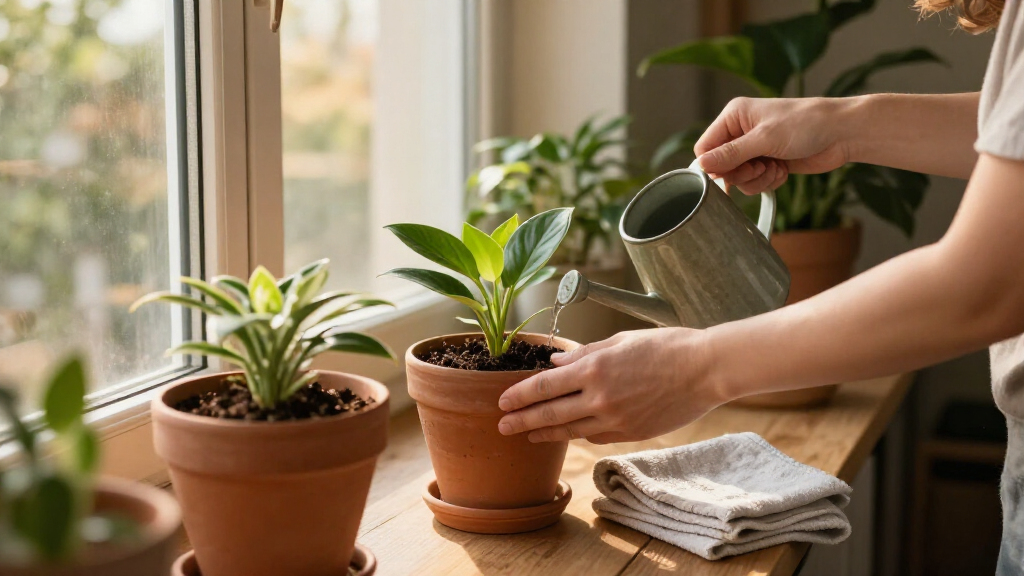
The report recommends changing watering and feeding habits rather than increasing care when plants grow more slowly. Sage says plants generally need less water and fertilizer during this period, and advises allowing soil to dry between waterings to help prevent root rot. He says to give plants a final dose of plant feed at the end of autumn; regular winter repotting is not recommended in his advice.
Two further habits address indoor conditions and light use. Grouping plants may create a more humid area around them, which can help when central heating dries the air. Sage also recommends wiping leaves with a microfibre cloth every one to two weeks so dust does not block as much of the already limited winter light. He says an occasional gentle shower with lukewarm water can remove dust and pests, but warns that water that is too cold or too warm may damage plants.
Small Changes Address Winter Stress
The recommendations matter because a summer care routine may not suit winter conditions. Shorter days can limit available light, while heating can dry indoor air and plants may grow more slowly. Sage recommends reducing watering and feeding during this slower growth period, and says allowing soil to dry between waterings can help prevent root rot.
The adjustments are straightforward and focus on observation rather than a fixed schedule: check how quickly soil dries, keep plants away from temperature extremes, and respond to the light available in each room. The source offers general guidance, not a guarantee that the same routine will work for every plant. Species, room conditions and individual plant health can affect care needs.
Products Worth Considering

Philips Hue Festavia 65-Foot Smart LED String Lights, 250 Color-Changing Mini LEDs

TCL 75-Inch QM6K QLED Mini LED 4K HDR Smart Google TV, 144Hz

Philips Hue Bridge Pro Smart Lighting Hub
As an affiliate, we earn on qualifying purchases.
How Winter Changes Indoor Conditions
The House Beautiful report frames the advice around the seasonal shift from autumn into winter. Its central point is that less daylight, cooler temperatures and drier indoor air can affect plants kept inside, including familiar varieties such as spider plants, peace lilies and monsteras. As a result, the report suggests easing back on some forms of care while improving access to suitable light.
Sage’s recommendations cover four areas: placement, watering and feeding, humidity, and leaf cleaning. They are presented as practical steps for the colder months, not as a detailed care guide for every species. The report does not identify a single schedule or indoor temperature that applies to all homes.
“It’s always a good idea to move them closer to a bright window as darker days hit, but make sure to avoid cold drafts and radiators.”
— Mark Sage, B&Q horticulture expert, quoted by House Beautiful
Care Needs Vary by Plant and Home
The report does not give plant-specific instructions, exact watering amounts, or a universal temperature and humidity range. It also does not quantify how much grouping, leaf cleaning or a plant light may improve plant health. Sage’s guidance is general advice, so the right routine may vary with species, potting mix, room conditions and the amount of light a plant receives.
The article does not report new research or a controlled test of the four habits. Its recommendations are attributed to Sage, and the source provides no further evidence comparing outcomes. Readers should treat the advice as seasonal guidance rather than a guarantee against yellowing, pests or root problems.
Monitor Plants Through the Season
The next step for plant owners is to adjust care as autumn turns to winter and watch how individual plants respond. Check soil before watering, keep foliage clear of dust, and assess whether a window provides useful light without exposing plants to drafts or radiator heat. If natural light is scarce, Sage suggests considering a plant light.
The report does not announce a follow-up study or a specific next milestone. Its practical guidance is to continue observing plants through winter and adapt watering, placement and other care to the conditions at home.
Key Questions
How often should I water houseplants in winter?
The report does not set a universal schedule. Sage says plants generally need less water as growth slows and recommends letting soil dry between waterings. Check the soil and the needs of the particular plant rather than following a summer schedule automatically.
Should I move my plants closer to a window?
Sage says moving plants closer to a bright window can help during darker days, but advises keeping them away from cold drafts and radiators. A plant light may be an option where natural light is limited.
Why group houseplants together in winter?
According to Sage, grouping plants can create a more humid microclimate around them. The report says this may be useful when central heating makes indoor air drier; it does not claim that grouping will meet every plant’s humidity needs.
How often should I wipe houseplant leaves?
Sage recommends wiping leaves with a microfibre cloth every one to two weeks to remove dust and help plants use available light. He also suggests an occasional gentle shower with lukewarm water, while cautioning against water that is too hot or too cold.
Source: housebeautiful.com