
TL;DR

Get cleaning gear delivered free with Prime
- Fast, free delivery on millions of items
- Prime Video, Amazon Music and more included
- Member-only deals all year
A Hunker home-improvement report describes turning copper plumbing pipe into a curtain rod, an alternative that can add visible metal detail and may cost less than some retail rods. The project requires measuring and cutting the pipe, fittings and wall-mounted supports; actual cost and suitability depend on local prices, window dimensions and curtain weight.
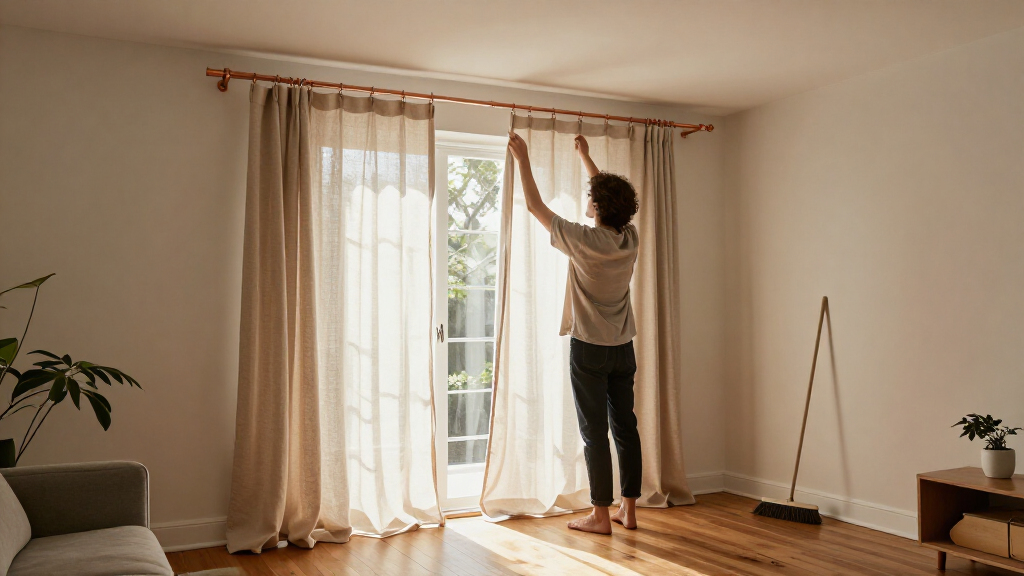
Hunker has outlined a do-it-yourself alternative to conventional curtain rods: use copper plumbing pipe and fittings as window hardware. The approach can give a room a visible metal detail and, depending on local prices and the parts required, may cost less than a store-bought rod, though the pipe must be measured and cut to fit.
The report gives one price example: Home Depot lists a half-inch-by-five-foot Cerro Type M copper pipe for $16.54. Hunker cautions that prices can differ by store or region, and that figure covers the pipe rather than the full project. The suggested additional materials include two flanges, two copper male adapters, two elbows, and optionally a copper tee for center support. The guide also lists copper spray paint for matching the flanges to the pipe.
Tools named in the instructions include a tape measure, level, pencil, drill and deburring tool or sandpaper. A tubing cutter may be needed to shorten the pipe. Curtain rings are optional, depending on the curtain panels. Hunker recommends measuring the window before buying materials, since a fixed-length pipe will not adjust to compensate if it is too short.
For installation, the guide says to cut the pipe to the planned length and smooth the ends so rough edges do not catch the fabric. After painting the flanges and allowing them to dry, the installer attaches one flange and adapter, uses the pipe and elbows to mark the position for the other support, then mounts the second flange. The pipe and curtains are fitted afterward. Hunker advises checking that the supports can carry the combined load and suggests a center tee when extra support is needed.
A Decorative Rod With Practical Limits
The idea makes curtain hardware part of a room’s visible design, rather than treating it as a purely functional fixture. Hunker suggests copper alongside white curtains and weathered wood for a farmhouse look, or exposed brick in an industrial-style room. Those are design suggestions, not guaranteed outcomes; the finished appearance will depend on the room, finish and other materials.
Cost is another reason the alternative may interest readers, but the source’s price comparison is limited. The listed $16.54 is for a single pipe, not a complete rod setup, and the report does not give prices for the fittings, paint, tools or rings. Readers should compare the total parts bill with a ready-made rod before treating it as a savings. The fixed length and need for secure wall supports also make this less flexible than an adjustable product.
There is a maintenance consideration: copper can tarnish over time. Hunker suggests rubbing affected areas with lemon and kosher salt, then wiping the surface with a damp cloth and drying it thoroughly. The report does not assess how often cleaning may be needed or how different finishes respond, so homeowners may want to test any cleaning method on an inconspicuous area first.
As an affiliate, we earn on qualifying purchases.
From Plumbing Aisle to Window
The report presents copper pipe as an unexpected reuse of a standard plumbing material, not as a new product or a tested commercial curtain system. Its central premise is that pipe and plumbing fittings can be assembled into visible window hardware when a conventional rod does not suit a room or a shopper’s preferences.
Hunker notes that the pipe can be paired with optional curtain rings, while elbows and adapters connect the rod to the wall-mounted flanges. The fittings are important to the proposed look and installation: the instructions call for marking the second support position with the pipe in place, then removing the pipe before securing that support. The source does not provide a tested weight rating or a universal installation specification.
““The perfect curtain rod could be hiding in the plumbing aisle.””
— Hunker
As an affiliate, we earn on qualifying purchases.
Costs and Load Capacity Vary
The source provides one retailer price for the pipe, but it does not state when that price was checked or give a complete materials total. Availability and costs may vary by location. It also does not say how much weight a particular pipe-and-fitting assembly can safely hold, or specify what kind of wall anchors are needed for different wall types.
That means the guide’s cost and installation advice should not be read as a universal guarantee. The appropriate support arrangement will depend on the span, curtain weight and wall construction. The report also does not provide testing data for the proposed configuration or instructions for every window layout.
As an affiliate, we earn on qualifying purchases.
Measure Before Buying Materials
Anyone considering the project should start by measuring the window and deciding where the supports will sit, then compare local prices for the pipe and all required fittings with the cost of a conventional rod. Before cutting, Hunker recommends holding the pipe in the planned position and checking the layout, since the finished pipe will not adjust in length.
Before hanging curtains, confirm that the wall attachments and any center support are suitable for the combined load. The source does not set out a formal load test or detailed anchor guidance, so readers may need advice suited to their wall and installation. After installation, the guide suggests monitoring the hardware and cleaning tarnish as needed; it does not specify a maintenance schedule.
As an affiliate, we earn on qualifying purchases.
Key Questions
How much does the copper pipe cost in Hunker’s example?
Hunker cites a $16.54 price at Home Depot for a half-inch-by-five-foot Cerro Type M copper pipe. It says prices can vary by store or region, and the cited amount does not cover fittings or other project materials.
What other materials does the project require?
The guide lists two flanges, two copper male adapters, two elbows and copper spray paint. A copper tee can be added for center support; curtain rings are optional, depending on the panels.
Can the pipe be adjusted like a standard curtain rod?
No. Hunker warns that the pipe is not adjustable in length, so measurements should be checked before purchasing and cutting it.
How does the guide suggest cleaning tarnished copper?
Hunker recommends rubbing tarnished areas gently with a cut lemon dipped in kosher salt, wiping away the residue with a damp cloth and drying the copper thoroughly.
Will copper pipe support any curtains?
The source does not provide a weight rating. It says to check that the supports can carry the pipe and curtains and suggests a center tee if extra support is needed. Suitable support depends on the span, the curtains and the wall installation.
Source: rss
Columbus Day / Indigenous Peoples' Day Picks
long weekend sales
As an affiliate, we earn on qualifying purchases.