TL;DR

Get cleaning gear delivered free with Prime
- Fast, free delivery on millions of items
- Prime Video, Amazon Music and more included
- Member-only deals all year
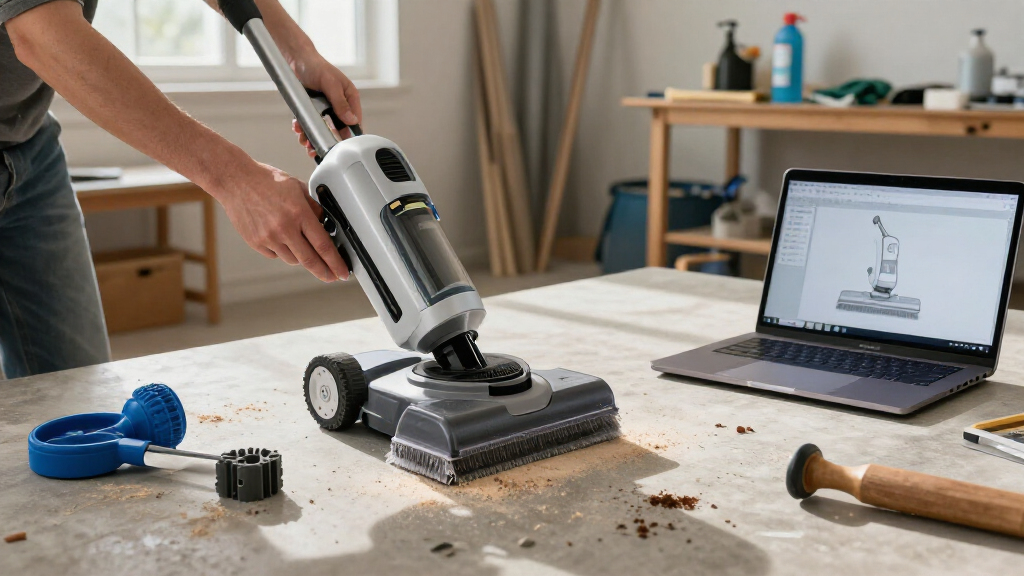
A ToolGuyd report describes using Google’s Gemini image-generation and coding tools to develop parts for a homemade, Fallout-inspired Halloween prop. Gemini produced OpenSCAD code that the maker could adjust, but it also missed design instructions; the project remains unfinished, with a rough first version planned for Halloween.
A maker is using Google Gemini to generate and revise OpenSCAD code for parts of a Fallout-inspired Halloween prop, according to a report by ToolGuyd. The project shows how generative AI can help turn an early idea into editable 3D models, while also leaving the maker to correct design errors and decide how the parts will fit together.
The project began after the maker’s son asked for a Fallout 4-themed costume. Building full power armor was not feasible within the available time, so the maker shifted toward a wasteland-style outfit and a custom prop that could stand out. A planned motorcycle chest protector was delayed and apparently lost, leading the maker to consider foam and other craft materials for the costume.
For the prop, the maker used Gemini to work through the design of a truncated cone with a mounting ring. After several iterations, Gemini supplied OpenSCAD code for a model made from two connected truncated cones. The maker says the code was useful because its parameters could be changed to adjust the geometry and dimensions. A test print was adequate for moving to the next stage, although the filament was wet and being dried.
The maker also asked Gemini to help design a handle and break a more elaborate fantasy tool into printable subassemblies. The results were mixed. In one design, the AI disregarded instructions about flush side arms and the placement of pill-shaped holes, and added chamfers the maker did not want. The maker manually changed code for another model, including its mounting holes and slots, and is printing a low-density version to test it.
AI’s Role in the Prop Design
The report offers a practical example of generative AI being used as a design aid rather than a finished-product generator. In this case, the code provided a way to test shapes and dimensions before committing to a more polished model. That can help a maker who has difficulty translating a mental picture into a CAD design get a tangible starting point.
The account also makes clear that generated output still needs close review. Gemini’s missed instructions and unwanted features required the maker to inspect and edit the work. The model did not resolve the larger challenge of planning a cohesive assembly: the current proposal is to attach separately designed parts to a small wooden box, potentially using screws, glue or other hardware. The value described is time and assistance with some tedious steps, not a fully automated design process.
OpenSCAD 3D modeling beginner guide
As an affiliate, we earn on qualifying purchases.
As an affiliate, we earn on qualifying purchases.
From Costume Idea to Printed Parts
The maker describes being able to model familiar objects but finding new designs harder, especially when the intended shape is not fully worked out. That gap shaped the AI experiment: rather than ask Gemini to finish a complete prop, the maker used it to explore individual components and produce editable code.
The planned prop may include printed parts, a wooden box, exterior wires and air fittings. The green fittings shown in the report were printed from McMaster-Carr 3D files to check how they might fit with quarter-inch inner-diameter air hose. The maker has not decided whether to use inexpensive metal fittings instead. A more capable CAD program such as Fusion could make it easier to adjust related dimensions and coordinate a full assembly, but the maker says there may not be time to remodel everything before Halloween.
“The AI made a lot of mistakes, and I’m also learning how to better constrain dimensions in my prompts.”
— ToolGuyd report author
As an affiliate, we earn on qualifying purchases.
Design and Build Still Unfinished
The prop has not been completed, and the report does not establish whether the current prints will fit or work as intended. The maker says the design is still largely imagined rather than fully planned as an assembly. It is also unclear which final materials and attachment methods will be used, whether the handle will be redesigned in CAD software, or what the finished prop will represent in the costume.
The maker is considering a rough first version for Halloween and later refinements, but does not confirm that the project will be finished by the holiday. The report is a single maker’s experience; it does not provide a controlled comparison of Gemini with other modeling tools or establish how well the approach works for other users.
3D printer screws and threaded inserts assortment
As an affiliate, we earn on qualifying purchases.
As an affiliate, we earn on qualifying purchases.
Testing the Next Print
The maker is printing a low-density handle model and plans to assess whether it works before choosing a final version. The next cone revision is expected to be larger and include mounting holes so it can be attached to a wooden box. If the handle or overall assembly needs more control than OpenSCAD provides, the maker may remodel parts manually in Fusion or similar software.
The immediate goal is a rough first-version prop for Halloween, with possible improvements later. The maker and son plan to build it together, while the son may decide what the finished device is called.
EVA foam sheets for Halloween costume props
As an affiliate, we earn on qualifying purchases.
As an affiliate, we earn on qualifying purchases.
Key Questions
What is the maker building?
A Fallout-inspired Halloween prop intended to accompany the maker’s son’s costume. The design is being developed from scratch rather than as a replica of a specific game tool.
How is Gemini being used?
The maker used Google Gemini to generate OpenSCAD code for printable shapes and to explore a handle and possible subassemblies. The code can be edited to change dimensions, but the maker still reviews and modifies the designs.
Did the AI follow the design instructions?
Not consistently. The report says Gemini ignored some directions about the handle’s side arms and hole placement and added unwanted chamfers. The maker had to refine prompts and edit the generated code.
Is the prop finished?
No. Test prints and design revisions are still underway. The maker is aiming for a rough version by Halloween, but the report does not confirm that it will be completed on time.
What is the maker’s main takeaway?
The maker says AI has helped with visualization and tedious modeling steps, but it has not removed the need for design judgment, manual corrections and planning how separate pieces will fit together.
Source: rss
Fall Picks
fall essentials
As an affiliate, we earn on qualifying purchases.