
TL;DR

Get cleaning gear delivered free with Prime
- Fast, free delivery on millions of items
- Prime Video, Amazon Music and more included
- Member-only deals all year
Start with sweeping, water, and scrubbing. Use mild cleaners, protect plants before cleaning, and rinse thoroughly. Avoid harsh chemicals and high-pressure washing near vegetation to keep plants safe and soil healthy.
You’ve probably seen a grimy, mossy patch on your concrete patio that needs a scrub. But how do you clean without accidentally turning your garden into a chemical battleground? It’s all about patience, gentle methods, and a bit of planning. When you’re working close to your greenery, the goal is to keep everything sparkling while keeping your plants alive and thriving.
This guide walks you through simple, safe steps—starting with the basics and scaling up only when necessary. You’ll learn how to protect your soil, choose the right cleaners, and control runoff. Because a clean patio shouldn’t come at the cost of a dying garden.
Start with simple, gentle cleaning methods—sweeping, water, scrubbing—before considering stronger chemicals or pressure washing.
Always protect plants and soil before cleaning, using water, coverings, and runoff barriers to prevent chemical exposure.
Use the least aggressive cleaners—plain water, mild soap, oxygen-based cleaners—and follow label instructions carefully.
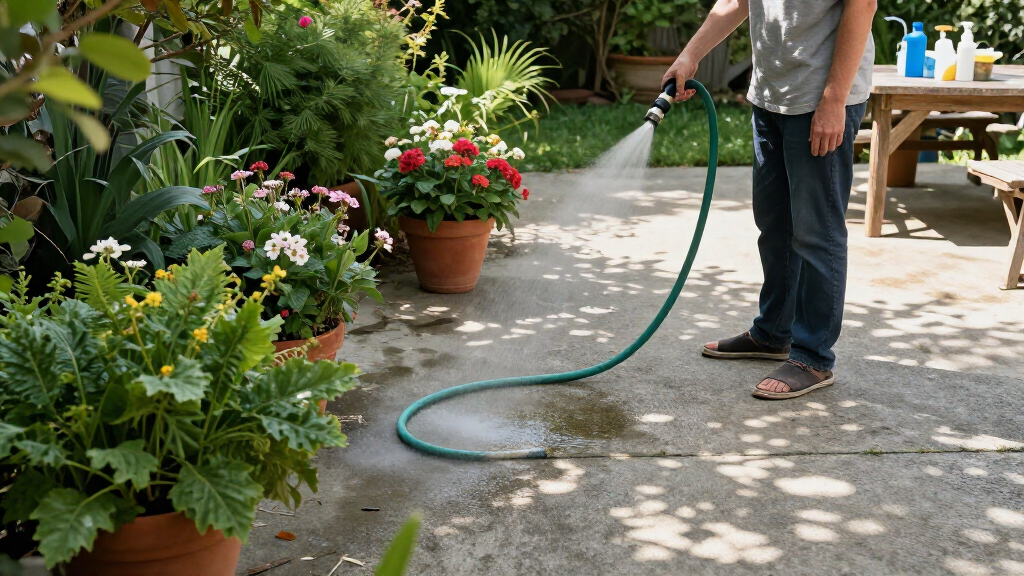
Control runoff and dwell time, working in small sections and directing water away from plants and drains.
Rinse plants thoroughly after cleaning and monitor them for a few days to catch any signs of stress early.
How to Clean a Concrete Patio Without Killing Your Plants
A grimy, mossy patio doesn’t need a chemical battleground. With patience, gentle methods, and a little planning, you can keep everything sparkling — and keep your garden alive and thriving. Start mild, protect your soil, control runoff, and scale up only when necessary.
Sweeping, water, and scrubbing handle most jobs before chemicals ever enter the picture.
Water soil thoroughly before cleaning — moist ground dilutes accidental splashes and absorbs less concentrated cleaner.
Rinse plants thoroughly afterward and monitor for a few days to catch stress early.
Match the Stain to the Safest Method
Not all stains are created equal. Identifying what you’re dealing with determines the treatment — and how careful you need to be with nearby vegetation.
| Stain Type | Best Treatment | Plant Risk | Runoff Control |
|---|---|---|---|
| Dirt & light grime | Plain water + stiff nylon brush, small amount of plant-safe soap | ✓ Minimal | Low — standard rinse |
| Mildew, moss & algae | Oxygen-based cleaner or vegetation-labeled product | ~ Moderate | Direct rinse away from beds |
| Grease & oil | Absorbent material first, then concrete degreaser on the spot only | ~ Moderate | Spot-treat only |
| Rust | Concrete-compatible rust remover (often acidic) | ✗ High | Strict runoff control required |
| Leaf & tannin stains | Oxygen cleaner + scrubbing | ✓ Low | Standard rinse |
| Paint or sealant | Specialized products | ✗ Highest | Full plant isolation + wastewater collection |
Escalate Only When Simpler Methods Fail
The safest sequence starts with zero chemicals and adds force only as needed. Each step up increases risk to plants, soil microbes, and the concrete itself. Avoid wire brushes — they scratch concrete and leave metal fragments that cause rust stains later.
Sweep
Clear leaves, soil, and loose debris with a stiff broom.
Rinse
Plain water alone — often enough with vigorous scrubbing.
Scrub
Warm water + stiff nylon-bristle brush. No chemicals yet.
Mild Soap
A small amount of mild dish soap if grime persists.
Spot-Treat
Target persistent stains only — never flood the whole patio.
Stronger Products
Only when everything simpler has failed. Read the label.
Protect Your Plants Before You Start
Protective measures are your first line of defense. Damage like root harm or leaf burn can take days to appear — prevention beats rescue every time.
Pre-Wet Soil & Plants
Water surrounding plants and soil thoroughly. Moist soil acts like a sponge — it dilutes accidental exposure and absorbs less concentrated cleaner.
Move Vulnerable Plants
Relocate containers, herbs, and delicate plants away from the patio to a shaded corner before any cleaning begins.
Cover Foliage
Loosely drape nearby foliage with plastic sheeting or lightweight tarps — but never leave plants covered in direct sun, where heat builds fast.
Build Runoff Barriers
Towels, absorbent socks, boards, or sand create temporary dams. Redirect rinse water away from beds, lawns, ponds, and storm drains.
Know Your Cleaners — Plant Impact Ranked
“Natural” doesn’t automatically mean safe. Vinegar is an herbicide at high strength and can etch concrete. Safer still does not mean harmless — always dilute, test a small area first, and follow label instructions exactly.
Oxygen-Based Cleaners
Sodium percarbonate releases hydrogen peroxide and breaks down into harmless substances — generally safer than chlorine bleach, though concentrated solution can still burn leaves.
Commercial “Plant-Safe” Products
Effective when used correctly. Follow dilution, dwell-time, runoff, and rinsing directions on the label precisely — safer does not mean harmless.
Mixing Bleach
Never mix bleach with ammonia, vinegar, acids, alcohol, or other cleaners. Dangerous gases and violent reactions can result.
A Double-Edged Sword
Pressure washing cuts cleaning time and chemical use — but excessive pressure can etch or roughen concrete, damage joints and sealers, blast dirt onto leaves, and injure plants directly.
Lowest Pressure
Use the lowest effective setting. Start low and increase only if needed — test on an inconspicuous corner first.
Wide Fan Nozzle
A wide fan spreads force evenly. Keep the wand moving steadily at 12–18 inches from the surface.
Avoid Weak Points
Never concentrate the jet on cracks, edges, joints, exposed aggregate, stamped concrete, or recently installed concrete.
Control Dwell Time & Runoff
Cleaning solution should stay on the patio only as long as needed. Never let it dry on the surface or flow into planting beds. Work in small sections, scrub, rinse, and move on — redirecting all wastewater away from beds, lawns, ponds, and storm drains.
How to Identify the Right Stain and Pick the Best Cleaning Method
Not all stains are created equal, and each needs a different approach. Dirt and light grime? A quick rinse and a scrub with warm water and a nylon brush are enough. Grease or oil? Absorb it first, then spot-treat with a concrete-safe degreaser. Rust stains? Use a rust remover designed for concrete, but be careful with runoff. Algae, moss, and mold? Oxygen-based cleaners or gentle pressure washing work well.
For example, last summer, I had a stubborn coffee spill that soaked into the concrete near my flower beds. Instead of heavy chemicals, I used a mixture of warm water and a splash of mild dish soap, scrubbing gently. It came out without harming the nearby basil plants. Recognizing the stain type helps you choose the safest, most effective treatment, saving your plants and your time.
Understanding the type of stain is crucial because it directly influences the choice of cleaning method. Using the wrong approach can lead to unnecessary chemical use or damage to your concrete and plants. For instance, aggressive scrubbing or harsh chemicals on rust stains can erode the surface or harm surrounding vegetation. Conversely, gentle, targeted treatments preserve both the integrity of your patio and the health of your garden. Recognizing these nuances allows you to balance effective cleaning with environmental safety, minimizing tradeoffs between cleanliness and plant health.
As an affiliate, we earn on qualifying purchases.
How to Protect Your Plants Before You Start Cleaning
Before you even start, water your plants and soil thoroughly. Wet soil acts like a sponge, diluting accidental splashes and reducing chemical absorption. Move delicate plants, containers, and herbs away from the patio. Cover nearby foliage with plastic sheeting or lightweight tarps—just don’t leave them in the sun too long, or heat can build up underneath.
For instance, when I cleaned my patio last spring, I moved my potted herbs to a shaded corner and covered my young tomato plants with plastic. After rinsing and scrubbing, I carefully removed the coverings, and my plants showed no signs of stress. These simple steps protect your garden from unintended chemical harm and keep your outdoor space thriving.
Protective measures are crucial because they serve as a first line of defense against accidental chemical contact or runoff. Properly shielding your plants minimizes the risk of damage that might not be immediately visible, such as root harm or leaf burn, which can manifest days later. Additionally, pre-wetting soil helps dilute any chemicals that might splash or seep into the ground, reducing long-term soil contamination. These precautions, while seemingly simple, are vital for maintaining a healthy garden ecosystem and ensuring that your cleaning efforts do not inadvertently compromise plant vitality.
mild outdoor pressure washer for patios
As an affiliate, we earn on qualifying purchases.
As an affiliate, we earn on qualifying purchases.
How to Use the Least Aggressive Cleaners Safely and Effectively
Start with basic, gentle methods—sweeping, water, and scrubbing—before turning to stronger cleaners. Use plain water and a stiff nylon brush to remove dirt and grime. If needed, add a small amount of mild soap, but avoid concentrated detergents or harsh chemicals. Spot-treat stubborn stains instead of applying chemical cleaners over the entire surface.
For example, I had a stubborn oil stain last year. I absorbed it with kitty litter first, then scrubbed with warm water and a tiny drop of dish soap. It lifted the stain without risking my garden. Remember, the less aggressive the cleaner, the safer your plants stay, and often, this approach suffices for routine cleaning.
Employing the least aggressive cleaning methods is essential because it minimizes the risk of chemical runoff and soil contamination. Harsh cleaners, while effective at removing tough stains, can leach into the ground, affect beneficial soil microbes, and be absorbed by plant roots, leading to long-term health issues. By starting with simple techniques, you preserve the soil’s natural balance and reduce the need for chemical interventions. This approach also encourages a more sustainable routine, where the focus is on prevention and minimal disturbance, ultimately supporting a healthier garden ecosystem with fewer tradeoffs.
As an affiliate, we earn on qualifying purchases.
Understanding Common, Plant-Friendly Cleaning Products
Plain water and mild soap are your safest bets. Oxygen-based cleaners, like sodium percarbonate, release hydrogen peroxide and are generally safer than chlorine bleach, but they still require careful runoff control. Vinegar and baking soda are popular natural options but can harm plants at high concentrations or with repeated use.
For example, a friend tried vinegar to remove algae and ended up with some browning on her hostas. She learned that vinegar is an herbicide at high strength. Always dilute, test a small area first, and rinse thoroughly after cleaning. Commercial plant-safe products can help but follow label instructions carefully.
Choosing the right cleaning product involves understanding its chemical nature and potential effects on your garden. Natural options like vinegar and baking soda are tempting but can cause unintended harm if used improperly—such as burning foliage or altering soil pH. Oxygen-based cleaners tend to be safer because they break down into harmless substances, but they still require careful application and runoff management. Always testing on a small area minimizes risk, and following label instructions ensures that the product’s benefits outweigh potential downsides, helping you maintain a safe environment for your plants.
eco-friendly patio cleaning supplies
As an affiliate, we earn on qualifying purchases.
As an affiliate, we earn on qualifying purchases.
How to Use Pressure Washers Without Damaging Your Concrete or Plants
Pressure washing can cut cleaning time, but it’s a double-edged sword. Excessive pressure can etch or roughen the concrete surface, damage joints, and spray dirt onto plants. Use the lowest effective pressure, a wide fan nozzle, and keep the wand moving steadily at a safe distance—about 12-18 inches from the surface.
For instance, I tested my pressure washer on an inconspicuous corner first. Starting at the lowest setting, I gently cleaned without causing surface damage. Always test first, especially on older or decorative concrete, to prevent costly mishaps.
Understanding the implications of pressure washing is vital because it balances efficiency with potential harm. High pressure can erode the surface, creating micro-roughness that traps dirt and algae more easily later. It can also dislodge loose particles that become airborne or settle onto nearby plants, causing damage. Using the correct pressure and technique minimizes these risks, preserving the integrity of your concrete while protecting surrounding vegetation. Testing first helps identify the right settings, avoiding costly mistakes and ensuring your cleaning is both effective and safe.
Controlling Dwell Time and Runoff for a Safe Clean
Limit how long cleaning solutions sit on your concrete. Do not let cleaners dry or flow into flower beds or lawns. Work in small sections, scrub promptly, and collect contaminated runoff with barriers or wet vacuums if needed. This prevents chemicals from leaching into your garden or storm drains.
For example, I cleaned a small patch at a time, rinsing each area thoroughly and directing runoff toward a gravel strip I laid out as a runoff barrier. This way, I avoided washing chemicals into my vegetable garden and kept everything safe.
Controlling dwell time and runoff is crucial because it directly impacts soil and plant health. If cleaning agents are allowed to sit too long or flow freely into planting beds, they can alter soil chemistry, harm beneficial microbes, and cause root damage. Shortening contact time and directing runoff away from vulnerable areas minimizes these risks. Using barriers or collection systems also prevents chemical accumulation in the soil, helping maintain a balanced environment. This careful management ensures your cleaning process doesn’t inadvertently cause long-term damage, preserving soil vitality and plant health.
How to Rinse and Rehydrate Plants After Cleaning
Once cleaning is done, carefully remove covers and rinse the foliage with clean water—top to bottom. If your cleaning reached the soil, water deeply to dilute any residual chemicals and prevent buildup. Monitor your plants for a few days for signs of stress, like browning or curling.
For instance, after cleaning my patio, I rinsed my potted herbs thoroughly and watched for signs of stress. They recovered quickly, showing how thorough rinsing and post-care help your garden bounce back from cleaning efforts.
Thorough rinsing is essential because it removes residual chemicals that could continue to harm plants or alter soil chemistry. Deep watering after cleaning helps dilute any chemicals that might have seeped into the soil, reducing the risk of long-term contamination. Monitoring your plants afterward is equally important, as it allows early detection of stress symptoms, enabling prompt action. This post-cleaning care preserves your garden’s vitality and ensures that your cleaning efforts have a positive, rather than detrimental, impact on plant health.
A Simple, Plant-Safe Cleaning Routine You Can Follow
Pick a mild and calm day—overcast and dry. Sweep the entire patio first, then move plants and containers away. Saturate surrounding soil with water. Wet the concrete, scrub with warm water and a nylon brush, then treat stains individually. Rinse everything carefully, directing runoff away from plants. Finish by rinsing nearby leaves and removing standing water.
For example, I followed this routine last weekend, and my plants looked healthy afterward. The whole process took less than an hour, and my concrete was spotless without risking my garden’s health. Consistency makes this routine effective and safe over time.
This routine’s strength lies in its simplicity and attention to detail. By working in manageable sections, you minimize chemical dwell time and runoff. Rinsing carefully ensures no residual cleaners linger, and moving plants away prevents accidental exposure. Repeating this process regularly keeps your patio clean while safeguarding your garden’s health, demonstrating that effective cleaning doesn’t have to be complicated or risky.
Common Myths and Facts About Cleaning Near Plants
Many believe natural means safe—this isn’t always true. Vinegar, salt, citrus acids, and concentrated oils can harm plants or etch concrete. Dilution helps but doesn’t eliminate risk. Chlorine bleach is often unnecessary for dirt and can damage soil biology. Regular sweeping and quick stain removal are better long-term strategies than heavy chemical use. Older, porous, or decorative concrete needs gentler methods.
For example, I once used straight vinegar on a moss patch—my hostas suffered browning. Now I always dilute and test first. Staying informed prevents accidental damage and keeps your outdoor space beautiful and healthy.
Understanding the myths versus facts about cleaning products is essential because misconceptions can lead to unnecessary damage. For example, believing that natural always means safe may tempt you to use potent substances like vinegar or salt at full strength, risking plant injury. Similarly, overestimating the necessity of aggressive chemicals can harm soil microbes vital for plant health. Dispelling these myths encourages safer, more informed choices—like using diluted solutions, testing small areas, and opting for less invasive cleaning methods—ensuring your cleaning practices support a thriving garden rather than compromise it.
Emerging Trends That Make Cleaning Safer and Smarter
Newer products focus on biodegradable, enzyme, or microbial cleaners, reducing chemical risks. Low-pressure surface cleaners and water-efficient pressure washers provide safer cleaning options. More homeowners are adopting targeted spot cleaning, sealing for prevention, and better drainage solutions to reduce algae and staining. These trends help keep your concrete and plants healthier longer.
For instance, I switched to an enzyme-based cleaner last year, and I noticed less algae regrowth, especially in shaded areas. These innovations make routine cleaning easier and safer for your garden.
Staying ahead with these trends is important because they reflect a shift toward environmentally conscious, plant-friendly cleaning practices. Biodegradable and enzymatic cleaners break down into harmless substances, minimizing soil and water contamination. Low-pressure systems reduce physical damage to the concrete and nearby plants, while targeted approaches prevent overuse of chemicals. Embracing these innovations means you can maintain your outdoor space effectively without sacrificing plant health, creating a more sustainable and resilient garden environment.
Frequently Asked Questions
Will bleach kill my plants?
Yes, concentrated bleach can burn foliage, damage roots, and harm soil microbes. If you must use bleach, isolate plants, protect runoff, and rinse thoroughly afterward to minimize damage.
Is oxygen bleach safe for plants?
Generally, yes. Oxygen bleach releases hydrogen peroxide, which breaks down quickly and is less harmful than chlorine bleach. Still, always pre-wet plants, dilute properly, and rinse thoroughly after cleaning.
Can I use vinegar without harming my garden?
Vinegar is an herbicide at high concentrations and can harm plants if not diluted well. For cleaning concrete, dilute with plenty of water and avoid spilling on plants. Rinse plants thoroughly if they come into contact with vinegar.
What’s the safest homemade cleaner for my patio?
Warm water mixed with a small amount of mild dish soap is the safest and most plant-friendly option. Always rinse thoroughly and avoid runoff into garden beds or waterways.
How do I stop runoff from damaging my plants during cleaning?
Use barriers like towels, absorbent socks, or gravel beds to catch runoff. Rinse in small sections, direct water away from plants, and collect contaminated water for proper disposal. This prevents chemicals from seeping into your garden.
Conclusion
Cleaning your concrete patio without harming your plants hinges on patience, gentle methods, and thoughtful planning. Protect your garden, use mild cleaners, and control runoff carefully. A little extra effort today keeps your outdoor space beautiful and healthy tomorrow.
Remember, a clean patio should never come at the expense of your garden’s vitality. With these tips, your outdoor space can shine without sacrificing your plants’ health. Keep it simple, stay cautious, and enjoy a thriving garden and a sparkling patio all season long.
Halloween Picks
halloween
As an affiliate, we earn on qualifying purchases.