TL;DR

Get cleaning gear delivered free with Prime
- Fast, free delivery on millions of items
- Prime Video, Amazon Music and more included
- Member-only deals all year
Check your doormat’s care label and backing, remove loose grit outdoors, then clean it with a material-safe method such as brushing natural coir or washing rubber with mild soapy water. Rinse when needed and air-dry the mat completely before putting it back; a damp mat can smell musty or harm nearby flooring.
A doormat can look like a small detail until a muddy shoe leaves a trail across your clean floor. The mat’s job is to catch grit, moisture, and debris at the door, but a packed, soggy, or fraying mat can stop doing that well. Cleaning it is less about scrubbing harder and more about choosing the right method for its fibers and backing.
This guide walks you through cleaning coir, rubber, synthetic, and washable mats without guessing what they can handle. You’ll learn how to remove loose dirt, tackle a fresh spill, dry the mat safely, and spot the signs that cleaning won’t bring it back. A quick check of the care label can save you from warped backing, faded fibers, or a ruined wash cycle.
Read the care label and inspect the backing before using water, a washer, or heat.
Shake and brush coir mats; avoid soaking natural fibers and let them dry fully.
Use warm water and mild dish soap on rubber mats, then rinse off residue.
Blot fresh spills, spot-test cleaners, and skip bleach or solvents unless the maker approves them.
Shake or vacuum weekly, and replace mats with failing backing, persistent odor, or heavy shedding.
How to Clean a Doormat That’s Seen Better Days
A doormat works hard at the threshold. Match the cleaning method to its fibers and backing, then let it dry fully so it can keep catching dirt without leaving dampness behind.
01 / Match the material
Four mats, four sensible methods
A sturdy-looking surface can still have delicate fibers, a printed finish, or a backing that cannot handle soaking or a wash cycle.
Coir
Shake outdoors and brush dried dirt with a stiff brush. Avoid soaking; spot-clean sparingly and air-dry thoroughly.
Rubber
Use warm water, mild dish soap, and a soft brush. Rinse away residue, then air-dry. Check printed designs and backing first.
Synthetic
Shake or vacuum before washing. Use hand or machine washing only when the label allows it; avoid excessive heat.
Cotton & woven
Vacuum often and blot spills promptly. Machine-wash on a gentle cycle only if approved, then dry completely.
Before water: Turn the mat over. Cracked, peeling, sticky, or separating backing can worsen in a washer. If the label is missing, begin with dry cleaning and test mild soapy water on a hidden spot.
02 / A reliable routine
Five steps to a cleaner mat
Remove grit before adding water, use a material-safe method, and make complete drying part of the clean.
- 01
Check label and backing
Look for water, machine, and heat limits. Set aside a mat with failing backing or heavy shedding.
- 02
Take it outside
Shake, brush, or vacuum loose dirt before cleaning. This reduces grit and abrasion.
- 03
Wash gently
Choose the method for the material. For washable mats, use mild detergent and approved settings.
- 04
Rinse when needed
For hand-washed mats, rinse until water runs clear and soap residue is gone.
- 05
Air-dry fully
Use a ventilated spot and let air reach both sides before returning the mat to the doorway.
03 / Keep it gentle
Small choices protect the mat
A little restraint can prevent fading, worn fibers, slick residue, and damage to the backing.
Cleaning effort, by method
Relative guidance for routine cleaning—not measured performance data.
Spill and cleaner rules
For fresh messes and unknown finishes, keep water and scrubbing under control.
From doorstep dirt to ready-to-use
Follow the chain in order; let the mat dry fully before putting it back.
04 / Keep it working
Know when cleaning is no longer enough
Shake or vacuum weekly, and clean more often when weather, traffic, or visible dirt calls for it. An outdoor scraper mat paired with an indoor mat can catch coarse debris and fine grit at the door.
Check the label and backing before you start
Before cleaning a doormat, check its care label and inspect the backing, because the material determines what water, soap, and heat it can handle. Look for washing instructions, warnings about machine cleaning, and any limits on cleaners. Turn the mat over and check whether the backing is cracked, peeling, sticky, or separating from the fibers.
That backing check matters even if the top looks sturdy. The top and backing have different jobs: fibers catch dirt, while the backing helps the mat stay in place and hold its shape. A synthetic mat with a rubber layer may look machine-friendly, yet a wash cycle can loosen or damage the backing if the maker says to avoid it. For example, if flakes of black rubber come away when you bend the edge, skip the washer and use a gentle method the label allows. Put the mat aside if pieces keep shedding; once the backing breaks down, washing can spread debris and leave the mat less stable underfoot.
Identify what you have before you bring out a bucket. Coir feels coarse and bristly; a rubber mat feels firm and often has molded grooves; cotton and many indoor mats feel soft and flexible. When a label is missing, use a cautious approach: shake or vacuum first, spot-test a small hidden area with mild soapy water, and avoid soaking or heat. This limits the chance of damage, though it may not remove deep stains as quickly as a full wash. If the test changes the color or texture, stop and keep to dry cleaning.
The care label sets the limits. A mat advertised as washable still needs care instructions that match its construction and backing.
Products Worth Considering

Shark Clean & Empty Cordless Stick Vacuum with Auto-Empty System, BU3521

eufy Security E30 4K Indoor Camera, 2-Pack

Shark PowerPro Reveal Plus Cordless Vacuum Cleaner, Charcoal, IZ376H
As an affiliate, we earn on qualifying purchases.
Clean coir with a brush, not a soak
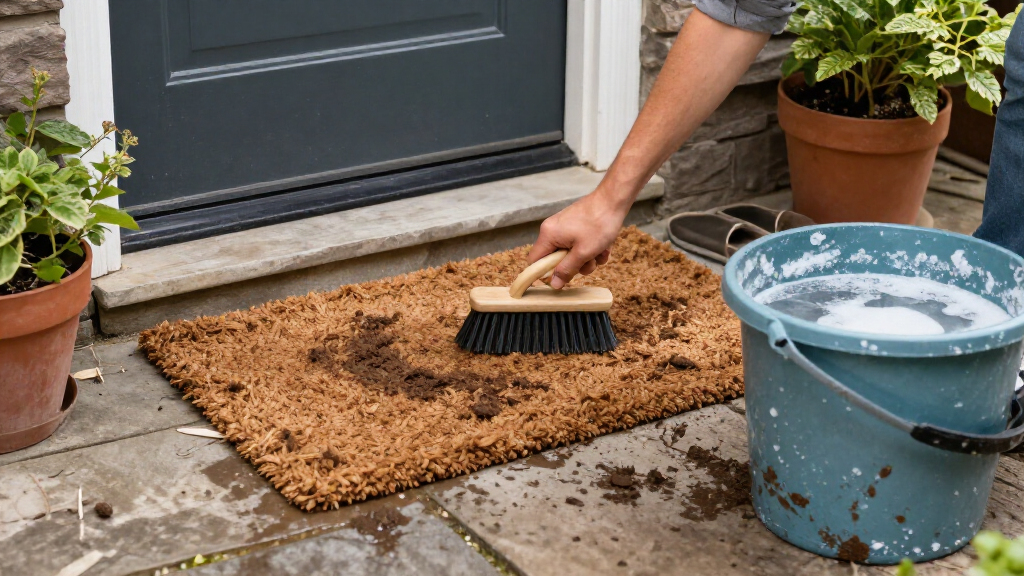
To clean a coir doormat, take it outside, shake it gently, and brush away dried dirt without soaking the fibers. Coir and other natural fibers can hold moisture, stain, and turn musty if they stay wet. A stiff brush can lift packed soil from the rough surface while keeping water use low. That dry approach is especially useful for routine dirt: it clears grit without making the slow-drying fibers the next problem to solve.
Imagine a coir mat beside a front step after a rainy week. First, lift it outdoors and shake loose grit away from the house; then brush from the center toward the edges so dirt falls onto the ground rather than into your entryway. If a small mark remains, dab it sparingly with a cloth dampened with mild soapy water, but check the label and test a hidden corner first. Spot-cleaning trades some stain-removal power for less moisture throughout the mat, which is usually the safer balance for a small mark.
Don’t dunk the mat in a tub or hose it until water runs through. A quick rinse may sound easier, but the fibers can stay damp deep inside even when the surface feels dry. That hidden moisture can create odor and may transfer to the step or floor beneath the mat. Set it in a well-ventilated spot and wait until it is dry throughout before returning it to the doorstep. On a cool, humid day, that can take longer than an afternoon; turning it over can help air reach the underside.
Think of the fibers as a dry brush that catches dirt at the threshold. Keep that brush clean and dry, and it can keep working; leave it waterlogged and it may trap an unpleasant smell instead.
Wash rubber and synthetic mats without roughing them up
Clean rubber doormats with warm water and a small amount of mild dish soap, then rinse well and air-dry. For synthetic-fiber mats, remove loose dirt first and follow the care label to see whether hand-washing, rinsing, or machine-washing is allowed. Neither “rubber” nor “synthetic” guarantees that a mat can take any cleaner or wash cycle. Matching the method to the whole construction matters because a tough surface can be attached to a more delicate backing or finish.
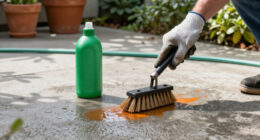
A rubber scraper mat with mud packed into its grooves usually needs only a soft brush or cloth and soapy water. Work across the grooves until the dirt lifts, then rinse away the soap so a slippery film doesn’t remain underfoot. If the mat has a printed pattern or textured backing, test a small area first; a strong cleaner can affect finishes even when the rubber itself seems tough. A soft brush may take longer than an abrasive scrubber, but it reduces the chance of wearing down edges or dulling the texture that helps catch dirt.
A synthetic mat outside a busy back door may collect sand and grass clippings. Shake or vacuum it before washing, since grit can turn a simple wipe-down into a gritty scrub and scratch or abrade the surface. If the label approves machine washing, use the stated settings and a mild detergent. Avoid excessive heat, and don’t put a heavy mat in the machine unless its care instructions permit it and your machine can handle the load. Hand-washing takes more effort, but it gives you better control over agitation and water when the mat’s backing or size makes a machine wash uncertain.
Rinsing counts as cleaning. Leftover soap can attract dirt or leave the surface slick, so check the water running off a hand-washed mat and rinse until it runs clear. The rinse also helps reveal whether mud is still lodged in grooves; if it is, brush that area again rather than scrubbing the whole mat harder.
Use this five-step routine for a washable mat
To clean a washable doormat safely, follow five steps: check it, remove dry dirt, wash according to its label, rinse if needed, and dry it completely. This sequence stops grit from turning into muddy paste and helps protect fibers and backing. Each step prevents a different problem: checking avoids an incompatible wash, removing loose dirt reduces abrasion, and complete drying keeps moisture from lingering against the floor. If the label says not to wash the mat, use the brushing or spot-cleaning method that fits its material instead.
- Check the label and backing. Look for machine, water, and heat instructions, then check for peeling or cracks.
- Take it outdoors. Shake, brush, or vacuum away loose dirt before adding water.
- Wash gently. Use mild detergent and the method the label permits; avoid excessive heat.
- Rinse away residue. If you washed it by hand, rinse until the water no longer looks soapy.
- Air-dry it fully. Lay it flat or hang it where air can circulate, and wait before putting it back.
For instance, if a washable entry mat has tracked-in soil but no stubborn stain, a gentle label-approved wash is usually enough. Using a more aggressive cycle may save time, but it can stress the backing without improving the result much. A damp mat can pass moisture to wood, laminate, or tile grout, so don’t treat a dry-looking surface as proof that the backing is dry too. Check both sides before it returns to the doorway; if the underside still feels cool or damp, give it more air time.
Treat spills and musty smells without harsh cleaners
For a fresh spill on a doormat, blot up liquid instead of rubbing, then spot-clean with mild soap and water if the material permits it. Rubbing can push the spill deeper or spread it across the fibers. Start with a clean cloth, press gently, and keep turning to a dry area as it absorbs the mess. Blotting takes repeated presses, but it removes liquid while disturbing less of the mat’s surface.
Say someone tracks a streak of wet soil onto a light-colored indoor mat. Lift off any clumps, blot the damp patch, and test mild soapy water on a hidden corner before dabbing the stain. Work from the edge toward the center to avoid making a larger mark, then remove soap residue as the label allows. Don’t soak a coir mat just to chase one dark spot: the stain may improve, but the extra moisture can create a slower-drying odor problem across a much larger area.
For a musty smell, remove the dirt and let the mat dry completely in a well-ventilated place. The odor can linger when moisture remains trapped in fibers or backing. If it persists after proper cleaning and drying, or the mat shows signs of mildew or moisture damage, replacement may be more practical than another round of scrubbing. Repeatedly adding water to mask the smell can deepen the moisture problem rather than solve its cause.
Avoid bleach, harsh solvents, vinegar, and high heat unless the care instructions specifically approve them. These can discolor or weaken some fibers and backings. Mild soap is a safer starting point; test any cleaner on an inconspicuous patch first. The tradeoff is that gentle treatment may leave an old stain visible, but preserving the mat’s material is often more useful than getting a brighter surface at the cost of weakened fibers.
Keep your doormat working with a weekly reset
Shake or vacuum a doormat weekly as a starting point, then clean it more thoroughly when it looks dirty or stops trapping debris well. The right schedule depends on traffic and weather: a quiet porch in a dry climate needs less attention than a busy back step where wet boots land every day. A doormat works hard; it catches grit and moisture before they reach your home. Regular removal matters because packed grit can be carried back indoors each time someone steps on it, while a damp mat left in place can keep transferring moisture to the threshold.
Try a simple Friday check after a week of school runs, dog walks, or grocery trips. Lift the mat and shake out its underside, vacuum the top if its material allows, and check whether the fibers still stand up or the grooves still clear. If a rainy spell has left the mat damp, move it somewhere airy to dry rather than leaving it against the threshold. This quick check also helps distinguish ordinary surface dirt, which a shake can remove, from embedded grime that needs a material-safe wash.
For muddy entrances, pair an outdoor scraper mat with an indoor mat. The outdoor surface can catch coarse dirt while the indoor one collects finer grit and moisture. This won’t eliminate tracked-in debris, but it gives each mat a smaller job. Regular cleaning helps it keep doing that job instead of letting packed dirt ride inside on the next pair of shoes. The two-mat setup adds another item to maintain, yet it can reduce the amount of mud and grit each mat accumulates between cleanings.
Clean more often when conditions call for it, and rotate or replace a mat when its fibers, shape, or backing are badly worn. If it sheds heavily or no longer catches dirt, another wash won’t restore its grip or structure. A clean surface can hide those functional failures, so judge the mat by how it lies and performs as well as how it looks.
Know when washing won’t save a worn-out mat
Replace a doormat when it no longer traps dirt, has a deteriorating backing, sheds heavily, or keeps a persistent odor after appropriate cleaning and drying. Cleaning can remove grime, but it cannot repair split backing, flattened fibers, or a mat that has lost its shape. A mat with curled edges can also become a trip hazard at a busy doorway. The practical test is whether it still lies securely and catches debris; a brighter appearance alone does not restore either function.
Consider a rubber-backed indoor mat that has started leaving crumbs of backing on the floor. A wash might make the top look brighter, but the backing damage is still there and can worsen with water or handling. If the mat slips, curls, or breaks apart when you lift it, stop using it and check the care guidance before deciding whether any safe repair is possible. Continuing to use it risks spreading bits across the floor and may leave the mat less able to stay in place.
Persistent mustiness deserves a practical check. Clean the mat according to its material and give it time to dry in moving air. If the smell returns quickly, or you can see mildew or moisture damage, replacing it may be the better way to protect the doorway and the floor beneath it. A second cleaning makes sense when dirt is the cause; recurring odor after full drying suggests moisture or material damage that cleaning alone may not resolve.
There’s a useful difference between dirty and spent: dirt can wash or brush away, but worn structure stays worn. A fresh-looking mat is only helpful if it still lies flat and catches what your shoes bring in. When the structure has failed, replacement restores the mat’s job more reliably than repeated washing.
Frequently Asked Questions
Can I put a doormat in the washing machine?
Only if the care label says the mat is machine-washable. Heavy mats and mats with rubber or specialty backings may be damaged or may strain the machine, so check the construction and instructions first.
How do I clean a coir doormat?
Take it outside, shake it gently, and brush off dried dirt with a stiff brush. Avoid soaking it, spot-clean sparingly if the label allows, and let it dry fully in a well-ventilated place.
How do I get rid of a musty smell?
Remove dirt, clean the mat according to its material, and let it dry completely where air can circulate. If the odor persists or the mat shows signs of mildew or moisture damage, it may need replacing.
Can I use bleach, vinegar, or a pressure washer?
Use these only if the manufacturer approves them. Bleach and vinegar can affect some fibers or backings, while a pressure washer may fray fibers or loosen backing; hand-cleaning with mild soap is gentler for many mats.
How often should I clean a doormat?
Shake or vacuum it weekly as a starting point. Clean it more often when it looks dirty, stops catching debris, or gets frequent exposure to mud, rain, and heavy foot traffic.
Conclusion
Start with the label, remove loose dirt outdoors, and match the cleaning method to the mat’s material. Then give it time to dry all the way through before it returns to the door. A clean, dry mat is a quiet first line of defense: it catches the grit at the threshold, before the rest of your home has to.