TL;DR

Get cleaning gear delivered free with Prime
- Fast, free delivery on millions of items
- Prime Video, Amazon Music and more included
- Member-only deals all year
Mold on outdoor cushions can be removed safely with vinegar, sunlight, and proper cleaning. Regular care and storage prevent future mold growth, keeping your furniture fresh and safe.
Picture this: you’re enjoying a lazy weekend on your patio, only to notice fuzzy green spots creeping across your outdoor cushions. Mold isn’t just ugly; it’s a health hazard. But don’t panic. With a few simple steps, you can banish mold and restore your cushions to their fresh, clean state.
This guide shows you how to tackle mold safely, using natural solutions that won’t harm your family or the environment. Plus, I’ll share tips to prevent mold from coming back, so your outdoor space stays inviting all season long.
Always wear gloves and a mask when cleaning mold to protect your health.
Use vinegar and sunlight for safe, eco-friendly mold removal.
Check your cushion fabric’s care label before cleaning to avoid damage.
Dry cushions thoroughly and store in a dry place to prevent mold regrowth.
Regular maintenance is key—clean and dry cushions after rain or heavy dew.
How to Clean Outdoor Cushions That Got Moldy
Moldy patio cushions look alarming, but most surface mold can be removed safely with gloves, vinegar, gentle scrubbing, rinsing, and a full dry in direct sunlight. The real win is moisture control: clean, dry, store smartly, and stop mold from getting a second invitation.
Vinegar loosens the mold. Sunlight finishes the job.
Clean Mold in Three Moves
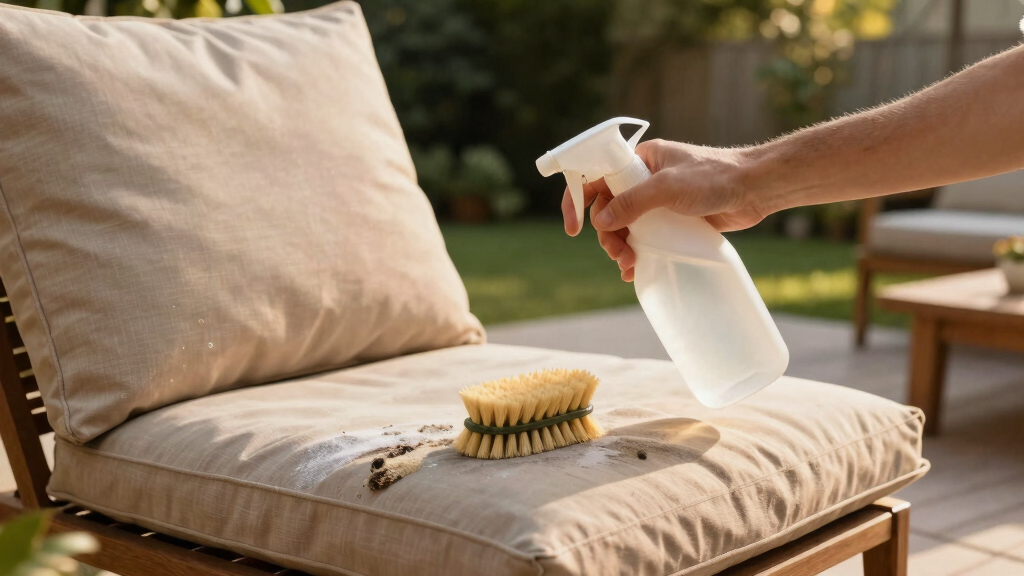
Work outdoors so loose spores do not spread inside. Start dry, clean gently, then let direct sun and airflow do the final sanitizing work.
Brush Outside
Remove cushions from furniture and brush loose mold with a stiff brush. Keep the motion controlled so spores fall away from your seating area.
Wash Gently
Apply vinegar solution with a sponge or soft brush. Scrub enough to lift mold, but avoid harsh abrasion that can fade or weaken fabric.
Rinse and Sun-Dry
Rinse with clean water, squeeze out excess moisture, and dry in direct sunlight until the cushion feels dry through the core.
Why Vinegar and Sunlight Work
Vinegar helps disrupt mold on the fabric surface, while UV exposure and moving air reduce the damp conditions mold needs to return.
Cleaning Power Map
Moisture Risk Scale
The danger zone is not one rainy day; it is trapped moisture. Cushions left damp in shade, stacked wet, or stored in humid spaces give mold the conditions it needs to colonize fabric.
Match the Method to the Fabric
Before cleaning, check the care label. Removable covers can often handle a washer, while acrylic or delicate outdoor fabrics need spot cleaning and a lighter touch.
| Feature | Removable Cover | Common Material | Best Cleaning Method | Risk Level |
|---|---|---|---|---|
| Machine-washable cover | ✓ | Cotton or polyester blend | Wash with mild detergent, then use a vinegar rinse. | ~ Low if care label allows it |
| Non-removable cushion | ✗ | Foam core with outdoor fabric | Spot clean with vinegar solution, rinse carefully, and dry completely. | ~ Medium if moisture stays inside |
| Delicate performance fabric | ~ | Sunbrella, acrylic, coated fabric | Avoid bleach and hard scrubbing; use a soft brush and mild solution. | ✓ Safe with gentle cleaning |
| Deep mold in cushion core | ✗ | Absorbent foam or batting | Replace if odor or staining returns after cleaning. | ✗ High health and regrowth risk |
Gentle Tactics
- Test any cleaner on a hidden seam before applying it broadly.
- Use a soft brush for coated or performance outdoor fabric.
- Rinse residue thoroughly so dirt does not stick to leftover soap.
Fabric Damage
- Do not use bleach first; it can discolor fabric and weaken fibers.
- Do not store cushions while damp, even if the outside feels dry.
- Do not bring moldy cushions indoors before brushing them outside.
Prevention Is the Real Cure
Mold prevention is a simple chain: reduce moisture, improve airflow, clean periodically, and store cushions where humidity cannot settle into the fabric.
Dry Fast
Stand cushions upright in the sun so water drains down instead of pooling in seams and corners.
Inspect Early
Look for fuzzy spots, musty smells, or dark specks before mold spreads across the fabric.
Keep Covered
Use a dry shed, garage, or breathable storage bag. Never stack damp cushions in a closed bin.
Gloves, mask, and eye protection reduce exposure.
Loose mold comes off outdoors before washing.
A mild solution helps lift surface growth.
UV and airflow help finish the drying phase.
Dry covered storage blocks repeat growth.
Common Cushion Mold Questions
Most moldy cushions can be saved when the growth is on the surface. Persistent odor, recurring stains, or mold inside the cushion core are signs replacement may be safer.
Can I use bleach?
Bleach can work on some durable white fabrics, but it is harsh and may discolor cushions. Try vinegar first and always spot test.
Are all cushions washable?
No. Removable covers are often washable, but non-removable or delicate fabrics usually need careful spot cleaning.
How do I stop mold returning?
Dry cushions after rain, store them covered, keep airflow moving, and clean periodically with vinegar.
When should I replace them?
If mold has penetrated the core or the musty smell returns after cleaning, replacement is usually the safer choice.
Quick Answer: How to Remove Mold from Outdoor Cushions in 3 Easy Steps
Start by brushing off loose mold outdoors with a stiff brush. Then, mix a natural cleaning solution—vinegar and water work best. Finally, dry your cushions in direct sunlight, which helps kill remaining spores and restores freshness.
As an affiliate, we earn on qualifying purchases.
Why Vinegar and Sunlight Are Your Best Mold Fighters
Vinegar is a natural fungicide that dissolves mold’s cell structure, making it easier to wipe away. Sunlight offers powerful germicidal properties—ultraviolet rays can kill up to 90% of mold spores when cushions are dried outdoors.
Imagine hanging your cushions on a warm, breezy day. The sun’s rays penetrate fabric fibers, breaking down mold and leaving your cushions smelling fresh.
eco-friendly outdoor cushion cleaner
As an affiliate, we earn on qualifying purchases.
As an affiliate, we earn on qualifying purchases.
How to Clean Moldy Outdoor Cushions Without Damaging Them
Not all cushions are created equal. Check the care label first. Here’s a quick comparison:
| Feature | Removable Cover | Material | Cleaning Method |
|---|---|---|---|
| Machine-washable cover | Yes | Cotton, polyester blend | Wash with mild detergent and vinegar rinse |
| Non-removable or delicate fabric | No | Sunbrella, acrylic | Spot clean with vinegar solution, avoid harsh scrubbing |
For delicate fabrics, steer clear of abrasive scrubbers or bleach, which can weaken fibers and cause discoloration. Instead, opt for soft brushes and mild solutions. Using gentle cleaning methods is crucial because aggressive scrubbing or harsh chemicals can damage the fabric’s integrity, leading to tears or fading that not only diminishes appearance but also reduces the cushion’s lifespan. Understanding the material helps you choose the right cleaning approach, balancing effective mold removal with preserving fabric durability. This careful approach ensures your cushions stay looking good and last longer, saving you money and effort over time.
As an affiliate, we earn on qualifying purchases.
Prevent Mold From Coming Back: Simple Tips That Work
Keeping cushions dry is your best defense. After rain or heavy dew, dry cushions in the sun or store them inside. Use mold-resistant sprays if your fabric allows—just follow the manufacturer’s guidance. And during off-season, store cushions in a dry, covered space, like a shed or garage.
Think of it like protecting your favorite shirt: keep it dry and away from humidity, and it’ll last longer. Proper storage prevents mold spores from settling and thriving, which is essential because mold spores are ubiquitous and can quickly colonize damp fabrics. Using mold-resistant sprays creates an inhospitable environment for mold growth, but these should complement good drying and storage practices rather than replace them. Ultimately, consistent maintenance—drying, storing properly, and occasional cleaning—acts as a proactive shield against mold, saving you time and money in the long run by keeping your outdoor cushions healthy and mold-free.
As an affiliate, we earn on qualifying purchases.
Frequently Asked Questions
Can I use bleach to clean moldy outdoor cushions?
Bleach can be effective but is harsh on fabrics and can cause discoloration. It’s best to try milder solutions like vinegar first and reserve bleach for stubborn mold on durable, white fabrics, always testing on a small area first.
How do I prevent mold from returning?
Keep cushions dry after rain, store them in a covered, dry area during off-season, and clean periodically with vinegar to inhibit mold growth. Good airflow also helps prevent moisture buildup.
Are all outdoor cushions washable?
No, not all. Check the care label. Removable covers are usually machine washable, but cushions with delicate or non-removable fabric require spot cleaning and careful drying.
What if mold has penetrated deep into the cushion?
Deep mold can be tricky. If cleaning doesn’t work or the mold persists, consider replacing the cushions. Often, mold that’s penetrated the core can’t be fully eradicated without risking health or damage.
How long does it take to clean moldy cushions?
The entire process, including brushing, soaking, scrubbing, rinsing, and drying, can take about 3-4 hours. Allow enough time for cushions to dry completely to prevent future mold growth.
Conclusion
Keeping outdoor cushions mold-free boils down to simple, natural tactics—clean, dry, and store smartly. Think of mold as an unwelcome guest that shows up only when you neglect your outdoor furniture.
Next time you spot those fuzzy spots, remember: vinegar and sunlight are your allies. A little effort now keeps your outdoor space fresh, safe, and inviting year-round.
Columbus Day / Indigenous Peoples' Day Picks
long weekend sales
As an affiliate, we earn on qualifying purchases.