TL;DR

Get cleaning gear delivered free with Prime
- Fast, free delivery on millions of items
- Prime Video, Amazon Music and more included
- Member-only deals all year
Cleaning green algae from patios and decks involves scrubbing, choosing safe cleaning solutions—like vinegar, bleach, or eco-friendly products—and maintaining good drainage and sunlight. Regular upkeep prevents future growth, keeping surfaces safe and attractive.
Imagine stepping onto your patio in the morning, only to slip on a slick, greenish film. Green algae love damp, shaded spots—turning your outdoor retreat into a safety hazard. Removing it isn’t just about looks; it’s about safety and keeping your space inviting.
In this guide, you’ll learn how to identify algae, choose safe cleaning methods, and keep your outdoor surfaces algae-free. Whether you prefer DIY solutions or want to understand the latest eco-friendly tech, you’ll find practical tips that work.
Use a stiff brush and a suitable cleaning solution—like vinegar or a diluted bleach mix—to scrub away algae thoroughly.
Natural remedies like vinegar are safer for plants and pets but may need repeated applications for heavy growth.
Power washing can be very effective but requires careful adjustment of pressure settings to avoid surface damage.
Regular maintenance—every 6-12 months—prevents algae from taking hold again, especially in shaded or damp spots.
Applying a protective sealant or algae-resistant coating creates a long-term barrier, reducing future growth.
How to Remove Green Algae From Patios and Decks
TL;DR: Scrub the surface, choose a safe cleaning solution, rinse thoroughly, then fix the damp, shaded conditions that let algae return. The goal is not just a cleaner patio or deck; it is a safer, less slippery outdoor space.
Bleach to water is the standard diluted mix for tough outdoor algae on suitable surfaces.
Diluted bleach can kill up to 99% of algae within about 10 minutes, but it needs careful rinsing.
Remove the algae you can see, then remove the damp shade it loves.
Green algae thrive where surfaces stay shaded and wet.
Minutes helps solutions soften the slick layer before scrubbing.
Months between routine cleanings in shaded outdoor areas.
Pressure protects wood decking from splintering or scarring.
Coatings make it harder for algae to cling and regrow.
Spot the Slick Green Film Early
Green algae usually appears as slimy or fuzzy green patches on concrete, stone, composite decking, and wood. It often shows up under furniture, along shaded edges, beneath overhangs, or anywhere rainwater lingers.
Green Sheen
Look for greenish patches that seem to shimmer when wet or glow against pale concrete and timber.
Slimy Surface
Algae feels slick underfoot, which is why it turns patios and decks into slip hazards after rain.
Shade Plus Moisture
Edges near trees, covered corners, and poorly drained sections are the most likely places for growth.
Clean It Without Damaging the Surface
The safest workflow pairs chemistry with mechanical removal. Let the solution loosen the algae, then scrub and rinse so residue does not keep working on wood, stone, plants, or nearby soil.
Clear
Sweep leaves, dirt, loose moss, and furniture away from the surface.
Choose
Use vinegar for light growth, bleach for suitable tough areas, or eco cleaner for gardens.
Apply
Spray generously and allow 10-15 minutes of contact time before scrubbing.
Scrub
Use a stiff brush on hard surfaces and a softer deck brush on delicate timber.
Rinse
Hose thoroughly or pressure wash on a low, surface-safe setting.
Repeat
Treat stubborn patches again, then schedule routine cleaning before regrowth spreads.
Natural, Chemical, or Eco Cleaner?
Choose the cleaner by surface type, algae severity, nearby planting, and how much scrubbing you are willing to do. Stronger does not always mean better for wood, paint, pets, or gardens.
| Method | Effectiveness | Safety & Environment | Ease of Use |
|---|---|---|---|
| Vinegar or Baking Soda | ~ Moderate for light algae; often needs repeat applications and scrubbing. | ✓ Plant and pet friendlier when used carefully; biodegradable and low toxicity. | ~ Simple to mix and spray, but patience matters on shaded, porous surfaces. |
| Diluted Bleach Solution | ✓ High impact on suitable concrete or stone; can kill 99% of algae within 10 minutes. | ✗ Can discolor, damage plants, irritate skin, and harm surfaces if overused. | ~ Requires careful dilution, protective gear, controlled application, and full rinsing. |
| Commercial Eco Cleaner | ✓ High; outdoor formulas are designed to penetrate algae without harsh handling. | ✓ Usually formulated for safer use around gardens, pets, and children. | ✓ Often spray-and-rinse, with less scrubbing required for routine growth. |
| Power Washing | ✓ Very effective when paired with a cleaner and used at the correct pressure. | ~ Chemical-free if water-only, but runoff and pressure damage remain concerns. | ~ Fast for patios; use low pressure and wide fan tips on wood decks. |
Effectiveness vs. Surface Risk
The best choice balances algae removal speed with the risk of harming wood fibers, painted finishes, nearby plants, or soil. Use stronger tools only where the material can handle them.
Removal Strength
Bars show practical removal strength for typical homeowner use, assuming correct contact time and thorough rinsing.
Pressure Washer Caution Scale
Hard patios tolerate more pressure than wood. For decks, stay conservative, use a wide fan spray, and keep the nozzle moving to avoid gouging or splintering.
Stop Algae From Coming Back
Algae prevention is environmental design. More airflow, better drainage, regular cleaning, and protective coatings all reduce the damp, shaded foothold algae needs.
Trim Shade
Cut back overgrown bushes and branches so surfaces dry faster after rain.
Move Water
Fix pooling, blocked channels, and splashback that keep patios damp.
Clean Often
Sweep frequently and wash every 6-12 months, especially in shaded areas.
Seal Surface
Use weather-resistant or algae-resistant coatings to reduce future grip.
From Slippery Patch to Safer Surface
Each action connects to the next: identify the algae, loosen it, remove it, rinse the residue, then alter the conditions so the surface stays cleaner for longer.
Find
Green, slick, damp patches in shaded zones.
Treat
Apply vinegar, bleach mix, or eco cleaner.
Scrub
Break the grip of algae on porous surfaces.
Rinse
Clear loosened growth and cleaning residue.
Prevent
Add light, airflow, drainage, and sealant.
How to Spot Green Algae on Your Surfaces
Green algae appears as slimy, fuzzy patches that shimmer in the sunlight—sometimes almost glowing against the concrete or wood. It thrives in shaded, damp areas where sunlight doesn’t reach, like under a deck or along the shaded edges of your patio.
Imagine a moist corner of your porch after a rainy week—those green patches are probably algae. It can be mistaken for moss or mold, but algae tend to be more slimy and slick to the touch.
Knowing what it looks like helps you act fast before it spreads or becomes slippery. Catching it early means less scrubbing later.
As an affiliate, we earn on qualifying purchases.
Step-by-Step: How to Remove Green Algae Safely and Effectively
- Clear the surface of loose debris and dirt. Sweep or blow away leaves and dust.
- Choose your cleaning method based on surface type and algae severity. For small patches, natural solutions like vinegar work; for larger infestations, consider bleach or commercial cleaners.
- Prepare your cleaning solution. For bleach, mix 1 part bleach with 10 parts water. For vinegar, use undiluted or mixed with water at a 1:1 ratio.
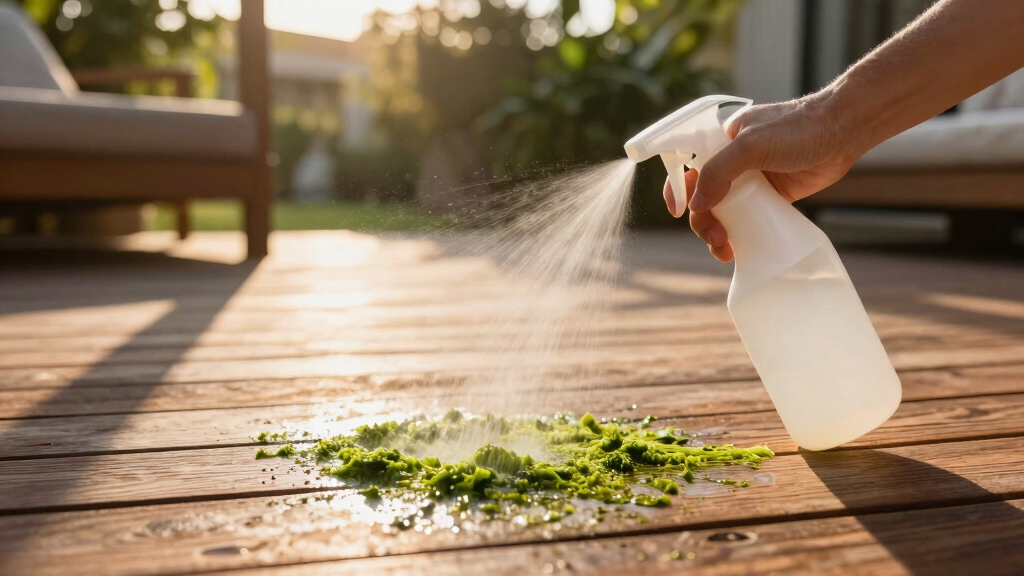
- Apply the solution generously over the algae patches using a spray bottle or garden sprayer. Let it sit for 10-15 minutes—this softens the algae and begins breaking down the slimy layer that makes algae slippery and difficult to remove.
- Scrub the surface with a stiff brush or use a deck scrubber for larger areas. For delicate surfaces, a softer brush prevents damage. Scrubbing is crucial because it physically removes the algae and its root-like structures that can cling to surfaces, preventing quick regrowth.
- Rinse thoroughly with a garden hose or pressure washer set to low pressure. Avoid high-pressure settings on wood decks to prevent splintering or damage. Proper rinsing helps wash away loosened algae and residual cleaning solution, preventing streaks and ensuring a clean, safe surface.
- Repeat if necessary, especially in stubborn spots. Regular cleaning every few months prevents algae from returning and helps maintain a safe, slip-resistant surface.
eco-friendly deck cleaning solution
As an affiliate, we earn on qualifying purchases.
As an affiliate, we earn on qualifying purchases.
Comparison: Natural Methods vs. Chemical Cleaners
| Method | Effectiveness | Safety & Environment | Ease of Use |
|---|---|---|---|
| Vinegar or Baking Soda | Moderate—good for light algae, needs reapplication. These natural solutions work by creating an environment that’s hostile to algae growth, but they don’t penetrate deeply or remove stubborn patches as quickly as chemical options. Their effectiveness depends on algae severity and surface porosity. | High—non-toxic, biodegradable, safe for plants and pets. This safety makes vinegar and baking soda ideal for environmentally sensitive areas, reducing the risk of accidental harm from chemical exposure. However, they may require more frequent application and scrubbing, especially in persistent cases. | Easy—mix and spray, requires some scrubbing. While straightforward, natural methods often need patience and repeated efforts, especially in shaded or heavily infested areas. Their gentle nature means they’re less likely to damage delicate surfaces but may demand more time and effort. |
| Bleach Solution | High—kills 99% of algae within 10 mins. Bleach is a powerful disinfectant that effectively destroys algae and other organic matter, making it suitable for heavily infested concrete or stone surfaces. Its rapid action is a significant advantage for quick cleanup. | Lower—can discolor surfaces, harmful if ingested or skin contact. While highly effective, bleach poses environmental and health risks, especially if used improperly. It can damage certain materials like wood or painted surfaces and may harm nearby plants if not carefully rinsed. | Moderate—mixing and rinsing, caution needed. Proper handling and dilution are essential to prevent surface damage and personal injury. Rinsing thoroughly afterward is critical to remove residual chemicals that could harm plants or wildlife. |
| Commercial Eco-Friendly Cleaners | High—designed for outdoor surfaces, effective against algae. These products often combine natural ingredients with advanced formulations to offer powerful algae removal while minimizing environmental impact. They typically penetrate surfaces better than simple vinegar solutions. | High—formulated to be safe for environment and surfaces. Their eco-friendly design reduces health risks and environmental contamination, making them suitable for use around gardens, pets, and children. They often come with manufacturers’ instructions for optimal safety and effectiveness. | Easy—spray and rinse, often no scrubbing needed. Many eco-friendly cleaners are designed for convenience, allowing homeowners to quickly apply and rinse without strenuous scrubbing, which saves time and effort while still achieving good results. |
As an affiliate, we earn on qualifying purchases.
How to Prevent Algae Regrowth and Keep Surfaces Clean
Prevention is the best cure. Green algae flourish in shady, damp areas. Increasing sunlight exposure helps dry out surfaces and makes it harder for algae to settle in. The deeper reason is that algae require moisture and shade to thrive; by reducing these conditions, you limit their ability to establish a foothold. Ensuring that surfaces are regularly exposed to sunlight disrupts their preferred environment, effectively reducing the likelihood of regrowth.
Improve drainage around your patio or deck—standing water invites algae. Proper drainage prevents water from pooling, which creates a consistently damp environment ideal for algae. Over time, standing water can also lead to other issues like moss or mold, further complicating surface maintenance.
Trim back overgrown bushes or trees that block sunlight, as overhanging foliage creates shaded, humid microclimates. This natural form of shading is a significant factor in algae proliferation, especially in shaded corners or under dense tree canopies. By increasing sunlight and airflow, you create a less hospitable environment for algae.
Applying a weather-resistant sealant or algae-resistant coating creates a barrier, making it harder for algae to cling and grow. These coatings can also reflect sunlight and repel moisture, further discouraging algae development. Regularly sweeping and washing surfaces every 6 months keeps algae at bay, maintaining a dry, clean environment that deters future growth.
Imagine a deck with a fresh coat of sealant, shimmering under the sun—algae just can’t find a foothold there anymore. This long-term approach not only improves appearance but also reduces the ongoing effort required for cleaning and maintenance.
algae resistant sealant for outdoor surfaces
As an affiliate, we earn on qualifying purchases.
As an affiliate, we earn on qualifying purchases.
DIY or Professional: Which Is Better for Your Situation?
If you have a small, lightly infested patio, DIY cleaning with vinegar or mild cleaners is usually enough. It’s cost-effective and straightforward. Just remember to wear gloves and rinse thoroughly. This approach is ideal for maintenance and minor issues, where the risk of surface damage is minimal, and the effort required is manageable.
For larger areas or stubborn growth—like algae that’s deeply embedded or covering a large deck—professional power washing or chemical treatment might be your best bet. Experts have equipment and expertise to do the job without damaging surfaces. They can also assess the extent of algae infiltration and recommend targeted treatments, saving you time and potential mistakes.
Think of it like cleaning your windows yourself versus hiring a pro—sometimes it’s worth calling in a specialist to get a spotless finish without risking damage. The decision hinges on the size of the area, severity of growth, and your comfort with DIY methods versus professional tools and techniques.
Frequently Asked Questions
Can I use bleach on my wooden deck without damaging it?
Yes, but with caution. Use a diluted bleach solution (1 part bleach to 10 parts water) and test on a small, hidden area first. Rinse thoroughly and avoid high-pressure power washing, which can splinter or discolor wood.
How often should I clean my patio to prevent algae buildup?
Inspect and clean your patio or deck every 6 to 12 months, especially in shaded or damp areas. Regular maintenance prevents algae from establishing a foothold and keeps surfaces safe and attractive.
Are natural remedies like vinegar safe for my plants nearby?
Yes, vinegar is safe in small amounts and when diluted properly. Avoid pouring it directly onto plants; instead, spray only on the algae patches, and rinse nearby plants thoroughly afterward.
What’s the best way to tackle stubborn, deep-rooted algae?
For tough cases, a professional power wash combined with a specialized algae treatment often works best. Make sure to follow safety instructions and avoid damaging delicate surfaces.
Can I prevent algae without sealing my surfaces?
Yes, regular cleaning, improving sunlight exposure, and good drainage are key. Sealants add extra protection but aren’t the only way to keep algae at bay.
Conclusion
Green algae on patios and decks isn’t a battle you have to lose. With the right tools, a bit of elbow grease, and some preventive habits, you can keep your outdoor surfaces safe, clean, and inviting.
Next time you spot those slimy patches, remember: a quick scrub and a little sunlight are your best allies. Imagine your clean, algae-free deck—ready for relaxing weekends or family gatherings.
Fall Picks
fall essentials
As an affiliate, we earn on qualifying purchases.