
TL;DR

Get cleaning gear delivered free with Prime
- Fast, free delivery on millions of items
- Prime Video, Amazon Music and more included
- Member-only deals all year
An Apartment Therapy writer said a light coating of WD-40 around the outside perimeter of her windows was followed by no visible spider webs for a month. The account is a single household test, not evidence that the method works for everyone or lasts a year; the writer also cautioned against spraying the glass.
An Apartment Therapy writer reported that spider webs did not return for a month after she cleared and cleaned her outdoor windows, then applied a light coating of WD-40 around their frames. The writer described using the method at her home in Florida; her account does not establish that it works reliably for other homes or that it prevents spiders “for good.”
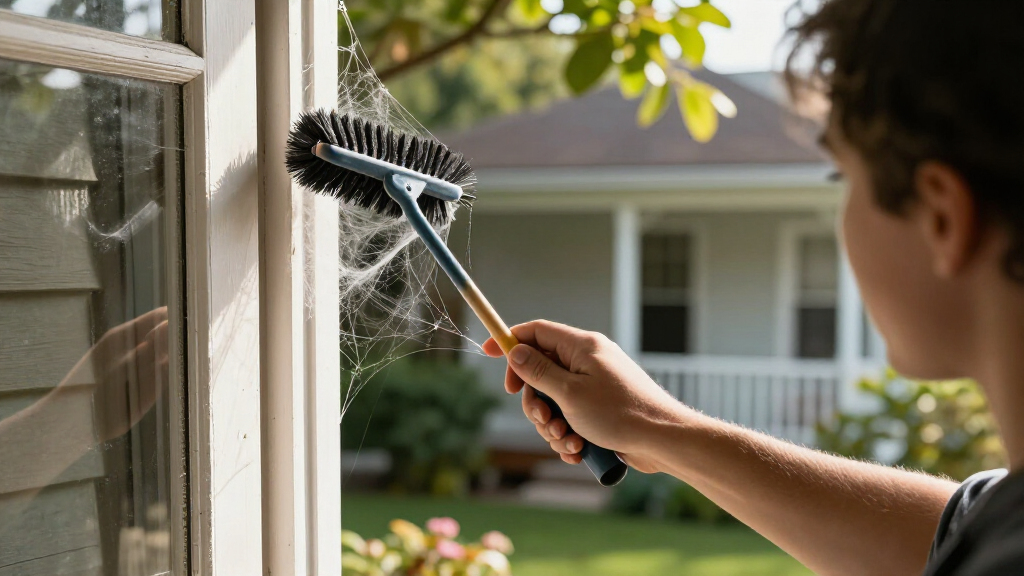
The writer said spiders repeatedly built messy webs in the corners of her exterior window panes, with new webs appearing within days of cleaning. To test the suggested method, she first removed the webs and cleaned the windows, then sprayed WD-40 along the sill, sides and top of each window. She also applied a small amount to the corners where she had seen spiders gathering.
She said she took care to keep the product off the glass because she did not want a greasy-looking finish. After spraying, she let the coating dry and did not wipe it away. She checked the windows after one week and again about a month later, reporting that she saw no new cobwebs at either point.
The writer speculated that WD-40’s lubricating properties could make the treated area less suitable for web-building, and that its odor might deter spiders. Those explanations were not established by the account as tested mechanisms. The source also says the writer experienced several heavy rains without seeing the webs return, but the account describes her personal observations without detailing how they were assessed.
A Small Test, Not a Lasting Guarantee
Recurring webs around windows are a practical nuisance for people who regularly clean exterior glass and frames. The report offers a low-effort method the writer tried, along with a specific observation period: no visible webs for about a month after treatment. That may interest readers looking for ways to reduce repeat cleaning, especially in places where the writer says spider activity persists throughout the year.
The report describes the writer’s experience at her home. It does not establish how consistently the method might work in other settings or identify what accounted for the result. Readers can regard the reported outcome as the writer’s experience rather than proof of broader effectiveness.
The article’s headline promises an outcome “for good,” while the described observation lasted around a month. Its further suggestion that a coating may last up to a year is not backed in the supplied report by a year-long test. The evidence supports only what the writer said she observed during the period she checked.
outdoor window spider repellent spray
As an affiliate, we earn on qualifying purchases.
As an affiliate, we earn on qualifying purchases.
How the Window Treatment Was Applied
The Apartment Therapy report describes an older home in Florida where the writer said webs repeatedly formed in the corners of exterior windows. Her usual routine—removing the webs and cleaning the windows—did not stop their return for more than a few days, according to her account. She described clearing and cleaning the windows before applying WD-40.
Her instructions were to spray lightly around the frame’s perimeter, including the bottom sill, sides and top, while avoiding the glass. She also treated small corners where she had noticed spiders. The writer said she let the product dry without wiping it. The source mentions a light coating and a small amount in the corners, but does not specify the frame materials or describe use in other homes.
The source mentions possible spillover benefits for door frames and soffits, including discouraging other insects and nesting bees or wasps. These are the writer’s claims in the report, not independently established results. The account contains no product-label guidance or expert advice about using WD-40 on particular surfaces.
““After checking the windows for signs of spiderwebs and seeing none after a week, I was pleasantly surprised to see how effective it was.””
— Apartment Therapy writer Trisha Sprouse
As an affiliate, we earn on qualifying purchases.
How Long the Effect May Last
The report does not establish whether the result would be repeated in other homes or how long the treated windows would remain free of webs. The writer describes seeing no new webs on the windows she checked over about one month, despite the headline’s “for good” wording. The article’s suggestion that a coating could last up to a year is not supported by a year of reported monitoring in the supplied material.
It is also unclear whether WD-40 itself prevented web-building, whether its odor affected spider activity, or whether another factor explains the result. The account does not describe a comparison with untreated windows or provide an expert assessment. It also does not establish that spraying around doors or soffits repels insects or prevents bee or wasp nests.
outdoor window web prevention products
As an affiliate, we earn on qualifying purchases.
As an affiliate, we earn on qualifying purchases.
Whether the Result Holds Over Time
The writer said she planned to leave the coating in place after rain and had not needed to reapply it during the reported period. Continued observation could show whether webs return and whether the method performs similarly across different weather and window conditions. The account describes observations through about a month.
The writer said she tried to keep the product off the glass to avoid a greasy appearance. The article’s account supports a short-term personal observation only; it does not provide a guarantee of lasting spider control.
spider deterrent for exterior windows
As an affiliate, we earn on qualifying purchases.
As an affiliate, we earn on qualifying purchases.
Key Questions
What did the Apartment Therapy writer do?
She removed existing webs, cleaned her outdoor windows, then sprayed a light coating of WD-40 around the window frames and in corners where spiders tended to gather. She said she avoided the glass and let the product dry.
How long did she report seeing no webs?
She said she saw no new webs after one week and still saw none about a month later. The report does not document a year-long test.
Does the report prove WD-40 keeps spiders away for good?
No. It describes one person’s experience at one home over about a month. It does not establish that the method works consistently or permanently.
Why did the writer think it might work?
She speculated that WD-40’s lubricating properties could make the treated area harder for spiders to use for webs and that its odor might deter them. The report does not confirm either explanation.
Did the writer spray WD-40 on the window glass?
No. She said she tried to keep the spray off the glass because she did not want it to look greasy, applying the product around the frames instead.
Source: rss
Fall Picks
fall essentials
As an affiliate, we earn on qualifying purchases.