
TL;DR
Building materials used thousands of years ago, such as Roman concrete and ancient bricks, still demonstrate durability today. Experts attribute this to their composition and construction techniques, highlighting their relevance for sustainable architecture.
Recent archaeological and scientific studies have confirmed that certain building materials from thousands of years ago, including Roman concrete and ancient bricks, still maintain their structural integrity today. This development underscores the durability of traditional construction techniques and materials, which are gaining renewed attention for sustainable architecture and preservation efforts.
Scientists and archaeologists have analyzed ancient construction materials, revealing that many, such as Roman concrete, possess chemical properties that enable them to withstand centuries of environmental stress. For example, Roman concrete, known as “opus caementicium,” contains volcanic ash and lime, which react over time to strengthen the material. Recent experiments show that these materials outperform some modern equivalents in durability and environmental resilience.
Experts from institutions like the University of California and the European Institute of Archaeological Sciences have documented how ancient builders used locally available resources and innovative techniques to create long-lasting structures. These include the use of specific mineral mixes and construction methods that promote chemical reactions beneficial for longevity. These findings are based on laboratory testing, field studies, and analysis of surviving ancient structures.
This renewed understanding is prompting architects and engineers to reconsider traditional materials and methods, especially as the industry seeks more sustainable and resilient building practices amid climate change and resource constraints.
Implications for Modern Sustainable Architecture
The durability of ancient building materials offers valuable lessons for contemporary construction, emphasizing sustainability and longevity. Using materials like Roman concrete could reduce the environmental impact of modern buildings, which often rely on energy-intensive manufacturing processes. Additionally, understanding the chemical composition and long-term performance of these materials can inform the development of new, eco-friendly construction options.
Furthermore, this knowledge supports preservation efforts for historic structures, which continue to stand for centuries with minimal maintenance. It also encourages a shift towards utilizing local, natural resources, reducing reliance on imported and synthetic materials. Overall, the resilience of ancient materials highlights their potential to influence future building standards and practices.

Roman Concrete: The Building Material We Forgot How to Make (Ancient Mysteries Revisited Book 14)
As an affiliate, we earn on qualifying purchases.
As an affiliate, we earn on qualifying purchases.
Historical Use and Recent Scientific Validation of Ancient Materials
Throughout history, civilizations such as the Romans, Egyptians, and Chinese employed locally sourced materials like volcanic ash, clay, and lime in their construction. Roman concrete, in particular, was used in iconic structures like aqueducts and the Pantheon, many of which still stand today. For centuries, the durability of these materials was observed but not fully understood scientifically.
In recent decades, advances in chemistry and materials science have allowed researchers to analyze these ancient materials more precisely. Studies have shown that volcanic ash in Roman concrete reacts with seawater, forming crystalline structures that enhance strength over time. This scientific validation has sparked renewed interest in traditional techniques as sustainable alternatives to modern construction methods.
These findings are complemented by archaeological discoveries of well-preserved ancient structures, providing real-world examples of long-lasting building practices that can inform modern design.
“Our analysis shows that Roman concrete contains mineral components that actively strengthen the material over centuries, making it more durable than many modern concretes.”
— Dr. Maria Lopez, Materials Scientist at the University of California
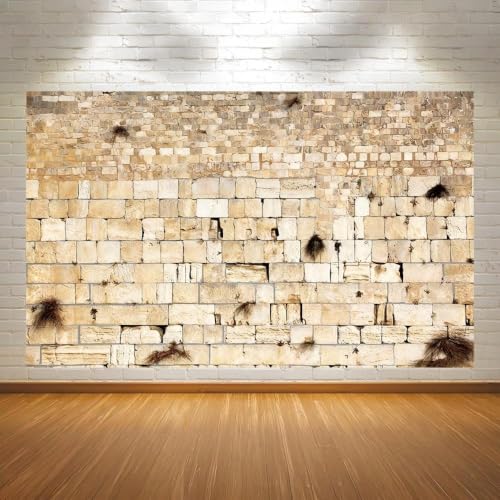
Rustic Jerusalem Stone Wall Photo Backdrop Party Decor 7x5FT Polyester
- Size: 7×5 feet (210x150cm)
- Material: Soft polyester, lightweight, foldable
- Packaging: Includes backdrop only, brackets not included
As an affiliate, we earn on qualifying purchases.
As an affiliate, we earn on qualifying purchases.
Remaining Questions About Replicating Ancient Durability
While scientific studies confirm the long-lasting properties of certain ancient materials, it is still unclear how easily these techniques can be scaled or adapted for modern construction. Questions remain about the cost, availability, and environmental impact of sourcing similar materials today. Additionally, the durability of ancient materials under different climatic conditions and in large-scale projects needs further testing.
Researchers are exploring whether modern modifications can replicate the beneficial chemical reactions found in ancient materials without compromising sustainability or safety. The extent to which these materials can be integrated into current building codes and standards also remains to be seen.

Construction Materials, Methods, and Techniques: Building for a Sustainable Future
As an affiliate, we earn on qualifying purchases.
As an affiliate, we earn on qualifying purchases.
Future Research and Potential Adoption in Modern Construction
Ongoing research aims to optimize ancient techniques for contemporary use, with pilot projects testing the application of Roman-inspired concrete in new buildings. Scientists are also investigating how to produce these materials at scale while minimizing environmental impact. Regulatory bodies and industry stakeholders are expected to evaluate these findings in the coming years, potentially leading to updated building standards that incorporate traditional, durable materials.
Meanwhile, preservation of ancient structures continues to provide valuable insights, and collaborations between archaeologists, engineers, and architects are likely to expand. The next phase involves translating scientific understanding into practical, sustainable building solutions for widespread use.

Akona Concrete & Mortar Color, 10 Ounces, Charcoal
- Type: Concrete & Mortar Dye
- Pigments: 5 Powdered Pigments
- Quantity: 10 Ounce Jar
As an affiliate, we earn on qualifying purchases.
As an affiliate, we earn on qualifying purchases.
Key Questions
Can ancient building materials be used in modern construction?
Yes, recent research indicates that certain ancient materials, like Roman concrete, can be adapted for modern use, offering durability and sustainability benefits.
Are ancient materials more environmentally friendly than modern ones?
Many ancient materials rely on natural, locally sourced resources and require less energy to produce, making them potentially more sustainable than some modern alternatives.
What challenges exist in adopting ancient materials today?
Challenges include sourcing materials at scale, meeting current building codes, and understanding long-term performance in different environments.
Will ancient construction techniques influence future architecture?
Research suggests that integrating traditional methods could improve building resilience and sustainability, likely influencing future design practices.
Source: rss