TL;DR
Listen free for 30 days with Audible
Thousands of audiobooks and originals — cancel anytime.
Start your free trialAs an affiliate, we earn on qualifying purchases.
Tea stains mainly come from tannins that bond with porous surfaces. Quick action with common household items like baking soda, vinegar, and enzyme cleaners makes stain removal easier. Different materials need different methods for best results.
Tea stains are stubborn, often lingering long after your first sip. They can turn a pristine mug or a favorite shirt into a blotchy mess. But don’t worry—most stains are removable with simple, everyday ingredients.
In this guide, you’ll discover practical ways to tackle tea stains on mugs and fabric, using familiar household items. Whether you’re dealing with fresh spills or dried marks, these tips will help keep your dishes and clothes looking their best without harsh chemicals or expensive products.
Act immediately—rinse and blot to prevent stains from setting.
Use gentle, household-friendly methods like baking soda, vinegar, and enzyme cleaners for safe, effective removal.
Tailor your cleaning approach to the mug or fabric material, avoiding abrasives and harsh chemicals.
Dry fabric only after confirming the stain is gone—heat can lock it in.
Patience and gentle handling are your best tools against stubborn tea stains.
How to Remove Tea Stains From Mugs and Fabric
Tea stains come mainly from tannins — natural plant compounds that bond readily with porous surfaces and textile fibers. With quick action and everyday items like baking soda, vinegar, and enzyme cleaners, most stains disappear without harsh chemicals or expensive products.
How to Remove Tea Stains From Mugs in 5 Easy Steps
Rinse Immediately
Rinse with warm water right after use — tannins bond quickly, and stains get harder to remove the longer they sit.
Soap & Soft Sponge
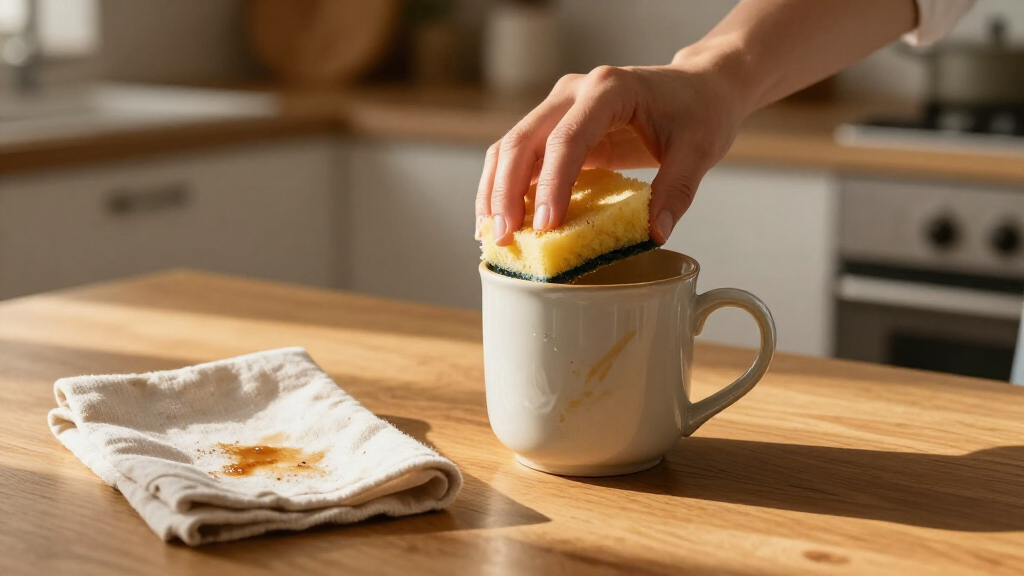
Apply dish soap and scrub gently with a non-scratch sponge to lift surface tannins before they penetrate.
Baking Soda Paste
Sprinkle baking soda on the damp surface, scrub softly, and rinse. A mild abrasive that neutralizes without scratching.
Soak 10–15 Min
Fill with warm water plus a denture tablet or a tablespoon of white vinegar to loosen deep-set tannins.
Wash, Dry, Inspect
Repeat if necessary. Patience prevents damage from over-aggressive cleaning and keeps mugs bright.
Best Methods for Different Mug Materials
| Material | Recommended Method | What to Avoid |
|---|---|---|
| Glazed ceramic & porcelain | ✓ Baking soda, vinegar, denture tablets | ✗ Abrasive scouring powders, steel wool |
| Stainless steel | ✓ Baking soda, stainless steel cleaner | ✗ Chlorine bleach, harsh abrasives |
| Plastic & silicone | ✓ Soaking with dish soap, oxygen-based cleaners | ✗ Harsh abrasives, bleach |
| Travel mugs | ✓ Manufacturer instructions, gentle scrubbing | ✗ Strong chemicals, abrasive tools |
| Fine china & decorated mugs | ✓ Hand wash, mild cleaners | ✗ Abrasives, strong chemicals |
Removing Tea Stains From Fabric Without Damage
Blot, Don’t Rub
Blot excess liquid with a clean white cloth. Rubbing pushes the stain deeper and damages delicate fibers.
Rinse From the Back
Cold water from the back pushes the stain out of the fibers and prevents spreading or dye setting.
Apply Detergent
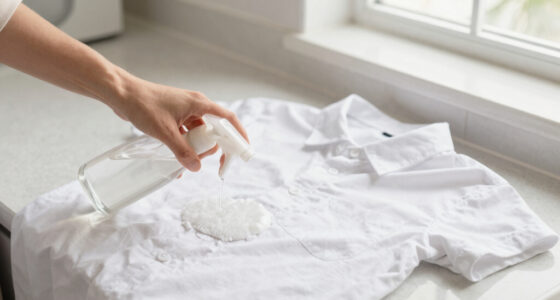
Use liquid laundry detergent or an enzyme stain remover directly on the spot. Let it work 5–15 minutes.
Wash Warm
Wash at the warmest temperature the care label allows — warm enough to dissolve tannins, not set them.
Air Dry & Check
Never use the dryer until the stain is fully gone — heat locks tannins in permanently. Repeat if needed.
When Stains Fight Back
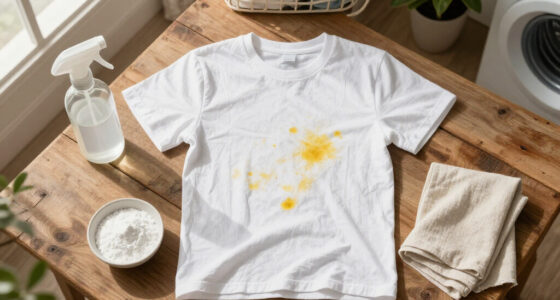
For dried or stubborn stains on washable colorfast fabric, soak in an oxygen-bleach solution following the label. For wool, silk, acetate, vintage textiles, and dry-clean-only items: blot gently and consult a professional — aggressive treatments, enzymes, and prolonged soaking can cause permanent damage.
Five Tips to Tackle Tough Tea Stains on Fabric
Act quickly. Blot excess liquid and rinse from the back before the stain sets deeper into the fibers.
Use oxygen-based removers for dried stains; avoid chlorine bleach on colored fabrics to prevent fading or damage.
Test first on a hidden patch — especially on delicate or vintage fabrics — to rule out discoloration.
Don’t dry until it’s gone. Dryer heat sets tannins permanently, making stains nearly impossible to remove.
Handle delicates gently. Stick with blotting and consider professional cleaning; aggressive rubbing weakens fibers.
Milk tea note: it leaves both tannin and protein/fat components — liquid detergent is especially effective here.
Common Mistakes That Make Tea Stains Worse
Rubbing a fresh spill
Spreads the stain deeper into fibers and can cause fraying or permanent damage to delicate fabrics.
Applying heat before removal
Heat causes tannins to bond more tightly with fibers — some stains become impossible to remove afterward.
Mixing household cleaners
Never combine vinegar or other acids with chlorine bleach — dangerous reactions can occur. Vinegar and baking soda largely neutralize each other anyway.
Abrasive tools on delicate finishes
Steel wool and scouring powders scratch glazed ceramics, stainless steel, printed designs, and nonstick coatings.
Treating every material the same
What’s safe for ceramic may ruin plastic, silicone, or silk — always match the method to the material.
Relying on salt
Salt doesn’t reliably “draw out” a stain — blotting and rinsing work far better. Also: persistent stains in cracked glaze may mean it’s time to replace the mug.
How to Safely Remove Tea Stains From Mugs Without Damaging the Finish
Tea stains on mugs form from tannins—those natural plant compounds that leave a brownish or yellowish ring. These tannins are water-soluble but tend to bond with the surface of the mug, especially if left uncleaned for a while. The key is to act quickly and choose gentle, effective cleaning methods because aggressive scrubbing or harsh chemicals can scratch or damage delicate finishes, leading to a dull appearance or even structural weakening.
Start with warm water and dish soap for fresh stains, as this helps break down tannins before they set deeper. For older marks, baking soda or vinegar work well because they can neutralize and loosen tannin deposits without abrasive damage. Avoid steel wool or abrasive powders that can scratch glazed ceramics or painted designs, which could make stains worse or ruin the mug’s appearance. Understanding the material of your mug guides your choice of cleaning method—what’s safe for ceramic might not be suitable for plastic or silicone, where gentler approaches preserve integrity.
For stubborn stains, using a denture-cleaning tablet in warm water can work wonders. It bubbles away the tannin buildup without harsh scrubbing, and its gentle action minimizes the risk of surface damage. If your mug is stainless steel, stick with baking soda or a cleaner approved for metal surfaces, since abrasive or corrosive chemicals can cause pitting or discoloration. Plastic or silicone travel mugs require soaking with dish soap or oxygen-based cleaners, careful not to damage coatings or seals that could be compromised by harsh chemicals or abrasive tools.
As an affiliate, we earn on qualifying purchases.
Step-by-Step: How to Remove Tea Stains From Mugs in 5 Easy Steps
- Rinse the mug with warm water immediately after use to prevent stains from setting, as tannins bond quickly with surfaces, making stains more difficult to remove the longer they sit.
- Apply a small amount of dish soap and scrub gently with a soft sponge. This initial step helps lift surface tannins and prevents them from penetrating deeper into the material.
- If stains persist, sprinkle baking soda onto the damp surface and scrub softly, then rinse thoroughly. Baking soda acts as a mild abrasive and neutralizer, breaking down tannins without scratching the surface.
- For tougher stains, fill the mug with warm water, add a denture tablet or a tablespoon of white vinegar, and let it sit for 10–15 minutes. This soaking process allows the chemical action to loosen deep-set tannins, which can otherwise be stubborn to remove with manual scrubbing alone.
- Wash thoroughly, dry, and inspect. Repeat if necessary. Repeated treatments may be required for heavily stained mugs, but patience prevents damage from over-aggressive cleaning.
Using this routine not only prevents stains from becoming permanent but also preserves the integrity of your mugs, ensuring they stay bright and functional over time.
As an affiliate, we earn on qualifying purchases.
Comparison Table: Best Methods for Different Mug Materials
| Material | Recommended Method | What to Avoid |
|---|---|---|
| Glazed ceramic & porcelain | Baking soda, vinegar, denture tablets | Abrasive scouring powders, steel wool |
| Stainless steel | Baking soda, stainless steel cleaner | Chlorine bleach, harsh abrasives |
| Plastic & silicone | Soaking with dish soap, oxygen-based cleaners | Harsh abrasives, bleach |
| Travel mugs | Follow manufacturer instructions, gentle scrubbing | Strong chemicals, abrasive tools |
| Fine china & decorated mugs | Hand wash, mild cleaners | Abrasives, strong chemicals |
As an affiliate, we earn on qualifying purchases.
How to Remove Tea Stains From Fabric Without Damage
Tea stains on fabric are primarily from tannins, which bond with fibers. Acting swiftly is key to preventing permanent discoloration. For fresh stains, blot gently with a clean cloth—don’t rub, which can push the stain deeper. Rubbing can also damage delicate fibers, leading to fraying or thinning of the fabric over time.
Rinse the fabric from the back with cold water to push the stain out of the fibers, which is more effective than rinsing from the front because it helps prevent spreading and sets less dye into the fabric. Apply liquid laundry detergent or an enzyme stain remover directly to the spot. Let it sit for 5–15 minutes, as this allows the enzymes or detergents to break down tannins more thoroughly, making removal easier. Then wash in the warmest water safe for the fabric, since heat helps dissolve residual tannins but can also risk setting stains if too hot.
Air dry and check. Repeat if any stain remains. Avoid using a dryer until the stain is gone, because heat can permanently set tannins, making the stain impossible to remove later. For dried or stubborn stains, soak the fabric in an oxygen-based bleach solution (if safe for the material), which helps lift the stain without harsh chemicals. Always test stain removers on hidden areas first to prevent unexpected damage.
Materials like wool, silk, or vintage textiles need gentle treatment—blot, avoid harsh chemicals, and consider professional cleaning if unsure. Recognizing the fiber type helps determine the best cleaning approach, as delicate textiles are more susceptible to damage from aggressive treatments.
As an affiliate, we earn on qualifying purchases.
Five Tips for Tackle Tough Tea Stains on Fabric and Clothes
- Act quickly—blot excess liquid and rinse from the back to prevent the stain from setting deeper into the fibers, which makes removal more difficult later.
- Use oxygen-based stain removers for dried stains; avoid chlorine bleach on colored fabrics to prevent color fading or damage. These removers are less harsh and help lift tannins without compromising fabric integrity.
- Test any stain remover on a hidden patch first to ensure it does not cause discoloration or damage, especially on delicate or vintage fabrics.
- Do not dry until you’re sure the stain is gone—heat from dryers can set tannins permanently, making them nearly impossible to remove afterward.
- For delicate fabrics, stick with gentle blotting and consider professional cleaning if needed, as aggressive treatments can weaken fibers or cause pilling.
Common Mistakes That Make Tea Stains Worse
Rubbing the stain, especially when fresh, spreads it deeper into fibers and can cause fraying or damage. Applying heat before removal can set the stain permanently—heat causes tannins to bond more tightly with fibers, making subsequent removal more difficult and sometimes impossible. Using abrasive tools on delicate mugs or fabrics damages surfaces and traps stains, creating more work and potential damage.
Mixing household cleaners like vinegar and bleach creates dangerous fumes and should be avoided because it can produce toxic gases, risking health and material integrity. Rinsing from the front instead of the back pushes the stain further into fibers, complicating removal and increasing the likelihood of permanent discoloration.
Salt might seem like a good idea, but it’s less effective than blotting and rinsing because it can cause scratching or embedding into fibers, worsening the stain. Remember, patience and gentle handling—allowing cleaners to work without aggressive scrubbing—are your best tools for successful stain removal, minimizing damage and preserving your belongings.
Frequently Asked Questions
Can dried tea stains be removed from fabric?
Yes, dried tea stains can often be removed by pretreating with an enzyme stain remover or oxygen-based bleach, followed by washing at the warmest safe temperature. Several treatments may be necessary for stubborn marks.
Does baking soda really remove tea stains from mugs?
Yes. Baking soda’s mild abrasiveness helps lift tannins from mug surfaces. Gently scrubbing with a baking soda paste can brighten stained mugs without scratching delicate finishes.
Is vinegar or baking soda better for cleaning tea-stained mugs?
Baking soda is generally better for scrubbing and removing surface stains, while vinegar can help loosen mineral buildup and tannins. Using them separately often yields the best results.
Can toothpaste clean tea stains from mugs?
Some non-gel toothpastes are mildly abrasive and can help, but they might scratch delicate finishes or leave residues. Baking soda tends to be simpler and safer for most mugs.
Why should I rinse tea stains from the back of fabric?
Rinsing from behind pushes the stain out of the fibers instead of forcing it further into the fabric, making removal easier and preventing spreading.
Conclusion
Tea stains are a common nuisance, but they’re rarely permanent. The key is to act quickly, choose gentle cleaning methods, and always consider the surface or fabric you’re treating.
With these practical tips, your mugs will stay bright, and your clothes will stay spotless. Next time a spill happens, remember—your best tool is patience, paired with simple household staples.
Flea & tick season Picks
flea and tick prevention
As an affiliate, we earn on qualifying purchases.