TL;DR

Get cleaning gear delivered free with Prime
- Fast, free delivery on millions of items
- Prime Video, Amazon Music and more included
- Member-only deals all year
To remove rust stains from concrete, first move or fix whatever is causing the rust, then scrub with warm water and a stiff nylon brush. For marks that remain, use a rust remover labeled for your concrete finish, test it in a hidden spot, follow its directions, and rinse thoroughly. Old or deep stains may need repeated treatment, and some may not disappear completely.
That orange ring under a patio chair can look as if it has soaked straight through the slab. Concrete is porous, so rust from a metal object, iron-rich sprinkler water, or lawn fertilizer can cling below the surface and resist an ordinary rinse.
This guide shows you how to remove rust stains from concrete without turning a small spot into a bigger surface problem. You’ll learn how to find the cause, start with gentle cleaning, choose a suitable remover, and protect nearby plants and finishes along the way.
The rule is simple: remove the source before treating the mark. A clean patch won’t stay clean if a rusty planter keeps dripping onto it. And while some fresh stains lift quickly, old rust can behave like orange dye in a sponge; a realistic goal may be to lighten it rather than erase every trace.
Remove or repair the rusty object, sprinkler leak, or fertilizer source before cleaning the mark.
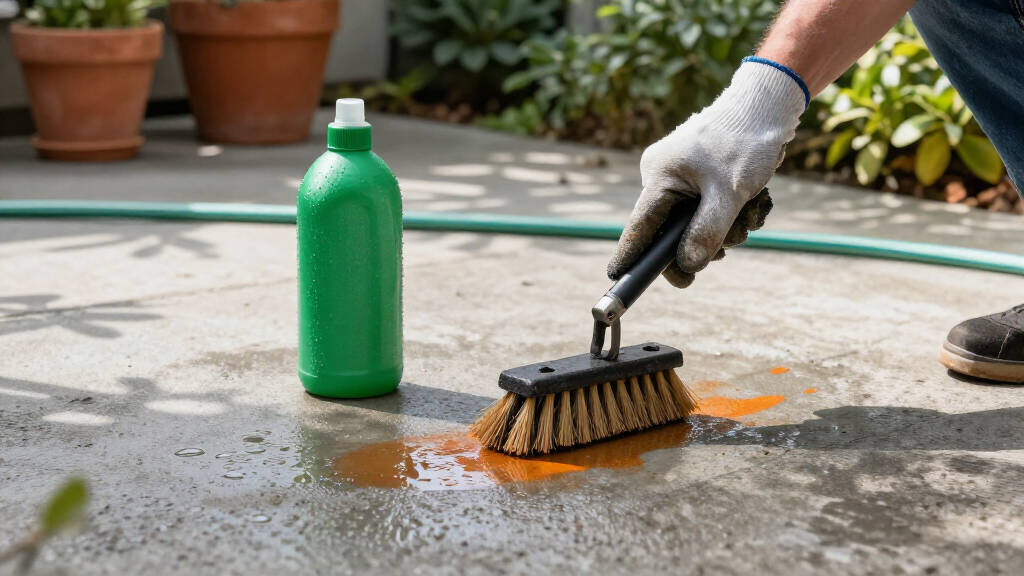
Start with warm water and a stiff nylon brush; avoid wire brushes that can leave rusting metal particles.
For persistent stains, choose a remover labeled for concrete and test it in a hidden spot first.
Follow label directions for protective equipment, contact time, runoff, and rinsing; never mix cleaners.
Expect old rust to lighten rather than disappear in some cases, and keep metal items dry or raised to prevent new stains.
Concrete care / field guide
How to Remove Rust Stains From Concrete
Track down the source, begin with gentle cleaning, and step up carefully if the orange mark remains. Concrete is porous, so older rust can leave a shadow even after treatment.
01 / Find the cause
Read the mark before you scrub
Rust commonly comes from metal, iron-rich irrigation water, or iron-containing lawn and garden products. A quick inspection helps stop the stain from returning.
Furniture & planters
Check chair legs, table feet, pots, tools, railings, and fasteners. Move the item, add protective feet or a tray, and let the concrete dry.
Water & fixtures
Orange residue near a sprinkler or drain can point to iron-bearing water. Repair leaks and note where irrigation runoff travels.
Fertilizer residue
Check whether lawn-care products list iron. Sweep up granules promptly and avoid washing residue toward garden beds or drains.
02 / Work in stages
Start gentle, then choose a suitable remover
Use the least aggressive method first so you can judge what helps. Escalate only when the stain remains and the concrete finish is compatible with the product.
Move furniture, sweep grit, and remove or repair the rust source.
Use warm water and a stiff nylon brush. Add a little dish soap for grime.
Rinse, let the patch dry, and inspect the color in daylight.
If rust remains, use a remover labeled for concrete and test first.
Keep wire brushes off the slab.
A wire brush can leave tiny metal particles behind. Those particles may rust later, adding new orange marks. A stiff nylon brush is a safer first choice for scrubbing concrete.
03 / Compare your options
Match the method to the stain
No single cleaner fits every slab. Decorative, colored, polished, or sealed concrete may react differently from plain unfinished concrete.
| Method | Best fit | Watch for |
|---|---|---|
| Warm water + nylon brush | ✓ Loose residue or a fresh, light mark | May not reach older, deeper discoloration. |
| Concrete-labeled rust remover | ✓ Persistent stains on a compatible finish | Follow label directions for PPE, contact time, runoff, and rinsing. |
| Vinegar or lemon juice | ~ Possibly a small, recent mark after a cautious test | May fail on deep stains; acids can etch or discolor concrete. |
| Muriatic acid | ✕ Generally a poor choice for spot cleaning | Can etch concrete and cause serious burns or harmful fumes if mishandled. |
04 / Protect the surroundings
Control application, contact time, and rinse water
A careful setup protects nearby plants, drains, and finishes while helping you treat just the stained area.
Keep the treatment contained
Shield nearby plants where practical, plan where runoff will go, and work on a small area at a time. Follow the product’s exact directions and contact time instead of guessing.
Rinse thoroughly as directed
Residue can affect concrete or nearby materials. Keep cleaner and rinse water away from plants, drains, and waterways. Rinse the area before changing products.
Pressure alone rarely dissolves embedded rust.
A washer may help remove loose dirt or cleaner residue, but it does not replace the cleaner’s directions. Excessive pressure can roughen or damage the surface. Keep the container label nearby for surface warnings, first-aid details, and disposal guidance.
05 / Set expectations
Some stains lighten without disappearing
Iron compounds can settle into concrete’s pores. Fresh surface rust may fade quickly, while older or deep stains can take repeated treatment or leave a visible shadow.
Traceability / keep stains from returning
Source → barrier → maintenance
Stop the rust at its source
Keep metal items off wet concrete, fix irrigation leaks, and clean up iron-containing fertilizer promptly.
Reduce direct contact
Use protective feet, trays, or other barriers beneath furniture and planters. A compatible sealer may reduce absorption.
Check after rain or watering
Look for damp metal, orange drips, and new streaks. A sealer does not remove rust sources or guarantee stain resistance.
Find the rust source before you scrub
Rust stains on concrete usually come from metal, iron-rich water, or iron-containing products, so inspect the area before you start cleaning. Look for a rusty chair leg, tool, railing fastener, planter, sprinkler head, or a line of orange residue where irrigation water drains. If the mark sits beneath a lawn-care spill, check whether the fertilizer label lists iron.
Move the object or repair the leak first. For example, if a patio table leaves a rust-colored crescent after rain, cleaning the crescent while leaving the damp metal feet in place invites the same mark back. Put protective feet under the table and let the concrete dry before judging the stain.
Notice the shape and pattern too. A round mark often points to a pot or furniture foot; streaks beside a sprinkler suggest iron-bearing water; scattered spots near a garden bed may follow fertilizer granules. These clues help you treat the cause instead of repeatedly scrubbing the evidence.
Concrete’s pores can hold iron compounds, which explains why a rinse may remove loose dirt but leave a rusty shadow. Write down where the stain begins and where water flows after watering. That small bit of detective work can spare you another afternoon with a brush.
Products Worth Considering

Shark Clean & Empty Cordless Stick Vacuum with Auto-Empty System, BU3521

Bose SoundLink Flex (2nd Gen) Portable Bluetooth Speaker, Black

eufy Security SoloCam E42 4-Camera Kit, 4K Solar Security Cameras with HomeBase 3
As an affiliate, we earn on qualifying purchases.
Start with the gentlest concrete-safe cleaning method
Begin with water, warm soapy water if needed, and a stiff nylon brush; this low-impact approach can lift loose rust residue and grime without adding a harsh chemical. Sweep away leaves and grit, rinse the patch, then scrub in short, overlapping strokes. A wire brush may shed or leave metal particles that can rust later, so keep it away from the slab.
For a small, recent mark under a garden chair, wet the concrete, add a little dish soap to warm water, and scrub for a few minutes. Rinse and inspect after the surface dries. If the orange color fades, repeat the gentle pass rather than immediately reaching for a stronger cleaner.
Use this sequence so you can tell what is working:
- Clear the area: Move furniture, sweep debris, and remove the rust source.
- Wet and scrub: Use warm water and a nylon brush; add a small amount of dish soap for grime.
- Rinse and check: Let the spot dry so you can see whether the stain remains.
- Step up carefully: Choose a product labeled for concrete if the mark persists.
Keep the rinse water contained where possible, especially near garden beds. Gentle cleaning may not shift an old stain, but it gives you a useful baseline and reduces the amount of stronger cleaner you may need.
Choose a rust remover that matches your concrete
A rust remover labeled for concrete is a practical next step for stains that survive scrubbing, but the label and your concrete finish matter. Some removers use oxalic, citric, or other acids to dissolve iron staining. Products differ in strength and surface compatibility, so there is no single best choice for every slab.
Before treating a large mark, check the product directions and test a hidden patch. A decorative colored walkway or sealed patio may react differently from plain, unfinished concrete. For instance, if your stain sits on a tinted porch, test behind a planter rather than in the middle of the entry where a pale spot would stand out.
| Option | Best fit | Watch for |
|---|---|---|
| Warm water and nylon brush | Loose residue or a fresh, light stain | May not reach older, deeper discoloration |
| Concrete-labeled rust remover | Persistent stains, when the finish is compatible | Follow label, PPE, contact time, and rinse directions |
| Vinegar or lemon juice | Possibly a small, recent mark after a cautious test | May fail on deep stains and can etch or discolor concrete |
Household acids are not automatically gentle just because they come from the kitchen. Strong acids such as muriatic acid are generally a poor choice for spot cleaning: they can etch the slab, create uneven color, and cause serious burns or harmful fumes if mishandled. A safer decision is to use a product designed for the surface and follow its maker’s guidance.
Apply cleaner without harming nearby surfaces
Protect the surrounding area, use the protective gear on the label, and follow the product’s exact directions. Before applying cleaner, move people and pets away, shield nearby plants where practical, and check where runoff will travel. A patio drain can carry cleaner toward a garden bed or waterway, so plan the rinse before you begin.
Work on a small area at a time. If the directions call for a specific contact time, use that time rather than guessing or leaving the product on while you handle another chore. A homeowner cleaning a narrow strip beside a flower border, for example, can use a controlled application and catch or redirect runoff instead of flooding the bed.
After treatment, rinse thoroughly as directed. Residue can affect concrete or nearby materials, and a pressure washer is not a substitute for the cleaner’s instructions. Pressure may help clear dirt or rinse residue, but it often cannot dissolve rust embedded in the pores; excessive force can also roughen or damage the surface.
Never mix cleaners. Keep rust removers away from bleach and other products, and rinse the area before switching to a different cleaner.
Keep the container label available until the job is done. It holds the surface warnings, first-aid details, and disposal guidance that generic cleaning advice cannot replace.
Set a realistic goal for old or deep rust
Fresh surface rust may lighten quickly, while old or deeply penetrated stains can take repeated treatment and may never vanish completely. The iron compounds can settle into concrete’s porous surface, leaving a shadow even after you remove the visible residue. That is why a clean-looking wet patch can appear stained again as it dries.
Compare the spot in daylight after each treatment rather than judging it while wet. For example, an orange ring under a planter might fade to a faint tan halo after one round, then improve a little more with a second application permitted by the product directions. If the stain stops changing, more scrubbing may wear the surface without improving the color.
Do not repeat a treatment more often or for longer than the label allows. If the concrete is polished, colored, sealed, stamped, or otherwise decorative, ask the installer or manufacturer about compatible care before trying a different chemical. A professional cleaner may be able to assess a deep stain when appearance matters, such as on a front walkway or a newly finished patio.
Keep expectations practical: the goal is a safer, less noticeable surface, not necessarily a flawless slab. Concrete naturally varies in color and texture, and aggressive spot treatment can leave a more obvious pale or rough patch than the original rust mark.
Keep rust stains from coming back
Prevent repeat stains by keeping the rust source off the concrete or correcting the water or fertilizer problem. Dry metal furniture after rain, raise planter pots on non-rusting feet, and avoid leaving tools on damp paving. If a sprinkler creates orange streaks, adjust the spray or investigate the water source instead of cleaning the same trail every week.
Iron-containing fertilizer can leave spots when granules sit on a wet slab. Sweep up spills promptly, following the fertilizer label, and rinse only in a way that does not carry the product into storm drains or garden beds. If you often bring gardening tools onto the patio, set them on a tray or hang them in a dry storage spot.
A compatible concrete sealer may reduce how much water and staining material the surface absorbs, but it does not remove the source or guarantee rust resistance. Check the sealer maker’s guidance for your concrete finish and maintenance needs. Sealing a patio while a rusty railing continues to drip is like putting a lid on a leaky jar: it does not fix the leak.
Make a quick seasonal check after winter and after heavy rain. Look beneath chair feet, along railings, and around irrigation lines. Catching a small orange fleck early usually takes less work than tackling a broad, dark stain months later.
Frequently Asked Questions
What causes rust stains on concrete?
Common causes include rusty tools, metal furniture, railings, fasteners, iron-rich irrigation water, and fertilizer containing iron. The stain’s shape can offer a clue: a ring may come from a pot or furniture foot, while streaks often follow water flow.
Will vinegar or lemon juice remove rust from concrete?
They may lighten a small, fresh stain, but results vary and deep marks often remain. Because these acids can etch or discolor concrete, test a hidden spot and follow cautious use guidance rather than leaving them on longer in hope of a stronger result.
Can I use muriatic acid to remove a rust spot?
Muriatic acid is generally a poor choice for ordinary rust-spot cleaning. It can etch concrete, leave uneven color, and cause serious burns or harmful fumes if mishandled; use a concrete-labeled rust remover and follow its precautions instead.
Should I use a pressure washer on rust stains?
A pressure washer can help remove loose dirt or rinse residue, but pressure alone often will not dissolve rust embedded in concrete. Too much pressure can damage the surface, so follow the equipment and cleaner instructions and use a suitable setting.
Will rust remover damage sealed or colored concrete?
It can change the color or texture of some sealed, decorative, polished, or colored surfaces. Check the product label, test an inconspicuous patch, and ask the concrete installer or manufacturer for care advice if the finish is specialty or valuable.
How do I remove an old or deep rust stain?
Use a remover labeled for concrete according to its directions, repeating treatment only if the label allows. Deep stains may need professional assessment, and complete removal is not always possible without risking surface damage.
How can I stop rust stains from returning?
Remove or repair the source, keep metal objects dry or raised off the slab, correct sprinkler leaks, and sweep up iron-containing fertilizer promptly. A compatible sealer may reduce absorption, but it cannot guarantee stain resistance or replace source control.
Conclusion
When rust stains concrete, start by finding what caused the mark, then clean from gentle methods toward a concrete-labeled remover only as needed. Test first, protect nearby plants and finishes, and rinse as directed; the stain may fade without disappearing fully.
Move the rusty chair, fix the dripping sprinkler, and give the slab a careful first scrub. A little prevention now can keep the next rain from painting the patio orange again.