TL;DR

Get cleaning gear delivered free with Prime
- Fast, free delivery on millions of items
- Prime Video, Amazon Music and more included
- Member-only deals all year
The right order to clean a bedroom is to gather supplies, remove rubbish and dishes, sort laundry, put belongings away, dust from high to low, clean touch points and mirrors, make the bed, then vacuum or sweep. Dust and debris fall as you work, so doing floors last helps keep them clean. Adjust the routine for your flooring, household, and the care instructions for each surface.
A freshly vacuumed bedroom can collect a fresh layer of dust in minutes if you wipe the shelves afterward. The fix is simple: work from top to bottom, and move from tidying to cleaning so you do not have to circle back over the same spots.
This guide gives you a flexible order to clean a bedroom, from carrying in a laundry basket to finishing the floor. You’ll also see where to place the bed-making and sheet-changing, how to adapt for carpets or hard floors, and which products need a surface-care check before use.
Think of the routine like clearing a path through a room: first move what does not belong, then clean what is left, and finish at your feet. Whether you have ten minutes before bed or a full Saturday morning, a sensible order makes the job faster and helps keep already clean areas from getting dirty again.
Bring a laundry basket, rubbish bag, cloth, and suitable cleaners into the room before you begin.
Remove rubbish and dishes, sort laundry, and put belongings away before wiping furniture.
Dust from high surfaces to low surfaces so falling particles can be picked up later.
Make the bed after sorting laundry and dusting; vacuum or sweep the floor last.
Adjust cleaning frequency for pets, allergies, and how quickly dust builds up, while following care labels.
A practical room reset · Home care guide
The Right Order to Clean a Bedroom
Clear what does not belong, clean what remains from high to low, and leave the floor until last. This flexible sequence helps avoid backtracking and keeps freshly cleaned areas cleaner.
Eight steps, one clear path through the room
Do the tidying before the wiping. Leave bed-making near the end and save vacuuming or sweeping for the final pass.
Gather supplies
Bring a basket, rubbish bag, cloth and surface-safe products.
Remove rubbish & dishes
Carry out cups, plates, packaging and anything that belongs elsewhere.
Collect laundry
Put worn clothes in the hamper; return clean clothes to their place.
Put belongings away
Clear nightstands, dressers and other surfaces before cleaning.
Dust high to low
Work from shelves and furniture tops down to lower surfaces.
Wipe touch points
Clean handles, switches, mirrors and glass with suitable products.
Make the bed
Refresh linens as needed, then make the bed for a finished look.
Vacuum or sweep
Pick up fallen dust and debris as the very last cleaning task.
Prepare once, then clear the path to every surface
A short setup can save time: keep the tools close and give belongings a clear destination before you start wiping.
Four basics for a smoother clean
Bring a laundry basket, a rubbish bag or bin, a microfiber cloth, and the products that suit your room. Add a duster or vacuum if you plan to use one. Set the basket and bag near the door without blocking your route.
- 1Basket for dirty laundry and clothes to sort
- 2Bag or bin for rubbish and packaging
- 3Microfiber cloth for suitable surfaces
- 4Cleaner matched to the surface and care label
Dust first. Floor last. Skip the do-over.
Each pass catches what the previous one leaves behind, so clean areas do not need to be revisited.
Let gravity help
Start with accessible shelves, light fixtures and furniture tops. Work down to bedside tables and lower surfaces so falling particles can be caught later.
Catch what falls
Vacuum carpet or rugs, or sweep hard flooring after dusting and tidying. Clean beneath accessible furniture when you can move it safely.
Match the finish to your flooring and household
The order is a useful default. Adjust the products and cleaning frequency to the room, the people and pets who use it, and each surface’s care guidance.
Vacuum at the end
Pick up dust and debris after wiping surfaces. Use attachments for accessible areas beneath furniture.
Sweep, then suit the finish
Remove loose debris last. Use only a floor product that matches the flooring and its care instructions.
Check before applying
One cleaner does not suit every surface. Check labels and maker guidance, especially for delicate finishes.
From clutter to clean floor
Keep the routine flexible. The goal is to avoid cleaning the same area twice.
Gather four basics so you can clean without leaving the room
To clean a bedroom without constant backtracking, bring a laundry basket, a rubbish bag or bin, a microfiber cloth, and the cleaning products suited to the room’s surfaces. Keeping these basics close lets you sort, wipe, and collect debris in one pass. Add a duster or vacuum if you already know you will use one.
For example, if your bedroom has a wood dresser, a glass mirror, and carpet, think through what each needs before you start. A cloth dampened according to the surface instructions may suit one task, while the mirror may need a glass-safe product. A carpet needs a vacuum, not a wet floor cleaner. Check each product’s label and the manufacturer’s care guidance, especially for wood, electronics, stone, or delicate finishes.
Set the basket and rubbish bag near the door, where they are easy to reach but won’t block your route. Put cloths and cleaners on a stable surface, away from children or pets. You do not need a special gadget for every task; the goal is to avoid walking out to fetch something each time you find a cup or a sock.
A short setup can save more time than rushing through the cleaning. If you have only a few minutes, gather the basket, bag, and cloth first, then focus on the visible mess. That small pause makes it easier to finish one task before starting the next.
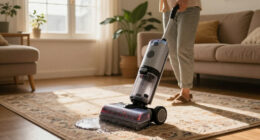
Products Worth Considering

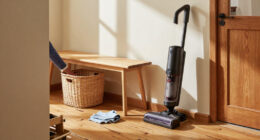
Dyson W1 PencilWash Cordless Wet and Dry Floor Cleaner with Dock

Shark HydroVac MessMaster Cordless Wet Dry Vacuum and Mop Combo, AW261

Dyson Ball Animal 3 Upright Vacuum
As an affiliate, we earn on qualifying purchases.
Clear rubbish, dishes, and laundry before you touch the surfaces
Start by taking out rubbish and dishes, collecting dirty laundry, and putting clean clothes where they belong. This tidy-first pass clears the bed and furniture so you can clean them directly. It also prevents a clean cloth from getting tangled in yesterday’s sweatshirt or brushing crumbs off a snack plate.
Walk around once with your basket and bag. Put packaging and tissues in the rubbish, carry cups and plates to the kitchen, and place worn clothes in the hamper. Return clean clothes to a drawer or closet instead of leaving them on the bed. If you find something that belongs elsewhere but cannot carry it safely with your other items, put it in a small “out of room” pile by the door and take it along when you finish.
Take a bedside table covered with a book, charging cable, water glass, and hair ties. Wiping around each object leaves dusty islands; moving them first gives you one clear surface to wipe. Keep cables and electronics dry, and follow the maker’s instructions for cleaning them.
This is where cleaning a bedroom becomes less like shuffling clutter and more like a clear sequence. Don’t make the bed yet: if you do, it can become a convenient landing spot for laundry and things you have not put away. Clear it first, and save the finished look for near the end.
Put things away before dusting for a smoother reset
Once the rubbish, dishes, and laundry are out of the way, return the remaining belongings to their usual homes and clear the flat surfaces. This gives you access to the dresser top, nightstand, windowsill, and other spots where dust settles. Clear surfaces first, and your cloth can make a single pass instead of tracing a maze around objects.
Imagine a nightstand with a lamp, hand cream, a paperback, and several loose coins. Put away the items you use, return the book to its shelf, and group small essentials in their usual spot. Then you can lift the lamp safely and wipe beneath it, rather than pushing dust into the gaps. If an item has no clear home, set it aside to decide where it belongs instead of starting a whole-room reorganization during a routine clean.
Follow the room’s own habits. A chair that holds tomorrow’s outfit may be useful, while a chair buried under a week of clothes may just hide the floor you need to vacuum. The point is not to make the room look staged; it is to clear the places you need to clean and keep everyday items easy to put back.
Putting things away before wiping reduces the number of times you handle each object, which matters because every extra move creates another chance to drop something or spread dust back over a clean surface. At the same time, a routine clean is not the best moment to solve every storage problem. If an item has no obvious home, setting it aside lets you finish the room; deciding its permanent place can take a separate pass when you have time.
Dust high surfaces first so falling particles land where you can catch them
Dust the bedroom from high surfaces to low surfaces, then finish with the floor. Start with accessible shelves, the tops of furniture, and suitable light fixtures, and work down to bedside tables and other lower surfaces. Dust can fall as you wipe, so this order lets your later passes catch what drops instead of making you repeat the floor.
For example, if a shelf above your dresser has a fuzzy line of dust, wiping the dresser first can leave it speckled again. Use a cloth or duster that traps dust rather than scattering it through the room. A lightly damp microfiber cloth may help on suitable surfaces, but check care instructions and avoid wetting electronics or finishes that do not tolerate moisture.
Do not climb on a chair or stretch across a wobbly bed to reach a fan or light. If the fixture is out of safe reach, leave it for a safe method or a qualified professional, particularly if electrical work or removal is involved. Keep cleaning to surfaces you can reach securely, and follow the fixture maker’s instructions.
Move steadily around the room rather than doubling back: shelves, furniture tops, lower surfaces. The path is easy to remember because it follows gravity. If you are prone to dust allergies, use the cleaning method recommended by your clinician and consider a damp cloth for appropriate surfaces; avoid deliberately shaking dusty bedding in the room.
Wipe mirrors and touch points with surface-safe products
After dusting, clean mirrors and the high-touch spots you use every day, such as handles and light switches, with products appropriate for those surfaces. This keeps the detailed wiping after the loose dust and before the floor. Use only compatible cleaners, and follow product labels and the surface manufacturer’s care guidance.
A mirror with fingerprints near the bottom may need a glass-safe cleaner and a clean cloth; a wooden dresser beside it may call for a different approach. Avoid spraying cleaner directly near switches or electronics. Apply it to a cloth when the label permits, and keep moisture out of openings. If you share the room, a quick pass over the door handle and drawer pulls can remove the grime that collects where hands land most.
One practical example: after a week of getting ready in a hurry, your mirror may show smudges while the light switch has a faint grey edge. Clean each with a suitable method, then let the surfaces dry as directed before returning objects. More product does not mean a better clean, and mixing household cleaners can create dangerous fumes; use one product at a time according to its label.
Not every bedroom needs a full disinfecting routine. Focus on visible soil and the spots your household touches often, while using disinfectants only as their labels direct. This keeps routine cleaning sensible and helps protect finishes from unnecessary product exposure.
Make the bed near the end, then leave the floor for last
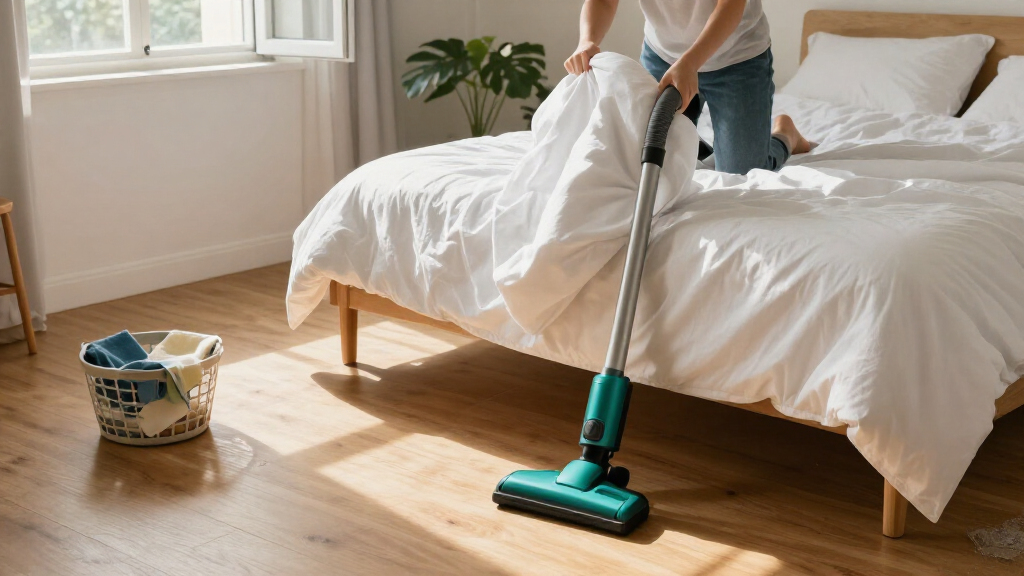
Make the bed after sorting laundry and dusting, then vacuum or sweep as the final cleaning task. That order gives the room a finished look while keeping dust and crumbs from settling onto a floor you already cleaned. Floor last is the easiest part of the routine to remember.
On sheet-changing day, strip the bed and put the linens straight into the laundry before you dust. Fit clean sheets and make the bed after the dusty work, or keep the clean set aside until you are ready to dress it. Many households change sheets weekly or every other week, adjusting for sweat, allergies, or pets that share the bed; choose a rhythm that fits your needs and follow the fabric care label.
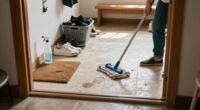
For a carpeted room, vacuum rugs and accessible areas under furniture. On hard flooring, sweep or vacuum first, then use a cleaner suited to the floor if needed. If a storage box under the bed gathers dust, move what you can safely move and clean beneath it; a suitable long attachment can reach under heavier furniture without forcing you to lift it. Never drag heavy furniture in a way that risks injury or damages the floor.
The floor-last step is useful because dust and crumbs have a predictable destination: down. Cleaning it after the bed and surfaces means one final pass can collect what fell during the work. The tradeoff is that making the bed can take a few extra minutes before vacuuming, but it keeps clean linens in place and gives you a clear route around the room. If you have only 15 minutes, keep the order and shorten the scope by skipping low-priority areas.
Adjust the routine for pets, allergies, and busy weeks
The right bedroom-cleaning schedule depends on how quickly your room collects dust, hair, and clutter. A quick tidy can happen daily or several times a week, while many people dust and vacuum weekly; pets, allergies, open windows, and household routines can call for more frequent attention. Use the same order, but adjust how often you repeat it.
If a dog naps on a bedroom rug, for example, you may see a stripe of fur by the bed before the rest of the carpet looks dirty. Vacuum that area more often if the carpet care instructions allow, and wash pet bedding according to its label. If dust triggers symptoms, a damp microfiber cloth and a vacuum with a sealed filter may suit your routine; follow medical advice for allergy symptoms and check the vacuum manufacturer’s guidance.
During a busy week, do a short reset: rubbish and dishes out, laundry into the hamper, belongings away, and a quick clean of the most-used surfaces and floor. On a fuller cleaning day, add high dusting, mirrors, sheet changes, and areas under accessible furniture. A cordless or robot vacuum can help with convenience, but it does not replace clearing cords, checking floor compatibility, or following the device maker’s instructions.
Think of the routine as a track you can shorten or extend. A small room with little furniture may need only a few minutes; a room with open shelves, pets, and rugs will take longer. Consistency matters more than a rigid schedule that does not fit your home.
Frequently Asked Questions
Should I make the bed first or last?
Make it near the end, after sorting laundry and dusting. That way, the bed is less likely to become a temporary landing spot for clothes or belongings, and clean linens stay clear of the dusting pass.
Should I dust or vacuum first?
Dust first, then vacuum or sweep. Dust can fall from shelves and furniture onto the floor, so leaving the floor until last helps you pick up the debris in one pass.
How often should I clean my bedroom?
A quick tidy can happen daily or several times a week, while many people dust and vacuum weekly. If you have pets, allergy concerns, or dust builds up quickly, adjust the frequency to suit your room and follow any relevant medical advice.
How often should I change the sheets?
Many households change sheets weekly or every other week. You may prefer more frequent changes if you sweat heavily, have allergies, or share the bed with pets; check the fabric care label when washing.
Can I use one cleaner on every bedroom surface?
No single cleaner suits every surface. Check the product label and care instructions, especially for wood, electronics, stone, glass, and delicate finishes, and never mix household cleaners.
How do I clean under the bed?
Move items you can safely handle, then vacuum or sweep beneath the bed. A suitable long attachment can reach under heavier furniture; avoid lifting or dragging anything that could injure you or damage the floor.
Conclusion
Keep one simple rule in mind: tidy first, clean high to low, and finish with the floor. That sequence gives you clear surfaces to wipe and keeps falling dust from undoing your vacuuming. Make the bed near the end, when it can stay clear and neat.
Next time the room looks lived-in, start with the laundry basket and rubbish bag. Follow the path from the shelves down to the rug, and let the clean floor be the last thing your feet touch.