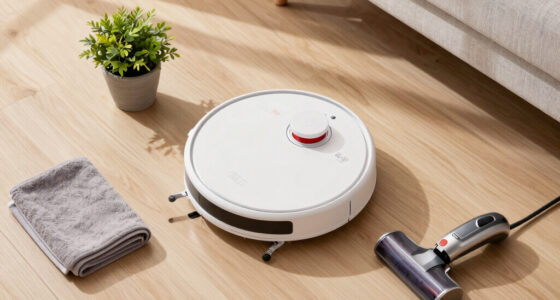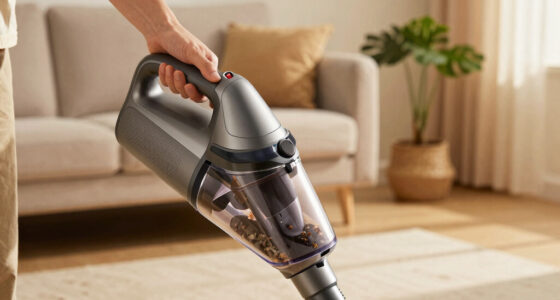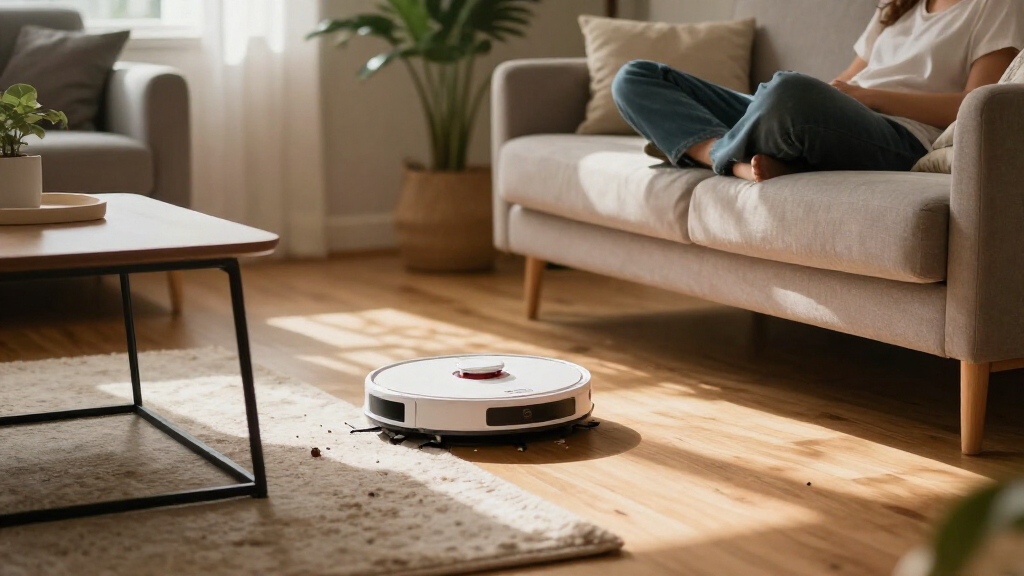

Choosing a robotic vacuum is less about whether a machine can move around your home and more about how much work you want it to take off your hands. A budget robot vacuum focuses on routine floor pickup at a lower upfront cost. A premium self-emptying model, often paired with a mop, can handle larger cleaning jobs with less frequent bin emptying and more automation. The price gap buys convenience and extra functions; it does not automatically mean every home will get cleaner floors.

Get cleaning gear delivered free with Prime
- Fast, free delivery on millions of items
- Prime Video, Amazon Music and more included
- Member-only deals all year

Roborock Qrevo S Pro Robot Vacuum and Mop, 18,500 Pa Suction
- ✔ Suction power: 18,500 Pa
- ✔ Battery life: Up to 180 minutes
- ✔ Dust bag capacity: 2.7 liters

Shark AV2501AE AI Robot Vacuum with XL HEPA Self-Empty Base
- ✔ Battery life: 120 minutes
- ✔ Navigation: 360° LiDAR with Matrix Clean Navigation
- ✔ Base capacity: Up to 60 days of debris, as described

ROPVACNIC Robot Vacuum and Mop Combo with 5200Pa Suction
- ✔ Suction power: 5200 Pa
- ✔ Battery life: 120 minutes
- ✔ Surfaces: Hardwood floors and low-pile carpets
For a smaller home with mostly open floors, occasional cleaning, or a tight budget, a basic vacuum may cover the real need. For a busy household, a home with pets, or someone who wants frequent runs without tending the machine after each one, the premium dock can make a meaningful difference. This comparison weighs navigation, everyday cleaning, maintenance, mopping, controls, and total value so you can judge whether the added cost suits your home.
At a Glance
| Criteria | Budget robot vacuum | Premium self-emptying robot vacuum with mopping | Winner |
|---|---|---|---|
| Upfront cost and value | Lower purchase cost; fewer costly extras to maintain | Higher purchase cost; value depends on whether added convenience gets regular use | A |
| Navigation and coverage | Often relies on basic mapping or reactive movement; performance varies by model | Usually offers more capable mapping, room selection, and keep-out zones | B |
| Routine vacuuming | Handles everyday dust and crumbs on accessible floors | Often provides stronger feature sets and better handling of varied cleaning routines | Depends |
| Maintenance and dock | Small onboard bin usually needs frequent emptying; limited or no dock | Dock can empty the dustbin and may manage mop pads or water, but adds upkeep | B |
| Mopping | Usually absent or a simple damp pad on some models | Often included; useful for light upkeep, but does not replace every manual mop | B |
| Controls and automation | Typically supports scheduled runs and app or button controls, with fewer advanced settings | Usually offers more detailed maps, routines, and room-by-room automation | B |
Roborock Qrevo S Pro Robot Vacuum and Mop, 18,500 Pa Suction
The Roborock Qrevo S Pro earns our top spot by combining the widest set of stated cleaning and upkeep features in this lineup. Its 18,500 Pa suction figure, LiDAR navigation, and SmartPlan 2.0 are paired with a mop system described as self-cleaning at 167°F, plus drying and an all-in-one dock that empties dust into a sealed 2.7-liter bag. For a household that wants one robot to vacuum and mop while reducing the frequency of hands-on maintenance, that combination is more complete than either the vacuum-focused Shark or the simpler ROPVACNIC combo.The tradeoff is that a feature-rich dock and mapping system may be unnecessary if we mainly need routine vacuuming or occasional light mopping. The listing specifies 2.4 GHz Wi-Fi only, so we should check that our network supports it. The stated 180-minute run time is the longest here, but actual coverage depends on the home and cleaning settings. Compared with Shark, Roborock adds mopping and dock functions; compared with ROPVACNIC, it offers more specified navigation and dust handling, while ROPVACNIC gives us a four-stage water adjustment and touchpad control. Its position at the top reflects feature breadth, not independently verified cleaning results.
Pros:
- Combines vacuuming and mopping with a mop system described as self-cleaning at 167°F.
- All-in-one dock empties debris into a sealed 2.7-liter bag and is described as drying mops.
- LiDAR navigation and SmartPlan 2.0 are intended to map rooms and avoid obstacles.
- Lists up to 180 minutes of battery life, more than the other two models here.
Cons:
- Wi-Fi compatibility is limited to 2.4 GHz, which may not suit every network setup.
- Its many dock and mop functions may be more than vacuum-only households need.
- The supplied description does not independently verify suction, noise, or cleaning performance.
Best for: Households seeking a vacuum-and-mop robot with mapped navigation and a dock designed to handle dust and mop upkeep.
Not ideal for: Buyers who want a simple vacuum-only robot, cannot use 2.4 GHz Wi-Fi, or would not benefit from an automated mop dock.
Bottom line: Choose the Qrevo S Pro when we want the broadest stated mix of vacuuming, mopping, mapping, and dock automation in this comparison.
“Choose the Qrevo S Pro when we want the broadest stated mix of vacuuming, mopping, mapping, and dock automation in this comparison.”
Shark AV2501AE AI Robot Vacuum with XL HEPA Self-Empty Base
For buyers focused on vacuuming rather than mopping, the Shark AV2501AE makes a clear case: it pairs 360-degree LiDAR mapping and Matrix Clean Navigation with a self-empty base described as holding up to 60 days of debris. Its HEPA filtration is specified to capture 99.97% of dust and allergens, making filtration and less frequent bin handling central to its appeal. Unlike the Roborock, it does not add mop cleaning or drying; that simpler scope may suit homes where floor care means vacuuming carpet and hard floors.There is a meaningful limitation in the supplied specs: Shark lists only one power level. That gives us less stated control over cleaning intensity than we might want for a mix of light daily pickup and heavily soiled areas. The ROPVACNIC also lists no suction-level adjustment, but at least provides multiple cleaning modes and a mop with adjustable water flow. Roborock is the more complete option if mopping is a priority; Shark is the more focused choice when a self-emptying vacuum and HEPA filter matter more. The 60-day figure describes base capacity, not a guaranteed interval between emptying for every home; pets, debris, and use can change upkeep needs.
Pros:
- LiDAR mapping and Matrix Clean Navigation are designed for planned whole-home coverage.
- Self-empty base is described as holding up to 60 days of debris.
- HEPA filtration is specified to capture 99.97% of dust and allergens.
- Works with Alexa and Google Home according to the supplied description.
Cons:
- The listing specifies only one power level, limiting stated control over cleaning intensity.
- It does not include a mop system, unlike the Roborock and ROPVACNIC.
- The 60-day capacity is not a guaranteed emptying schedule for every household.
Best for: Households that want mapped vacuuming, a self-empty base, and stated HEPA filtration without adding a mop system.
Not ideal for: Buyers who need mopping, adjustable suction levels, or a specified run time longer than 120 minutes.
Bottom line: Pick the Shark when we want mapped vacuuming and HEPA filtration with less frequent dust-bin handling, and do not need a mop.
“Pick the Shark when we want mapped vacuuming and HEPA filtration with less frequent dust-bin handling, and do not need a mop.”
ROPVACNIC Robot Vacuum and Mop Combo with 5200Pa Suction
The ROPVACNIC Robot S1 is the most straightforward way into this group if we want both vacuuming and mopping without the more involved dock package described for Roborock. Its listing includes 5200 Pa suction, a four-stage adjustable water tank, and controls through an app, remote, voice, or touchpad. That range of controls can be useful for a household where not everyone wants to manage cleaning through a phone. The product is specified for hardwood floors and low-pile carpets, so its stated fit is clearer—and narrower—than Roborock’s broader description of cleaning across floor types.ROPVACNIC also describes a pet-hair-friendly brush system and auto-docking, but it does not provide the detailed mapping, dust-bag capacity, or mop-dock functions listed for the other picks. Compared with Shark, it adds mopping and adjustable water flow but lacks Shark’s stated HEPA filter and long-capacity self-empty base. Compared with Roborock, it offers several control methods and a simpler setup on paper, while giving up the longer stated run time and more extensive dock automation. We should skip it if we need a documented mapping system or regularly clean higher-pile carpet; neither is established in the supplied specifications.
Pros:
- Combines vacuuming and mopping with four-stage water adjustment.
- Offers app, remote, voice, and touchpad controls.
- Lists a no-entanglement side-brush design intended for pet hair.
- Auto-docking and self-charging are included in the description.
Cons:
- Surface recommendations are limited to hardwood and low-pile carpets.
- The supplied description does not specify LiDAR mapping or a self-emptying dust base.
- Its listed 120-minute battery life is shorter than Roborock’s stated 180 minutes.
Best for: Buyers with hardwood or low-pile carpet who want a basic vacuum-and-mop robot and flexible ways to control it.
Not ideal for: Homes needing documented LiDAR mapping, a large self-empty base, HEPA filtration, or cleaning on floor types beyond its listed recommendation.
Bottom line: Choose the ROPVACNIC when we want an approachable vacuum-and-mop combo for the listed floor types and value flexible controls over advanced dock features.
“Choose the ROPVACNIC when we want an approachable vacuum-and-mop combo for the listed floor types and value flexible controls over advanced dock features.”
As an Amazon Associate we earn from qualifying purchases.
Key Differences
The clearest gap is what happens after a cleaning run. A budget robot typically returns to its charger with its small dustbin still full, leaving you to empty it before or after the next job. A self-emptying dock transfers much of that dust into a larger bag or container. That change matters most when the robot runs often, picks up pet hair, or cleans a large area. The dock does not make upkeep disappear: bags or containers need attention, and any mop system needs pad and water care. Still, it can reduce the number of routine interruptions.
Navigation and mopping also favor premium machines, though the practical benefit varies by home. Better mapping can help a robot clean selected rooms and avoid marked areas instead of wandering through the whole floor. That is helpful around cables, pet bowls, and rooms that do not need daily cleaning. A mop attachment is mainly a way to keep light grime from building up between manual cleans. If your floors are mostly carpet, or you rarely mop, those features may add complexity without solving a frequent problem.
So the better choice depends on how often you will use the extra automation. A budget model is a sensible way to automate basic pickup in a compact, uncomplicated space. A premium model makes more sense when frequent cleaning, pet hair, multiple rooms, or reduced hands-on work justifies the higher cost. Compare the specific models as well as their tiers: suction claims, obstacle handling, dock functions, replacement supplies, and app support differ across products.
Detailed Comparison
Upfront cost and value (Budget robot vacuum wins — major)
Budget wins on purchase price. Its lower cost suits people who need regular dust and crumb pickup but do not need a dock or mop. The gap is major when the premium machine costs several times as much. That higher price can still pay off in convenience if it replaces frequent manual bin emptying or runs often enough to keep floors in better shape. If those jobs are rare, the extra spend is harder to justify.
Premium usually wins on control and repeatable coverage. Mapping, room selection, and keep-out zones can make cleaning more predictable, particularly in homes with several rooms or objects that need to be avoided. The practical gap is moderate for open layouts but can be major in a busy or cluttered home. A basic robot may still do the job in a small clear space, though its route and coverage can be less precise.
Routine vacuuming (moderate difference)
The winner depends on the specific models and floor plan. Both tiers can pick up everyday debris from accessible hard floors. Premium models often include stronger cleaning features and more flexible room routines, but tier alone cannot establish how well a particular vacuum handles rugs, hair, or corners. The gap is minor for light cleaning on open floors; it matters more when the robot must clean frequently or handle varied surfaces. Check model-level reviews and specifications against your floors.
Premium wins on reducing routine attention. A self-emptying base can handle the dustbin after runs, so you do not have to empty a small container every time. The difference is major for pet owners or frequent schedules and less noticeable when the robot runs only occasionally. You still need to replace or empty the dock’s collection system and clean brushes and filters. Dock bags and other parts may also add ongoing cost.
Premium wins on available function, but not for every floor-care routine. A built-in mop can lift light marks and dust from hard floors between deeper cleans. This is useful for homes with plenty of tile or sealed hard flooring. It is not a substitute for scrubbing dried spills, cleaning grout, or dealing with a heavily soiled floor. If your home is mostly carpet, this feature has little value. The gap is major for hard-floor households that want frequent light maintenance and minor for everyone else.
Premium usually offers more detailed scheduling. Room-by-room routines, saved maps, and adjustable zones can help tailor cleaning to family patterns and different floor types. Budget models generally cover simpler schedules and basic start controls, which may be enough when one run across the home is all you need. The difference is moderate: advanced controls save time when used, but a long list of settings has little value if you prefer to press one button and leave.
Budget robot vacuum: Pros and Cons
Pros:
- Lower purchase cost makes basic automation accessible
- Simple feature set can be a good fit for compact, open homes
- Less dock equipment and fewer premium accessories to buy
Cons:
- Small onboard bin may need frequent emptying
- Mapping and room controls may be limited
- Usually lacks a useful mopping system
Pros:
- Self-emptying dock can reduce hands-on bin maintenance
- Mapping and room routines usually provide more control
- Mopping can help maintain hard floors between deeper cleans
Cons:
- Higher upfront cost and possible recurring supply costs
- Dock and mop parts need their own cleaning and upkeep
- Extra features may go unused in small homes or carpet-heavy spaces
Who Should Choose What
Choose Budget robot vacuum if:
- You want lower-cost daily pickup for dust, crumbs, or light debris
- Your home is small, open, and easy for a robot to cover
- You do not mind emptying the bin and already handle mopping yourself
Choose Premium self-emptying robot vacuum with mopping if:
- Pet hair or frequent cleaning fills a small robot bin quickly
- You want room maps, selected-room schedules, or keep-out zones
- Your home has substantial hard flooring and you will use light mopping
- Reducing routine interaction is worth paying more and tending a larger dock
Skip both if: You need deep carpet cleaning, dependable pickup in heavily cluttered rooms, or a machine that replaces manual floor care entirely. A conventional vacuum or dedicated mop may better match those jobs.
Value for Money
Paying more is worthwhile when the premium functions remove chores you would otherwise do repeatedly. A self-emptying dock can be a real quality-of-life upgrade for a robot that runs several times a week, especially in a pet household. Mapping can also save time when you want one room cleaned without sending the robot through the entire home. Mopping adds value when you have broad areas of hard flooring and treat it as light maintenance.
For a small apartment, occasional runs, or a carpet-heavy home, the budget model is usually the better value. The premium purchase price can be difficult to recover in convenience if you rarely use its dock, maps, or mop. Include ongoing costs in the comparison: bags, mop pads, filters, and replacement brushes can change the long-term bill. Look at the exact dock design and what it actually automates. Paying more makes sense when you can name the recurring task it will reduce; otherwise, a simpler vacuum leaves more money for other household needs.
Final Verdict
Choose a budget robot vacuum if you want affordable routine pickup, have a straightforward floor plan, and are comfortable emptying the bin yourself. For those conditions, the premium features are pleasant extras rather than necessities.
Choose a premium self-emptying model if the robot will run often, your household produces plenty of hair or debris, or room-level control and light mopping solve regular chores. The biggest deciding factor is how often you will benefit from less hands-on maintenance. If that benefit is frequent, the premium price can be justified; if it is occasional, buy the budget model and keep the difference.
Frequently Asked Questions
Is a premium robot vacuum worth the extra cost?
It can be, if you run the vacuum frequently and value a dock that empties the bin or controls that target specific rooms. If your home is small and you clean only now and then, a budget model is likely the better value.
Does a robot vacuum with a mop replace a regular mop?
No. A robot mop is generally best for light, frequent upkeep on hard floors. Dried spills, stubborn marks, and deeper floor cleaning may still need a manual mop.
Should pet owners buy a self-emptying model?
Often, yes, especially when hair fills a small bin quickly and the robot runs several times a week. Check brush design, hair handling, dock capacity, and replacement bag costs for the specific model.
Will a budget robot vacuum work in a larger home?
It may, but small bins, less capable mapping, or shorter cleaning runs can mean more interruptions and less predictable coverage. Compare the model’s mapping, battery behavior, and bin capacity with the size and layout of your home.