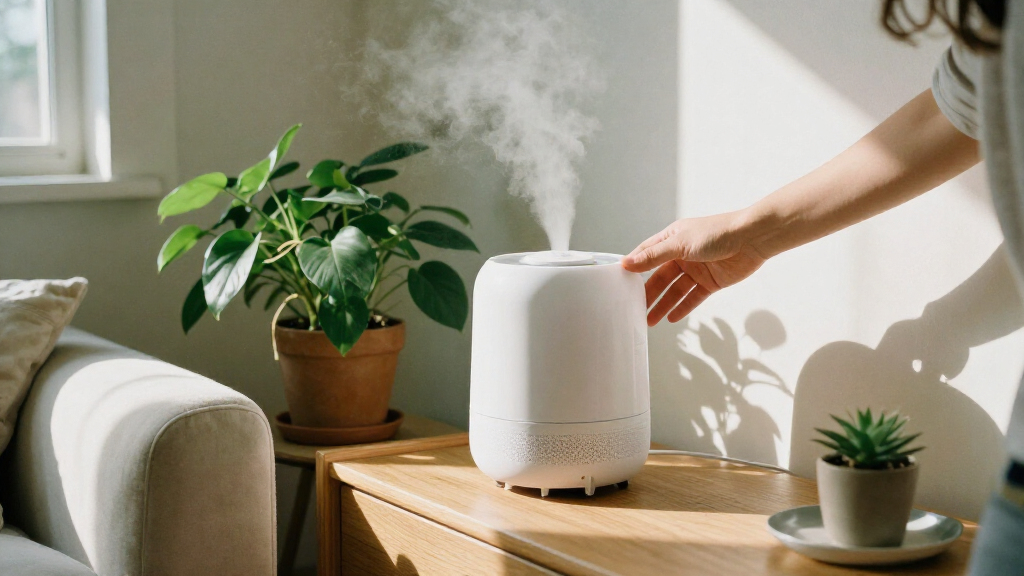

Choosing an ultrasonic humidifier is less about which one makes more moisture and more about how that moisture fits your room, household, and routine. Cool-mist models vibrate water into a fine mist without heating it. Warm-mist models add a heating stage before moisture leaves the unit. Both can raise indoor humidity, but the added heat changes energy use, cleaning demands, and safety considerations.

Get cleaning gear delivered free with Prime
- Fast, free delivery on millions of items
- Prime Video, Amazon Music and more included
- Member-only deals all year

Levoit Classic 160 Top-Fill Cool Mist Humidifier, 2.5 L
- ✔ Tank capacity: 2.5 L
- ✔ Runtime: Up to 25 hours on low
- ✔ Noise level: 25–28 dB

DREO 3L Cool Mist Humidifier
- ✔ Tank capacity: 3 L
- ✔ Runtime: Up to 30 hours in sleep mode
- ✔ Mist output: 250 ml/hr

Lacidoll 8L Top-Fill Humidifier
- ✔ Tank capacity: 2.1 gallons / 8 L
- ✔ Coverage: 500–800 sq ft stated
- ✔ Runtime: Conflicting listings: up to 48 hours and 24 hours
For most households, a cool-mist ultrasonic humidifier is the more practical default: it avoids hot surfaces and generally uses less electricity. Warm mist can feel more comfortable in a chilly room, and some users prefer its output during cold weather, but it does not reliably treat illness or purify water. The better choice depends on whether warm output matters enough to accept extra power use and burn risk.
At a Glance
| Criteria | Cool-mist ultrasonic humidifiers | Warm-mist ultrasonic humidifiers | Winner |
|---|---|---|---|
| How mist is produced | A vibrating diaphragm disperses cool, fine droplets into the air. | An ultrasonic mechanism is paired with a heater that warms water before output. | Depends |
| Room comfort | Adds moisture without warming the room; suits year-round use. | Warm output may feel more pleasant in a cold room, though it does not meaningfully heat a room. | Depends |
| Energy use | Usually lower because the water is not heated. | Higher because the unit must heat water. | A |
| Safety around children and pets | No boiling chamber, so hot-water burn risk is lower. | Hot water and heated components create a burn hazard. | A |
| Cleaning and mineral residue | Can leave mineral dust and support microbial growth if water and tank care are neglected. | Still needs regular cleaning; heating does not eliminate all microbes or mineral buildup. | Tie |
| Typical value | Usually the practical value choice for everyday, whole-household use. | Worth a premium only when warm output is a clear comfort preference. | A |
Levoit Classic 160 Top-Fill Cool Mist Humidifier, 2.5 L
The Levoit Classic 160 is our best overall choice because its core strengths are easy to judge: a 2.5-liter tank, stated coverage of 219 square feet, adjustable mist, and a rotating nozzle. Top filling and a wide opening make routine refills and cleaning more approachable than a narrow-neck reservoir. For bedrooms and similarly sized spaces, that balance is more useful than adding a remote or a larger tank without clear evidence the room needs it.Against the DREO 3L, the Levoit gives up some stated coverage and humidity-control features, but its simpler setup may suit buyers who want basic mist adjustment without a digital control scheme. It is also quieter on paper at 25–28 dB than the Lacidoll’s stated 35 dB, a meaningful distinction for light sleepers. The tradeoff is that its lowest-setting runtime is up to 25 hours, shorter than the DREO’s stated 30 hours in sleep mode and far below the Lacidoll’s most generous claim.Water and upkeep deserve attention: the provided guidance recommends distilled or purified water to reduce white dust, and filter cotton may need replacement around monthly depending on water hardness. The automatic shutoff is useful if the tank empties or is removed, though the supplied notes mention a slight delay. Choose it for manageable cleaning and uncomplicated bedroom use; skip it if you need broad coverage, integrated humidity targeting, or a reservoir sized to minimize refills over a large area.
Pros:
- Top-fill design and wide opening simplify filling and cleaning.
- Runs up to 25 hours on the lowest setting.
- Stated 25–28 dB noise level and lights-off sleep use suit bedrooms.
- Automatic shutoff responds to low water or tank removal.
Cons:
- Stated coverage is smaller than the DREO’s 300-square-foot claim.
- Distilled or purified water is recommended to reduce white dust.
- Filter cotton may need replacement about monthly, depending on water hardness.
Best for: Buyers who want a quiet, easy-to-clean ultrasonic humidifier for a bedroom or other room within the stated 219-square-foot range.
Not ideal for: Those seeking humidity sensing and adjustment, the broadest stated coverage, or a very large tank for fewer refills.
Bottom line: For a smaller room, the Levoit combines the clearest everyday essentials with approachable cleaning, though buyers needing broader coverage should consider the DREO.
“For a smaller room, the Levoit combines the clearest everyday essentials with approachable cleaning, though buyers needing broader coverage should consider the DREO.”
DREO 3L Cool Mist Humidifier
The DREO 3L is the strongest option for buyers who want more control than the Levoit offers without moving to the Lacidoll’s tall, high-capacity format. Its stated coverage reaches 300 square feet, and it adds adjustable humidity control, a humidistat, timer, and digital display. Those features help make it easier to target a preferred room setting instead of relying only on manual mist adjustment.Its claimed 26 dB sleep mode is close to the Levoit’s stated noise range, while the 3-liter tank and up-to-30-hour runtime in sleep mode offer a modest step up in capacity. That combination makes it a more feature-rich bedroom pick than the Levoit. The Lacidoll holds much more water, but its product information gives conflicting runtime and coverage figures; the DREO’s stated range is more specific, though still a manufacturer claim rather than a guarantee for every room.The DREO includes an aroma tray and a 360-degree nozzle, but buyers should focus on the humidifier’s actual moisture-control role rather than treating fragrance as a substitute for humidity management. Its demineralization cartridge may require maintenance or replacement, and the unit needs a corded outlet. Pick it if you want humidity controls and a longer stated sleep-mode runtime in a compact footprint. If your priority is the simplest maintenance, the Levoit’s wide opening and fewer listed controls may be a better fit.
Pros:
- Top-fill 3-liter tank with up to 30 hours of stated sleep-mode runtime.
- Adjustable humidity control, humidistat, timer, and digital display.
- Stated coverage up to 300 square feet.
- 26 dB sleep mode and rotating nozzle support bedroom placement.
Cons:
- Demineralization cartridge may need maintenance or replacement.
- Requires a corded electrical outlet.
- The 300-square-foot coverage is a stated maximum, not a room-condition guarantee.
Best for: People who want adjustable humidity and timer controls in a compact humidifier for a room up to the stated 300-square-foot coverage.
Not ideal for: Buyers who prefer the simplest possible maintenance or who need a tank substantially larger than 3 liters.
Bottom line: The DREO is the most versatile compact pick here, trading the Levoit’s simpler upkeep for more precise controls and broader stated coverage.
“The DREO is the most versatile compact pick here, trading the Levoit’s simpler upkeep for more precise controls and broader stated coverage.”
Lacidoll 8L Top-Fill Humidifier
The Lacidoll 8L is the capacity specialist in this lineup. Its 2.1-gallon reservoir is much larger than the Levoit’s 2.5 liters or the DREO’s 3 liters, so it is the natural choice for people who want fewer refill interruptions. Remote and touch controls, a timer, three mist speeds, sleep mode, and adjustable humidity settings also give it more ways to manage operation than the simpler Levoit.That scale comes with an important caveat: the supplied information claims coverage of 500–800 square feet, while runtime is listed both as up to 48 hours and as 24 hours. We therefore rank it behind the more clearly specified DREO for buyers who need dependable planning around a particular room size or run schedule. Its stated 35 dB noise level is also higher than both competing models, making it less compelling for a noise-sensitive bedroom even though a sleep mode is included.The filter-free design avoids scheduled filter replacement, and low-water shutoff adds a useful safeguard. Still, filter-free does not mean maintenance-free: the reservoir and wetted parts will need routine cleaning, as with the other humidifiers here. The unit is tall at 27 inches and requires a corded outlet, so placement and clearance matter. Choose it when tank size and remote control are your leading priorities; skip it if you need a compact unit, quieter stated operation, or consistent capacity and coverage information.
Pros:
- Large 8-liter tank can reduce refill frequency.
- Remote and touch controls, timer, sleep mode, and three mist speeds.
- Adjustable humidity range is listed as 45%–95%.
- Filter-free design with automatic low-water shutoff.
Cons:
- Coverage and runtime claims vary within the supplied product information.
- Stated 35 dB noise level is higher than the Levoit and DREO figures.
- Tall form and corded power constrain placement.
Best for: Buyers prioritizing a large reservoir, remote access, and multiple control options for a larger indoor space.
Not ideal for: Those sensitive to operating noise, short on vertical space, or relying on precise coverage and runtime figures.
Bottom line: Choose the Lacidoll for reservoir capacity and remote convenience, while treating its conflicting coverage and runtime claims cautiously.
“Choose the Lacidoll for reservoir capacity and remote convenience, while treating its conflicting coverage and runtime claims cautiously.”
As an Amazon Associate we earn from qualifying purchases.
Key Differences
The biggest practical divide is heat. Cool mist keeps operation simpler, uses less electricity, and avoids a hot-water chamber. That makes it easier to recommend for homes with children, curious pets, or users who want a humidifier running for long periods. Warm mist gives a different feel in winter, but the warmth is local to the plume rather than a substitute for room heating.
Neither type removes the need for upkeep. Ultrasonic units can disperse minerals from hard water as visible white dust, and standing water in a neglected tank can harbor microbes. Warm-mist heating may reduce some organisms in the water, but the tank, surfaces, and emitted moisture are not guaranteed sterile. Regular cleaning, fresh water, and following the manufacturer’s instructions matter more than choosing warm over cool.
In value terms, cool mist is the stronger everyday purchase for most users. Pay extra for warm mist when you specifically prefer its sensation in a cool bedroom or living space and can place it safely. For allergy, asthma, or infection concerns, choose based on safe humidity control and maintenance rather than assuming either mist type is a treatment.
Detailed Comparison
How mist is produced (moderate difference)
Cool-mist ultrasonic units use a vibrating diaphragm to break water into tiny droplets. Warm-mist models add a heater that warms or boils water before the moisture is released. The distinction is meaningful because heating adds power demand and hot components, while both designs still need clean water and tank care. Neither method should be treated as a water purifier.
Room comfort (moderate difference)
Warm mist wins for users who find a warm plume more pleasant in cold weather. Cool mist is more versatile across seasons and avoids adding warmth when the room is already comfortable. The gap is moderate and personal: neither type meaningfully heats a room, and both can raise humidity when sized and operated appropriately. A hygrometer can help prevent excessive humidity, which may encourage condensation or mold.
Energy use (Cool-mist ultrasonic humidifiers wins — moderate)
Cool mist wins because it does not spend electricity heating water. Warm-mist energy use varies by model and operating time, but its heater adds consumption. The difference is moderate for occasional use and can become more noticeable during long nightly operation. If the humidifier will run for many hours, the lower-power design is generally better value.
Safety around children and pets (Cool-mist ultrasonic humidifiers wins — major)
Cool mist wins by a clear margin because it does not contain a heating chamber of hot water or produce hot vapor. Warm-mist units can burn if tipped, touched, or placed where someone can reach the output. For a nursery or shared family room, the cooler design is the safer default. Either unit still needs a stable location and a cord kept out of reach.
Cleaning and mineral residue (moderate difference)
This is a tie in overall maintenance burden. Both types require regular tank cleaning and water replacement. Cool-mist ultrasonic models can send dissolved minerals into the air as white dust, especially with hard tap water; distilled or demineralized water may reduce it. Heating does not remove mineral scale, and warm-mist models also need care around deposits. Follow the manual’s cleaning schedule and avoid assuming heat makes maintenance optional.
Typical value (Cool-mist ultrasonic humidifiers wins — moderate)
Cool mist is the better value for most buyers because it generally combines lower energy use with a simpler safety profile and broad seasonal usefulness. Warm mist earns its added cost and operating expense only for someone who specifically prefers warm output and can manage the burn risk. The value gap is moderate: purchase prices vary widely, so compare total operating cost and features rather than assuming every warm-mist model costs more upfront.
Cool-mist ultrasonic humidifiers: Pros and Cons
Pros:
- Lower energy use than a heated model in typical operation.
- No hot-water chamber, making it a safer choice around children and pets.
- Works year-round without adding warmth to the output.
Cons:
- Minerals in hard water can become airborne white dust.
- Requires consistent cleaning and fresh water to limit microbial growth.
- The cool plume may feel less comfortable to some users in winter.
Warm-mist ultrasonic humidifiers: Pros and Cons
Pros:
- Warm output may feel more comfortable in a chilly room.
- Heating can reduce some organisms in the water, though it does not sterilize the whole unit or air.
- Can suit users who strongly prefer warm mist during seasonal use.
Cons:
- Higher electricity use because water is heated.
- Hot water and surfaces create a burn risk, especially around children and pets.
- Still requires regular cleaning and can accumulate mineral scale.
Who Should Choose What
Choose Cool-mist ultrasonic humidifiers if:
- You want a humidifier for a nursery, family room, or home with pets.
- You expect long or year-round operation and want to keep electricity use lower.
- You prefer a straightforward option and can use suitable water and clean the tank regularly.
Choose Warm-mist ultrasonic humidifiers if:
- You prefer warm output in a cool bedroom or living space.
- You can place the unit on a stable surface out of reach and accept its added energy use.
- You plan to use it seasonally and the warmer plume matters more to you than lower running cost.
Skip both if: Skip both if you will not keep up with tank cleaning, need a device to treat a medical condition, or need room heating; a humidifier does not replace medical care or a heater.
Value for Money
For most households, cool mist delivers more useful value: it avoids heater-related energy use and burn hazards while still adding humidity. A higher-priced warm-mist model is worth paying for only when its warmer output is a specific comfort preference. Check the product’s capacity, controls, noise rating, and cleaning access, since these affect daily use more than mist temperature alone. If hard water is an issue, account for the cost and convenience of distilled water or a model with effective demineralization features.
Final Verdict
Choose a cool-mist ultrasonic humidifier for the best all-around fit. It is the clearer recommendation for homes with children or pets, extended use, and buyers who want lower energy consumption. Choose warm mist if you specifically enjoy warm output in cold weather, can keep the hot components safely out of reach, and accept the additional running cost. The deciding factor is whether warm output improves your comfort enough to justify heat, energy use, and burn risk; for most users, it does not.
Frequently Asked Questions
Is warm mist better for a cold or cough?
Warm mist may feel soothing to some people, but it does not cure a cold or reliably shorten symptoms. Use a humidifier only as directed, keep it clean, and seek medical advice for persistent or serious symptoms.
Does a warm-mist ultrasonic humidifier kill germs?
Heating may reduce some organisms in the water, but it does not make the entire humidifier sterile or guarantee that emitted moisture is germ-free. The tank and other surfaces still need regular cleaning.
Can either type leave white dust?
Yes. Ultrasonic units can disperse minerals from hard water, which may settle as white dust. Distilled or demineralized water can reduce this, and the manual may specify compatible water or cartridge use.
Which type is safer for a nursery?
Cool mist is generally the safer choice because it has no hot-water chamber or hot vapor that could cause a burn. Keep any humidifier stable, clean, and positioned away from the crib and electrical hazards.
Fall Picks

Philips Hue Essential Starter Kit with Bridge and 4 E26 Smart Bulbs
As an affiliate, we earn on qualifying purchases.