TL;DR

Get cleaning gear delivered free with Prime
- Fast, free delivery on millions of items
- Prime Video, Amazon Music and more included
- Member-only deals all year
To get rid of cooking smells fast, remove the food source, ventilate air outdoors, and clean greasy residue. Masking odors with candles or vinegar rarely works; physical removal and airflow are the only reliable solutions.
You just fried bacon or simmered curry, and now your entire apartment smells like a diner kitchen. You light a candle. You spray air freshener. You boil vinegar. Nothing works. The smell clings to your curtains, your hair, and the back of your throat.
Here is the hard truth: cooking odors usually linger because tiny particles and volatile compounds from food settle on nearby surfaces or remain in the air. Grease-heavy, smoky, and strongly aromatic foods—such as fried fish, bacon, curry, and garlic—can be especially persistent. You cannot simply cover them up. You have to remove them.
This guide breaks down the exact sequence to get rid of cooking smells fast. We will skip the folk remedies that don’t work and focus on physics and chemistry. You will learn how to stop the source, move air outdoors, and clean the residue that keeps releasing smells long after you turn off the stove.
Remove the source (burnt food, trash) and ventilate air outdoors immediately; masking with scents does not remove odor particles.
Clean greasy surfaces on the stovetop, backsplash, and hood filters, as residue continues to release volatile compounds.
Wash or vacuum fabrics like towels, curtains, and upholstery, as they absorb and hold cooking odors longer than hard surfaces.
Use baking soda or charcoal only for residual odors after cleaning; they are slow absorbers, not instant air cleaners.
Avoid ozone generators and rely on ventilation and mechanical filtration (HEPA + carbon) for safe, effective odor removal.
Stop the Source Before You Do Anything Else
The fastest way to get rid of cooking smells fast is to stop creating them. If something is still burning or smoking, no amount of air freshening will help. Turn off the heat immediately. Remove the burnt food or the pan from the burner. If the smoke is heavy, move the pan outside if safe to do so. This step is critical because as long as the heat source is active, the chemical reaction producing volatile organic compounds (VOCs) continues, meaning you are fighting a losing battle against a continuously refilling air supply.
Next, deal with the trash. A half-eaten piece of burnt toast or a greasy paper towel in your kitchen bin acts as a continuous odor emitter. Take the trash out. If you are composting, seal the compost bin tightly. These small steps cut off the supply of VOCs that are currently filling your room. Leaving these items in place creates a “rebound effect” where odors return as soon as ventilation slows down, because the source is still off-gassing into the environment.
Do not ignore the stove itself. If grease is spattering or bubbling over, wipe it up once it cools slightly. Residue on the burner continues to heat up and release smells every time you use the stove later. By removing the active source, you stop the problem from growing while you prepare to clean. This is a tradeoff of time versus efficacy: spending two minutes wiping now saves hours of ventilation later, as residual grease is far harder to neutralize once it has polymerized on the metal surface.
Products Worth Considering

Levoit Core 300S-P Smart Wi-Fi Air Purifier

Blueair Blue Pure 211i Max Smart Air Purifier

Levoit Vital 100S-P Air Purifier for Home and Pets
As an affiliate, we earn on qualifying purchases.
Ventilate Outdoors, Not Just Around the Room
Most people make the mistake of just turning on a ceiling fan. That circulates the smelly air, spreading it to your living room and bedroom. To truly clear the air, you need to exhaust the air outdoors. If you have a range hood that vents outside, turn it on high. Keep it running for at least 15 to 20 minutes after you finish cooking. This duration is necessary because odors are not just in the immediate plume; they diffuse into the surrounding air and require sustained airflow to be fully purged from the volume of the room.
If you don’t have a vented hood, you must create a cross-breeze. Open a window on one side of the kitchen and a door or window on the opposite side of the house. Place a box fan in one of the openings, facing outward. This pushes the stale, odor-laden air out of your home rather than just mixing it with fresh air. The implication here is directional: you want negative pressure in the kitchen to pull contaminants out, rather than positive pressure that might force odors into other living spaces.
A recirculating range hood, which most apartments have, does not remove air. It only filters grease and passes the air back into the room. It traps some particles but leaves the gas-phase odors behind. For those units, you must rely on open windows and outward-facing fans to physically replace the indoor air with outdoor air. This highlights a key limitation of many rental kitchens: without exterior venting, mechanical filtration alone is insufficient for strong odors, making window management the primary tool for air quality control.
Clean Greasy Surfaces to Stop Re-Release
Odors do not just float; they stick. Grease from frying settles on your stovetop, backsplash, and nearby cabinet fronts. As this grease cools and then reheats, or simply sits in a warm kitchen, it continues to release volatile compounds. You must clean greasy surfaces to stop this cycle. This is why a kitchen can smell clean one hour and pungent the next; the residue is a slow-release mechanism for odor molecules.
Wipe down the stovetop and counters with a degreasing cleaner or hot soapy water. Pay attention to the backsplash tiles and the upper cabinets, which often collect invisible layers of oil. If you cooked fish or curry, the smell might be trapped in the grout or porous surfaces. Scrub those areas gently. The tradeoff here is effort versus longevity: skipping the backsplash might save time now, but it guarantees that the next time you cook, the heat will re-vaporize those old oils, compounding the smell over time.
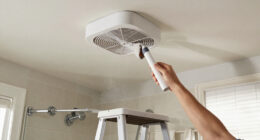
Check your range hood’s grease filter. If it is clogged with old grease, it becomes a source of stale odor itself. Remove the filter and soak it in hot water with dish soap. A clean filter improves airflow and prevents old smells from circulating every time you cook. This maintenance step is often overlooked, yet it is crucial because a saturated filter loses its efficiency in trapping new particles, allowing odors to bypass the filter and recirculate into your living space.
Treat Fabrics That Absorb and Hold Odors
Soft materials are odor sponges. Dish towels, aprons, curtains, and even your couch cushions absorb cooking fumes quickly. If the smell persists after you have cleaned the kitchen, check your textiles. Launder any washable items that were in the kitchen during the cooking process. Fabrics have a high surface area and porous structure, which traps volatile compounds deep within the fibers, making them much harder to deodorize than hard surfaces.
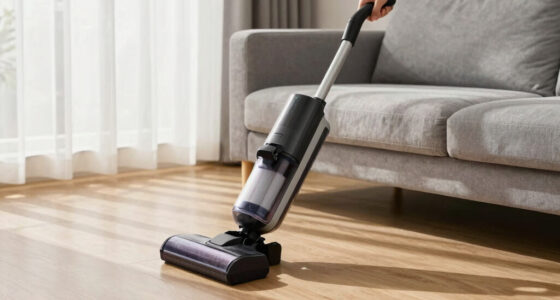
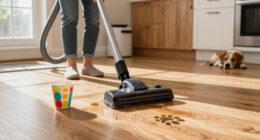
For non-washable items like heavy drapes or upholstery, use a vacuum with a HEPA filter. Vacuuming removes the microscopic particles that have settled into the fabric fibers. For stubborn smells on carpets or rugs, consider using a baking soda sprinkle. Let it sit for 15 minutes to absorb moisture and odors, then vacuum it up thoroughly. This method works because baking soda is alkaline and can neutralize acidic odor molecules, but it is a temporary fix for surface-level smells rather than a deep clean.
Do not forget your clothes. If you wore a cotton shirt while frying bacon, that shirt holds the smell. Wash it separately. If you cannot wash it immediately, hang it outside in fresh air or near an open window. Moving air helps dissipate the volatile compounds trapped in the fabric fibers. This underscores the importance of immediate action: the longer the fabric sits in a stagnant, odorous room, the more the compounds bind to the material, eventually requiring professional cleaning or replacement.
Use Absorbers Correctly (And Avoid the Myths)
Once you have removed the source, ventilated, and cleaned, you might still notice a faint residual odor. This is where odor absorbers can help, but they have limits. A bowl of baking soda or activated charcoal placed near the kitchen can absorb some lingering gases. However, these are not instant fixes. They work slowly over hours or days. The implication is that absorbers are passive tools; they rely on the natural diffusion of molecules toward the absorber, which is a slow process compared to the active removal of ventilation.
Be wary of folk remedies like boiling vinegar or citrus peels. While these methods are popular, they mostly mask odors by replacing one smell with another. They also add moisture to the air, which can sometimes make odors more noticeable or promote mold growth in humid climates. They do not remove the grease particles or volatile compounds causing the smell. This is a critical distinction: masking creates a sensory illusion of cleanliness but leaves the actual pollutants in the air, which can be problematic for those with respiratory sensitivities.
Air fresheners and scented candles are also poor choices for getting rid of cooking smells fast. They add fragrance but leave the underlying cause untouched. If you must use them, do so only after you have cleaned and ventilated. Otherwise, you are just creating a confusing mix of burnt garlic and artificial pine. The tradeoff here is psychological comfort versus actual air quality; while a pleasant scent may make the room feel better, it does not reduce the concentration of harmful VOCs, potentially giving you a false sense of security about the air you are breathing.
When to Use an Air Purifier (And When Not To)
Air purifiers are often marketed as the ultimate solution, but they are supplements, not replacements for ventilation. A standard HEPA filter captures particles like smoke and dust, which helps with visible smog. However, HEPA filters do not remove gas-phase odors. For that, you need a purifier with a significant amount of activated carbon or other sorbent media. This distinction is vital because many consumers buy HEPA-only units expecting to eliminate smells, only to find the odor persists despite the filter working correctly on particles.
Even with a carbon filter, a portable purifier works slowly. It cannot match the speed of a vented range hood or an open window. Use a purifier if you have allergies or if you cannot open windows due to weather or pollution. Place it near the kitchen, but do not expect it to clear a strong curry smell in minutes. The limitation here is capacity and airflow rate; a small unit in a large room may only process a fraction of the air volume per hour, making it ineffective against high-concentration odor events.
Avoid ozone-generating air purifiers in occupied spaces. Ozone can irritate your lungs and is not a safe or effective way to clear cooking odors in a home. Stick to mechanical filtration and ventilation. If you have persistent indoor-air concerns, consult a professional about proper ventilation systems rather than relying on gadgets. This warning highlights a significant health tradeoff: some devices offer quick odor neutralization at the cost of air quality safety, making them unsuitable for residential use where occupants are present.
Frequently Asked Questions
What is the fastest way to get rid of a cooking smell?
Remove the food source, ventilate directly outdoors by opening windows and using fans, and wipe down greasy surfaces. These steps physically remove the odor particles and gases, which works better than adding fragrance.Does boiling vinegar or lemon remove cooking odors?
It may change the room’s scent by masking the odor, but it is not a dependable substitute for removing the odor source and ventilating. It adds moisture to the air and does not remove grease particles.Why does my kitchen still smell the next day?
Odor often remains in grease on the hood filter, cabinets, walls, or stovetop, or in textiles and trash. Check and clean these sources, and ensure your hood is venting outdoors if possible.Will an air purifier remove cooking smells?
It depends on the device. Particle filtration helps with smoke, but odor removal generally requires suitable gas-adsorbing media like activated carbon. A purifier should supplement, not replace, a vented hood and cleaning.Can I use a fan to clear the smell?
Yes, but only if it helps push air outdoors. A fan that only circulates air may spread the odor to other rooms rather than removing it from your home.Conclusion
Getting rid of cooking smells is not about finding a magic spray. It is about physics. You must remove the source, push the bad air out, and clean the sticky residue that holds the smell. If you follow this sequence, your kitchen will smell like fresh air, not last night’s dinner.
Next time you fry fish, start the hood before you heat the pan. Open a window. Clean up as you go. Your nose—and your guests—will thank you.