TL;DR

Get cleaning gear delivered free — and shop member deals
- Fast, free delivery on millions of items
- Access to Prime Big Deal Days deals on October 6–7
- Prime Video, Amazon Music and more included
To keep your bath mats clean and smelling fresh, wash them weekly using gentle or machine methods, add natural disinfectants like vinegar or baking soda, and dry thoroughly. Regular maintenance prevents mold, bacteria, and odors from building up.
Ever step onto a bath mat that feels damp, smells musty, or looks dingy? That’s more than just an annoyance — it’s a breeding ground for bacteria and mold. Your bath mat may seem like a small detail, but it plays a big role in bathroom hygiene and freshness.
In this guide, you’ll learn exactly how to clean and freshen your bath mats, whether they’re cotton, rubber, or plush. We’ll cover simple steps, natural cleaning tricks, and smart tips to keep them smelling clean and looking new.
Wash your bath mats weekly — don’t wait for odors or mold to appear.
Always dry mats thoroughly after each use to prevent mold growth.
Use natural disinfectants like vinegar and baking soda for safe, effective cleaning.
Check your material before washing; cotton and microfiber usually tolerate hot water, while shag or plush need gentle handling.
Eco-friendly options like antimicrobial mats and natural cleaners are worth considering for ongoing freshness.
What material is your bath mat made of? Choose the right cleaning method.
Bath mats come in all textures — cotton, microfiber, rubber, shaggy plush. Knowing your material helps you avoid damage and pick the best cleaning method.
For example, cotton and microfiber mats are usually machine washable on gentle cycles. Rubber or vinyl mats often need spot cleaning or hand washing. Shag or plush mats require extra care to maintain their fluffiness.
Always check the care label. A cotton mat can handle hot water and detergent, but a shaggy mat might need a delicate wash or spot cleaning to keep its pile intact.
As an affiliate, we earn on qualifying purchases.
How often should I wash my bath mat? Keep mold and odors away with weekly cleanings.
Washing your bath mat at least once a week is the best way to prevent mold, bacteria, and stubborn odors. If your bathroom is humid or you use the mat multiple times daily, consider washing more often.
Imagine stepping onto a fresh, clean mat every morning. Regular washing keeps that feeling alive, especially since dampness creates a perfect environment for mold spores and bacteria to thrive.
Set a reminder or incorporate it into your weekly bathroom routine — it’s a small step that makes a big difference in bathroom hygiene.
natural disinfectant for bath mats
As an affiliate, we earn on qualifying purchases.
As an affiliate, we earn on qualifying purchases.
How to clean your bath mat in 3 simple steps
- Check the label. Confirm if it’s machine washable or needs hand cleaning.
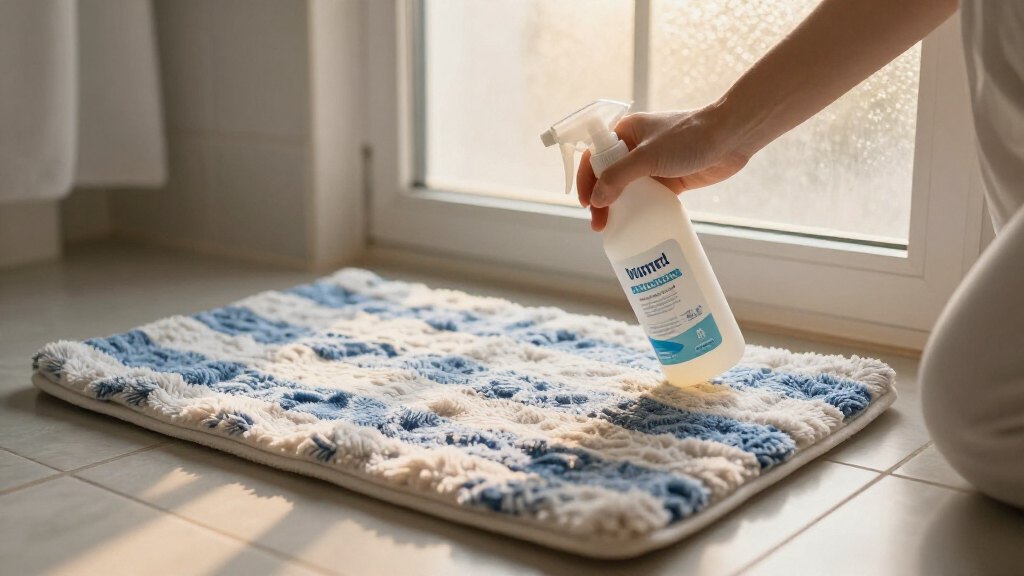
- Pre-treat stains or odors. Sprinkle baking soda, spray with vinegar, or use a mild detergent. Let sit for 10-15 minutes.
- Wash thoroughly. Use hot water (if safe for your mat), add a splash of white vinegar or a natural detergent, and run a complete cycle. For hand washing, scrub gently with warm water and a mild soap, then rinse.
After washing, it’s crucial to dry completely to prevent mold. Air dry in a well-ventilated area or tumble dry on low heat. Never leave it damp — that’s an invitation for mold to return.
As an affiliate, we earn on qualifying purchases.
How to freshen your bath mat naturally and keep it smelling fresh
Natural freshening methods are gentle but effective. First, sprinkle a layer of baking soda on your dry bath mat before washing to absorb odors and moisture. During laundry, add a few drops of essential oils like tea tree, lavender, or eucalyptus for a refreshing scent.
Why do these work? Baking soda neutralizes odor-causing acids and absorbs excess moisture, which inhibits bacterial growth. Essential oils contain natural antimicrobial properties and give a pleasant scent, making your bathroom smell inviting after every wash. Regularly using these natural remedies maintains freshness without synthetic fragrances. Keeping a small container of baking soda in your bathroom and refreshing it monthly ensures ongoing odor control. Replacing mats periodically also helps maintain a clean, inviting space. Remember: fresh doesn’t happen by accident — it’s a habit.
As an affiliate, we earn on qualifying purchases.
What are the latest eco-friendly cleaning trends for bath mats?
More brands now offer mats with antimicrobial treatments or built-in odor control. Plus, natural cleaners like vinegar, baking soda, and plant-based detergents are gaining popularity for their safety and environmental benefits.
Some mats now feature activated charcoal layers that trap odors, while others are made from quick-drying, antimicrobial fabrics. These innovations help keep your bathroom fresh longer without relying on harsh chemicals. Choosing eco-friendly options means you protect your family and the planet while maintaining a hygienic bathroom environment. However, it’s important to weigh the benefits against potential tradeoffs: some antimicrobial treatments may have limited lifespan, and natural fabrics might require more frequent washing to stay effective. Overall, these trends reflect a growing awareness of sustainability and health in bathroom care.
Comparison table: Machine wash vs. hand wash your bath mat
| Feature | Machine Wash | Hand Wash |
|---|---|---|
| Ease | Very easy, just toss in and go | Requires more effort, scrubbing needed |
| Effectiveness | Great for cotton and microfiber mats | Good for delicate, shaggy, or plush mats |
| Drying | Quick, in dryer or air dry | Air drying required, longer process |
| Best for | Frequent cleaning, large family bathrooms | Gentle cleaning, preserving delicate fibers |
How to prevent your bath mat from getting mold and lingering odors
The key is thorough drying. After each use, hang your bath mat in a well-ventilated area so it dries completely. If it stays damp, mold spores will settle in quickly.
For extra protection, wash your mat weekly and sprinkle baking soda between washes. Keep your bathroom ventilated, especially during humid weather, to reduce moisture buildup.
Imagine stepping onto a fluffy, clean mat every morning, free of musty smells. Small habits like proper drying and regular cleaning keep your bathroom fresh and healthy.
Frequently Asked Questions
How often should I wash my bath mat?
Ideally once a week. If you notice odors or see mold, wash it more frequently. In humid environments, sticking to weekly cleaning helps prevent bacteria buildup.
Can I put my bath mat in the washing machine?
Most cotton and microfiber mats are safe for machine washing, but always check the label. Use warm or hot water for best germ-killing results, and dry thoroughly afterward.
How do I remove mold or mildew from my bath mat?
Pre-soak in a vinegar solution or a mild bleach mixture if the material allows. Then wash thoroughly. Always rinse well and dry completely to prevent future mold growth.
What’s the best way to keep my bath mat smelling fresh?
Regular washing combined with baking soda sprinkled before washing and adding essential oils during laundry keeps it smelling clean and inviting.
Are eco-friendly cleaning options effective?
Yes. Vinegar, baking soda, and natural detergents do a great job of cleaning and deodorizing without harsh chemicals, making them safer for your family and the environment.
Conclusion
A clean bath mat isn’t just about looks — it’s about hygiene, comfort, and peace of mind. Regular washing, proper drying, and natural freshening keep that soft, inviting feel every time you step out of the shower.
Think of your bath mat as a small but mighty ally in your bathroom. A little routine maintenance turns it into a fresh, odor-free zone—without chemicals or fuss. That’s a habit worth keeping.
Fall Picks
fall essentials
As an affiliate, we earn on qualifying purchases.