TL;DR

Get cleaning gear delivered free with Prime
- Fast, free delivery on millions of items
- Prime Video, Amazon Music and more included
- Member-only deals all year
Mix 2 cups (about 475 ml) of water with 1 teaspoon of mild dish soap to make a simple cleaner for routine dirt and grease on many suitable hard, nonporous surfaces. It does not disinfect, and you should check surface instructions, test a hidden spot, and store the labeled bottle securely.
A cleaner can smell like a lemon grove and still be the wrong choice for your countertop. For everyday dust, fingerprints, and cooking splashes, two familiar ingredients are often enough: water and a little mild dish soap.
This guide shows you how to make a non-toxic all-purpose cleaner, where the simple recipe can help, and where it has limits. You’ll also learn how to protect delicate finishes, handle food-contact surfaces, and tell routine cleaning apart from disinfection.
Here, “non-toxic” describes a modest, practical intent, not a promise that a mixture is harmless in every amount or safe for every person or pet. The useful approach is to name the ingredients, use them as directed, and keep the bottle away from curious hands and paws [1].
Mix 2 cups (about 475 ml) of water with 1 teaspoon of mild dish soap for routine cleaning on many suitable hard, nonporous surfaces.
Treat the mixture as a cleaner, not a disinfectant; use an appropriately registered and labeled product when disinfection is needed.
Test a hidden spot, follow surface and appliance instructions, and apply cleaner to a cloth near electronics or food.
Leave essential oils out if fragrance is a concern, and avoid vinegar on natural stone and other acid-sensitive materials.
Label a clean bottle, store it securely away from children and pets, and discard the mixture if its appearance or smell changes.
A simple cleaner for everyday messes with clear limits
Water and mild dish soap can lift routine dirt and grease on many suitable surfaces. This mixture does not disinfect.
Make the cleaner
Use a clean container and label what is inside.
Combine 2 cups of water with 1 teaspoon of mild dish soap.
Close the bottle and swirl to avoid excess foam.
Mark it “routine cleaner—not a disinfectant” and keep it away from children and pets.
Know what it can do
Cleaning and disinfection serve different purposes.
- Lifts everyday dirt and grease.
- Use on suitable hard, nonporous surfaces.
- This homemade mixture is not a disinfectant.
- Use a product labeled to kill specified germs when disinfection is needed.
Check surfaces first
Care instructions matter more than a recipe’s popularity.
Try a hidden spot
Check for dulling, discoloration, or residue before cleaning a larger area.
Protect nearby items
Apply cleaner to a cloth near electronics, painted finishes, or food.
Food-contact areas
Rinse with potable water when appropriate and follow surface instructions.
Skip unnecessary extras
More ingredients do not automatically make a cleaner safer or more effective.
- Avoid vinegar on natural stone and other acid-sensitive materials.
- Leave essential oils out if fragrance is a concern or pets may be exposed.
- Never mix bleach with vinegar, ammonia, acids, or other cleaners.
Make a simple cleaner with two ingredients
For a basic cleaner on many suitable hard, nonporous surfaces, combine 2 cups (about 475 ml) of water with 1 teaspoon of mild dish soap. The mix loosens ordinary dirt and greasy fingerprints; it is not made to disinfect. A short recipe is easier to measure, label, and adapt than a crowded cabinet of homemade mixtures [1].
- Start with a clean spray bottle or clean container.
- Add 2 cups of water and 1 teaspoon of mild dish soap.
- Close the bottle and gently swirl it to mix. Shaking hard can create a bottle full of foam.
- Write the ingredients and “routine cleaner—not a disinfectant” on a clear label.
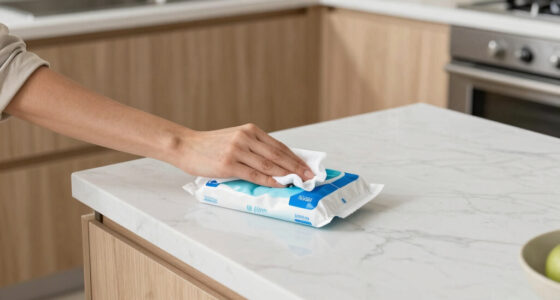
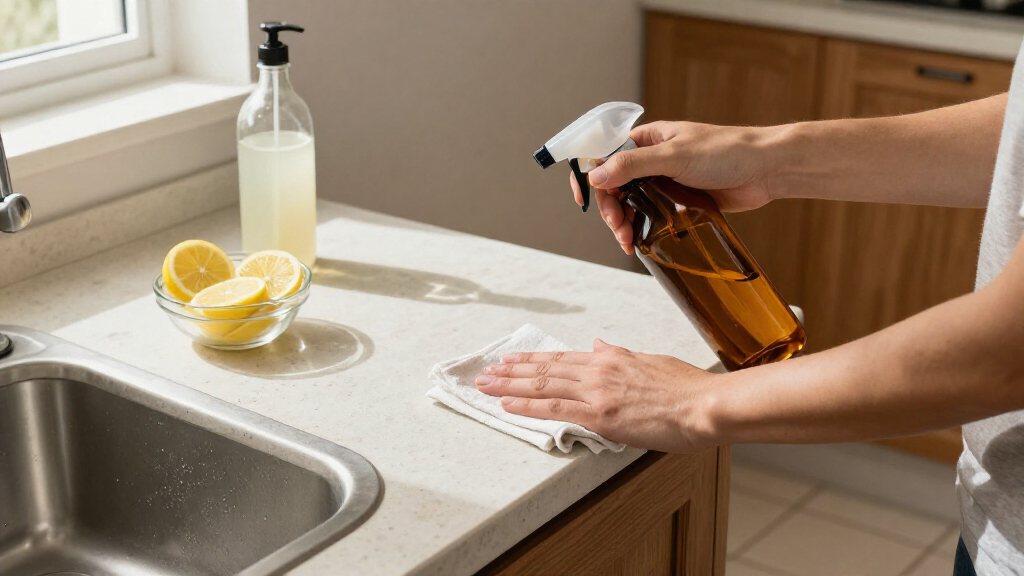
For instance, after breakfast you might use the mixture on a washable, sealed kitchen counter to lift crumbs and a faint ring of coffee. Spray a cloth and wipe the surface, then follow the counter maker’s care instructions. If the area touches food, rinse with potable water when appropriate.
You can also skip the spray bottle: put the measured cleaner on a damp cloth. That can help you control overspray near a cutting board or delicate finish. Keep the batch small and the recipe plain; more ingredients do not automatically make a cleaner safer or more effective [1].
Products Worth Considering

Dyson PencilVac Fluffycones Cordless Hard Floor Vacuum

Philips Hue Festavia 65-Foot Smart LED String Lights, 250 Color-Changing Mini LEDs

Bose Lifestyle Ultra Wireless Soundbar with Dolby Atmos, Black
As an affiliate, we earn on qualifying purchases.
Know what “non-toxic” means before you use the bottle
“Non-toxic” does not mean harmless in every dose or circumstance. A more useful description of this recipe is that it uses familiar ingredients for routine cleaning when used as directed. Soap can irritate eyes, and any cleaner can cause trouble if someone drinks it or uses it in a way the recipe was not intended for [1].
That distinction matters in a home with a toddler who likes to explore under the sink, a cat that walks across counters, or someone with sensitive skin. Store the cleaner out of reach, avoid spraying it into the air, and wash your hands after cleaning. If you know fragrances bother someone in your household, choose an unscented dish soap and leave essential oils out.
The word “natural” does not settle questions about safety either. Vinegar and essential oils may sound gentle, but vinegar’s acidity can harm some materials, while oils can irritate skin or airways and may pose risks to pets [1]. In practice, a short ingredient list is a bit like a clear recipe card: you can see what went in and make a sensible choice about where to use it.
Use specific, supportable claims. You can say the bottle contains water and mild dish soap and is intended for routine cleaning. Do not claim it kills germs unless you have a product intended and labeled for that purpose. Product labels and rules can vary by country, so check current local guidance when a germ-killing claim matters [1].
Use it on suitable surfaces, then check the finish
Use the mixture only on surfaces that tolerate water and mild soap. “All-purpose” does not mean every material, coating, appliance, or finish. A quick test in a hidden spot gives you a chance to notice dulling, discoloration, or residue before you wipe a whole visible area [1].
Imagine cleaning a sealed laminate counter after making sandwiches. A damp cloth with a little cleaner may lift the sticky juice ring, but you should still follow the counter maker’s directions and rinse the area that will touch food when appropriate. On electronics, painted finishes, or areas close to food, apply the cleaner to the cloth rather than spraying the surface.
- Check first: Test an inconspicuous patch and read the manufacturer’s care guidance.
- Avoid by default: Do not use homemade sprays on unsealed wood or delicate finishes without surface-specific advice.
- Use a cloth near electronics: Keep liquid off screens, ports, and controls, and follow the device maker’s instructions.
- Rinse when appropriate: Food-contact surfaces and appliances may call for a potable-water rinse or another specific cleaning method.
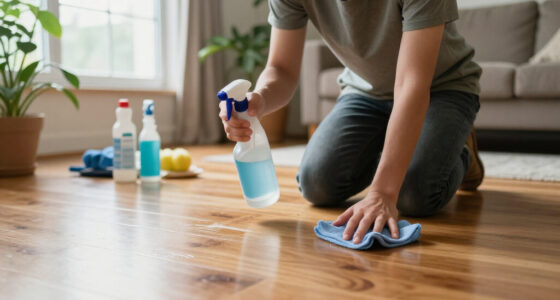
Floors call for extra care: a surface that can handle a damp wipe may not tolerate excess water or soap residue. If your floor maker advises against soap or recommends a particular cleaner, follow that guidance. For instance, a barely damp cloth may suit a sealed surface better than a wet mop that leaves slick patches.
Skip vinegar on stone and leave out unnecessary extras
Vinegar is not a universal shortcut. Its acidity can damage natural stone, grout, some metals, and certain finishes, so a vinegar recipe is a poor default when you do not know how a surface will react [1]. Marble, for example, may look sturdy under a heavy fruit bowl, yet an acidic cleaner can leave a dull mark that stands out in the light.
Essential oils are optional, not proof that a cleaner works better or is safer. Their scent may make a kitchen smell like oranges, but fragrance can irritate skin or airways and some oils may be harmful to pets [1]. If your household includes someone with asthma, fragrance sensitivity, or pets that spend time near the cleaned surface, leaving the oils out is a sensible choice.
Baking soda has a different tradeoff: it can act as a mild abrasive, but that grit may scratch delicate surfaces [1]. For instance, a paste might help with a stubborn mark on a surface designed to tolerate scrubbing, while the same treatment could leave fine scratches on a glossy finish. Check the care instructions and test a small, hidden spot first.
Simple does not mean suitable everywhere. A surface’s care instructions matter more than a homemade recipe’s popularity.
Do not combine ingredients just because they are common household items. Never mix bleach with vinegar, ammonia, acids, or other cleaners, and do not combine products unless their labels explicitly say it is safe [1]. If a bottle already contains a cleaner, do not pour this recipe into it; start with a clean container instead.
Use a labeled cleaner for disinfection
Cleaning removes soil and many germs; disinfecting uses a product intended and labeled to kill specified germs. Your soap-and-water mixture does the first job. It should not be described as a disinfectant, even if you wipe a countertop until it shines [1].
This difference becomes practical when someone at home is ill. You can use the simple mixture to remove visible dirt from a suitable surface, but if you need a germ-killing claim, choose an appropriately registered product and follow its label. The directions may specify how much product to use, whether to rinse, and how long the surface must stay wet.
For example, after raw chicken splashes onto a food-preparation area, first follow the kitchen and appliance instructions for cleaning that surface. If disinfection is needed, use a product labeled for the intended surface and germs, following the instructions exactly. A homemade soap spray cannot replace that labeled step.
Keep the jobs separate. The everyday cleaner is useful for routine crumbs, fingerprints, and greasy marks; a labeled disinfectant serves a different purpose. Public-health guidance and product formulations can change, and rules vary by country, so consult your local public-health authority and the current product label when you need up-to-date disinfection advice [1].
Store a small batch safely and know when to discard it
A homemade water-based cleaner has no tested shelf life here. Make a modest batch in a clean bottle, label it, and keep it secured away from children and pets. Do not store it in a drinking bottle, food jar, or any container someone could mistake for something to eat or drink [1].
That last point is easy to picture on a busy morning: a clear bottle beside a juice jug can confuse a tired adult, let alone a child. Put the cleaner with household supplies, close the cap after use, and wipe any drips from the outside. If the mixture’s appearance or smell changes, discard it rather than trying to rescue it with extra soap or fragrance.
Keep the recipe small enough that you can use it during routine cleaning instead of storing a large jug for months. Use a clean cloth, too; a bottle cannot do much if the rag carries old grease back onto the counter. If you prefer not to store a mixture, add the measured ingredients directly to a damp cloth as you need them.
If you accidentally mix cleaners and fumes develop, leave the area and get fresh air. Contact your local poison-control service or emergency services for advice suited to the situation; do not try to neutralize the mixture by adding another chemical [1].
Put the recipe to work in a normal cleaning routine
The best use for this recipe is an ordinary cleaning job on a compatible surface. Think of the soap as a small helper that lifts grime so your cloth can carry it away. It is not a magic shield against germs, and it cannot override the care instructions for a countertop, floor, appliance, or painted cabinet [1].
Say you finish chopping vegetables and see flour dust, a few oil flecks, and a sticky spot near the stove. Apply a little cleaner to a cloth, wipe the mess, and rinse the food-contact area when appropriate. If the counter maker says to use a particular method, follow that instead. The goal is a clean surface without leaving a puddle or a slick film.
For a painted cabinet door with a fingerprint, use a cloth that is only lightly damp and test the cleaner somewhere hidden first. If the paint looks dull or the cloth picks up color, stop and check the cabinet instructions. On a natural-stone counter, choose a surface-approved cleaner instead of reaching for vinegar because it is already in the pantry.
This is a useful article’s practical promise: give a simple recipe, explain what it can do, and make its limits easy to remember. Water plus a little mild soap handles many routine messes. When the job involves a delicate material or a disinfection claim, the surface maker or product label should guide your next step.
Frequently Asked Questions
What is the easiest non-toxic all-purpose cleaner to make?
Mix 2 cups (about 475 ml) of water with 1 teaspoon of mild dish soap in a clean, labeled bottle. Use it for routine cleaning on suitable hard, nonporous surfaces, and follow the surface maker’s care directions [1].
Does homemade soap-and-water cleaner disinfect?
No. It can remove ordinary dirt and grease, but it is not a disinfectant. If you need a germ-killing claim, use an appropriately registered product according to its current label [1].
Can I use vinegar on every surface?
No. Vinegar’s acidity can damage natural stone, grout, some metals, and certain finishes. Check the surface instructions and use a product approved for that material [1].
Can I add essential oils for fragrance?
You can, but essential oils are not needed to make the cleaner work and may irritate skin or airways; some may pose risks to pets. A fragrance-free recipe is a good choice for sensitive households [1].
How long does homemade cleaner last?
This simple water-based mixture has no tested shelf life. Make small batches in a clean bottle, and discard the mixture if its appearance or smell changes [1].
Can I use the cleaner on food-contact surfaces or electronics?
Follow the surface or appliance instructions, and rinse food-contact areas with potable water when appropriate. Near electronics, spray the cloth rather than the device, and keep liquid away from openings and controls [1].
Conclusion
Keep the recipe clear: 2 cups of water, 1 teaspoon of mild dish soap, and a label that says what is inside. Use it for ordinary messes on surfaces that allow it, test first, and remember that cleaning is not disinfection.
That small bottle can earn its place by doing one modest job well. Let the surface instructions—and the product label when germs matter—set the next step.