TL;DR

Get cleaning gear delivered free — and shop member deals
- Fast, free delivery on millions of items
- Access to Prime Big Deal Days deals on October 6–7
- Prime Video, Amazon Music and more included
Lemon can tackle light mineral deposits, odors, and tarnish thanks to citric acid, but it’s not suited for heavy grime or disinfection. Use it carefully on appropriate surfaces and avoid mixing with bleach or harsh chemicals.
Lemon’s citric acid effectively tackles light mineral deposits, odors, and tarnish but isn’t a disinfectant.
Avoid using lemon on natural stone, unsealed grout, or delicate metals to prevent surface damage.
Use lemon for quick freshening and mild cleaning, but don’t rely on it for heavy grime or pathogen control.
Test lemon on small areas first, and never mix with bleach—acid reactions can be dangerous.
Consider sustainability: lemon rinds can be a good, natural cleaner, but buying lemons solely for cleaning isn’t always eco-friendly.
Is Lemon Actually a Good Cleaner?
Yes—but only for certain jobs. Citric acid makes lemon useful against light mineral deposits, odors, tarnish, and mild grime. It is not a universal cleaner, a reliable disinfectant, or safe for every surface.
A small chemistry toolkit
Lemon has two useful components: citric acid in its juice and aromatic oils—including d-limonene—in its peel. Their household strength is variable, so performance is less predictable than a formulated product.
Dissolves minerals
Acidity helps break down light limescale, hard-water spots, and some rust or tarnish.
Loosens residue
Lemon can soften soap scum and mild splatters, making physical wiping more effective.
Freshens surfaces
Acid can react with certain odor-causing compounds while citrus oils add a fresh scent.
Helps with light grease
D-limonene is a solvent, but rubbing with peel delivers an unstandardized concentration.
Results will differ
Fresh and bottled juice vary in acidity; homemade mixtures are not performance-tested.
Acid has limits
It cannot reliably penetrate porous materials or remove deeply embedded grime and microbes.
Strongest on the small stuff
This relative effectiveness scale reflects lemon’s practical role in ordinary household cleaning—not standardized laboratory scores.
Performance depends on concentration, surface, residue, contact time, and mechanical wiping.
Choose the right task
Lemon is most useful when the residue is light, the material is acid-resistant, and sanitation is not the goal.
| Household task | Lemon fit | Why | Practical note |
|---|---|---|---|
| Water spots on compatible fixtures | ✓Good | Citric acid attacks mineral residue | Brief contact; rinse and dry |
| Microwave splatters | ✓Good | Steam loosens dried food | Lemon adds scent; wiping does the removal |
| Cutting-board odors | ~Conditional | Can lift odors and light stains | Not a substitute for safe sanitation |
| Copper or brass tarnish | ~Conditional | Acid can loosen oxidation | Avoid plated, antique, or delicate finishes |
| Heavy stove grease | ✕Poor | Insufficient for baked-on deposits | Use an appropriate degreaser |
| Serious mold growth | ✕Poor | Does not address deep growth or moisture | Use targeted remediation |
| After raw meat or illness | ✕Unsafe choice | No reliable pathogen kill claim | Use a registered disinfectant |
✓ suitable for a light cleaning role ~ depends on material and finish ✕ choose another method
Brighten—or accidentally damage?
Acid can etch stone, dull coatings, corrode metals, weaken sealants, and discolor porous materials. Manufacturer guidance always takes priority.
Often useful—with care
Keep contact brief, test first, and rinse thoroughly.
Avoid or verify first
These materials may etch, corrode, fade, or lose their finish.
Four checks before you squeeze
A quick decision chain reduces surface damage, chemical reactions, and false confidence about hygiene.
Identify
Confirm the material, coating, sealant, and manufacturer guidance.
Test
Apply to a small hidden area and check for dulling or discoloration.
Use briefly
Allow only a few minutes of contact; avoid soaking vulnerable materials.
Rinse + dry
Remove acidic residue, especially from metals and food-contact surfaces.
Never mix lemon juice with chlorine bleach.
Acids can cause bleach to release dangerous chlorine gas. Do not combine lemon with other cleaners unless the product manufacturer explicitly permits it.
Cleaning is not disinfecting
The difference matters most in kitchens, bathrooms, high-touch areas, and anywhere illness or raw-food contamination is involved.
Cleaning
Physically removes dirt, grease, residue, and many germs from a surface.
Lemon can help with this limited role.Disinfecting
Uses a tested product to kill specified pathogens at a verified concentration and contact time.
Lemon does not reliably perform this role.The smart lemon rulebook
Treat lemon as a specialized, low-intensity tool—not the default answer for every cleaning problem.
Match it to mild residue
Best for light minerals, odors, tarnish, and some stains.
Protect vulnerable surfaces
Avoid natural stone, unsealed grout, and delicate metals.
Do not confuse scent with hygiene
A fresh smell does not prove that pathogens were killed.
Test, rinse, and dry
Brief use limits etching, corrosion, and discoloration.
Consider the footprint
Reuse leftover rinds; buying lemons only to clean may not be the greenest choice.
Common questions
The bottom line: lemon offers useful chemistry, but safe materials and realistic expectations determine whether it is the right choice.
Does lemon kill bacteria?
It may reduce some bacteria under certain conditions, but it is not a reliable household disinfectant.
Can lemon remove mold?
It may clean light surface mildew, but it will not resolve established mold in porous materials or the moisture causing it.
Is lemon safe for granite or quartz?
Do not assume so. Acidity can affect stone, resins, sealants, or finishes; check the manufacturer’s instructions.
Can lemon clean stainless steel?
Often, in moderation. Use brief contact to remove water spots, then rinse and dry to protect the finish.
How long should lemon juice sit?
Only a few minutes at most. Longer exposure raises the risk of etching, corrosion, and discoloration—especially on sensitive materials.
What Makes Lemon a Handy Light Cleaner?
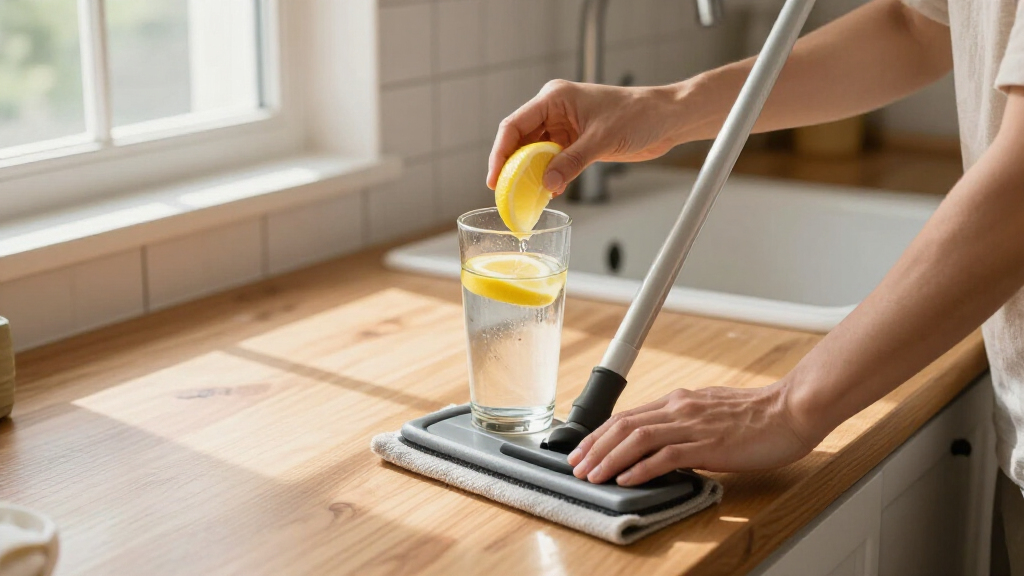
Lemon juice contains citric acid, which has a pH around 2–3. It’s this acidity that gives lemon its cleaning power for specific tasks. For example, it can dissolve light mineral deposits like water spots, loosen soap scum, and cut through some grease when paired with warm water and dish soap.
Imagine wiping down a foggy bathroom faucet or brightening up a dull cutting board. Lemon’s natural acids react with these residues, breaking them apart without harsh chemicals. Plus, the fresh citrus scent adds a clean aroma to your space, making it a popular choice for mild cleaning and deodorizing.
natural lemon cleaner for light mineral deposits
As an affiliate, we earn on qualifying purchases.
As an affiliate, we earn on qualifying purchases.
What Surfaces Can Lemon Brighten or Freshen?
Lemon cleans well on certain surfaces, especially for light stains, odors, and mineral buildup. For instance, it can remove water spots on stainless steel fixtures or freshen up a refrigerator interior. It’s also good for tarnish on copper or brass and light rust stains on metal.
Say you spill tomato sauce on a wooden cutting board. Rubbing it with lemon and salt can help lift the stain and remove lingering odors. Or, steaming a microwave with lemon slices can loosen dried splatters, making cleaning easier.
Just keep in mind, results vary depending on the freshness of the lemon and the surface’s porosity or finish.
As an affiliate, we earn on qualifying purchases.
Where Lemon Falls Short — What It Doesn’t Do Well
Lemon isn’t suited for heavy-duty grime, baked-on residues, or deep mold. Its acidity is limited in penetrating porous materials or tackling stubborn stains like wine or coffee. If you try to clean these with lemon alone, you might see some surface removal but leave behind residues or microbes that could cause odors or health issues over time. The tradeoff here is that while lemon is convenient and natural, relying solely on it can lead to incomplete cleaning, especially where hygiene matters most.
For example, attempting to clean a greasy stove with lemon might remove some surface grease but won’t eliminate the bacteria or deeply embedded residues. The acidity may be insufficient to break down baked-on grime or mold spores that have penetrated porous surfaces. This highlights the importance of understanding lemon’s limitations: it’s effective for light cleaning but inadequate for ensuring thorough sanitation or removing stubborn stains. Overestimating its capabilities can result in a false sense of cleanliness, which might compromise health or lead to persistent odors and stains.
As an affiliate, we earn on qualifying purchases.
Surfaces to Watch Out For — When Lemon Can Damage Your Materials
Acidic lemon juice can etch or dull certain surfaces. Avoid applying it to marble, limestone, or travertine, which are calcium-based stones vulnerable to etching. The same goes for unsealed grout, concrete, and engineered stones that aren’t acid-resistant.
Metals like aluminum, cast iron, silver, and delicate antique finishes can corrode or tarnish when exposed to lemon’s citric acid. Natural or unfinished wood, dyed fabrics, and electronic screens are also at risk of damage.
Always test a small, hidden area first. Rinse thoroughly after cleaning to minimize acid exposure. This proactive approach helps prevent costly or irreversible damage, ensuring your surfaces retain their appearance and integrity over time.
As an affiliate, we earn on qualifying purchases.
Is Lemon a Reliable Disinfectant? The Truth About Germs
In practical terms, lemon is not a household disinfectant. While its acidity can inhibit some bacteria temporarily, it doesn’t meet the standards for killing pathogens reliably. For example, it won’t eliminate the bacteria that cause food poisoning or the mold spores hiding in damp corners.
Cleaning involves removing dirt and germs physically. Disinfecting kills a specific range of germs through tested chemical agents. Lemon’s natural acids aren’t proven to do this consistently, especially not in the contact time or concentration needed. Relying on lemon alone may leave harmful microbes behind, which can be risky in kitchens, bathrooms, or high-touch areas. For proper sanitation, use a registered disinfectant following the label instructions, especially in situations requiring high hygiene standards.
Understanding this distinction ensures you don’t mistake surface cleaning with pathogen elimination, which is critical for health and safety.
Frequently Asked Questions
Does lemon kill bacteria?
Lemon may reduce some bacteria under certain conditions, thanks to its acidity. However, it’s not a reliable disinfectant for household cleaning or high-risk areas. For proper sanitation, use a registered disinfectant following the label instructions.
Can lemon remove mold?
Lemon can clean light surface mold or mildew, but it won’t eliminate established, deep-seated mold, especially in porous materials. Removing mold often requires more targeted treatments and moisture control.
Is lemon safe for granite or quartz countertops?
Generally, no. The acidity can etch or dull calcium-based stones like marble or limestone, and may damage resins or finishes on engineered surfaces. Always check your manufacturer’s guidance before applying lemon.
Can lemon clean stainless steel?
Yes, in moderation. Lemon can remove water spots and brighten stainless steel, but prolonged contact might cause dulling or corrosion. Rinse and dry thoroughly after use to protect the finish.
How long should lemon juice sit on a surface?
Only a few minutes at most. Extended contact increases the risk of etching, discoloration, or surface damage—especially on sensitive materials. Always rinse well after applying lemon.
Conclusion
Lemon is a handy, natural tool for light cleaning, but it’s not a one-size-fits-all solution. Knowing its strengths and limits helps you clean smarter without risking damage or false expectations. Think of lemon as a bright splash of freshness—use it wisely and sparingly, especially around vulnerable surfaces.Fall Picks
fall essentials
As an affiliate, we earn on qualifying purchases.