
TL;DR
Open a free Amazon Business account
Business pricing, bulk buying and tax-exempt orders.
Create a free accountAs an affiliate, we earn on qualifying purchases.
Your fridge smells because of spoiled food, spills, and bacteria buildup. Regular cleaning, proper storage, and natural deodorizers like baking soda can keep it fresh without harsh chemicals.
Ever open your fridge and get hit with that sour, stale smell? It’s more common than you think — and often, it’s not just about bad food. Your fridge is a tiny ecosystem of moisture, bacteria, and leftover crumbs, all working together to create that unwelcome aroma.
Knowing what causes these odors and how to fight them can turn your messy, smelly fridge into a fresh, inviting space. This isn’t about harsh chemicals or complicated tricks — it’s about simple, practical habits that keep your kitchen smelling clean and your food safer.
Regularly clean your fridge once a month to prevent odor buildup.
Use natural deodorizers like baking soda or activated charcoal for long-lasting freshness.
Check hidden spots like door seals and drip pans for mold or debris.
Avoid harsh chemicals — opt for vinegar and gentle cleaning solutions.
Promptly toss spoiled food to keep your fridge smelling clean and safe.
What Exactly Is Causing That Stink in Your Fridge?
Your fridge’s smell usually comes from spoiled food, spills, or mold hiding in the corners. When food goes bad, bacteria and fungi start to grow, releasing gases that create that sour or rotten odor. Leftover spills — like a forgotten piece of cheese or spilled juice — also settle into cracks and drip pans, feeding microbes.
Imagine a forgotten container of leftovers that’s gone moldy — that’s a prime source of bad smells. Even clean-looking shelves can harbor bacteria in door seals or underneath drawers, quietly releasing odors over time. These hidden spots matter because they serve as reservoirs for microbial growth, which can cause persistent, hard-to-eliminate odors. Ignoring them means odors can reappear even after cleaning, leading to a cycle of frustration. Recognizing the significance of these often-overlooked areas helps you target your cleaning efforts more effectively, ensuring a fresher fridge in the long run.
As an affiliate, we earn on qualifying purchases.
How Regular Cleaning Stops Odors Before They Start
Cleaning your fridge regularly is the easiest way to prevent persistent smells. Aim for once a month — it’s enough to catch spills, wipe away crumbs, and freshen up the interior.
Here’s a simple routine:
- Remove all items and check for expired or spoiled food.
- Wash shelves and drawers with warm water and a mild soap or vinegar solution.
- Wipe down door seals, edges, and the interior walls.
- Dry everything thoroughly before replacing items.
This routine is vital because bacteria and mold can develop rapidly in moist, unclean environments. Regular cleaning not only prevents odors but also extends the lifespan of your fridge components. It’s a small investment of time that pays off by maintaining a hygienic, odor-free space. The tradeoff is that infrequent cleaning allows odors to embed deeper into surfaces, making them harder to remove and increasing the risk of microbial contamination that could affect your food safety.
natural fridge deodorizer baking soda
As an affiliate, we earn on qualifying purchases.
As an affiliate, we earn on qualifying purchases.
Natural Odor Fighters That Really Work
Many swear by baking soda because it absorbs odors without any artificial scent. Just keep an open box on a shelf or in a corner of your fridge, and replace it every 3 months.
Activated charcoal or eco-friendly gel deodorizers are also excellent, especially if you want something longer-lasting. They trap odor molecules inside tiny pores, preventing smells from escaping into your kitchen. These options matter because they directly address the source of odors—the odor molecules—by trapping them before they spread. Choosing the right deodorizer depends on your needs: baking soda is affordable and easy, but activated charcoal can last longer and handle stronger smells. The tradeoff involves cost, longevity, and convenience, so understanding these differences helps you pick the best solution for your routine.
Here’s a quick comparison:
| Feature | Baking Soda | Activated Charcoal | Commercial Gel Deodorizer |
|---|---|---|---|
| Longevity | 3 months | 6+ months | 1-2 months |
| Cost | Very affordable | Moderate | Higher |
| Ease of Use | Simple, just replace | Drop in or hang | Plug or place in fridge |
As an affiliate, we earn on qualifying purchases.
Keep Your Fridge Smelling Fresh Without Harsh Chemicals
Natural cleaning solutions are gentle yet effective. Use a mix of equal parts white vinegar and water to wipe down interior surfaces — vinegar kills bacteria and neutralizes odors without toxic fumes.
For stubborn smells, add a few drops of lemon or tea tree oil to your spray. These natural scents freshen up the space and help fight microbes.
Always air out your fridge after cleaning. Leave the door open for 15 minutes to let fresh air circulate, reducing moisture and odor buildup.
This routine is environmentally friendly and reduces exposure to synthetic chemicals, which can sometimes cause allergic reactions or irritate sensitive skin. Using natural cleaners supports a healthier home environment, but it’s important to note that they might require more frequent application compared to harsher chemical cleaners to maintain the same level of freshness. The tradeoff is between safety and convenience, with natural options offering long-term health benefits.
As an affiliate, we earn on qualifying purchases.
Spot Hidden Sources of Smell — Drip Pans, Seals & More
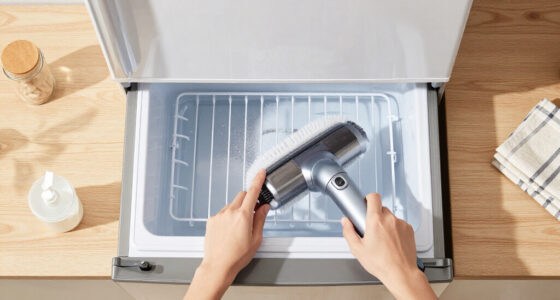
Sometimes, the smell isn’t obvious at first glance. Drip pans underneath your fridge can collect debris and mold, releasing foul odors. Door seals trap crumbs and bacteria, quietly contributing to the stink.
To clean these:
- Unplug your fridge for safety.
- Remove and scrub drip pans with warm soapy water.
- Wipe door seals with a damp cloth and mild soap.
- Dry everything thoroughly before plugging back in.
Regular attention to these hidden spots is crucial because neglecting them allows bacteria, mold, and debris to accumulate. These microbial colonies produce persistent odors that are difficult to remove once established. Properly cleaning these areas prevents odor recurrence and extends the overall freshness of your fridge, saving you from repeated deep cleans and potential health risks associated with mold exposure.
When Smells Persist, You Might Be Dealing With Mold or Spoiled Food
If you’ve cleaned and still smell something off, it could be mold lurking behind drawers or in corners. Mold thrives in damp, dark spots and can cause health issues if ignored.
Check for visible black or green patches, and clean with a mixture of vinegar or baking soda paste. If mold persists, consider replacing affected parts or calling in a professional. These persistent odors matter because mold releases spores and mycotoxins that can trigger allergic reactions, respiratory problems, or other health issues, especially for sensitive individuals. Addressing mold promptly by thorough cleaning or replacement is essential to maintain a safe environment. Similarly, spoiled food releases gases and bacteria that continue to emit odors long after disposal, which can contaminate other foods or surfaces if not properly handled. Recognizing these signs early prevents health risks and keeps your fridge hygienic.
Frequently Asked Questions
What is the best way to eliminate persistent fridge odors?
Start by cleaning all surfaces with vinegar or mild soap, then place an open box of baking soda inside. Replace it every 3 months, and keep an eye on hidden spots like door seals and drip pans. Good airflow and prompt food disposal make a big difference.
How often should I clean my refrigerator to prevent smells?
Cleaning once a month is ideal. Regular cleaning prevents spills from hardening, mold from growing, and odors from becoming embedded. Quick weekly wipe-downs of shelves and seals help maintain freshness.
Can certain foods cause more odors than others?
Absolutely. Foods like cheese, seafood, cooked onions, and fermented products tend to produce stronger smells. Always store these in airtight containers to contain their aroma and prevent it from spreading.
Are natural remedies like baking soda effective long-term?
Yes, baking soda is proven to absorb odors effectively for about 3 months. For longer-lasting freshness, combine it with activated charcoal or replace it regularly. It’s safe, cheap, and chemical-free.
How do I clean hard-to-reach areas like door seals and drip pans?
Unplug your fridge for safety, then remove and scrub drip pans with warm, soapy water. Wipe door seals with a damp cloth and mild soap. Use an old toothbrush for tight corners, and dry everything thoroughly before plugging back in.
Conclusion
A fresh fridge isn’t just about odor — it’s about creating a healthier, more inviting kitchen. A little regular maintenance and smart choices keep pesky smells at bay and your food tasting as good as it looks.
Next time you notice a whiff of sourness, remember: a clean, well-ventilated fridge is your best defense. Keep it simple, keep it fresh, and enjoy the peace of mind that comes with a truly odor-free kitchen.
Fall Picks
fall essentials
As an affiliate, we earn on qualifying purchases.