
TL;DR

Get cleaning gear delivered free with Prime
- Fast, free delivery on millions of items
- Prime Video, Amazon Music and more included
- Member-only deals all year
Cleaning a dusty garage floor requires removing loose particles carefully before wet cleaning. Using a fine-filter vacuum and damp mopping prevents dust from becoming airborne and settling deeper into the concrete. Proper water management and safety are key for a thorough, safe clean.
If your garage floor looks like a dusty moonscape, you’re not alone. Dust tends to settle on concrete just like it does on shelves—quietly and persistently. But unlike tossing a broom around wildly, a thoughtful, staged approach makes the job easier and results in a cleaner, safer space.
In this guide, you’ll learn how to tackle dust without stirring it up, avoid common mistakes, and choose the right tools for the job. Whether it’s drywall powder from recent renovations or persistent road dust, you’ll pick up practical tips to restore your garage to a tidy, usable space.
Vacuum with a HEPA filter before wet cleaning to trap fine dust and prevent airborne particles.
Use a staged process: clear, vacuum, treat stains, then damp mop and rinse carefully.
Choose tools like microfiber mops and shop vacuums designed for fine dust to improve results.
Address oil, grease, and stubborn stains with specific cleaners, avoiding spreading contamination.
Always wear PPE and ventilate properly to stay safe from hazardous dust and chemicals.
How to Clean a Garage Floor That’s Covered in Dust
Dust settles on concrete quietly and persistently — like a moonscape in your own home. A staged approach removes particles without stirring them into the air, whether it’s drywall powder from renovations or persistent road grime.
HEPA-filter vacuuming is roughly twice as effective at capturing fine dust as sweeping — and keeps particles out of the air you breathe.
EXPERT CLEANING STANDARDSThe Staged Method: Dust Out, Not Up
Following these stages in order prevents dust from becoming airborne and ensures contaminants are fully removed instead of smeared across the concrete.
Clear the Floor
Remove all stored items, tools, and debris to expose the full surface.
Gear Up
Eye protection, a well-fitting dust mask or respirator, and gloves shield you from fine particles.
Ventilate Carefully
Open doors and windows — but avoid gusts that blow dust into your house or neighborhood.
Pick Up Large Debris
Use a dustpan and broom only for big chunks and loose objects.
Vacuum Thoroughly
HEPA-filter shop vacuum, slow overlapping passes in all directions — especially corners and joints.
Treat Stains Separately
Oil, grease, and rust spots need a dedicated cleaner or degreaser first.
Wet Mop or Scrub
pH-neutral cleaner with a microfiber mop or stiff nylon brush; avoid over-wetting.
Rinse Carefully
Sparing water only; extract dirty rinse water with a wet vacuum or squeegee.
Let Dry Completely
Wait until fully dry before re-storing items or applying sealers.
Why Vacuuming Beats Sweeping
A broom pushes fine particles around, creating a cloud that settles right back down. A HEPA-filter shop vacuum pulls tiny grains out of the air and into a sealed container — like a magnet instead of a fan.
Illustrative comparison of fine-dust capture effectiveness by method. HEPA filters capture 99.97% of particles as small as 0.3 microns per expert standards — sweeping redistributes much of what it collects back into the air.
Choosing the Right Tools & Supplies
The right equipment speeds up the process and keeps your garage air healthier. A household vacuum can clog or suffer motor damage from fine dust — use a proper shop vacuum.
HEPA Shop Vacuum
Traps tiny dust particles without releasing them back into the air.
Cyclone Pre-Separator
Traps most dust upfront, preserving suction and filter longevity.
Soft Push Broom & Dustpan
For large debris only — use sparingly to avoid kicking up dust.
Microfiber Dust Mop
Traps fine particles far better than cotton, even on uneven surfaces.
Stiff Nylon Deck Brush
For stubborn stains and textured concrete surfaces.
pH-Neutral Cleaner + Degreaser
Gentle for general washing; a concrete-safe degreaser for oil spots.
Wet Vacuum / Floor Squeegee
Removes excess water and rinse runoff immediately.
PPE Kit
Gloves, safety glasses, and an N95-or-better respirator.
Cat Litter / Baking Soda
Blots fresh oil and grease spills before they soak in.
Matching the Method to the Mess
Different dust and stain types need different treatment. Concrete is porous — dirty water left standing carries contaminants deeper into the surface.
| Dust / Stain Type | Best Approach | Watch Out For |
|---|---|---|
| Light household dust | Soft broom for large debris, then fine-filter vacuum and damp microfiber mop. | Don’t start wet cleaning before loose dust is removed. |
| Drywall / construction dust | Vacuum slowly in overlapping passes; repeat after particles settle. | Never wash drywall or cement dust into drains. |
| Concrete “dusting” | Persistent pale-gray dust signals surface abrasion — needs a densifier or sealer. | Cleaning alone is only a temporary fix. |
| Oil & grease | Blot fresh spills, apply absorbent, then concrete-safe degreaser or poultice. | Never spread oily rinse water across the floor. |
| Mud, salt & winter residue | Remove dry solids first; warm water with neutral cleaner, rinse and extract. | Road-salt residue may need more than one rinse. |
Common Mistakes That Make Dust Worse
Small errors can undo hours of cleaning — and even damage your floor or equipment.
✗ Aggressive Sweeping
Kicks dust into the air, making it harder to breathe — and it settles right back down. Vacuum first instead.
✗ Using a Household Vacuum
Fine dust clogs filters or burns out the motor. Use a shop vacuum rated for fine dust.
✗ Washing Before Vacuuming
Water plus loose dust creates a gritty slurry that sinks into pores and joints. Always go dry before wet.
✗ Overusing Detergent
Excess soap leaves a film that traps dirt and ruins sealer adhesion. More is not better.
✗ Sealing Too Soon
Epoxy or sealer applied before the concrete is perfectly clean and dry leads to peeling. Let it fully dry.
✗ Flooding the Floor
Standing water forces contaminants into cracks and walls. Rinse in sections and extract immediately.
Protect Yourself from Hazardous Dust
Garage dust can contain silica, chemicals, or unknown contaminants. Never mix household cleaners — especially bleach with ammonia or acids. If dust keeps returning, the source may be deteriorating concrete, unsealed masonry, or poor door seals.
Eye Protection
Safety glasses prevent splashes and debris from reaching your eyes.
Respirator (N95+)
Essential for fine mineral, construction, or unknown dust.
Gloves & Closed Shoes
Shield skin from chemicals, debris, and contaminated water.
Keep Kids & Pets Away
Isolate the work zone until dust has settled and the floor is dry.
Why Vacuuming Is Better Than Sweeping for Dust
Vacuuming a dusty garage floor is more effective than sweeping because it traps fine particles rather than redistributing them into the air. A standard broom just pushes dust around, making it harder to breathe and creating a cloud that settles back down.
Imagine trying to sweep flour off a countertop—if you just sweep it into a pile and then scoop it up, some still gets airborne or smeared into corners. A shop vacuum with a fine-dust or HEPA filter acts like a magnet, pulling those tiny grains out of the air and into a sealed bag or container.
For example, if you have drywall dust from a recent project, vacuuming with a HEPA filter captures 99.97% of particles as small as 0.3 microns, according to expert standards. This keeps your indoor air cleaner and prevents the dust from settling back into cracks or onto stored tools.
HEPA filter shop vacuum for dust removal
As an affiliate, we earn on qualifying purchases.
As an affiliate, we earn on qualifying purchases.
Step-by-Step: The Best Way to Remove Dust from Your Garage Floor
- Clear the floor: Remove all stored items, tools, and debris to expose the surface.
- Wear protective gear: Eye protection, a well-fitting dust mask or respirator, and gloves shield you from fine particles.
- Ventilate: Open garage doors and windows, but avoid creating strong gusts that blow dust into your house or neighborhood.
- Pick up large debris: Use a dustpan and broom for big chunks or loose objects.
- Vacuum thoroughly: Use a shop vacuum with a HEPA filter, making slow, overlapping passes in all directions—especially corners and joints.
- Address stains separately: Oil, grease, or rust spots need a dedicated cleaner or degreaser before the floor is truly clean.
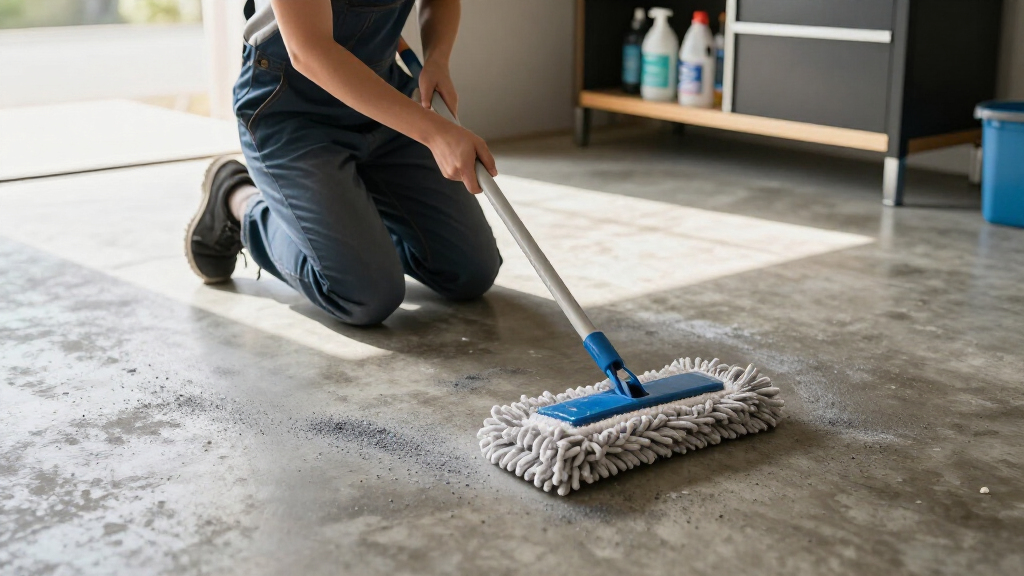
- Wet mop or scrub: Use a pH-neutral or concrete-safe cleaner with a microfiber mop or stiff nylon brush; avoid over-wetting.
- Rinse carefully: Use sparing amounts of water, and extract dirty rinse water with a wet vacuum or squeegee.
- Let dry: Wait until the floor is completely dry before re-storing items or applying sealers.
This staged process prevents dust from becoming airborne and ensures contaminants are removed effectively.
As an affiliate, we earn on qualifying purchases.
Choosing the Right Cleaning Tools and Supplies
Picking the right gear makes all the difference. Here’s a quick rundown of essential tools:
- Fine-filter or HEPA-capable shop vacuum: Captures tiny dust particles without releasing them back into the air.
- Pre-separator or cyclone attachment: Extends filter life by trapping most dust upfront.
- Soft push broom and dustpan: For large debris—use sparingly to avoid kicking dust into the air.
- Microfiber dust mop: Better at trapping fine particles than cotton mops, especially on uneven surfaces.
- Stiff nylon deck brush: For stubborn stains or textured concrete surfaces.
- Bucket and pH-neutral cleaner: Gentle but effective for wet cleaning.
- Concrete-safe degreaser: For oil or grease spots.
- Wet vacuum or floor squeegee: To remove excess water and rinse runoff.
- Personal protective equipment: Gloves, safety glasses, and a respirator for safety.
Using the right equipment not only speeds up the process but also keeps your garage safer and healthier.
garage floor concrete stain remover
As an affiliate, we earn on qualifying purchases.
As an affiliate, we earn on qualifying purchases.
How to Deal with Oil, Grease, and Stubborn Stains
Oil and grease are common in garages and require special treatment. First, blot fresh spills with paper towels or absorbent granules like cat litter or baking soda. Then, apply a concrete-safe degreaser, following the product instructions. For old, hardened stains, you might need to repeat the process or use a poultice—a paste of absorbent material and cleaner that pulls out deep contaminants.
Imagine trying to clean an old oil stain on your driveway—it’s a slow, layered process. Avoid spreading oily rinse water across the floor, which can worsen the problem. Instead, work in sections, and immediately soak up excess water with a wet vacuum or squeegee.
For instance, a 2-year-old motor oil spill on a garage floor might take two or three treatments with a degreaser and some scrubbing to fully lift. Patience pays off—rushing can spread the stain or push it into the porous concrete.
As an affiliate, we earn on qualifying purchases.
Managing Water and Rinsing Without Creating a Muddy Mess
Wet cleaning is essential but tricky. The goal is to rinse the floor without turning it into a muddy slip zone or forcing contaminants into cracks. Use a light spray or damp mop, and avoid flooding the surface. Always have a wet vacuum or squeegee ready to remove excess water immediately after rinsing.
Imagine washing a muddy driveway—you don’t want to use so much water that it pools and seeps into walls or cracks. Instead, rinse small sections at a time, collecting dirty water as you go. If your garage has no proper drainage, consider using a wet vacuum with a sealed tank or an absorbent floor pad to control runoff.
For example, after a heavy drywall dust clean, a quick rinse with a garden hose might seem tempting, but it could cause more harm than good if the water seeps into walls or cracks. Instead, use a microfiber mop dampened with water, and immediately extract the rinse water.
Common Mistakes That Make Dust and Dirt Worse
Many homeowners unwittingly undo their hard work with small mistakes. Sweeping aggressively kicks dust into the air, making it harder to breathe and settle again. Using a household vacuum not designed for fine dust can clog filters or damage the motor. And washing the floor before removing loose debris just pushes dirt deeper into the pores.
Another common error is overusing detergent—more isn’t better. Excess soap leaves a film that traps dirt and interferes with coatings or sealers. Also, applying epoxy or sealers too soon—before the concrete is perfectly clean and dry—can lead to peeling or poor adhesion.
For instance, a homeowner cleaning after a drywall project might rush to wash the floor, only to find the dust settling back because they skipped vacuuming thoroughly first. Recognizing and avoiding these pitfalls saves time and money.
Safety First: Protect Yourself When Cleaning Dust
Garage cleaning can expose you to hazardous dust, chemicals, or contaminants. Always wear closed-toe shoes, gloves, and safety glasses to prevent splashes or debris from getting in your eyes or on your skin. Use a respirator or mask—preferably N95 or better—if you’re dealing with fine dust or unknown materials.
Keep children and pets away during the cleaning process. Avoid dry sweeping or using a leaf blower, which kicks up dust into your lungs and the environment. If you suspect the presence of asbestos, lead paint, or chemical residues, stop and consult a professional before proceeding.
For example, if you notice flaky, powdery dust that comes from the concrete itself, it could be a sign of deterioration or contamination. Use proper PPE, and consider testing before aggressive cleaning.
Frequently Asked Questions
What is the fastest way to remove a thick layer of garage dust?
Start by removing large debris with a broom. Then vacuum thoroughly with a HEPA-filtered shop vacuum, making slow passes in all directions. Finish with damp mopping to pick up remaining fine dust—this prevents dust from becoming airborne and settling back down.
Should I sweep or vacuum first?
Vacuum first for fine dust, especially with a HEPA filter. Use a broom only for larger, sharp debris. Sweeping alone often redistributes fine particles into the air, making vacuuming with proper filtration more effective later.
Can I use a regular household vacuum?
It’s not recommended for heavy construction or fine dust. Household vacuums often lack the necessary filtration and can clog or get damaged. A shop vacuum with a HEPA filter is better suited for garage dust cleanup.
Do I need a HEPA vacuum?
Yes, especially if dealing with drywall, concrete dust, or allergens. HEPA filters trap 99.97% of particles down to 0.3 microns, greatly improving indoor air quality during and after cleaning.
Can I hose out the garage?
Only if you can contain and legally discharge the water without polluting nearby soil, water, or property. Use a wet vacuum to control runoff, and avoid flooding or washing contaminants into storm drains.
Conclusion
Cleaning a dusty garage floor isn’t about rushing or brute force. It’s about taking a smart, staged approach—removing loose particles first, then carefully washing away residual dirt. The result: a cleaner, healthier space you can trust.
Next time your garage looks like a dust bowl, remember: patience, proper tools, and safety make all the difference. With a few simple steps, your garage can go from dusty disaster to a tidy haven—ready for the next project or a simple weekend refresh.
Halloween Picks
halloween
As an affiliate, we earn on qualifying purchases.