
TL;DR

Get cleaning gear delivered free with Prime
- Fast, free delivery on millions of items
- Prime Video, Amazon Music and more included
- Member-only deals all year
Cleaning window screens is straightforward with basic tools and eco-friendly solutions. Removing dirt, grime, and mold regularly keeps your home fresh and screens durable, saving you money and effort.
Use a garden hose with gentle spray as your go-to for quick, safe cleaning.
Remove screens for a deep clean, soaking in soapy water for stubborn grime or mold.
Avoid harsh chemicals and abrasive tools to prevent damage to delicate mesh.
Regular maintenance every 3-6 months keeps screens in top shape and preserves airflow.
Replace torn or sagging screens promptly to maintain home protection and appearance.
Why Regular Cleaning Keeps Your Screens Looking New
Cleaning your window screens every few months isn’t just about appearance. It’s about preventing buildup of dirt, pollen, pet hair, and even mold that can cause damage over time. When you keep screens clean, you improve airflow, reduce allergens, and extend their lifespan. For example, in areas with high pollen counts or pollution, screens can trap more debris, which can eventually clog or weaken the mesh. Regular maintenance acts like a protective shield, saving you from costly replacements later on.
Think of your screens as the filter for your home’s fresh air. When they’re clogged or grimy, your home’s ventilation suffers. By cleaning them twice a year, you keep the air flowing freely and your view crystal clear. Plus, a clean screen looks sharper—like a freshly cleaned lens—making your entire home feel brighter and more inviting.
Additionally, neglecting regular cleaning can lead to the buildup of mold and mildew, especially in humid climates. These fungi not only discolor the screens but can also pose health risks, especially for allergy sufferers or those with respiratory issues. Regular cleaning prevents these health hazards and preserves the integrity of your screens, ensuring they continue to serve their purpose effectively.
As an affiliate, we earn on qualifying purchases.
Gather These Easy Tools for a Fast Screen Makeover
Cleaning window screens doesn’t require fancy equipment—just a few simple items you already have around the house. Here’s what you’ll need:
- Soft-bristled brush or a gentle scrub sponge
- Garden hose with a spray nozzle or a spray bottle
- Mild soap, like dish detergent, or a vinegar-water solution
- Large basin or tub for soaking
- Microfiber cloth or towel for drying
Using these tools keeps the process safe for your screens and gentle on your surfaces. Avoid abrasive scrubbers or harsh chemicals—they can cause tears or weaken the mesh over time. If you prefer eco-friendly options, vinegar and baking soda work wonders without leaving harmful residues. Choosing gentle, non-abrasive tools ensures that you don’t compromise the structural integrity of your screens, which is essential for their durability and continued effectiveness in filtering dust and pests.
As an affiliate, we earn on qualifying purchases.
Step-by-Step: How to Clean Window Screens in 5 Easy Moves
- Remove the screens carefully. Gently lift them out of the window frame, supporting the edges to avoid bending or tearing. Proper removal prevents unnecessary stress on the mesh, which can lead to tears or deformation over time. Handling screens with care preserves their shape and prolongs their lifespan, saving you money on replacements.
- Vacuum or brush off loose dirt. Use a soft brush or a vacuum with a brush attachment to knock off dust and debris, especially in hard-to-reach corners. This initial step reduces the amount of dirt that needs to be scrubbed away during washing, making the cleaning process more efficient and less abrasive. Removing surface debris also prevents scratches during subsequent cleaning steps, protecting the mesh’s integrity.
- Prepare your cleaning solution. Mix a few drops of dish soap or a cup of vinegar into a bucket of warm water—just enough to create a mild, sudsy rinse. This gentle solution effectively loosens dirt, grime, and mold without risking damage to the mesh or frame. Using eco-friendly solutions like vinegar reduces chemical exposure and environmental impact, making your cleaning routine safer for your family and the planet.
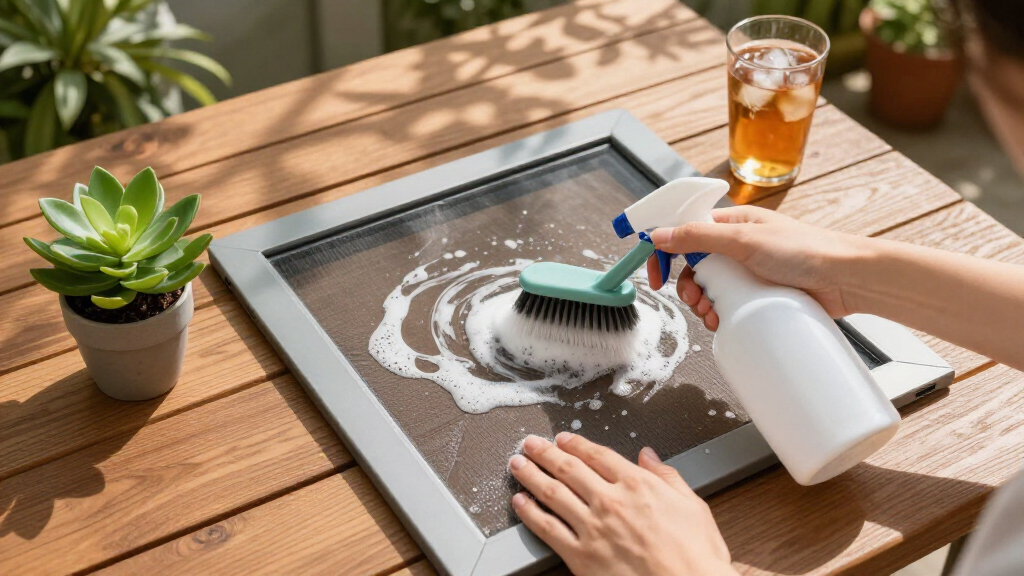
- Scrub gently with your sponge or brush. Dip into the solution and lightly scrub both sides of the screen, focusing on stained or grimy spots. For stubborn stains, a soft-bristled toothbrush can help. Gentle scrubbing is crucial because aggressive cleaning can weaken or tear the mesh, reducing its effectiveness and lifespan. Taking your time ensures a thorough clean without compromising the screen’s durability.
- Rinse thoroughly and let dry. Use a garden hose with gentle spray or rinse in a bathtub. Shake off excess water, then lay screens flat on a towel or hang them to air dry in the sun. Wait until completely dry before reinstalling. Proper drying prevents mold growth and helps maintain the screen’s shape and strength. Ensuring the screens are fully dry before reinstalling avoids trapping moisture that can lead to mold or rust, extending their useful life.
This simple process turns a dusty, dirty screen into a clear, nearly new one in about 15-20 minutes.
As an affiliate, we earn on qualifying purchases.
Compare Cleaning Methods: When to Spray, Soak, or Use a Pressure Washer
| Method | Best For | Pros | Cons |
|---|---|---|---|
| Garden hose spray | Light dirt and dust | Quick, safe, eco-friendly | Less effective for heavy grime |
| Soaking in soapy water | Stubborn stains, mold | Deep cleans, loosens grime | Requires removal and drying time |
| Pressure washing | Heavy buildup or large screens | Fast, powerful | Risk of damage if used improperly |
Choosing the right cleaning method depends on the level of dirt and the condition of your screens. Light dust can be easily removed with a gentle spray, preventing the need for more invasive cleaning. Soaking is ideal for stubborn grime or mold that has set in, providing a deep clean that loosens debris without aggressive scrubbing. Pressure washing offers rapid results for large or heavily soiled screens but carries the risk of damaging delicate mesh if not used carefully. Weighing these tradeoffs helps you select the most effective and safe approach, ensuring your screens stay intact and functional.
As an affiliate, we earn on qualifying purchases.
How to Handle Tough Stains and Mold Safely
Stubborn stains or mold on window screens can be a challenge, especially since aggressive scrubbing can damage delicate mesh. Using a mixture of equal parts water and vinegar is a safe and effective approach because vinegar’s acidity dissolves mold and grime without harsh chemicals. Spray it onto the affected area, let it sit for 10 minutes, then gently scrub with a soft brush. This process allows the vinegar to penetrate and break down the mold or stain at a microscopic level, making it easier to remove without damaging the mesh. For persistent mold, commercial mold removers formulated for outdoor use can be effective, but always test first to prevent discoloration or weakening of the material. The key is patience and gentle handling—aggressive scrubbing can cause tears or holes, compromising the screen’s protective function and longevity.
When and Why You Should Replace Your Screens Instead of Cleaning
Even with regular cleaning, screens don’t last forever. If you notice tears, holes, or sagging mesh that won’t stay taut, it’s time for a replacement. Damaged screens not only look unsightly but also compromise your home’s defense against pests and allergens. When the mesh is torn or sagging, it creates gaps that pests like insects can exploit, and pollen or dust can enter more easily, defeating the purpose of the screens. Upgrading to newer materials like polyester or fiberglass offers enhanced resistance to tears, UV damage, and mold, which means less frequent replacements and easier maintenance. Replacing screens is often affordable and straightforward—measure the existing screens accurately, buy a new roll, and use a spline tool to install. Properly installed, new screens restore the protective barrier, improve airflow, and enhance your home’s overall comfort and appearance.
Keep Your Screens Fresh Year-Round with These Tips
Regular maintenance keeps screens looking and functioning their best. Besides cleaning, consider these tips:
- Inspect screens monthly for tears or loose edges.
- Use a gentle brush to remove spider webs or leaves that settle around frames.
- Apply a protective coating or screen sealant to resist mold and dirt buildup.
- When cleaning, always remove screens first to avoid drips and mess inside your home.
In high pollen or dusty seasons, increase cleaning frequency to every 2-3 months. This habit prevents buildup and keeps your views crystal clear all year round. Regular inspections help catch minor damages early, preventing costly repairs or replacements later. Using protective coatings can also extend the lifespan of your screens by creating a barrier against moisture and dirt, which are primary culprits in deterioration. Consistent, gentle cleaning and proactive maintenance ensure your screens remain effective, durable, and visually appealing over time.
Frequently Asked Questions
How often should I clean my window screens?
Aim to clean your screens every 3 to 6 months. If you live in a dusty or polluted area, consider more frequent cleanings to keep dirt and pollen at bay.Can I clean screens without removing them?
Yes, you can. Use a hose with a gentle spray or a spray bottle with soapy water to clean in place. However, removing screens allows for a more thorough clean and prevents water from dripping inside your home.What’s the best way to remove stubborn stains or mold?
Mix equal parts water and vinegar, spray on the affected area, and gently scrub with a soft brush. For persistent mold, a commercial mold remover labeled for outdoor use can be effective—just test it first.Are newer screen materials easier to clean?
Yes, materials like polyester or fiberglass are more resistant to dirt and mold, making them easier to maintain compared to older aluminum or metal screens.Can I use a pressure washer on screens?
You can, but with caution. Use a low-pressure setting to avoid tearing the mesh. It’s best for large or heavily soiled screens, but gentle cleaning methods are safer for most homes.Conclusion
Cleaning window screens isn’t a chore—it’s a quick refresh that makes your home look brighter and breathe easier. A few simple tools, a gentle touch, and regular upkeep will keep your views clear and your home healthier. So, grab that hose or sponge—your screens are waiting for a fresh start. Imagine the crisp, clean view you’ll enjoy after just a few minutes of care—every breeze and sunbeam will feel even better.Halloween Picks
halloween
As an affiliate, we earn on qualifying purchases.