
TL;DR

Get cleaning gear delivered free with Prime
- Fast, free delivery on millions of items
- Prime Video, Amazon Music and more included
- Member-only deals all year
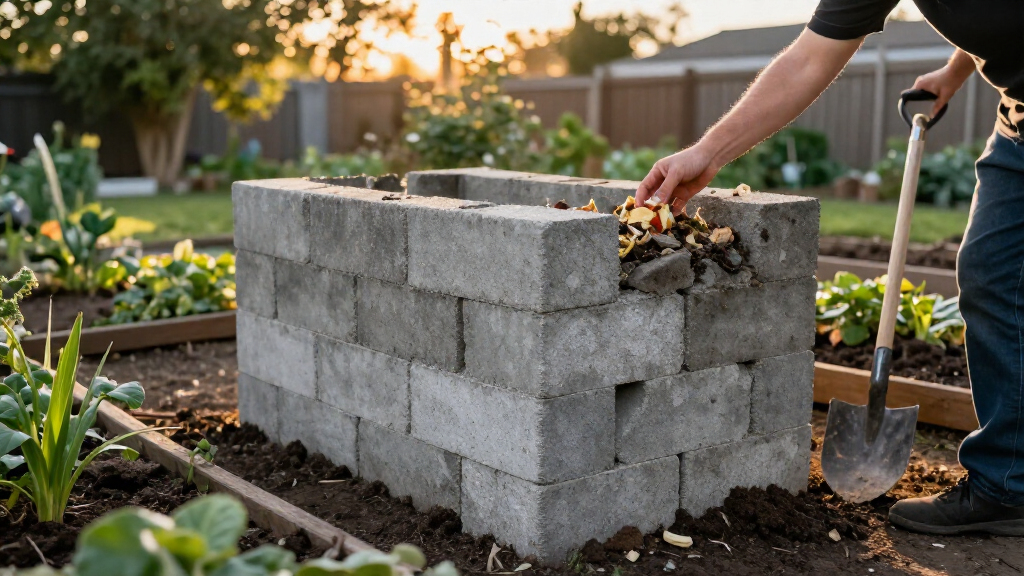
A Hunker report describes building a backyard compost enclosure from about 30 to 35 concrete blocks, stacked without mortar and with the front left open. The report says the hollow blocks and gaps between them can allow airflow, and that the open side lets gardeners add and turn material and check the pile’s temperature. Exact costs, build dimensions and composting results will vary.
Hunker has outlined a mortar-free way to build a backyard compost enclosure from about 30 to 35 concrete blocks, offering gardeners a sturdy alternative to bins made from lighter materials. The design leaves one side open for access and uses block openings or gaps to let air reach the compost.
The instructions call for a back wall made from a row of four to five blocks, with two side walls built from another four to five blocks each. The fourth side is left open so gardeners can add material, turn the pile and check its temperature. The source says the enclosure can be assembled without mortar and may take less than a day to build.
Additional blocks are stacked in rows to raise the walls. Hunker recommends staggering the blocks rather than aligning every joint, and says the side walls can taper toward the open front. Blocks can be placed with their hollow sides facing inward, or spaced apart to preserve openings for airflow. The report provides block counts and layout guidance.
For sourcing, the report suggests checking local listings on Facebook and Craigslist, contacting construction sites or junk haulers, and asking nearby Habitat for Humanity ReStores about used stock. If reclaimed blocks are unavailable, it cites new 8-by-8-by-16-inch blocks at Home Depot for less than $3 each.
A Reusable Structure for Backyard Compost
The practical appeal is a bin assembled from a common building material rather than a purpose-made compost container. Hunker says another section can be added to the block enclosure and that the length of its side walls can vary. That may be useful for gardeners who want a fixed composting area and have access to inexpensive or reclaimed blocks.
Airflow is relevant because the report describes the openings as a way to let air reach the pile. It says aerobic bacteria need oxygen and that airflow can speed decomposition, but provides no measured comparison of composting times or results. Hunker describes the enclosure as sturdy and durable.
Products Worth Considering

Samsung 85-Inch M70H Series Mini LED 4K Smart TV (2026)

TCL 85-Inch QM6K Series QLED Mini LED 4K HDR Smart Google TV

Bose TV Speaker (2nd Gen) Compact Soundbar with Bluetooth and HDMI Connectivity
As an affiliate, we earn on qualifying purchases.
How the Block Design Works
Backyard composting turns organic waste into a soil amendment. The source mentions pallets, cardboard, plastic buckets and bags as materials used to make DIY bins. Its focus is the container design, not a full guide to compost ingredients or maintenance. Hunker notes that some materials should not go into compost but does not provide a complete list in the supplied report.
The suggested construction is a simple stack rather than a mortared wall: a back, two sides and an open front. The report says one enclosure uses roughly 30 to 35 blocks. It also describes the hollow sides facing parallel to the ground as one option, while noting that blocks can be oriented differently if spaces are left to maintain airflow.
““no mortar required””
— Hunker
Costs and Performance Vary
The source does not state when its price information was collected. It also gives no precise footprint, wall height or site preparation instructions, or guidance on whether a particular yard requires permits or other checks.
The report does not provide testing to establish how much faster compost decomposes in this design, how long the enclosure lasts, or how stable a given stack will be under local conditions. Its description of airflow and durability is guidance from the article, not a controlled comparison. The supplied material includes a video attribution to Jim Bob’s Garden.
Plan the Site Before Stacking
Anyone considering the project will need to measure the intended area, decide on wall height and footprint, and estimate how many blocks those choices require. They can compare local prices with used or free blocks. Because the walls are stacked without mortar, Hunker advises staggering the joints to help with stability and leaving openings for airflow.
Hunker recommends leaving the front open for access and maintaining airflow through the block openings or gaps. The report says the project may take less than a day, but does not specify a construction schedule beyond that estimate or identify a later test or update.
Key Questions
How many concrete blocks does the suggested compost enclosure use?
Hunker estimates about 30 to 35 blocks for one enclosure. The number can vary with the planned footprint and height.
Does the design require mortar?
No. The report describes the blocks as stacked without mortar, with staggered joints recommended for added stability.
Why does the design leave one side open?
The open front gives access to add and turn compost and check its temperature, according to Hunker.
Where can gardeners find blocks?
The report suggests local online listings, construction sites, junk haulers and Habitat ReStores. It also cites new blocks at Home Depot for less than $3 each, but that price may have changed.
Source: rss