
TL;DR

Get cleaning gear delivered free with Prime
- Fast, free delivery on millions of items
- Prime Video, Amazon Music and more included
- Member-only deals all year
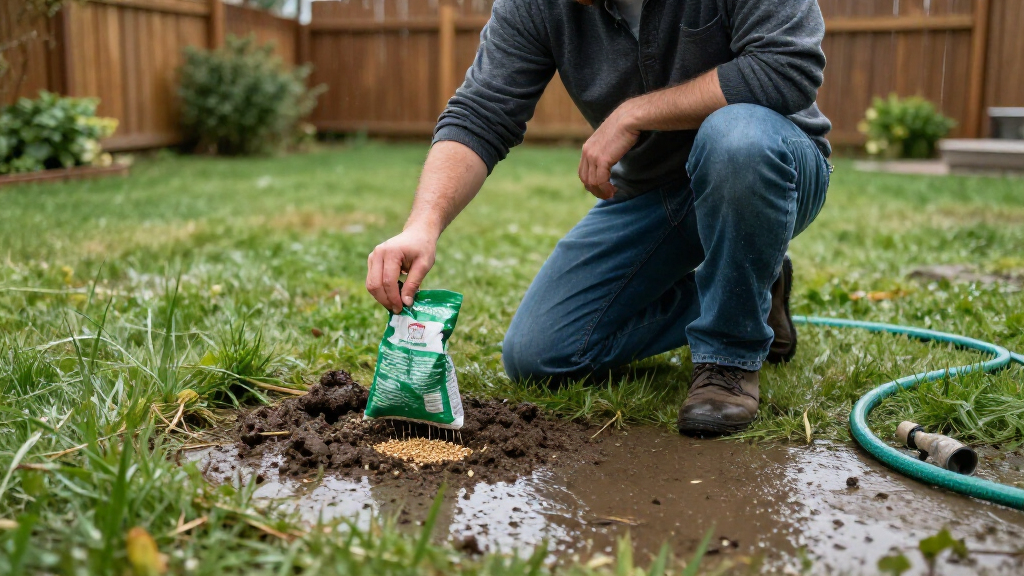
Grass seed can germinate after heavy rain if the soil stays moist but is not waterlogged. Standing water can deprive seed of oxygen or rot it, while runoff may wash seed into clumps. Once the ground is workable, gardeners can redistribute seed, aerate waterlogged spots lightly and add a thin protective cover.
Grass seed can still germinate after heavy rain if water drains away and leaves the soil moist rather than saturated, according to lawn-care experts quoted by Ideal Home. Their advice for gardeners whose newly sown lawns are flooded or patchy is to redistribute displaced seed, aerate waterlogged areas lightly and cover seed with a thin layer of topsoil or compost.
Moisture supports germination, but standing water can create problems. Guy Jenkins, consumer manager at Johnson’s Lawn Seed, told Ideal Home that seed will grow in many cases, while warning that fully saturated or waterlogged ground can affect germination. Lawn-care expert Jonathan Davis of Lawnsmith said seed left in pooled water can rot or be deprived of oxygen.
Heavy rain can also move seed across the surface. Davis said that may leave thick clumps in some places and bare soil in others. The first step is to check whether seed has shifted, then wait until the ground is workable and rake it across bare areas, Jenkins advised.
Jenkins said germination typically begins within seven to 21 days. If the lawn remains visibly patchy after that period, he advised overseeding the affected spots. The timing can vary with conditions; the source does not provide a guarantee that seed will sprout within that window.
Protecting a Newly Sown Lawn
The difference between damp soil and waterlogged ground can determine whether newly sown seed stays in place and has conditions to germinate. For homeowners, checking drainage and correcting bare patches may prevent a rain-damaged lawn from remaining uneven. The advice also cautions against treating all heavy rainfall as a failed sowing: the condition of the soil after the rain, rather than rainfall alone, is the key indicator described by the specialists.
Timing matters because raking or aerating saturated soil can disturb seed. The recommendations are to wait until the ground is workable before redistributing seed and to keep aeration light, focusing on pooled areas. That can help avoid adding further disruption while addressing the drainage problem.
Products Worth Considering

iRobot Roomba Max 715 Pet Robot Vacuum with AutoEmpty Dock

Shark Navigator Robot Vacuum with 30-Day Self-Emptying Base, White (AV2110S)

Samsung 48-Inch S90H OLED 4K Smart TV (2026)
As an affiliate, we earn on qualifying purchases.
Rain, Drainage and Germination
The Ideal Home report frames the issue around autumn lawn seeding after stormy weather. It says autumn is a suitable time to sow grass seed, but heavy rain can affect seed through waterlogging, runoff or displacement. Its guidance comes from Guy Jenkins of Johnson’s Lawn Seed and Jonathan Davis of Lawnsmith; it is expert advice reported by the publication, not a controlled test comparing different lawns or seed varieties.
Davis’s three suggested measures address different problems. Raking can spread seed that has gathered in patches. Light aeration creates channels intended to help water drain, while a thin layer of topsoil or compost can help hold seed in place. Davis also suggested a light natural covering to reduce seed movement and deter birds. He advised keeping aeration light at this time of year to avoid disturbing seed or stressing existing grass.
“You should typically start to see germination within seven to twenty-one days.”
— Guy Jenkins, quoted by Ideal Home
How Much Seed Has Survived?
The report does not establish how much seed survives a particular storm, how long standing water must remain to cause damage, or how quickly a given lawn will drain. Results depend on the site and its drainage, and the article does not give a forecast for individual lawns. Gardeners will need to check whether water has pooled, whether seed has moved and whether bare areas remain as germination progresses.
The seven-to-21-day period is described as typical, not guaranteed. The source does not specify whether it applies equally to every seed mix, soil type or local weather pattern, so a lack of visible growth should be judged alongside conditions rather than treated as a definite sign that all seed has failed.
Check Drainage Before Overseeding
After the rain, check the lawn for standing water, bare patches and areas where seed has collected in clumps. If seed has moved, wait until the soil is workable before raking it across bare ground. Where water has pooled, consider light aeration focused on the affected spots, taking care not to disturb the seed or existing grass. A thin layer of topsoil or compost may help hold seed in place.
Watch for germination over the following seven to 21 days, the typical window Jenkins gave. If the lawn is still noticeably patchy afterward, overseed the affected areas. How much seed needs replacing will depend on what is visible as the lawn develops.
Key Questions
Will grass seed grow after heavy rain?
It can. The experts quoted by Ideal Home say seed may germinate if rain drains away and the soil remains moist rather than waterlogged. Standing water can harm seed, and runoff can move it.
What should I do if rain has washed seed into patches?
Wait until the ground is workable, then rake displaced seed across bare areas, Jenkins advised. If the lawn remains visibly patchy after the typical seven-to-21-day germination window, overseed those spots.
Should I aerate a waterlogged lawn?
Davis recommends light aeration to help water drain through the soil, concentrating on waterlogged areas. He cautions against heavy aeration that could disturb seed or stress existing grass.
Can I cover newly sown grass seed?
A thin layer of topsoil or compost can help keep seed in place, Davis told Ideal Home. He also suggested a light natural covering to reduce wash-away and bird feeding.
How long does grass seed take to germinate?
Jenkins said gardeners typically start to see germination within seven to 21 days. That is a typical range, not a guarantee; the report does not give a precise timetable for every lawn or seed type.
Source: idealhome.co.uk