
TL;DR
Open a free Amazon Business account
Business pricing, bulk buying and tax-exempt orders.
Create a free accountAs an affiliate, we earn on qualifying purchases.
Deodorant marks on dark clothes are caused by aluminum compounds and sweat. Treat stains promptly with natural remedies like baking soda, vinegar, or rubbing alcohol—harsh chemicals aren’t necessary. Prevention through proper deodorant use helps keep clothes stain-free longer.
Nothing spoils the sleek look of a dark outfit faster than a stubborn deodorant stain. You’ve probably noticed that those white or grayish marks pop up right around your armpits, especially after a long day or a quick change. The good news? Removing them doesn’t mean sacrificing your favorite shirt or resorting to harsh chemicals. You just need the right approach, some common household ingredients, and a little patience.
In this guide, you’ll learn how deodorant stains form, why certain methods work best for dark fabrics, and simple steps you can take to banish those marks for good. Whether you’re tackling a fresh stain or a stubborn one that’s been lurking for a while, I’ll walk you through effective, safe techniques you can do at home with minimal fuss.
Treat deodorant stains promptly with natural remedies like baking soda, vinegar, or rubbing alcohol for best results.
Avoid harsh chemicals like bleach on dark fabrics, as they can cause discoloration.
Allow deodorant to dry fully before dressing to reduce transfer and buildup.
Switch to clear, gel, or natural deodorants to prevent future stains.
Prevention is easier than removal—proper application and quick action save time and fabric integrity.
How to Remove Deodorant Marks From Dark Clothes
White streaks on a navy shirt or black blazer come from aluminum compounds in antiperspirants mixing with sweat and skin oils. Here’s how to lift them safely—with nothing harsher than baking soda, vinegar, and a little patience.
What Causes Deodorant Marks—and Why Dark Fabric Makes Them Worse
Deodorant residue is mostly aluminum compounds from antiperspirants combining with sweat and skin oils. The white or grayish film itself isn’t darker on dark clothes—contrast simply turns a faint streak into a spotlight. Over time, these residues bond with fibers, so the clock matters.
White Residue
Caused by aluminum compounds in antiperspirants. Transfers to fabric before the product fully dries, leaving chalky streaks that show starkly on black and navy weaves.
Yellow Staining
Formed when sweat reacts with deodorant ingredients. More common on light fabrics, but can appear on dark clothes too—especially when garments sit unwashed for days.
The Step-by-Step Protocol
Spot-Test
Test any remedy on a hidden seam first to confirm the fabric won’t discolor.
Apply Remedy
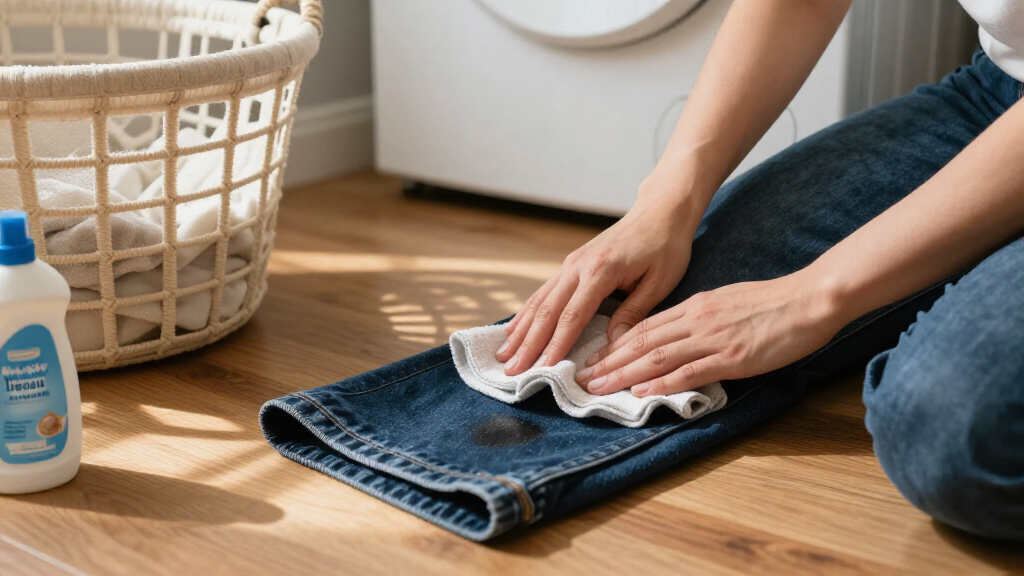
Work in baking soda paste, vinegar solution, or alcohol gently with fingers or a soft brush.
Wait 10–15 min
Let the agent break down residue. Never scrub aggressively—dark fibers fade and pill.
Rinse Cold
Cold water stops residues from bonding deeper. Hot water can set the stain.
Repeat or Wash
Stubborn marks may need a second round, then a wash with detergent for darks.
5 Damage-Free Ways to Remove Deodorant Marks
Each method suits a different scenario—work through them in order of ease or availability. For stubborn stains, repeat the process or combine methods.
Baking Soda Paste
Mix 2 tablespoons of baking soda with a few drops of water into a thick paste. Rub in gently with fingers or a soft-bristled brush, let sit 10–15 minutes, rinse with cold water.
White Vinegar Solution
Combine equal parts white vinegar and water. Dab onto the stain with a clean cloth—the acidity neutralizes alkaline deodorant buildup—then rinse or wash as usual.
Rubbing Alcohol
Dampen a cotton ball and gently blot the stain. Alcohol dissolves oily, sticky residue and evaporates fast, limiting fabric exposure.
Commercial Stain Removers
Choose a remover formulated for deodorant or sweat stains—these use enzymes or surfactants—applied pre-wash per package instructions.
Cold Water + Gentle Scrub
For fresh marks, rinse immediately with cold water and use a soft cloth to gently scrub the residue away before it sets into the fibers.
Why Baking Soda Wins
A baking soda paste lifts deodorant stains from dark fabrics without damaging delicate fibers—making it the most accessible and effective home remedy in the arsenal.
Natural Remedies vs. Commercial Products
| Feature | Natural Remedies | Commercial Products |
|---|---|---|
| Cost | Low — often under $5 for ingredients | Varies — usually $5–$15 per bottle or tube |
| Ease of Use | Simple, but requires mixing and patience | Very convenient — just follow instructions |
| Gentleness | Very gentle, safe for delicate fabrics | Depends on formulation; some may be harsh |
| Environmental Impact | Eco-friendly, biodegradable | Varies; some contain strong chemicals |
| Effectiveness | Great for fresh or light stains | Effective for stubborn, set-in stains |
Choosing between them comes down to priorities: natural options are gentle and budget-friendly for routine maintenance; commercial enzyme formulas pack more punch for tough, set-in stains.
Keep Your Dark Clothes Stain-Free Longer
Let It Dry Fully
Wait a few minutes after applying deodorant before dressing to cut residue transfer.
Go Clear or Gel
Clear and gel formulas leave far less visible residue than stick antiperspirants.
Aluminum-Free
Natural, aluminum-free deodorants are less likely to stain and gentler on fabric.
Wash Promptly
The sooner sweat and deodorant residue hits the wash, the easier it comes out.
Add a Barrier
Protective undershirts or pads block transfer on hot days and workouts.
Reader Questions, Answered
Do
- Treat stains promptly—action before laundry night beats action on laundry night
- Pre-treat before machine washing, with detergent made for darks
- Use cold water; it stops residues bonding to fibers
- Test any remedy on a small, inconspicuous area first
- Repeat or combine methods for stubborn, set-in stains
Don’t
- Use bleach on dark fabrics—it causes discoloration, period
- Scrub aggressively—it causes pilling, fading, and fiber damage
- Rinse set-in stains with hot water—it can lock in the residue
- Apply undiluted vinegar directly—dilute 1:1 with water
- Wait days to wash sweat-exposed garments—buildup gets resistant
What Causes Deodorant Marks and Why Do They Show Up on Dark Clothes?
Deodorant marks are mostly caused by aluminum compounds in antiperspirants that combine with sweat and skin oils. These create white or grayish residues, especially noticeable on dark fabrics due to the high contrast. Imagine a deep navy shirt or black blazer—those faint white streaks look like a spotlight. The marks aren’t just unsightly; they can also be stubborn to remove if ignored.
Understanding the cause helps you pick the right treatment. Over time, these residues can set into fibers, making them harder to remove. The key is to act quickly—treating stains before they fully set gives you a much better shot at complete removal.
For example, if you notice a faint white line after a day at work, don’t wait until laundry night. Spot-treat right away with a simple home remedy to prevent the stain from becoming a permanent fixture. The sooner you address the stain, the less likely it is to bond deeply with the fibers, which can make removal more difficult. This also means that regular maintenance and prompt action can prevent buildup that becomes increasingly resistant to cleaning, saving you time and effort in the long run.
deodorant stain remover for dark clothes
As an affiliate, we earn on qualifying purchases.
As an affiliate, we earn on qualifying purchases.
5 Simple Ways to Remove Deodorant Marks from Dark Clothes Without Damage
- Baking Soda Paste: Mix 2 tablespoons of baking soda with a few drops of water until it forms a thick paste. Gently rub it into the stain with your fingers or a soft-bristled brush. Let sit for 10-15 minutes, then rinse with cold water. This natural abrasive lifts residues without harming dark fibers. The gentle scrubbing action helps dislodge residues that have bonded with fibers, which is crucial because aggressive scrubbing can damage delicate fabrics or cause fading. Baking soda’s mild abrasiveness effectively breaks down residues while maintaining fabric integrity, making it a safe choice for everyday use.
- White Vinegar Solution: Combine equal parts white vinegar and water. Dip a clean cloth or sponge into the solution and dab onto the stain. The acidity breaks down deodorant build-up. Follow with a rinse or wash as usual. Vinegar’s acidic nature can neutralize alkaline residues in deodorant deposits, helping to dissolve and lift stains. However, overuse or applying undiluted vinegar directly can sometimes weaken or discolor fabrics; hence, the diluted method balances efficacy with fabric safety. Regular use of vinegar can also prevent future build-up by maintaining the pH balance on fabrics.
- Rubbing Alcohol: Dampen a cotton ball or soft cloth with rubbing alcohol and gently blot the stain. It dissolves residues and evaporates quickly, reducing the risk of fabric damage. Avoid over-saturating and test on a small area first. Rubbing alcohol acts as a solvent that breaks down oily and sticky residues. Its quick evaporation minimizes prolonged exposure, reducing potential damage. However, because alcohol can sometimes dry out or weaken fibers, testing on a hidden area first ensures the fabric’s resilience.
- Commercial Stain Removers: Use a stain remover formulated for deodorant or sweat stains. Apply according to package instructions, ideally before washing. Look for products labeled safe for dark fabrics. These often contain enzymes or surfactants designed to target specific residues. While they are effective, choosing products suitable for dark fabrics prevents discoloration or fading, which is a common concern with harsher chemicals. Using such products as part of a regular maintenance routine can prolong the life of your clothes and keep stains from setting.
- Cold Water and Gentle Scrubbing: For fresh stains, rinse the area with cold water immediately. Use a soft cloth to gently scrub the stain away. This prevents residues from setting into fibers. Cold water helps to stop the chemical reaction that causes residues to bond with fibers, which hot water can sometimes exacerbate. Gentle scrubbing dislodges particles without damaging delicate fibers, especially important for dark or textured fabrics where aggressive cleaning might cause pilling or fading. Regularly rinsing and gentle cleaning are key to maintaining dark garments’ appearance over time.
Each method works best for different scenarios—try them in order of ease or availability. For stubborn stains, repeat the process or combine methods for better results. Remember, patience and gentle handling are your best allies in preserving fabric quality while effectively removing stains.
natural fabric stain remover baking soda vinegar
As an affiliate, we earn on qualifying purchases.
As an affiliate, we earn on qualifying purchases.
Comparison Table: Natural Remedies vs. Commercial Products for Deodorant Stain Removal
| Feature | Natural Remedies | Commercial Products |
|---|---|---|
| Cost | Low, often under $5 for ingredients | Varies, usually $5-$15 per bottle or tube |
| Ease of Use | Simple, requires mixing and patience | Very convenient, follow instructions |
| Gentleness | Very gentle, safe for delicate fabrics | Depends on formulation; some may be harsh |
| Environmental Impact | Eco-friendly, biodegradable | Varies; some contain strong chemicals |
| Effectiveness | Great for fresh or light stains | Effective for stubborn stains, especially with enzyme-based formulas |
Choosing between natural remedies and commercial products depends on your priorities—cost, convenience, or environmental concerns. For routine maintenance, natural options are gentle and budget-friendly. For tough stains, commercial formulas often pack more punch.
As an affiliate, we earn on qualifying purchases.
Prevention Tips: Keep Your Dark Clothes Stain-Free Longer
- Let deodorant dry completely: Wait a few minutes after application before dressing. It reduces residue transfer.
- Switch to clear or gel deodorants: They leave less visible marks compared to stick antiperspirants.
- Try natural or aluminum-free deodorants: These are less likely to cause stains and are gentler on fabrics.
- Wash clothes promptly: The sooner you treat sweat and deodorant residues, the easier they come out.
- Use protective undershirts or pads: They add a barrier, especially during hot days or workouts.
Imagine slipping into a favorite black blazer for an important meeting. Taking a moment to let your deodorant set and choosing the right product can keep your look sharp and stain-free longer.
As an affiliate, we earn on qualifying purchases.
How to Treat a Stubborn Deodorant Stain Step-by-Step
When a stain has set, patience and proper technique are your best friends. Here’s a straightforward process:
- Identify the stain: Check if it’s fresh or dried. Fresh stains respond better to quick action.
- Pre-treat with a natural remedy: Apply baking soda paste or dab with vinegar solution. Let sit for 10-15 minutes.
- Gently scrub: Use a soft brush or cloth to loosen residues, especially on textured fabrics.
- Rinse thoroughly: Use cold water to wash out the treatment, avoiding hot water which can set stains.
- Wash as usual: Use your regular laundry cycle with a gentle detergent suitable for dark clothes.
- Air dry: Avoid the dryer until you verify the stain is gone, as heat can set any remaining residue.
For example, I once noticed a faint white streak on a black shirt after a week. Applying a baking soda paste, letting it sit, then rinsing and washing made the stain disappear completely. Patience pays off! Additionally, understanding the nature of stubborn stains guides you to choose the right treatment. Older stains are often more resistant because the residues have had more time to bond with fibers, making them harder to remove. Employing a combination of gentle pre-treatment and multiple washes can improve success, but always balance cleaning power with fabric safety to avoid damage or fading.
Frequently Asked Questions
Can I use bleach to remove deodorant stains from dark clothes?
No, bleach can damage dark fabrics and cause discoloration. Stick to gentle, fabric-safe methods like baking soda, vinegar, or rubbing alcohol to remove stains without risking harm to your garments.
How long does it take to see results after treating a stain?
Immediate rinsing or washing usually provides the best results. For stubborn or older stains, you might need to repeat the treatment a couple of times. Patience and gentle care are key.
Are natural remedies safe for all fabrics?
Generally, yes. But always test on a small, hidden area first to make sure there’s no discoloration or damage, especially on delicate or dark fabrics. Recognizing the specific fabric type and its care requirements helps prevent unintended damage, and some fabrics may react differently to acidic or abrasive treatments, so cautious testing is recommended.
What’s the best way to prevent deodorant marks in the first place?
Allow deodorant to dry fully before dressing, switch to clear or gel formulas, and consider natural or aluminum-free options. Promptly washing clothes also helps keep stains at bay. These practices reduce the amount of residue transferred to clothes and minimize the chance of stains setting, which is especially important for maintaining the appearance of dark garments over time.
Can I use a washing machine to remove deodorant stains?
Yes. Pre-treat stains with your chosen method before washing. Use cold water and a gentle detergent suitable for dark fabrics to prevent setting the stain. Proper pre-treatment combined with gentle washing preserves fabric color and integrity, making it an effective routine for stain removal and fabric care.
Conclusion
Deodorant stains on dark clothes aren’t a lost cause. With gentle, household ingredients and a little patience, you can keep your wardrobe looking sharp without resorting to harsh chemicals or expensive treatments.
Next time you spot a mark, remember: quick action, natural remedies, and prevention are your best tools. Keep your dark garments pristine, and enjoy the confidence that comes with a fresh, clean look—no stains needed.
Flea & tick season Picks
flea and tick prevention
As an affiliate, we earn on qualifying purchases.