TL;DR

Get cleaning gear delivered free — and shop member deals
- Fast, free delivery on millions of items
- Access to Prime Big Deal Days deals on October 6–7
- Prime Video, Amazon Music and more included
Rust stains from sinks or tubs often come from iron in water or corroding fixtures. Mild acids like lemon or commercial rust removers work best when used correctly, and prevention is key to lasting results.
Rust stains in your bathroom aren’t just unsightly — they’re a sign of iron-rich water, corroding fixtures, or metal objects left on wet surfaces. But you don’t have to live with them. With a few simple, safe steps, you can make those orange-brown marks vanish.
In this guide, you’ll learn exactly how to remove rust stains from your sink or tub without risking damage. Whether you’re dealing with porcelain, acrylic, or natural stone, I’ll show you what works — and what doesn’t — so your bathroom stays clean, bright, and rust-free.
Start with a thorough wash to prep the surface and improve treatment results.
Use mild acids like lemon juice or commercial rust removers suited for your fixture material.
Repeat treatments in short, gentle sessions to avoid scratching or damaging your surfaces.
Match your cleaning method to the material — avoid harsh abrasives or acids on natural stone or acrylic.
Prevent future stains by drying surfaces, fixing leaks, and testing or treating your water for iron.
How to Remove Rust Stains From a Sink or Tub
Orange-brown marks are usually iron deposits—not ordinary dirt. Remove them with the gentlest surface-compatible treatment, rinse completely, and address the source before the stain returns.
Wash away soap scum and oils before treating rust.
Minutes for a light lemon-and-baking-soda treatment.
Mix bleach with acids, vinegar, ammonia, or rust remover.
Repeat gentle sessions instead of scrubbing harder.
Clean, treat, rinse, reassess.
Rust treatment works best on a clean surface. Begin with ordinary washing, then escalate only as far as the fixture material safely allows. Stop if the finish turns dull, rough, sticky, or discolored.
Wash
Use warm water and mild dish detergent to remove oil, soap scum, and loose debris. Rinse well.
Test
Confirm the material and test the treatment in a small, inconspicuous area before wider use.
Treat
Apply a mild acidic paste or labeled rust remover. Keep it within the recommended contact time.
Rinse + dry
Remove all residue with clean water, dry with a soft towel, and repeat gently only if needed.
Lemon juice + baking soda paste
Mix into a spreadable paste, cover the stain, and let it work briefly without drying completely. Rub lightly with microfiber or a non-scratch sponge, then rinse thoroughly. Baking soda adds mild abrasion; the lemon supplies the acid that reacts with the iron deposit.
The fixture decides the method.
A treatment that is effective on glazed porcelain may permanently etch natural stone or dull acrylic. Identify the material before reaching for any acid, powder, pad, or commercial remover.
Porcelain + enameled iron
Use mild acids or an approved oxalic-acid product. Avoid abrasive tools that can scratch or wear through the glaze.
Acrylic + fiberglass
Choose only products explicitly labeled safe for the material. Use a soft cloth and minimal pressure.
Stainless steel
Use a stainless-steel-safe rust remover, rub with the grain, rinse completely, and dry immediately.
Stone + cultured marble
Use a manufacturer-approved or stone-specific cleaner. Natural stone can etch or discolor on contact with acid.
What works where.
“Safe” always means label-approved, spot-tested, and used for the specified time. Manufacturer guidance takes priority when a fixture has a special coating or finish.
| Surface | Mild acidic paste | Commercial remover | Abrasive pad | Critical instruction |
|---|---|---|---|---|
| Porcelain | ✓Usually compatible | ✓Use labeled product | ×Avoid scratching glaze | Check for chips exposing metal. |
| Acrylic | ~Only if approved | ~Acrylic-safe only | ×Can dull finish | Use soft cloth and light pressure. |
| Fiberglass | ~Test carefully | ~Surface-safe only | ×Scratch risk | Stop if gloss changes. |
| Stainless steel | ~Steel-safe only | ✓Preferred for rust | ×May scratch grain | Rub with grain; rinse and dry. |
| Natural stone | ×Acid can etch | ~Stone-specific only | ×Permanent damage | Consult a stone-care specialist. |
✓ compatible when directed / ~ conditional or label-dependent / × avoid
Four mistakes that make rust worse.
Cleaning chemistry and force both matter. The wrong combination can create toxic gas, pit metal, etch stone, or leave scratches that trap future deposits.
Do not use bleach as the primary rust treatment.
It is ineffective against iron oxide in many situations and may intensify discoloration or corrode finishes.
Never mix cleaning products.
Keep bleach away from acids, vinegar, ammonia, toilet cleaner, and rust remover. Dangerous gases can form.
Skip steel wool and harsh scouring powder.
Permanent scratches damage the finish and give future rust and grime more places to collect.
Do not extend the contact time.
More time does not guarantee more removal. It can cause etching, dullness, discoloration, or stripped coatings.
Follow the stain upstream.
Cleaning removes the visible deposit. Lasting control comes from identifying how iron reaches the wet surface and interrupting that path.
Hard or well water carries dissolved minerals.
Drips and puddles remain on the fixture.
Air converts deposits into orange-brown marks.
Repeated wetting deepens the discoloration.
Repair leaks, replace rusting parts, or filter water.
Prevent the next orange ring.
Small habits reduce surface contact time, while plumbing and water-treatment fixes address recurring mineral deposits at their source.
Dry wet surfaces
Wipe sinks and tubs after use so iron-bearing water cannot evaporate in place.
Remove metal objects
Do not leave cans, razors, tools, or metal containers on a wet ledge.
Fix drips + corrosion
Repair leaks and replace rusting fixture parts before deposits spread.
Test the water
Check iron, manganese, hardness, and pH; consider filtration or softening.
Patience preserves the finish.
Use gloves, ventilate the room, follow the product label, and rinse completely after every treatment.
Start with a gentle clean to loosen the stain
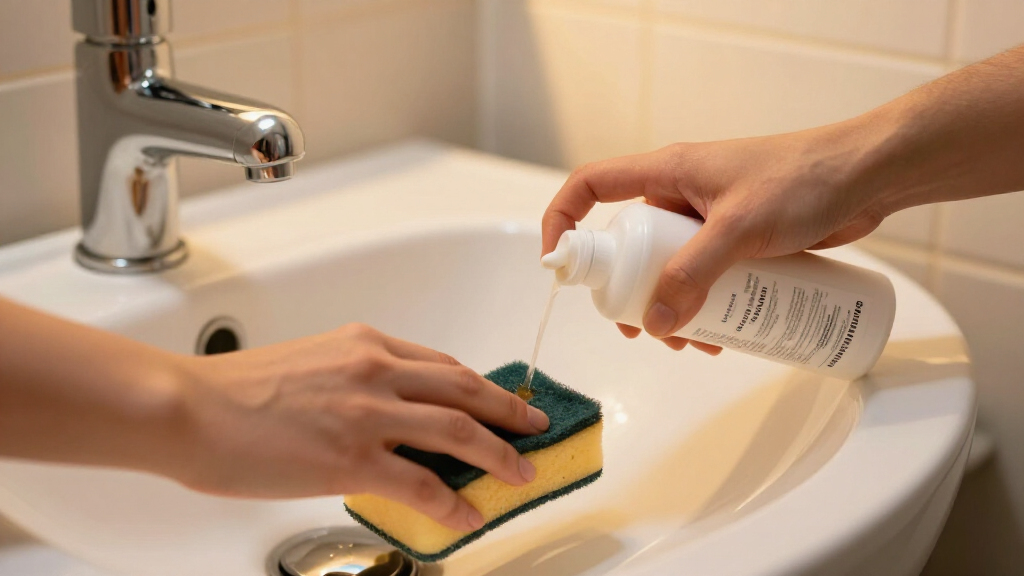
Before anything else, wash the stained area with warm water and a mild dish soap. This clears away oils, soap scum, and loose debris that could block rust removal. Rinse thoroughly and dry with a soft towel. This simple step often makes the next treatments more effective.
For example, if you notice a rusty ring around your tub, a quick wash helps prep the surface. It’s like giving your stain a clean canvas to work on.
rust stain remover for bathroom sinks
As an affiliate, we earn on qualifying purchases.
As an affiliate, we earn on qualifying purchases.
Try a homemade acidic paste for light rust stains
For light rust deposits, combining lemon juice with baking soda creates a mildly abrasive, acidic paste. Apply it directly to the stain, then let it sit for 10-15 minutes. Gently rub with a microfiber cloth or non-scratch sponge, then rinse thoroughly.
For instance, on a porcelain sink, this paste can lift faint rust spots without scratching the glaze. Be sure to test in an inconspicuous spot first.
As an affiliate, we earn on qualifying purchases.
Use commercial rust removers for stubborn stains
If homemade remedies don’t do the trick, a commercial rust remover designed for your fixture surface can save the day. Look for products with oxalic, citric, or sulfamic acids, and always follow the label instructions.
Applying a commercial rust remover can be highly effective because these products contain concentrated acids formulated specifically to break down iron oxide deposits. However, they also pose risks: overuse or improper application can damage delicate surfaces or strip finishes. Always test in a small area first, and use protective gloves and ventilation. Rinsing thoroughly after the treatment ensures no residual acids remain, preventing future damage or discoloration.
Choosing the right product matters because different surfaces react differently to various acids. For example, an acid safe for porcelain might etch natural stone, leading to permanent damage. Understanding the chemical composition and your fixture’s material helps prevent costly mistakes.
natural stone safe rust stain cleaner
As an affiliate, we earn on qualifying purchases.
As an affiliate, we earn on qualifying purchases.
Repeat treatments gently — avoid harsh scrubbing
Patience beats force when removing rust. Applying treatments in short, repeated sessions reduces the risk of damaging surfaces. Repeated gentle applications can gradually lift stains without abrasively removing surface layers or causing scratches. If you notice dullness, rough patches, or discoloration, it’s a sign to stop or adjust your approach.
For example, if a rust stain persists after two treatments, a third gentle application might be enough. Forcing it can create scratches or dullness, making future stains more likely. Remember, surfaces like porcelain and natural stone are sensitive; aggressive scrubbing can cause microcracks that trap dirt and stain more easily over time. The key tradeoff here is between effectiveness and surface integrity: aggressive scrubbing might remove the stain faster but risks permanent damage, which could make future cleaning even more difficult and costly.
lemon juice rust stain removal kit
As an affiliate, we earn on qualifying purchases.
As an affiliate, we earn on qualifying purchases.
Match cleaning methods to your surface to avoid damage
Porcelain or enameled cast iron: Use mild acids and approved oxalic products. Avoid abrasive tools that can scratch the glaze. If chips expose metal, repair the coating after cleaning. Using harsh abrasives or overly aggressive acids can cause microcracks, which weaken the surface and make it more susceptible to future stains and damage.
Acrylic or fiberglass: Stick to products labeled safe for these materials. Avoid harsh acids and abrasive scrubbing pads that can dull or scratch the surface. Damage here not only looks unsightly but can also compromise the integrity of the material, leading to cracks or discoloration that trap dirt and stains.
Stainless steel: Use a rust remover formulated for steel, rub along the grain, and dry immediately to prevent pitting. Never use chlorine bleach, which can cause pitting or corrosion, especially on older fixtures. Proper matching of cleaning agents helps preserve the finish and prevents costly repairs or replacements.
Cultured marble or natural stone: Use manufacturer-approved cleaners. Keep acids and abrasives away, especially on natural stone, which can etch or discolor easily. Damage to these surfaces can be irreversible, so understanding what products are safe is crucial for long-term maintenance.
Understanding these material differences is crucial because using the wrong cleaner or abrasive can lead to microcracks, dulling, or etching. These damages may not be immediately visible but can trap dirt and stains, making future cleaning more difficult and expensive. Properly matching cleaning methods preserves the integrity of your fixtures and prolongs their lifespan.
What NOT to do when removing rust stains
Avoid these common pitfalls:
- Using bleach as a rust treatment — it often doesn’t work and can worsen stains. Bleach can also cause discoloration or weaken certain finishes.
- Mixing cleaners like vinegar or acids with bleach or ammonia — dangerous gases can form, risking health hazards and surface damage.
- Scrubbing with steel wool or harsh powders on delicate surfaces — scratches are permanent and can trap stains, making future cleaning more difficult.
- Leaving acids on longer than recommended — this can damage finishes, cause etching, or discolor the surface permanently.
For example, many people try to scrub rust with steel wool, only to end up with scratches that trap stains and make future cleaning harder. Proper technique and timing are essential to avoid long-term damage.
Prevent future rust stains with simple habits
Keep rust at bay by removing metal objects from wet surfaces, drying after cleaning, and fixing drips promptly. Regularly clean small deposits before they build up, and replace rusting fixtures or parts.
Testing your water for iron, manganese, and pH levels helps identify long-term causes. Upgrading to a whole-house iron filter or water softener can significantly cut down on future stains. These measures address the root causes, reducing the need for repeated cleaning and preventing the buildup of rust deposits that can etch or stain surfaces over time.
For example, installing a water softener in a home with hard, iron-rich water drastically reduces rust stains over time, saving effort and preserving fixture surfaces.
When to call in the pros for tough stains
If rust stains keep coming back despite your best efforts, or if your water looks orange and smells metallic, it’s time for professional help. A plumber, water-treatment specialist, or fixture refinishers can assess and fix underlying issues. Persistent stains may indicate ongoing corrosion or high iron levels that require specialized treatment or water conditioning systems.
Deep stains in natural stone or chipped enameled surfaces may need refinishing or replacement. For example, a deep rust pattern that refuses to fade on a marble countertop likely needs expert attention, as DIY methods could cause further damage or be ineffective.
Frequently Asked Questions
Does vinegar really remove rust from a bathtub?
Vinegar can loosen light rust and mineral deposits on some surfaces, but it’s not a universal fix. Its acidity helps break down rust particles, but it’s less effective on heavy or ingrained stains. Additionally, overuse or prolonged exposure can etch or discolor delicate surfaces like natural stone or glazed porcelain, leading to dullness or pitting. Therefore, understanding the surface type and using vinegar judiciously is important. For stubborn stains, stronger acids or commercial rust removers may be necessary, but always test first and follow safety precautions.
Can baking soda remove rust stains?
Baking soda helps with light surface deposits through gentle abrasion and mild alkalinity, which can loosen some surface rust. However, its effectiveness diminishes on stubborn or deep rust stains because it lacks the acidity needed to break down iron oxide. Using baking soda as part of a cleaning routine can prevent minor stains from setting in, but for more significant rust, acidic solutions or specialized rust removers are more effective. Combining baking soda with other treatments can be beneficial, but don’t rely solely on it for tough stains.
Is bleach effective for rust removal?
No. Bleach is generally ineffective against rust because it does not chemically react with iron oxide. Instead, it may bleach the surface or temporarily lighten stains, but the rust itself remains. In some cases, bleach can worsen stains by causing discoloration or damaging finishes, especially on natural stone or enamel surfaces. Using bleach as a rust treatment is a common misconception; always choose acids or rust-specific removers for effective results.
What is the fastest way to get rid of a stubborn rust stain?
The quickest method often involves using a commercial rust remover formulated for your fixture material. These products contain concentrated acids designed to break down rust quickly. To avoid damage, follow the instructions carefully, test in an inconspicuous area first, and rinse thoroughly after application. While they work fast, overuse or improper application can cause surface damage, so patience and caution are key. Combining this with proper surface preparation and gentle reapplications enhances safety and effectiveness.
How long should rust remover or vinegar sit before rinsing?
Follow the specific product instructions or fixture guidelines. Typically, acids and rust removers should be left on for only 5 to 15 minutes to prevent damage. Longer exposure can etch or discolor surfaces, especially natural stone or glazed porcelain. Rinsing thoroughly after the recommended time ensures no residual acids remain, which could cause ongoing damage or staining. Always monitor the process and avoid leaving solutions on longer than advised to maintain the integrity of your fixtures.
Conclusion
Rust stains can seem stubborn, but with patience and the right tools, they often disappear without damage. Always test first, use gentle acids, and avoid the temptation to scrub aggressively. Your sink or tub can look new again with just a little care.
Remember, preventing future stains is easier than removing deep-set ones. Keep metal objects away from wet surfaces, dry thoroughly, and consider water treatment options if iron is a recurring problem. Now, go enjoy a rust-free bathroom!
Fall Picks
fall essentials
As an affiliate, we earn on qualifying purchases.