
TL;DR

Get cleaning gear delivered free with Prime
- Fast, free delivery on millions of items
- Prime Video, Amazon Music and more included
- Member-only deals all year
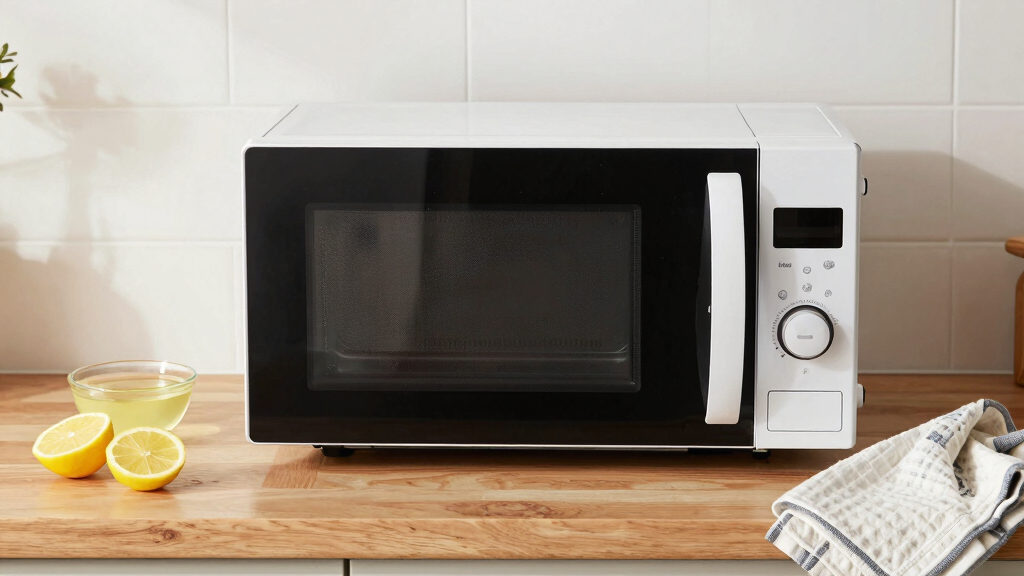
Microwave odors come from food spills, grease, or mold building up inside. Heating a water-vinegar or lemon mixture for 2 minutes creates steam that loosens grime and neutralizes smells, a fast fix anyone can do to keep their microwave fresh.
Ever opened your microwave and been greeted by a sour, burnt smell that just won’t go away? You’re not alone. Many people struggle with lingering odors, even after cleaning. The good news? There’s a quick, 2-minute fix that uses steam and natural ingredients to refresh your microwave and wipe out bad smells.
In this guide, you’ll learn exactly why your microwave smells, what causes those stubborn odors, and most importantly, how to banish them with just a simple steaming step. No harsh chemicals, no complicated tools—just a straightforward trick anyone can do.
Why Your Microwave Always Smells—And It’s Not Just Food Spills
Most odors in your microwave originate from more than just visible spills. When food spills are not thoroughly cleaned, they leave behind residues that can ferment or decompose, releasing foul odors over time. Grease splatters, which are often invisible once cooled, can cling to surfaces and trap bacteria and mold spores. These microorganisms thrive in damp, greasy environments and produce volatile compounds that emit unpleasant odors. Burnt or steamed food also contributes to persistent smells because the heat causes molecules to bond with interior surfaces, embedding odors into porous materials like the turntable, door seals, and vents.
Understanding these causes highlights why a superficial wipe isn’t enough. Residues that are left behind can continue to emit odors long after cleaning, especially if moisture and warmth persist inside the microwave. This is why odors tend to return quickly—because the underlying grime and microbial activity remain. Addressing these deeper sources with a method that loosens and neutralizes residues is essential for truly fresh-smelling microwave.
In essence, the lingering smell isn’t just about visible stains; it’s about the microscopic and molecular buildup that sustains these odors. Recognizing this helps us appreciate why simple wiping sometimes fails and why steam cleaning with vinegar or lemon is a more effective approach—because it reaches into those hidden crevices and breaks down the bonds that hold onto odors.
As an affiliate, we earn on qualifying purchases.
How the 2-Minute Steam Trick Completely Refreshes Your Microwave
The power of steam lies in its ability to penetrate and loosen embedded grime and microbial residues that cause odors. Heating a mixture of water with vinegar or lemon for just 2 minutes creates a dense vapor that surrounds every surface inside your microwave, including those hard-to-reach corners and porous materials. This process not only lifts away grease and food particles but also chemically neutralizes odor molecules by breaking them apart or masking them with fresh scents.
By doing this, you’re effectively dissolving the molecular bonds that trap smells and residues, which simple wiping can’t reach. The steam softens dried-on stains and kills some bacteria, reducing microbial sources of odor. The acidity of vinegar or the natural oils in lemon further cut through grease and leave behind a subtle, clean scent—enhancing the deodorizing effect.
This method’s simplicity belies its effectiveness. The 2-minute steam treatment acts as a deep clean that resets your microwave’s internal environment, making it smell fresh and preventing odor recurrence. It’s a practical, chemical-free approach that leverages the physical and chemical properties of steam and natural acids to restore cleanliness and freshness efficiently.
As an affiliate, we earn on qualifying purchases.
As an affiliate, we earn on qualifying purchases.
As an affiliate, we earn on qualifying purchases.
Fall Picks
fall essentials
As an affiliate, we earn on qualifying purchases.