
TL;DR

Get cleaning gear delivered free — and shop member deals
- Fast, free delivery on millions of items
- Access to Prime Big Deal Days deals on October 6–7
- Prime Video, Amazon Music and more included
Cleaning a stainless steel sink is about gentle, regular upkeep using non-abrasive products. Wiping in the grain and drying afterward helps avoid water spots and scratches. Natural solutions like vinegar and baking soda work well and are eco-friendly.
Nothing beats the sleek, shiny look of a clean stainless steel sink — until water spots, fingerprints, or grime start to dull its glow. But cleaning it the wrong way can scratch, dull, or even damage the surface. If you want your sink to stay looking brand new, it’s all about knowing the right techniques and products.
In this guide, you’ll learn simple, effective steps to keep your stainless steel sink spotless without harsh chemicals or abrasive tools. Whether you’re dealing with water spots, stains, or everyday messes, these tips will help you preserve that mirror-like shine and extend your sink’s life.
Always wipe in the direction of the grain to prevent scratches and maintain the finish.
Natural cleaners like vinegar and baking soda are effective, safe, and eco-friendly for daily upkeep.
Avoid steel wool, abrasive scrubbers, and harsh chemicals that can dull or damage the surface.
Dry the sink thoroughly after cleaning to prevent water spots and mineral deposits.
Regular maintenance extends the lifespan of your sink and preserves its shiny appearance.
How to Clean Your Stainless Steel Sink Without Scratches
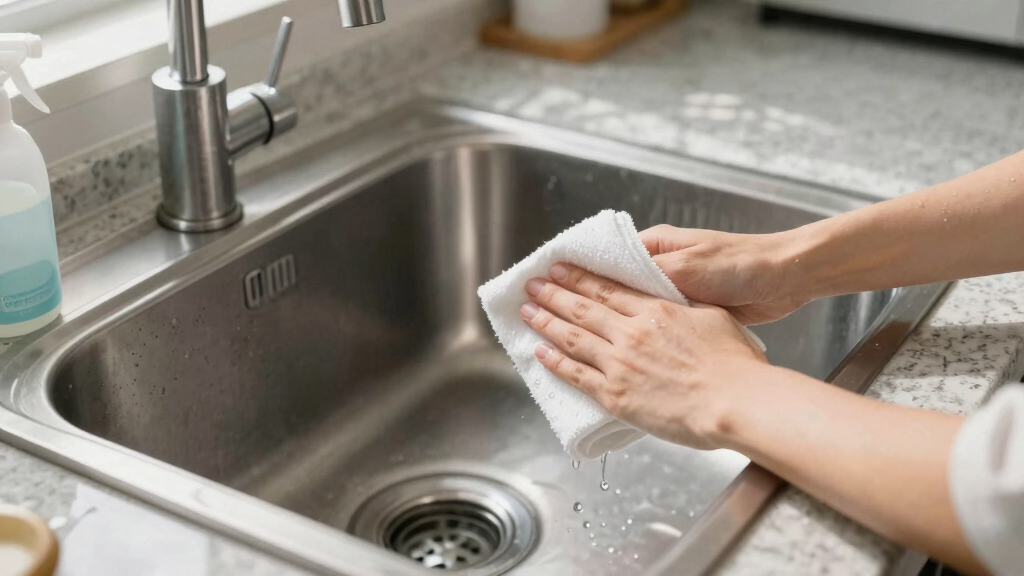
Cleaning in the direction of the grain is key. Imagine the fine lines running through your sink’s surface — following them prevents scratches and keeps the finish smooth.
For daily cleaning, a soft microfiber cloth with warm water and a few drops of mild dish soap works wonders. After rinsing, wipe dry to prevent water spots. For stubborn grime, a paste of baking soda and water gently lifts stains without scratching.
For example, after making a batch of homemade pasta, you might notice flour and water splashes. Using a soft cloth and wiping in the grain direction keeps the surface pristine without dulling it.
Why does this matter? Wiping in the grain direction minimizes the risk of micro-scratches that can accumulate over time, dulling the finish. Using gentle tools prevents the surface from becoming a scratch magnet, which not only preserves aesthetic appeal but also maintains the protective layer that keeps your sink resistant to corrosion and staining. The tradeoff is that more abrasive cleaning might seem faster but can permanently damage the surface, leading to costly repairs or replacements down the line.
stainless steel sink cleaning brush
As an affiliate, we earn on qualifying purchases.
As an affiliate, we earn on qualifying purchases.
The Best Natural Products for a Sparkling Sink
Natural cleaners are gentle but effective. Vinegar cuts through mineral deposits and disinfects—just spray it on, let sit a few minutes, then wipe clean. Baking soda acts as a mild abrasive that lifts stains and dullness without scratching.
For instance, if your sink has water spots or fingerprints, spray it with a mix of equal parts vinegar and water. After a few minutes, buff with a damp microfiber cloth. For tougher stains, sprinkle baking soda, scrub lightly, then rinse.
Olive oil or a stainless steel polish can add a final shine, leaving your sink looking polished and new.
Why choose these? Vinegar and baking soda are not only eco-friendly but also safe for your plumbing and environment. They don’t introduce harsh chemicals that could linger or cause long-term damage. However, overusing vinegar on certain finishes might dull the shine if not properly rinsed, so moderation and thorough rinsing are key. The tradeoff is that natural solutions are gentler but may require a bit more time or repeated applications compared to commercial cleaners, which can be more aggressive but risk surface damage if misused.
microfiber cloth for stainless steel
As an affiliate, we earn on qualifying purchases.
As an affiliate, we earn on qualifying purchases.
Common Mistakes That Dull or Damage Your Sink
Avoid using steel wool, abrasive scrubbers, or harsh chemicals like bleach. These can scratch or discolor the surface, making stains and water spots more noticeable.
For example, scrubbing with steel wool might remove stains but will leave tiny scratches that dull the finish over time. Similarly, bleach can cause discoloration, especially if left sitting.
Always test a small area first and stick to non-abrasive tools. Regularly drying your sink after use also prevents water spots and mineral buildup that can be tough to remove later. The implications of these mistakes are significant: scratches and discoloration compromise the protective layer, making the surface more vulnerable to corrosion, staining, and the accumulation of grime. The tradeoff here is between quick fixes with abrasive tools that cause long-term damage and gentle cleaning that preserves the integrity of your sink’s surface, ensuring it remains both beautiful and durable over time.
natural stainless steel cleaner vinegar baking soda
As an affiliate, we earn on qualifying purchases.
As an affiliate, we earn on qualifying purchases.
Comparison Table: Cleaning Products for Stainless Steel Sinks
| Product Type | Effectiveness | Safety | Best For |
|---|---|---|---|
| Mild Dish Soap | Good for daily cleaning | Very safe | Everyday messes |
| Baking Soda | Gentle abrasive, removes stains | Safe, natural | Water spots, dullness |
| Vinegar & Water | Disinfects, removes mineral deposits | Safe when diluted | Water spots, fingerprints |
| Commercial Stainless Steel Cleaner | Highly effective, leaves shine | Follow manufacturer instructions | Persistent stains, dull finish |
Choosing the right product depends on the mess and your preference for natural or commercial options. For routine cleaning, mild soap and water are enough. For tougher stains, baking soda or vinegar do the job without damaging the surface.
Understanding the strengths and limitations of each product helps you avoid accidental damage. For example, commercial cleaners might be highly effective but could contain chemicals that, if used improperly, dull or harm the finish. Natural options, while gentler, may require more patience or repeated applications to achieve the same results. The tradeoff involves balancing effectiveness with safety and environmental impact, ensuring your cleaning routine maintains the integrity of your sink over time.
stainless steel sink scratch remover
As an affiliate, we earn on qualifying purchases.
As an affiliate, we earn on qualifying purchases.
Step-by-Step: The Perfect Weekly Cleaning Routine
- Start by rinsing the sink with warm water to loosen debris.
- Apply a small amount of mild dish soap or a baking soda paste, then scrub gently in the grain direction.
- Rinse thoroughly, making sure no residue remains.
- Spray with vinegar if you notice water spots or fingerprints, then wipe clean.
- Dry completely with a microfiber cloth to prevent water spots and mineral buildup.
- Finish with a light buff of olive oil or stainless steel polish for extra shine.
This routine takes less than five minutes but keeps your sink looking pristine day after day. Regularly following this process prevents the buildup of grime and mineral deposits, which can cause long-term damage if neglected. The key is consistency: neglecting routine cleaning allows residues to embed into the surface, making future cleaning more difficult and increasing the risk of scratches or dullness. The tradeoff is that a quick weekly routine is far less effort than deep cleaning repairs, saving you time and money in the long run.
Why Regular Maintenance Extends Your Sink’s Life
Consistent cleaning prevents grime, soap scum, and mineral deposits from settling in. Over time, these can cause scratches, dullness, or even corrosion.
Imagine a sink that gets a quick wipe every day — it stays shiny, resists water spots, and requires fewer deep cleans. Skipping regular care leads to stubborn stains and dulling that’s harder to fix later. Long-term, neglecting routine maintenance can result in the need for costly repairs or even premature replacement of the sink, which can be avoided by simple daily habits. Think of your sink as a piece of jewelry — clean it often, and it keeps its sparkle longer, saving you money and preserving its value.
The Final Shine: Tips for a Spotless, Scratch-Free Finish
After cleaning, always dry your sink with a microfiber cloth to prevent water spots and mineral deposits. Lightly buff with olive oil or a stainless steel polish to restore shine.
For example, a quick wipe with a soft cloth after each use keeps fingerprints at bay and enhances the finish. Applying a tiny drop of oil periodically creates a protective barrier that repels fingerprints and water spots. This regular maintenance not only preserves the aesthetic but also forms a protective layer that extends the lifespan of your sink. The tradeoff is minimal effort for significant long-term benefits: maintaining a pristine appearance and preventing damage that could require costly repairs or replacements.
Think of this as giving your sink a gentle polish — it’s like a skincare routine for your kitchen.
Frequently Asked Questions
How do I remove stubborn stains or rust from my stainless steel sink?
For stubborn stains, make a paste of baking soda and water, then gently scrub with a soft cloth. For rust spots, a mixture of baking soda and lemon juice works well — just apply, let sit a few minutes, then rinse thoroughly. The key is patience: allowing the natural acids and abrasives time to work breaks down mineral deposits and stains without damaging the surface. Rushing the process or using harsh tools can worsen the problem, leading to scratches or discoloration that are difficult to reverse. Long-term, adopting a routine of gentle cleaning and timely stain removal prevents buildup and preserves your sink’s appearance, avoiding costly repairs or replacements.
Can I use bleach or harsh chemicals on my stainless steel sink?
It’s best to avoid bleach and harsh chemicals, as they can discolor or dull the finish over time. Stick to natural solutions or specific stainless steel cleaners following manufacturer instructions. While these chemicals might seem effective initially, they can erode the protective layer of your sink, leading to corrosion, staining, or surface damage. The tradeoff involves risking long-term damage for short-term cleaning power. Using safer alternatives like vinegar, baking soda, or dedicated stainless steel products ensures your sink remains durable and shiny for years, with minimal environmental impact.
What’s the easiest way to prevent water spots and fingerprints?
Wipe your sink dry immediately after use with a microfiber cloth. Applying a small amount of olive oil or stainless steel polish can also help repel fingerprints and water spots, keeping the surface shiny longer. This simple habit prevents mineral deposits from settling and forming water spots, which can be difficult to remove once dried. Regularly polishing with natural oils creates a protective barrier, making future cleaning easier and maintaining the pristine look of your sink. The tradeoff is minimal effort for a consistently spotless, shiny surface that requires less intensive cleaning over time.
Are eco-friendly cleaning options effective?
Yes, vinegar, baking soda, and olive oil are safe, natural, and effective. They clean well without the harsh effects of chemicals, making them perfect for regular maintenance. While they might require a bit more patience or repeated application compared to commercial cleaners, they are less likely to cause long-term damage and are better for your health and environment. Proper technique—such as thorough rinsing and timely application—maximizes their effectiveness, ensuring your sink remains spotless without sacrificing safety or sustainability.
How often should I clean my stainless steel sink?
Ideally, clean it daily or after heavy use to maintain its shine and hygiene. Quick wipes in between deep cleans help prevent buildup and keep it looking its best. Regular cleaning prevents the accumulation of soap scum, mineral deposits, and stains that, if left untreated, can become ingrained and harder to remove. Consistent maintenance also minimizes the risk of scratches or dullness caused by abrasive buildup. The tradeoff is that a simple daily routine takes only a few minutes but significantly extends the lifespan and appearance of your sink, reducing the need for more intensive cleaning or repairs later.
Conclusion
Keeping your stainless steel sink looking fresh isn’t about harsh scrubbing or chemical overload. It’s about gentle, consistent care — wiping in the grain, drying thoroughly, and using natural cleaners. Think of it as giving your sink a daily spa treatment that keeps it shining for years.
Next time you wash dishes, remember: a simple wipe and a quick polish can turn a dull, fingerprinted sink into a sparkling centerpiece of your kitchen. Your sink’s shine is a reflection of your care — treat it well, and it will reward you with lasting beauty.
Halloween Picks
halloween
As an affiliate, we earn on qualifying purchases.