
TL;DR

Get cleaning gear delivered free — and shop member deals
- Fast, free delivery on millions of items
- Access to Prime Big Deal Days deals on October 6–7
- Prime Video, Amazon Music and more included
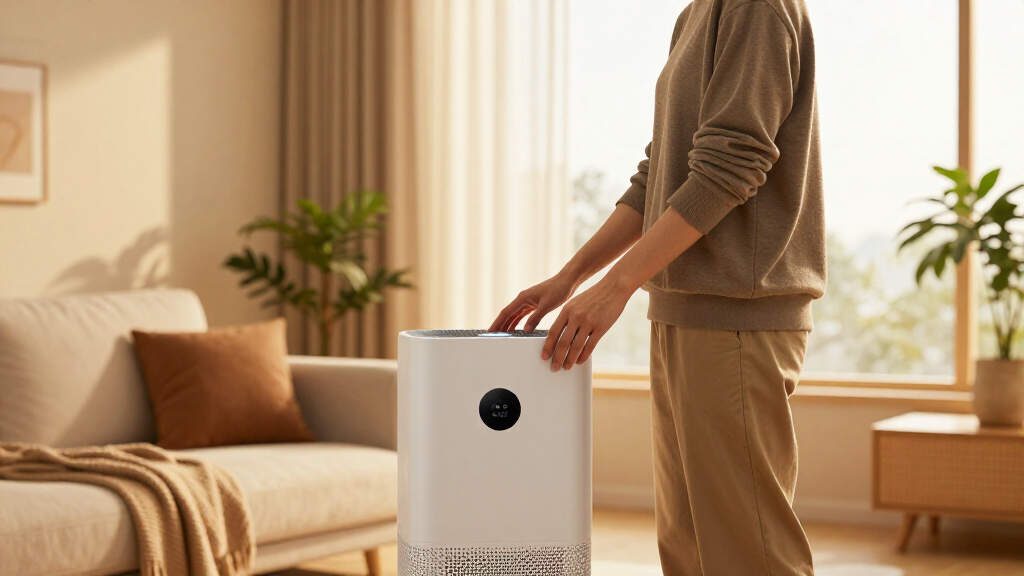
An air purifier helps when airborne particles are a persistent problem that source control can’t fix. It’s most useful for allergy sufferers, pollution entry, or limited ventilation, but not needed if your home is already clean and well-ventilated.
Ever thought about whether you really need an air purifier? The truth is, they’re powerful tools, but only in specific situations. In many homes, simple source control and ventilation do more than enough. But if you or someone in your household suffers from allergies, asthma, or frequent pollution exposure, a purifier might be a game-changer.
This guide will help you spot the signs that a purifier is worth your investment. We’ll cover what it can and can’t do, how to pick the right one, and when to skip it altogether—saving you time, money, and unnecessary clutter.
Use an air purifier mainly if you have allergy or asthma symptoms worsened by airborne particles or live near pollution sources.
Source control—like sealing leaks, reducing combustion, and improving ventilation—often trumps relying solely on filtration.
Choose a purifier with a high CADR for your room size and look for verified, independent testing to ensure real performance.
Avoid ozone generators and unproven ionizers; mechanical HEPA filtration remains the safest and most effective for particles.
Operate your purifier continuously during pollution events, keep filters maintained, and don’t expect it to fix active mold or gas problems.
How to Tell If You Actually Need an Air Purifier
Short answer: buy one when airborne particles remain a persistent problem after source control and sensible ventilation. For allergies, smoke, traffic pollution, or limited ventilation, a properly sized HEPA purifier can be transformative. For an already clean, well-ventilated home, it may simply add cost, noise, and clutter.
Particle problem—or something filtration cannot fix?
Purifiers clean airborne particles. They do not repair leaks, remove active mold, control humidity, detect radon, or replace ventilation.
Particle capture at approximately 0.3 micrometers.
With an eight-foot ceiling and five air changes hourly.
Approximate CADR for that example room.
Mechanical filtration without intentional ozone production.
Six signs filtration may be worth it
Symptoms can prompt an investigation, but coughing, headaches, or irritated eyes do not identify the cause by themselves. Look for a repeatable connection between symptoms, particle sources, room conditions, and measured air quality.
Allergies or asthma worsen indoors
Pollen, pet dander, dust-mite debris, or fine particles repeatedly trigger congestion, coughing, wheezing, or irritated eyes.
Smoke or traffic pollution enters
Wildfire smoke, busy-road emissions, or industrial pollution regularly infiltrates through windows, doors, and building leaks.
Particles cannot be fully avoided
Cooking, pets, candles, or a wood-burning stove create ongoing fine-particle loads despite reasonable source reduction.
Opening windows makes air worse
Outdoor smoke, pollen, heat, cold, or noise makes natural ventilation impractical when clean air is most needed.
One occupied space stays polluted
A bedroom, nursery, or home office retains airborne particles even after cleaning and controlling obvious sources.
PM2.5 remains repeatedly elevated
A reliable monitor shows a recurring particle problem under normal living conditions—not merely a brief cooking spike.
Use the right intervention in the right order
A purifier should be one part of an indoor-air strategy. Start with the source, then ventilation, then filtration for the particle exposure that remains.
Name the pollutant
Is the problem smoke, pollen, dander, moisture, mold, carbon monoxide, radon, or an unknown irritant?
Control the source
Stop indoor smoking, vent cooking, repair leaks, remove damaged material, and reduce candles or incense.
Exchange air safely
Use outdoor air when it is cleaner; keep windows closed when smoke or high pollen would worsen exposure.
Clean what remains
Choose verified particle filtration with enough CADR for the occupied room and run it consistently.
Buying signal: if a meaningful particle problem remains after steps two and three—or those steps are constrained—a purifier has a clear job to do.
Persistent particles = yesWhat a purifier can—and cannot—remove
Match the tool to the pollutant. HEPA filtration is strong against airborne particles, while gases, moisture, settled contamination, and active growth require different controls.
| Problem | Standard HEPA purifier | Better primary action | Important note |
|---|---|---|---|
| PM2.5 and smoke particles | ✓ Effective | Source control + HEPA | Size by CADR and run continuously during smoke events. |
| Pollen, dander, airborne dust | ✓ Effective | Cleaning + HEPA | Also wash bedding and use a sealed HEPA vacuum. |
| Odors and some gases | ~ Limited | Ventilation + substantial carbon | Thin carbon sheets saturate quickly and have limited capacity. |
| Carbon monoxide or radon | ✗ No | Alarms, testing, mitigation | A purifier is never a substitute for dedicated safety measures. |
| Excess humidity or active mold | ✗ No | Moisture control + remediation | Repair leaks and physically remove contaminated materials. |
| Settled dust on surfaces | ~ Indirect | Vacuuming + damp cleaning | Particle filters only capture material that reaches the intake. |
| Carbon dioxide | ✗ No | Outdoor-air ventilation | CO₂ accumulation is a ventilation issue, not a particle issue. |
Bottom line: “99.97% capture” describes filter-media performance under test conditions. Real room performance also depends on airflow, leakage, placement, operating speed, and run time.
CADR matters more than marketing
Room-coverage claims can conceal weak assumptions. Clean Air Delivery Rate combines airflow with filtration efficiency, making it the most useful specification for comparing particle removal.
Calculate the clean air your room needs
200 × 8 × 5 ÷ 60 ≈ 133 CFM
For a 200-square-foot room with an eight-foot ceiling, approximately 133 CFM supports five air changes per hour.
Illustrative CADR sizing
Eight-foot ceilings at five air changes per hour.
Specs that earn their place
A powerful unit operated quietly at medium speed may clean more air in everyday life than a smaller purifier whose loud maximum setting is rarely used.
Verified CADR ratings
Compare smoke, dust, and pollen CADR—not vague square-footage claims.
Sealed filtration path
Air should pass through the filter rather than leak around its edges.
Manageable operating noise
Check performance at the fan speed you can comfortably use for hours.
Affordable replacement filters
Confirm availability, price, replacement interval, and annual ownership cost.
No intentional ozone emissions
Mechanical filtration should not add a respiratory irritant to occupied air.
Independent performance testing
Look for credible verification such as AHAM certification and transparent data.
Energy-efficient continuous use
Particle control depends on sustained airflow, particularly during pollution events.
Simple controls and indicators
Useful settings and filter reminders matter more than an overloaded app.
Technologies to approach carefully
Ask three questions: Does it intentionally produce ozone? Are the claims independently verified? Does it improve clean-air delivery enough to justify its cost and complexity?
Ozone generators
Ozone is a lung irritant. Devices designed to create it should not be used as routine air cleaners in occupied residential spaces.
Ionizers and electrostatic units
Some may emit ozone or create chemical byproducts. Demand independent emissions and clean-air performance data.
UV and photocatalytic add-ons
They may add cost without a consistent residential advantage. Proven particle removal still depends primarily on airflow and filtration.
From evidence to cleaner air
A useful purchase has a visible chain of logic. If any link is missing—especially the pollutant, room size, or operating plan—the result is likely to disappoint.
Recurring symptoms or pollution events
Identify a genuine airborne-particle problem
Remove sources and improve safe ventilation
Match verified CADR to the occupied room
Track PM2.5, symptoms, filters, and use
Placement and maintenance determine results
A well-sized purifier cannot deliver its rated clean air if airflow is blocked, the filter is neglected, or the machine stays switched off during the exposure that matters.
Prioritize the occupied room
Start with the bedroom, nursery, office, or room where symptoms are worst.
Protect airflow paths
Keep intakes and outlets away from curtains, furniture, corners, and walls.
Operate consistently
Use continuous operation during smoke, high pollen, cooking, or sensitive periods.
Replace filters on time
Inspect filters, follow manufacturer guidance, and avoid washing disposable HEPA media.
Buy for a defined particle problem—not for vague “fresh air.”
A purifier is most valuable when airborne particles remain after practical source control, ventilation is constrained, and the selected unit can deliver enough clean air at a tolerable noise level. Skip it when your home is already smoke-free, adequately ventilated, reasonably clean, and served by sufficient central filtration.
How to Spot Real Signs You Need an Air Purifier
If you’re wondering whether an air purifier will actually make a difference, look for these clear signs. Does someone in your home experience frequent sneezing, coughing, or wheezing? Are you noticing a persistent smell of cooking, pets, or smoke that just won’t go away? Do you see dust settling on surfaces faster than usual?
Imagine a family with a toddler who has asthma. Despite regular cleaning and venting, they notice her wheezing worsens during winter. A portable HEPA filter can cut down airborne allergens and particles, providing relief. When these symptoms or signs appear, an air purifier might be worth considering.
Also, consider environmental issues—like living near a busy road or forest fires—where outdoor pollution seeps into your home. Continuous exposure to PM2.5 particles can lead to health issues over time. If your indoor air quality monitoring shows elevated particle levels, that’s a green light for a purifier.
As an affiliate, we earn on qualifying purchases.
When Your Home Doesn’t Need an Air Purifier
You probably don’t need a purifier if your home is already clean, well-ventilated, and free from obvious pollution sources. For example, if you don’t smoke, have pets kept outside, and avoid burning candles or incense, the air is already cleaner.
Likewise, if your central HVAC system has a high-quality filter—like MERV 13 or higher—and runs regularly, it may do the job of an air purifier. Think of it like a built-in barrier that already filters out many airborne particles.
Before rushing into a purchase, check if source control can solve your problem—like sealing leaks, reducing cooking emissions, or removing mold sources. These inexpensive fixes often beat a gadget in effectiveness and cost.
Remember: a purifier can’t fix active mold, high humidity, or gaseous pollutants. If those are your issues, focus on moisture control, radon testing, or ventilation instead.
Understanding when your home is already optimized for air quality helps prevent unnecessary purchases and ensures you address the root causes effectively. Over-reliance on filtration can lead to wasted money if the underlying issues—like moisture or chemical pollutants—are ignored. This holistic approach saves costs and improves health outcomes.
As an affiliate, we earn on qualifying purchases.
What Air Purifiers Can and Can’t Do for You
A true HEPA filter captures 99.97% of particles at 0.3 micrometers—particles like pollen, pet dander, dust, and smoke. It’s excellent at reducing airborne allergens and fine particles that trigger respiratory issues. For example, during wildfire season, a HEPA purifier can cut down visible smoke and reduce coughing.
However, air purifiers can’t remove gases like carbon monoxide, radon, or odors. Activated carbon filters adsorb some gases, but their capacity is limited, especially in large or smoky spaces.
They also don’t address moisture, active mold, or settled dust. If mold is growing behind walls, a purifier won’t help. You need moisture control and physical removal for those problems.
Understanding these limitations is crucial because it prevents false expectations. Relying solely on a purifier when the primary problem is gaseous pollutants or moisture can lead to disappointment and ongoing health issues. It’s important to use the right tool for the specific pollutant—filtration for particles, ventilation or chemical removal for gases, and moisture management for mold. Recognizing what an air purifier can and cannot do helps in creating a comprehensive indoor air quality strategy that truly protects your health.
As an affiliate, we earn on qualifying purchases.
How to Pick the Right Purifier: The Key Specs & Features
Choosing a purifier isn’t just about fancy labels or big square footage claims. The most important number is the CADR—Clean Air Delivery Rate. It tells you how much air the unit can filter per minute, factoring in efficiency and airflow.
For example, a 200 sq ft room with an 8 ft ceiling and a goal of 5 air changes per hour needs about 133 CFM. Look for a purifier that matches or exceeds this number at a tolerable noise level.
Features to prioritize include:
- Verified CADR ratings for smoke, dust, and pollen
- Sealed filtration paths to prevent bypass
- Replaceable filters with accessible costs
- Low noise at high speeds
- Energy efficiency for continuous use
- No ozone emissions
- Simple controls and filter indicators
- Independently certified performance (like AHAM)
Remember: Bigger isn’t always better. A smaller unit with a high CADR for your room size is more effective than a large, underpowered one. Choosing the right specifications ensures you get the most effective filtration without unnecessary expense or noise, making your investment more worthwhile in the long run.
As an affiliate, we earn on qualifying purchases.
Technologies to Approach with Caution
Some features sound tempting but come with caveats. Ozone generators, for example, produce ozone—a lung irritant—and are best avoided, especially in occupied spaces. While marketed as air cleaners, their ozone emissions can worsen respiratory issues and create additional chemical hazards.
Ionizers and electrostatic precipitators can create ozone or other chemical byproducts, which may negate their benefits and pose health risks. Additionally, some of these devices produce little measurable improvement in air quality, especially in typical household environments.
UV sterilizers and photocatalytic oxidation might help with microbes or odors, but they often add cost and complexity without consistent proven advantages in residential settings. Mechanical HEPA filtration remains the safest, most reliable choice for removing particles effectively. When evaluating these devices, ask: Does it produce ozone? Are its claims backed by independent testing? Does it focus on proven filtration methods? Recognizing these pitfalls helps avoid investing in technologies that might do more harm than good or simply don’t deliver on their promises.
Placement, Operation, and Maintenance Tips
Place your purifier where it’s most needed—typically in the room where you spend the most time or where symptoms worsen. Keep the intake and outlet clear of furniture and curtains for maximum airflow. For example, a purifier in the bedroom can help improve sleep quality during allergy season.
Run it continuously during pollution episodes or when sensitive persons are present. Higher speeds clean the air faster but may increase noise. Balance comfort and effectiveness.
Replace filters on schedule—don’t wait until they’re visibly dirty. Follow manufacturer guidance, and avoid washing disposable HEPA filters unless explicitly designed for it. For multi-room coverage, consider multiple units rather than relying on one portable device.
Regular maintenance is essential because dirty or worn filters reduce efficiency and can cause the purifier to work harder, increasing energy consumption and wear. Keeping your device clean and well-maintained ensures it continues to perform effectively, providing cleaner air and extending its lifespan. This proactive approach can save money on repairs or replacements in the long run and guarantees optimal air quality benefits.
What You Can Expect from a Properly Sized & Used Air Purifier
When sized correctly and operated properly, a HEPA purifier can cut indoor particle levels by roughly 50-70%, according to studies. For allergy sufferers, this can mean fewer sneezing fits, less congestion, and better sleep. For example, during wildfire smoke events, a well-chosen purifier can make your home feel like an oasis.
But it’s important to remember: an air purifier isn’t a cure-all. It’s an exposure-reduction tool. It works best alongside other measures—like source control, ventilation, and monitoring.
Expect some modest health improvements, especially in sensitive populations. However, it’s crucial to understand that the benefits are incremental and that relying solely on an air purifier without addressing other sources of pollution or moisture may limit overall effectiveness. Think of it as part of a layered defense—each component working together to improve indoor air quality significantly.
Emerging Trends & New Ideas in Home Air Cleaning
Today’s air cleaning isn’t just about HEPA filters. High-CADR portable units are increasingly used during wildfire seasons or in response to pollution spikes. DIY Corsi–Rosenthal boxes—constructed with high-efficiency filters and box fans—are gaining attention for affordability and effectiveness, though safety and quality vary. While these DIY solutions can be cost-effective, they often lack standardized testing and may pose safety concerns if not assembled correctly.
Low-cost PM2.5 sensors now allow homeowners to track pollution patterns in real time. But keep in mind, consumer-grade sensors aren’t as accurate as professional instruments. They can still provide valuable insights for comparing conditions before and after filtration, helping you make informed decisions about your indoor environment.
Cost considerations now include energy and filter replacements, not just the purchase price. And scrutiny of ozone-producing devices or vague “whole-home” claims continues to grow, emphasizing the importance of verified performance and safety. Staying informed about these trends ensures you adopt strategies that are both effective and safe, avoiding unnecessary expenses or health risks.
Frequently Asked Questions
Do air purifiers actually work for everyday indoor pollution?
Yes, especially when they have an effective HEPA filter, are properly sized for your room, and run continuously. They are excellent at reducing airborne particles like pollen, dust, pet dander, and smoke, but they won’t fix all indoor pollutants.Will an air purifier help with allergies or asthma?
It can reduce airborne allergens like pollen, pet dander, and dust mites, often providing relief. However, combining filtration with source control and cleaning offers the best results for allergy or asthma management.Can a purifier remove wildfire smoke from my home?
A HEPA purifier can significantly lower smoke particles indoors, improving air quality during fires. For gases and odors, a unit with activated carbon can help, but capacity is limited—so it’s most effective when paired with other measures like sealing windows.Does a purifier eliminate viruses and bacteria?
HEPA filters can capture airborne microorganisms, reducing their concentration. But they do not prevent transmission, so they should be used alongside ventilation, vaccination, and other precautions.Will a purifier prevent mold growth?
It can trap airborne mold spores but cannot eliminate active mold behind walls or fix moisture issues. Moisture control and physical removal are essential for mold remediation.Conclusion
If you’re facing ongoing particulate issues, a properly sized HEPA purifier can make your home noticeably cleaner and healthier. But remember, it’s a tool—not a magic fix. Source control, ventilation, and regular cleaning are your best allies in indoor air quality.
Picture your home as a fresh, quiet sanctuary, where clean air quietly supports your health. When the signs point to particles entering your space, a smart, well-chosen purifier can help turn that vision into reality. Just stay realistic about what it can and can’t do, and use it as part of a balanced approach.
Halloween Picks
halloween
As an affiliate, we earn on qualifying purchases.