
TL;DR

Get cleaning gear delivered free with Prime
- Fast, free delivery on millions of items
- Prime Video, Amazon Music and more included
- Member-only deals all year
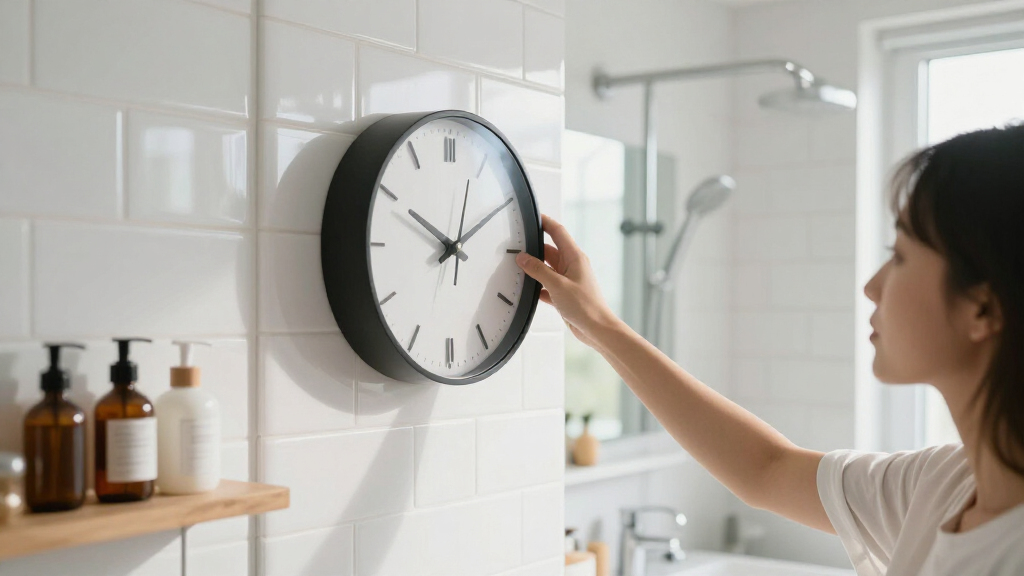
A person moved a clock into their bathroom, which led to a notable change in their morning routine. The adjustment appears to influence punctuality and daily habits. Experts suggest environmental cues can impact time perception and behavior.
A homeowner reported that moving a clock into their bathroom has permanently changed their morning routine, leading to earlier wake-up times and improved punctuality. The change has attracted attention for its potential implications on daily habits and time perception.
The individual, who wishes to remain anonymous, placed a clock in their bathroom approximately three months ago. Since then, they have consistently woken up earlier and completed morning tasks more efficiently. This adjustment has reportedly reduced their tardiness and increased overall productivity during the start of their day.
According to the homeowner, the presence of the clock in the bathroom creates a visual cue that influences their perception of time, prompting them to start their morning activities sooner. Experts in behavioral psychology note that environmental cues, such as clocks in specific locations, can significantly impact routines and time awareness. The homeowner’s experience suggests that simple environmental changes can have meaningful effects on daily schedules.
While anecdotal, this case aligns with broader research indicating that environmental cues shape behavior. The homeowner plans to continue monitoring their routine and is considering experimenting with other visual prompts to further optimize their mornings.
Impact of Environmental Cues on Daily Routines
This story highlights how small environmental modifications, like relocating a clock, can influence personal behavior and time management. Such insights are relevant for individuals seeking to improve punctuality or establish better routines. It also underscores the potential for simple behavioral interventions to promote productivity and well-being.
Experts suggest that understanding and leveraging environmental cues could be a cost-effective way to foster positive habits. The case demonstrates that even minor changes can lead to significant lifestyle improvements, prompting further exploration into behavioral triggers and habit formation.
As an affiliate, we earn on qualifying purchases.
Research on Environmental Cues and Routine Changes
Research in behavioral psychology has long shown that environmental cues play a crucial role in shaping habits. Studies indicate that visual prompts, like clocks or reminders, can reinforce routines and influence perceptions of time. The idea that a clock’s placement impacts waking habits is supported by existing literature on contextual triggers and habit formation.
Historically, many individuals have used environmental cues—such as alarms, visual reminders, or designated spaces—to establish or modify routines. The recent anecdotal account adds to this body of evidence, suggesting that even relocating a single clock can have a measurable effect.
While scientific studies often focus on broader behavioral interventions, this personal experiment underscores the importance of environmental context in everyday life. It also raises questions about how simple adjustments could be used more widely to encourage healthier or more productive habits.
“Environmental cues are powerful tools in shaping our daily routines. Moving a clock to a different location can subtly influence our perception of time and prompt behavioral changes.”
— Dr. Lisa Chen, behavioral psychologist
As an affiliate, we earn on qualifying purchases.
Unclear Extent and Generalizability of Effects
It is not yet confirmed whether this effect is widespread or specific to this individual. Scientific studies on similar interventions are limited, and personal anecdotes may not generalize to others. Further research is needed to determine if relocating clocks or similar environmental cues can reliably influence routines across diverse populations.
Additionally, other factors—such as individual motivation or concurrent lifestyle changes—may contribute to the observed improvements, making it difficult to attribute the change solely to the clock’s relocation.
As an affiliate, we earn on qualifying purchases.
Further Investigation and Broader Applications
Researchers and behavioral experts are interested in exploring whether similar environmental adjustments can promote better habits on a larger scale. Future studies might examine different types of cues, locations, and behavioral outcomes to assess effectiveness. Meanwhile, individuals looking to optimize routines might consider experimenting with environmental prompts, including clock placement, to see if they experience similar benefits.
The homeowner plans to continue tracking their routine and may share their experience in more formal settings or studies, contributing to a growing understanding of environmental influences on daily behavior.
As an affiliate, we earn on qualifying purchases.
Key Questions
Can moving a clock really change my morning routine?
There is anecdotal evidence suggesting that relocating a clock can influence waking habits by providing visual cues that impact perception of time. Scientific research supports the idea that environmental cues can shape routines, but individual results may vary.
How should I place a clock to improve my mornings?
Experts recommend placing clocks in visible locations where they can serve as effective cues. For example, in the bathroom or near the bed, to prompt earlier waking and more timely routines. Personal experimentation is advised to find what works best.
Are there other simple ways to improve morning routines?
Yes, strategies include setting visual reminders, establishing consistent sleep schedules, and creating designated spaces for morning activities. Small environmental adjustments can support healthier, more productive habits.
Is this approach suitable for everyone?
While some individuals may benefit from environmental cues, effects can vary based on personality, motivation, and existing routines. Consulting behavioral specialists can help tailor effective strategies.
Does this mean I should move all my clocks around?
Not necessarily. The effectiveness depends on personal preferences and routines. Experimenting with clock placement in key locations may help determine if this approach benefits you.
Source: rss
Fall Picks
fall essentials
As an affiliate, we earn on qualifying purchases.