TL;DR

Get cleaning gear delivered free with Prime
- Fast, free delivery on millions of items
- Prime Video, Amazon Music and more included
- Member-only deals all year
Deodorizing your carpet naturally is easy and safe. Using simple ingredients like baking soda, vinegar, and essential oils can neutralize odors without harmful chemicals. Regular maintenance keeps your home fresh and healthy.
Imagine walking into your home and being greeted by a fresh, clean scent, not the overpowering chemical smell that some commercial cleaners leave behind. You don’t need harsh chemicals to keep your carpets smelling great. In fact, natural remedies can do the job just as well—if not better—without risking your family’s health or the environment.
Today, you’ll discover how to deodorize your carpet using safe, everyday ingredients. Whether you’re dealing with pet odors, spilled coffee, or musty smells, these simple tips will help you refresh your space without toxic fumes or expensive products.
Baking soda is a powerful, inexpensive odor absorber that works best when left on carpets for at least 24 hours.
Vinegar neutralizes alkaline odors and kills bacteria, making it a natural disinfectant for carpets.
Essential oils add a pleasant scent and antimicrobial properties, but always dilute before use to prevent staining.
Regular maintenance—monthly or after spills—keeps odors from building up and improves overall freshness.
Combine multiple natural methods like baking soda, vinegar, and essential oils for maximum deodorizing effect.
How to Deodorize Carpet Without Harsh Chemicals
Neutralize pet odors, spills, and musty smells with simple household ingredients—without toxic fumes, overpowering fragrances, or expensive products. The goal is to remove the odor source, not merely cover it.
Ideal baking soda contact time for stubborn smells.
Equal parts white vinegar and water for light spot misting.
A practical routine between spills and pet accidents.
Check colorfastness in a hidden area before treatment.
Why natural deodorizing works
Carpet smells usually come from organic residue, bacteria, or trapped moisture. Natural treatments address these causes through absorption, neutralization, and breakdown—reducing the need to mask odors with heavy fragrance.
Trap moisture and odor
Baking soda’s porous structure captures odor molecules and helps draw out moisture. Longer contact gives it more opportunity to work.
Balance odor chemistry
Vinegar’s acidity helps neutralize alkaline smells and disrupt odor-causing bacteria. Its sharp scent fades as the carpet dries.
Remove the source
Plant-based enzyme cleaners digest proteins and other organic matter from pet accidents and food spills instead of covering them up.
Five proven odor fighters
Choose the gentlest ingredient that matches the odor source. Combining compatible methods can improve results, but every liquid treatment should be applied lightly to avoid soaking the carpet pad.
Baking soda
Absorbs odors and moisture. Sprinkle evenly, allow adequate dwell time, then vacuum slowly and thoroughly.
Watch: excess powder may leave residue or strain some vacuum filters.White vinegar
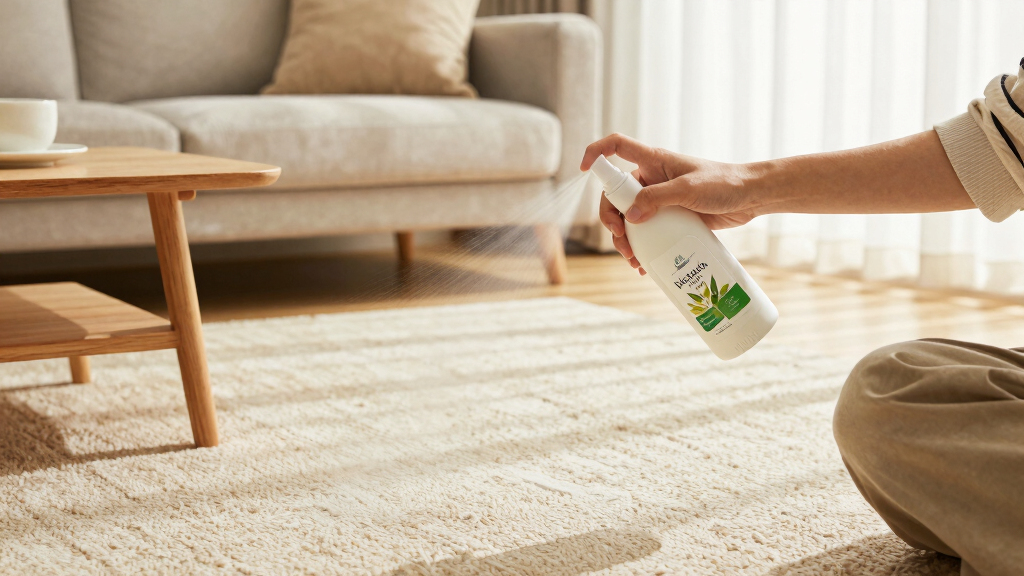
Helps neutralize alkaline odors and reduce bacteria. Mix equal parts vinegar and water for a light spot-cleaning spray.
Watch: ventilate well and never saturate the carpet or underlay.Essential oils
Lavender, tea tree, or eucalyptus can add fragrance and limited antimicrobial benefits when properly diluted.
Watch: never apply directly; check pet safety and patch test first.Hydrogen peroxide
Oxidizes organic stains and odors at a molecular level. It can be useful on suitable light-colored, colorfast carpet.
Watch: bleaching risk is significant—hidden-area testing is essential.Enzymatic cleaner
Plant-based formulations break down pet urine, food, and other protein-rich residue at the source.
Watch: enzymes require full contact time; follow the product label precisely.A simple six-step refresh
Work dry before wet. Remove debris, absorb the odor, vacuum completely, and only then treat any remaining source with a lightly applied solution.
Clear the area
Move furniture and identify the strongest odor zones.
Sprinkle soda
Apply a thin, even layer across the carpet.
Allow dwell time
Use 24 hours for persistent odors when practical.
Vacuum slowly
Make several passes to lift all remaining powder.
Mist vinegar mix
Lightly spray lingering areas and let them air-dry.
Repeat as needed
Treat spills promptly and refresh about monthly.
Mist lightly—do not soak. Blot when appropriate, ventilate the room, and allow the carpet to dry fully.
Add only a few diluted drops of a carpet-safe essential oil. Avoid direct oil application, which may stain fibers or create exposure risks for pets and sensitive people.
Match intensity to the odor
Natural methods often work quickly on surface smells. Deep odors can take several applications over multiple days because residue may have reached the carpet backing or pad.
Suggested baking soda dwell time
Relative contact time by odor severity—not a measure of chemical strength.
Choose the right remedy
Start with the odor source, then consider carpet color, desired contact time, and risk. A targeted solution usually outperforms repeated fragrance-only treatments.
| Natural agent | Best use | Odor absorption | Bacteria / organic action | Color risk | Typical contact |
|---|---|---|---|---|---|
| Baking soda | Routine and musty odors | ✓ Strong | ~ Limited | ✓ Low | 30 minutes–24 hours |
| White vinegar | Alkaline smells and spots | ~ Neutralizes | ✓ Helpful | ✓ Usually low | Until fully dry |
| Essential oils | Light finishing scent | ✗ Mainly fragrance | ~ Varies | ~ Dilute first | Light mist only |
| Hydrogen peroxide | Organic stains on light carpet | ~ Oxidizes | ✓ Strong | ✗ Bleaching risk | Per label or test |
| Enzymatic cleaner | Pet urine and food residue | ✓ Source removal | ✓ Targeted | ~ Product-specific | Full label dwell time |
Freshness is a chain, not a cover-up
The most reliable natural routine connects source identification, targeted treatment, complete drying, and prevention.
Natural carpet care FAQ
For severe mold, widespread water damage, persistent urine in the carpet pad, or odors that keep returning, professional inspection or deep cleaning may be necessary.
Are natural methods as effective as chemical cleaners?
Yes for routine deodorizing and many minor odors when used correctly. Deep-seated smells may need repeated treatment, source removal, or professional cleaning.
How quickly should I expect results?
Surface odors may improve quickly. Strong smells can require several hours to several days and more than one careful application.
Can essential oils go directly on carpet?
No. Dilute them sparingly in a suitable carrier, patch test, and verify safety for pets and household members before use.
How often should carpet be deodorized?
A monthly refresh is a useful baseline. Clean spills and pet accidents immediately rather than waiting for the next routine treatment.
Regular vacuuming, doormats, prompt spill cleanup, and good moisture control prevent odors from becoming embedded. Natural deodorizing works best as part of this routine—not as a substitute for removing contaminated material or correcting dampness.
Why Natural Deodorizing Works Better Than You Think
Natural deodorizing methods target the root causes of odors—organic material, bacteria, and moisture—without introducing harmful chemicals. For example, baking soda absorbs moisture and neutralizes acids that cause smells, while vinegar breaks down bacteria and alkaline odor molecules. These ingredients are gentle, effective, and safe for your family and pets.
Understanding why these ingredients work is crucial. Baking soda’s ability to neutralize acids means it can eliminate many types of odors, including pet smells and food spills, which are often acidic in nature. Vinegar’s acidity helps to kill bacteria that produce foul odors, which is especially important in preventing persistent smells. The tradeoff is that vinegar has a strong scent initially, but it dissipates as it dries, leaving no lingering chemical residue. Recognizing these mechanisms helps you appreciate their targeted action—addressing the odor sources directly rather than masking them temporarily. This approach reduces the need for repeated treatments and minimizes chemical exposure, making your home safer and healthier.
natural carpet deodorizer baking soda
As an affiliate, we earn on qualifying purchases.
As an affiliate, we earn on qualifying purchases.
5 Proven Natural Ingredients to Fight Carpet Odors
- Baking Soda: Absorbs odors and moisture, making it ideal for routine maintenance. Its porous structure traps odor molecules, preventing them from lingering. However, leaving it on for less than 30 minutes might not allow enough time for full absorption, especially with stubborn smells. Longer application—up to overnight—maximizes effectiveness, but it requires patience. When vacuumed thoroughly afterward, it leaves your carpet smelling fresh and reduces the chance of re-odorization. The tradeoff is that overuse or improper application can sometimes cause residue or make cleaning more laborious, so moderation and proper timing are key.
- Vinegar: Neutralizes alkaline odors and kills bacteria, which are often the root of persistent smells. Its acetic acid breaks down odor-causing compounds and microbial colonies, providing a deeper clean than surface treatments. Mixing equal parts water and vinegar creates a solution effective for spot cleaning and spray applications. While vinegar’s scent can be strong initially, it evaporates quickly, leaving no chemical residue. The main consideration is to ensure good ventilation during use, as the initial smell might be off-putting, but the long-term benefits outweigh this temporary inconvenience.
- Essential Oils: Add a fresh scent and antimicrobial properties, but their effectiveness depends on proper dilution. Using high concentrations can stain or irritate skin and fabrics. When added to water or baking soda, they release fragrance and some antimicrobial benefits, but their primary advantage is masking residual smells while providing a more pleasant home environment. The tradeoff is that some oils may cause allergic reactions or discoloration if used improperly, so testing and moderation are essential.
- Hydrogen Peroxide: Whitens and deodorizes, especially effective on light-colored carpets. Its oxidative properties break down organic stains and neutralize odors at the molecular level. However, it can cause bleaching or discoloration on darker or colored fibers if not tested first. Using it cautiously ensures that you get the benefits without damaging your carpet’s appearance. Its effectiveness depends on correct dilution and application timing, making it a potent but delicate option.
- Enzymatic Cleaners: Break down organic matter like pet urine or food spills, tackling odors at their source. They contain enzymes that catalyze the decomposition of proteins and other organic compounds responsible for bad smells. Choosing plant-based, non-toxic enzymatic cleaners ensures safety for pets and children. The key is to allow sufficient contact time for enzymes to work effectively, which might mean leaving the solution on longer or reapplying. Their targeted action makes them a powerful tool for stubborn, organic odors, but they require patience and proper application for best results.
For example, a friend used a mixture of baking soda and lavender oil on her living room rug. After a few hours, the smell was gone, replaced by a calming floral scent. This highlights how combining ingredients can enhance effectiveness by addressing odors at multiple levels—absorption, microbial elimination, and scent masking.
eco-friendly carpet odor remover vinegar essential oils
As an affiliate, we earn on qualifying purchases.
As an affiliate, we earn on qualifying purchases.
Step-by-Step Guide to Deodorize Your Carpet Naturally
Now that you understand the ingredients and why they work, let’s walk through a simple process to deodorize your carpet effectively:
- Clear the Area: Remove furniture or items from the carpet to ensure even treatment and thorough cleaning.
- Apply Baking Soda: Sprinkle a generous layer of baking soda over the entire carpet. For stubborn odors, let it sit for at least 24 hours, or even overnight if possible.
- Vacuum Thoroughly: After the waiting period, vacuum the baking soda completely to remove all residues. This step is crucial to prevent any leftover powder from causing buildup or staining.
- Spot Clean with Vinegar Solution: For lingering smells, mix equal parts water and vinegar in a spray bottle. Lightly spray the affected areas and allow to dry. You can also add a few drops of essential oil to the spray for added scent.
- Optional: Use Essential Oils: For ongoing freshness, add a few drops of your favorite essential oils to a spray bottle with water and lightly mist the carpet regularly.
- Repeat as Needed: For persistent odors, repeat this process weekly or after spills to maintain a fresh scent.
With consistent application, your carpets will stay fresher longer, and you’ll reduce reliance on chemical cleaners.
As an affiliate, we earn on qualifying purchases.
Frequently Asked Questions
Are natural deodorizing methods as effective as chemical cleaners?
Yes, when used correctly, natural methods like baking soda and vinegar can neutralize most common odors. They work well for routine deodorizing and minor smells, though deep-seated or stubborn odors might require repeated treatments or professional cleaning.
How long does it take for natural deodorizing treatments to work?
Surface odors can disappear almost immediately, but for deep or strong smells, it might take several hours to a few days with repeated applications. Patience and consistency are key to natural deodorizing success.
Can I use essential oils directly on my carpet?
It’s best to dilute essential oils in water or a carrier solution before spritzing on your carpet. Undiluted oils can stain or cause damage, especially on light-colored fabrics. Always test on a small, hidden area first.
Are natural deodorizing methods safe for pets and children?
Generally, yes, but check specific product labels and avoid using excessive amounts of essential oils. Always test solutions first and keep them out of reach of curious little hands and paws.
How often should I deodorize my carpet naturally?
Monthly maintenance or immediately after spills and pet accidents is ideal. Regular deodorizing prevents odors from becoming embedded and keeps your home smelling fresh naturally.
baking soda and essential oils carpet freshener
As an affiliate, we earn on qualifying purchases.
As an affiliate, we earn on qualifying purchases.
Conclusion
Natural deodorizing isn’t just safer; it’s often more effective than you’d expect. With simple ingredients and a little effort, you can keep your carpets smelling fresh without exposing your family to harmful chemicals. Think of it as giving your home a gentle, eco-friendly hug.
Next time odors creep in, reach for your pantry instead of the cleaning aisle. Your carpets—and the planet—will thank you.
Halloween Picks
halloween
As an affiliate, we earn on qualifying purchases.