
TL;DR

Get cleaning gear delivered free — and shop member deals
- Fast, free delivery on millions of items
- Access to Prime Big Deal Days deals on October 6–7
- Prime Video, Amazon Music and more included
To dry a carpet quickly after cleaning, boost airflow with fans, open windows, and use dehumidifiers. Combining these methods can cut drying time from 12-24 hours to just 2-6 hours, preventing mold and odors.
Imagine walking into a freshly cleaned home, only to find your carpet still damp hours later. That frustrating wait can be shortened dramatically with the right techniques. Faster drying means less downtime, fewer odors, and a big boost in preventing mold or fiber damage.
In this guide, you’ll learn practical, proven ways to speed up the drying process after cleaning. Whether you’re tackling it yourself or coordinating with professionals, these tips make a real difference. Ready to cut your drying time in half? Let’s get started.
Open windows and use high-velocity fans immediately after cleaning to boost airflow.
Pair fans with a dehumidifier to actively remove moisture from the air and speed drying.
Maintain a warm environment, but avoid overheating or direct heat on the carpet.
Limit foot traffic until the carpet is fully dry to prevent re-soiling and fiber damage.
Professional drying systems with industrial equipment cut drying times by up to 75%, ideal for large or heavily soaked carpets.
Cut Carpet Drying From All Day to a Few Hours
Freshly cleaned carpet should feel like a reset, not a waiting room. The fastest approach combines airflow, dehumidification, moderate warmth, and traffic control so moisture leaves the fibers before odors, mold risk, or re-soiling can take hold.
Key insight: High-velocity air movers paired with dehumidifiers can reduce carpet drying time by up to 75% when equipment and room conditions are matched well.
The Four Controls That Matter Most
Fast drying is not one trick. It is a controlled environment: less standing water, faster moving air, lower humidity, and steady moderate heat.
Remove Excess Water
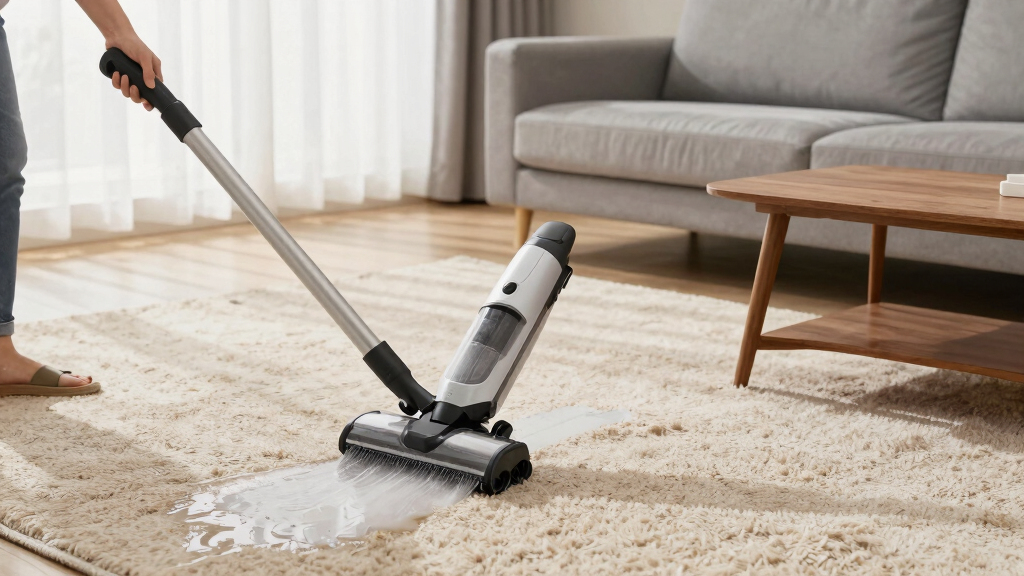
Use a wet/dry vacuum or clean towels before running fans. Less moisture in the carpet means every later step works faster.
Create Cross-Movement
Open windows when outdoor humidity is low, then aim fans across the damp surface so humid air is constantly replaced.
Run a Dehumidifier
Close the room when using a dehumidifier so it can pull moisture from the air instead of fighting outdoor humidity.
Keep It Warm
Moderate warmth helps air hold more moisture. Avoid direct heat on carpet, which can damage fibers or dry unevenly.
Use Multiple Angles
Two or more fans aimed from different sides prevent damp pockets and help fibers dry evenly across the room.
Limit Foot Traffic
Walking on damp carpet can push soil into fibers, flatten pile, and slow the drying process you just accelerated.
A Home Drying Sequence That Works
Follow the order below right after cleaning. The first hour matters most because moisture is still near the surface and easiest to remove.
Pull out excess water with a wet/dry vacuum or absorbent towels.
Open windows only when outside air is drier than the room.
Blow air directly across the carpet fibers, not just around the room.
Place the unit centrally and keep intake and exhaust clear.
Target about 70-75°F and keep heaters off the carpet.
Resume traffic only when the carpet feels dry at the base.
What Changes the Drying Curve
Air movement starts evaporation. Dehumidification keeps the air hungry for moisture. Warmth helps, but only when used with control.
Drying Time by Setup
Room Condition Spectrum
Drying improves as airflow rises and humidity falls. The sweet spot is a warm room with active air movement and controlled moisture.
Avoid blasting heat directly onto the carpet. Uneven drying can trap moisture below the surface while the top feels dry.
DIY vs. Professional Drying
Most homes can achieve a 2-6 hour window with the right setup. Heavy soaking, basements, and large rooms may justify industrial equipment.
| Method | Tools Used | Drying Time | Effectiveness | Best For | Watchouts |
|---|---|---|---|---|---|
| Passive drying | No added equipment | 12-24 hours | ✗ Slow | Very small, lightly damp areas | Higher odor and mold risk if humidity is high |
| Ventilation only | Open windows and doors | 8-16 hours | ~ Weather dependent | Dry outdoor climates | Can backfire when outside air is humid |
| DIY accelerated | Box fans and portable dehumidifier | 2-6 hours | ✓ Good | Most home cleaning projects | Requires careful fan placement and closed-room humidity control |
| Professional drying | Industrial air movers and dehumidifiers | Up to 75% faster | ✓ Excellent | Large rooms, soaked carpet, humid basements | Higher cost, but fastest and most even drying |
When to Call a Pro
If the padding is soaked, the room smells musty, or the carpet is still damp after 24 hours, professional extraction and drying are the safer route.
- Use fans immediately after cleaning, especially over the wettest lanes.
- Pair airflow with a dehumidifier in basements, bathrooms, and humid weather.
- Keep the room warm, but avoid direct heat and blocked vents.
- Delay furniture replacement and foot traffic until the base of the carpet is dry.
From Damp Fibers to Dry Carpet
The drying process is a chain. Break one link and moisture lingers; connect all five and drying time drops sharply.
Remove the biggest moisture load first.
Replace humid air around fibers.
Help fibers release water faster.
Support evaporation without overheating.
Reduce odors, mold risk, and re-soiling.
Boost Airflow to Evaporate Moisture Faster
Airflow is your best friend after carpet cleaning because it directly influences how quickly moisture leaves the fibers. Think of it as giving your carpet a breath of fresh air, which accelerates the evaporation process. When air moves over wet fibers, it replaces the humid air immediately surrounding them, causing moisture to escape faster. Without proper airflow, moisture can linger longer, increasing the risk of mold growth and odors.
By opening windows and creating cross-ventilation, you introduce natural breezes that carry away damp air, which is especially effective if the outdoor humidity is low. Conversely, indoor fans and air movers are essential when outdoor conditions are unsuitable. Positioning high-velocity fans to blow directly over the wet surface ensures a steady flow of air that significantly speeds up evaporation.
However, it’s important to consider tradeoffs: excessive airflow in a very humid environment can actually slow drying because the air becomes saturated with moisture. Therefore, combining airflow with dehumidification is often necessary to optimize drying conditions.
Maximizing airflow isn’t just about turning on fans; it involves strategic placement and timing. Using multiple fans directed from different angles creates a circulation pattern that dries fibers evenly, preventing uneven moisture pockets that could lead to mold. This approach can drastically reduce drying times from 12 hours to as little as 4 or 5 hours in typical scenarios, but understanding the environment helps fine-tune these strategies for the best results.
high velocity air mover for carpet drying
As an affiliate, we earn on qualifying purchases.
As an affiliate, we earn on qualifying purchases.
Dehumidifiers: Your Secret Weapon Against Dampness
Dehumidifiers are crucial because they actively remove moisture from the air, which is a key factor in the drying process. When fibers are wet, they release water into the surrounding air. If the air is already saturated with moisture, this process slows down significantly. By pulling moisture out of the air, dehumidifiers create a drier environment, encouraging fibers to release water more rapidly and thus reducing overall drying time.
Using a dehumidifier in tandem with fans or air movers enhances this effect, as the device continually lowers the humidity level, preventing the air from becoming saturated. This is especially important in high-humidity environments—like bathrooms or basements—where natural evaporation alone might be insufficient.
It’s worth noting that the efficiency of a dehumidifier depends on its capacity relative to the room size and moisture load. A larger or more powerful unit can extract more moisture per hour, resulting in faster drying. For example, a 50-pint dehumidifier can significantly cut drying times in rooms with high moisture levels, sometimes halving the time compared to using fans alone.
Practical tips include keeping the air intake unobstructed, closing doors and windows to contain moisture, and positioning the dehumidifier centrally in the room for even moisture removal. These steps ensure the device operates at peak efficiency, creating an environment conducive to rapid drying and helping prevent mold growth and fiber damage over the long term.
As an affiliate, we earn on qualifying purchases.
Control Temperature to Speed Up Evaporation
Temperature plays a pivotal role because warm air can hold more moisture than cold air, thus accelerating evaporation from wet fibers. When you increase the ambient temperature—say, to around 70-75°F (21-24°C)—you create conditions that favor faster drying. Warm air enhances the vapor pressure gradient between the fibers and the surrounding environment, which is the driving force behind moisture leaving the fabric.
However, there’s a balance to strike: excessive heat can damage carpet fibers or cause uneven drying, leading to shrinkage or discoloration. Overheating can also cause the moisture to evaporate rapidly in some areas but remain trapped in others, creating uneven drying patterns that may promote mold growth.
In cold environments like basements or during winter, adding a space heater or increasing the central heating raises the temperature, making the air more capable of absorbing moisture. This, combined with good airflow and dehumidification, dramatically shortens drying times. For example, in winter conditions, supplementing with a portable heater while running fans can reduce drying time from 24 hours to roughly 6-7 hours.
Safety considerations are essential: avoid placing heaters directly on the carpet or blocking vents, as this can cause damage or pose fire hazards. Maintaining a stable, moderate temperature ensures fibers dry evenly without risk, optimizing the entire process.
wet dry vacuum cleaner for carpets
As an affiliate, we earn on qualifying purchases.
As an affiliate, we earn on qualifying purchases.
Step-by-Step: How to Speed Up Carpet Drying in Your Home
- Remove excess water with a wet/dry vacuum or blot with towels. This initial step reduces the total moisture load, making subsequent drying efforts more effective and faster.
- Open windows and doors to create cross-ventilation. This not only introduces fresh air but also helps carry away humid air, which is essential for a quicker evaporation cycle. Proper ventilation prevents moisture buildup that can slow down drying and promote mold growth.
- Position fans or air movers over the wet area, blowing directly onto the fibers. Strategic placement maximizes airflow over the entire surface, ensuring even drying and preventing moisture pockets that could lead to mold or fiber damage.
- Activate a dehumidifier in the room to actively draw moisture from the air. This reduces ambient humidity, allowing fibers to release water more rapidly and shortening overall drying time.
- Maintain a warm environment, turning on space heaters if needed. Warmth enhances evaporation, especially in cooler environments, but should be used carefully to avoid overheating or damaging the carpet.
- Limit foot traffic until the carpet feels dry to the touch. Walking on damp fibers can re-soil the fibers, cause fiber damage, or promote mold growth, which defeats the purpose of quick drying.
This combination not only speeds drying but also minimizes the risk of mold and odors. It’s a simple routine that can cut drying times from over 12 hours to under 4, provided you understand your environment and adapt appropriately.
As an affiliate, we earn on qualifying purchases.
Compare DIY Methods and Professional Equipment
| Method | Tools Used | Drying Time | Effectiveness |
|---|---|---|---|
| DIY with fans & dehumidifiers | Box fans, portable dehumidifier | 2-6 hours (if conditions are right) | Good for small areas with moderate moisture |
| Professional drying system | High-powered air movers, industrial dehumidifiers | 1-3 hours | Fastest, most consistent for large or heavily soaked carpets |
While DIY methods are accessible and cost-effective, professional systems excel at rapid, even drying—especially after deep cleaning or floods. For everyday cleaning, smart use of fans and dehumidifiers can suffice, but for large or waterlogged carpets, consider calling in the pros.
What to Avoid if You Want Your Carpet to Dry Fast
Steer clear of closing windows on humid days or using low-powered fans. These slow down evaporation and can cause mold. Also, don’t walk on the carpet until it’s dry—re-soiling and damage happen fast.
Avoid placing heaters directly on the carpet or blocking vents. Excess heat can damage fibers or cause uneven drying. Patience is key—walking on damp carpet invites odors and mold growth.
For example, in a small apartment, leaving windows closed during a rainy day kept humidity high, doubling the drying time. Simple steps like opening windows and using strong fans make a big difference.
Frequently Asked Questions
How long does it usually take for a carpet to dry after cleaning?
Typically, it takes between 2 to 24 hours for a carpet to dry completely after cleaning. Using fans, dehumidifiers, and good ventilation can shorten this to 2-6 hours, depending on conditions.Can I walk on the carpet once it feels dry to the touch?
It’s best to avoid foot traffic until the carpet is fully dry. Walking on damp fibers can re-soil the carpet and cause fiber damage, leading to odors or mold in the long run.What’s the fastest way to dry a carpet at home?
Use a combination of high-powered fans or air movers, open windows for natural ventilation, run a dehumidifier, and keep the room warm. This multi-pronged approach can dry a carpet in as little as 2-4 hours.Will a hairdryer or space heater help dry my carpet faster?
A hairdryer can assist in small areas but isn’t practical for large carpets. Space heaters can help raise room temperature but should be used cautiously to avoid damage or uneven drying. Fans and dehumidifiers remain more effective overall.How do professional carpet drying systems work?
They combine high-powered air movers and industrial dehumidifiers to draw moisture out rapidly and evenly. This setup often dries large or heavily soaked carpets within 1-3 hours, far faster than DIY methods.Conclusion
Speeding up carpet drying is about smart airflow, moisture control, and temperature management. A few simple steps can cut your waiting time from hours to just a couple of hours, saving you headaches and potential damage.
Next time you clean your carpet, remember: good ventilation, strategic fans, and a dehumidifier are your best allies. Think of your drying process as a quick, efficient dance—keep the air moving, and your carpet will be dry before you know it.
Fall Picks
fall essentials
As an affiliate, we earn on qualifying purchases.