TL;DR

Get cleaning gear delivered free with Prime
- Fast, free delivery on millions of items
- Prime Video, Amazon Music and more included
- Member-only deals all year
Your rug slides because of poor backing, slippery floors, or placement issues. Using quality rug pads, double-sided tape, or DIY fixes can prevent accidents and protect your floors.
Ever tripped over a rug that just refuses to stay put? It’s more common than you think. A slipping rug isn’t just annoying—it’s a safety hazard, especially for kids and seniors. Knowing why your rug slides and how to fix it can turn your space safer and more cozy.
In this guide, you’ll find straightforward answers, real-world tips, and eco-friendly options to keep your rugs steady. Whether you’re dealing with hardwood, tile, or laminate, you’ll learn what works best to hold your rugs in place.
Use a quality, appropriate rug pad for your flooring to prevent up to 80% of rug movement.
Double-sided tape and silicone grippers are quick fixes but check compatibility with your floor type.
DIY solutions like non-slip shelf liner are budget-friendly and effective for small or temporary needs.
Regularly inspect and replace worn pads or backing to maintain grip and safety.
Avoid harsh chemicals or adhesives that could damage your floors or rugs.
Why Your Rug Keeps Sliding — and How to Stop It
A wandering rug is more than an everyday annoyance. Poor backing, slick flooring, incorrect sizing, and heavy foot traffic can turn it into a fall hazard. The right grip solution makes the room safer, protects the floor, and helps the rug last longer.
of rug movement may be prevented with a quality, floor-compatible rug pad.
is a typical replacement range for pads, depending on traffic and wear.
The safest fix depends on the surface beneath the rug—not just the rug itself.
The friction is failing somewhere
Start with the root cause. A fix that works on glossy tile may be unnecessary—or damaging—on finished hardwood.
Too smooth or worn
Thin rugs and degraded backing create little resistance. Each footstep can push the rug farther out of position.
Slick hard flooring
Polished hardwood, tile, and laminate reduce friction, especially when dust collects beneath the rug.
Wrong size or shape
Small rugs without furniture anchoring are easier to kick, bunch, rotate, or curl at the edges.
Constant footfall
Hallways, kitchens, and entryways repeatedly load the rug from different angles, weakening its grip over time.
Choose the right level of grip
Begin with a non-damaging option. In high-traffic areas, combining a properly sized pad with corner grip can deliver the most reliable result.
Quality rug pad
Use a thick, non-slip pad cut slightly smaller than the rug. It adds grip, cushioning, and protection.
Best all-roundFloor-safe tape
Double-sided rug tape gives lightweight rugs immediate hold. Test first and reserve it for compatible surfaces.
Quick fixSilicone grippers
Corner pads or removable grippers work well on smooth floors but may need replacement in busy zones.
Low profileDIY shelf liner
Trim non-slip liner or a clean rubber mat to sit beneath the edges. It is inexpensive and renter-friendly.
Budget choiceBuilt-in backing
For long-term convenience, choose a rug manufactured with a textured, non-slip underside.
Low maintenanceWhich grip suits your floor?
Balance surface compatibility, traffic, expected lifespan, rug height, and the likelihood of residue or finish damage.
| Option | Best for | Grip | Main advantage | Watch out for |
|---|---|---|---|---|
| 01 / Durable Rubber rug pad | Hardwood, laminate, tile | ✓ Excellent | Reusable, stable, and long-lasting | ~ Extra thickness can alter rug height |
| 02 / Cushioned Felt rug pad | Carpet and tile | ~ Good | Soft feel and added cushioning | ~ Can compress or move on very slick floors |
| 03 / Temporary Double-sided tape | Small rugs and short-term use | ✓ Immediate | Affordable and easy to apply | ✗ Wrong tape may leave residue or damage finishes |
| 04 / Targeted Silicone grippers | Smooth, high-traffic surfaces | ✓ Strong | Clean, low-profile, and repositionable | ~ Grip can weaken with wear or uneven texture |
DIY grip without harsh glue
Household materials can provide enough friction for small rugs and temporary setups—provided they remain flat, clean, and securely tucked beneath the rug.
Shelf liner
Place strips beneath the rug edges or use one sheet under the center. Keep the liner hidden inside the rug perimeter.
Best for runners and small matsOld rubber mat
Cut clean, flat pieces for each corner. Avoid curled or brittle rubber that could create bumps beneath the rug.
Best for a near-zero-cost fixClean and inspect
Dust reduces friction. Vacuum beneath the rug and check pads, backing, edges, and grips for wear or compression.
Repeat during regular floor careWhat to watch out for
Harsh glue or incompatible tape may discolor flooring, strip finishes, or leave difficult residue.
Extra height can produce uneven edges, interfere with doors or vacuuming, and create a new trip point.
Follow flooring and rug manufacturer instructions, then test products in a small hidden area first.
Why Does My Rug Keep Moving? The Surprising Causes
The main culprits are often overlooked: poor backing, slippery floors, or placement issues. Rugs without grip tend to slide on hard surfaces like wood or tile. If your rug’s backing is worn out or too smooth, it loses friction, making it easy to shift.
Imagine placing a thin rug on a glossy laminate floor—every footstep nudges it out of place. High traffic areas or uneven surfaces only make things worse. Sometimes, a rug just isn’t the right size or shape for the space, adding to the movement problem.
Understanding these causes is crucial because it helps you choose the most effective fix. For example, a worn-out backing may need a new non-slip pad, while an uneven floor might require additional grip solutions. Ignoring these causes can lead to ongoing safety hazards or damage to your flooring over time. Addressing the root issue ensures your rug stays put, reduces the risk of falls, and preserves your flooring’s integrity.
Products Worth Considering

Levoit Eleva 300X HEPA Air Purifier for Home and Bedroom

Levoit Core 400S-P Smart Air Purifier for Large Rooms

Shark Navigator Robot Vacuum with Self-Empty Base, Dark Grey (RV2120AE)
As an affiliate, we earn on qualifying purchases.
How to Stop Your Rug from Sliding: 5 Easy Fixes That Work
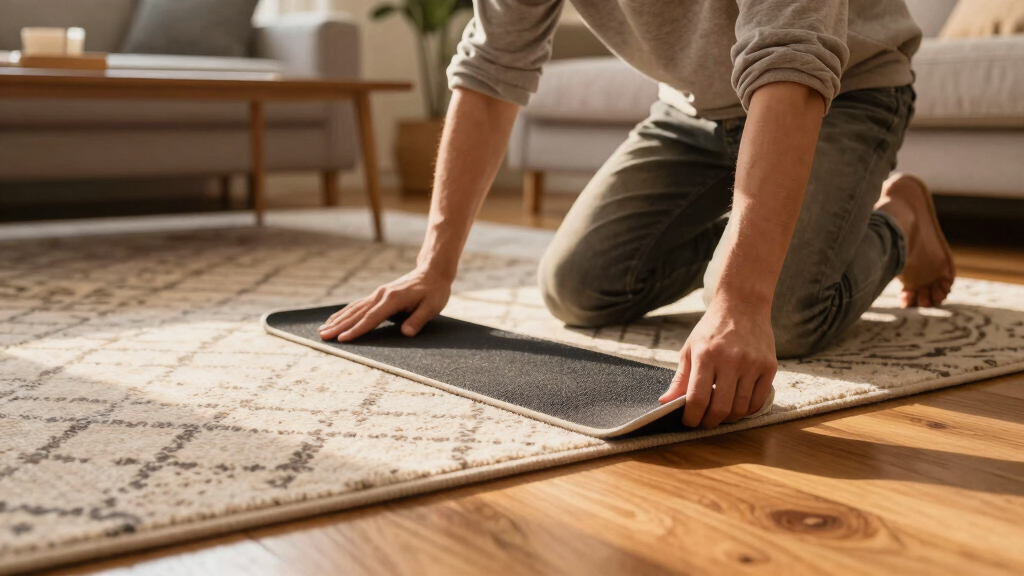
- Use a quality rug pad. Pick a thick, non-slip pad designed for your floor type. Rubber-backed pads work well on hardwood, while felt pads suit tile or laminate. A good rug pad not only prevents slipping but also adds cushioning, making your space more comfortable. It can extend the life of your rug by reducing wear and tear caused by constant movement.
- Try double-sided tape. Special tape sticks your rug to the floor without residue. It’s a quick, affordable fix that can be especially effective on small or lightweight rugs. However, choosing the right tape is important—some can damage delicate surfaces or leave residues that are difficult to clean. Using high-quality, floor-safe tape minimizes these risks and provides a strong grip, but it’s best suited for temporary or light-use scenarios.
- Apply silicone-based grippers. Adhesive pads or sprays increase grip between the rug and floor. These options are quick to apply and often less invasive than pads or tapes. Silicone grippers work well on smooth surfaces and can be easily removed or repositioned. The tradeoff is that over time, they may wear out or lose their effectiveness, especially in high-traffic areas, so regular reapplication is recommended.
- DIY with household items. Use non-slip shelf liner or rubberized shelf pads underneath your rug for instant grip. These household solutions are inexpensive and can be customized to fit your rug’s shape. They are especially useful for temporary fixes or small rugs. The key here is that they provide enough friction to prevent slipping without damaging your flooring or rug, making them a practical choice for renters or those on a budget.
- Opt for rugs with built-in non-slip backing. Some rugs come ready to stay put, saving you the hassle of additional accessories. These rugs often have a textured backing or special coatings designed to grip surfaces. While they tend to be more expensive initially, they offer a long-term, low-maintenance solution that minimizes the risk of slipping and prolongs the rug’s life.
Remember: combining these methods often yields the best results, especially in high-traffic zones or on particularly slick floors. Regularly inspecting your rug’s backing and replacing worn pads or grips ensures ongoing security and safety.
Compare Rug Grip Options: Which Is Best for Your Floor?
| Option | Best For | Pros | Cons |
|---|---|---|---|
| Rubber Rug Pads | Hardwood, laminate, tile | Durable, excellent grip, reusable | Can be thick, may alter rug height or cause slight unevenness |
| Felt Rug Pads | Carpets, tiles | Soft, adds cushioning, good grip | Less durable, can slide on very smooth surfaces over time, may compress and lose grip |
| Double-Sided Tape | Small rugs, temporary fixes | Easy to apply, inexpensive, immediate hold | Residue may be difficult to clean, potential floor damage if not chosen carefully, especially on delicate surfaces |
| Silicone Grippers | High-traffic areas | Quick, clean application, strong grip, reusable | May wear out over time, less effective on textured or uneven surfaces |
Choosing the right grip depends on understanding your floor type, how much traffic your space gets, and how long you want the solution to last. A well-chosen option can improve safety, prolong your rug’s lifespan, and keep your floors protected, making your decision an investment in both safety and longevity.
DIY Tricks That Keep Rugs in Place Without Breaking the Bank
Sometimes, a quick fix from around the house can do the trick. Place strips of non-slip shelf liner underneath the rug edges. Or, cut up an old rubber mat into smaller pieces and slide them under corners. These DIY hacks are budget-friendly and surprisingly effective because they increase friction between the rug and floor, reducing movement caused by foot traffic or vibrations. Properly applying these materials ensures they stay in place and do not damage your flooring or rug over time.
For example, I used a piece of non-slip liner under my runner on glossy kitchen tiles. No more slipping, and it cost less than five bucks. Plus, it’s easy to remove and replace as needed, making it a flexible solution for renters or temporary setups. Keep in mind that these DIY methods work best when applied correctly—ensure the liner or rubber pieces are securely tucked under the edges to avoid bunching or shifting.
Just avoid using harsh glues or chemicals—they can damage floors or rugs over time. Instead, focus on non-permanent, non-damaging solutions that can be easily adjusted or removed.
What to Watch Out for When Fixing Your Rug
Some fixes seem simple but come with risks that can outweigh their benefits if not carefully considered. Double-sided tape, for instance, might leave residue or damage delicate flooring like hardwood if the wrong type is used or if it’s applied improperly. This residue can be difficult to clean and may require chemical solvents that could harm your floors or affect their finish. Similarly, overly thick or dense rug pads can cause uneven surfaces, leading to tripping hazards or damage to the rug’s backing over time. They can also alter the rug’s appearance or make it difficult to vacuum properly.
Always check manufacturer instructions for your rug and flooring before applying adhesives or pads. Testing a small, inconspicuous area first helps prevent long-term damage. If you’re fixing a high-traffic or safety-critical space, consulting a flooring professional can help you choose the most durable and safe solution. Making informed choices minimizes the risk of unintended damage, prolongs the life of your flooring and rug, and maintains the safety and aesthetic of your space.
Frequently Asked Questions
What is the best way to stop my rug from slipping on hardwood floors?
Use a high-quality rubber or felt rug pad designed specifically for hardwood floors. These pads provide excellent grip without damaging the surface. Make sure to choose one that fits your rug size perfectly for maximum stability.
Can I use double-sided tape to secure my rug?
Yes, double-sided tape works well for small rugs or temporary fixes. Just ensure it’s suitable for your flooring type to avoid damage or residue. Test it on a small area first, especially on delicate surfaces like hardwood or laminate.
Are eco-friendly options available for rug pads?
Absolutely. Natural rubber and felt pads are eco-friendly, safe, and effective. They’re made from sustainable materials and are a good choice if you want to keep your home green while preventing slipping.
How often should I replace my rug pad?
Typically every 1 to 3 years, depending on wear and tear. Regularly inspect for signs of flattening, tearing, or loss of grip. Replacing worn pads keeps your rug secure and your floors protected.
What common mistakes should I avoid when fixing my slipping rug?
Avoid using harsh glues or adhesives not designed for your floor. Also, don’t choose overly thick pads that could cause tripping or uneven surfaces. Always follow manufacturer instructions and test first.
Conclusion
Keeping your rugs from sliding isn’t just about safety—it’s about making your home cozy and confident. A simple rug pad or a few household tricks can keep your space looking sharp and feeling secure.
Next time your rug starts to slip, remember: a bit of prep and the right product make all the difference. Your floors will thank you, and so will everyone walking through your door.