
TL;DR

Get cleaning gear delivered free with Prime
- Fast, free delivery on millions of items
- Prime Video, Amazon Music and more included
- Member-only deals all year
A Hunker report describes DIYers using wallpaper to make electrical panel doors blend with surrounding walls or look like a decorative feature. The approach must not obstruct the panel, cover required labels, interfere with the door or handle, or conflict with local codes.
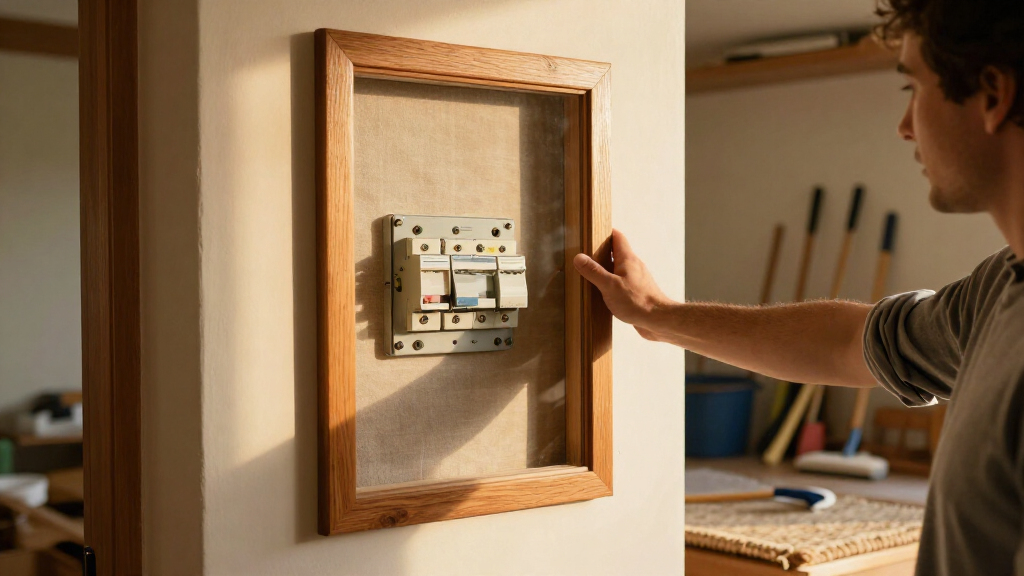
DIYers are using wallpaper to make visible electrical panel doors blend into a room or, as Hunker describes, look more like a painting. The decorating idea applies to the outside of the cover: Hunker advises keeping the panel accessible, ensuring its door can close and seal properly, and checking local code requirements before covering it.
Hunker describes using a matching piece of wallpaper on the outside of the closed panel door to blend it with a papered wall. On painted walls, a small patterned piece can make the cover look more like a painting; the report says a frame could be added as a further design choice.
For conventional wallpaper, Hunker says adhesive can be applied to the exterior of the cover, with care taken to keep it off the back of the door and out of the electrical box. Peel-and-stick paper is another option mentioned in the report. One described method places the paper over the closed door and trims around the door’s seam, avoiding excess material folding into the panel. Another applies cut pieces to the door and the cover’s outer edges. The report also advises cutting around the handle so it remains visible and easy to use.
Hunker cautions that the panel should not be concealed so thoroughly that occupants or first responders cannot locate and open it in an emergency. It says not to cover required labels on the exterior, and that the door must still close and seal correctly. The report notes that panel covers are metal and are intended to contain heat if an electrical problem occurs. It also advises keeping wallpaper and adhesive out of the enclosure.
Keeping Decor Clear of Panel Access
Hunker says electrical panels sometimes end up in living rooms, bedrooms, or hallways, where a plain metal door may stand out against a finished interior. The report presents wallpaper as a way to blend the cover with the wall or give it a patterned look. It also notes that a separate wall hanging might look awkward.
The safety and access limits matter alongside the visual result. An electrical panel may need to be opened quickly, and emergency responders need to be able to find it. Hunker advises keeping the handle visible, not covering required labels, and making sure the door can close and seal properly. It also cautions against excess paper folding into the panel.
Hunker’s suggestions focus on applying wallpaper to the panel cover. The report advises checking local codes and keeping wallpaper and adhesive out of the electrical box. It does not assess the suitability of specific wallpaper products or adhesives.
peel and stick wallpaper removable patterned
As an affiliate, we earn on qualifying purchases.
As an affiliate, we earn on qualifying purchases.
How the Wallpaper Idea Works
Electrical panels are often placed in less prominent areas such as basements, Hunker says, but their location varies by home. When a panel sits on a visible wall, Hunker says hanging art over it is often suggested. The report presents wallpaper as an alternative that can match the surrounding wall or give the metal door a patterned look; it notes that an extra wall hanging might look awkward.
The report points to social media examples, including a TikTok creator identified as cowapocalypses, who used patterned paper against a painted wall. It does not provide a survey of how many people use the method, independent testing, or a comparison of wallpaper types. Its instructions focus on applying paper to the exterior and trimming it so the door’s edges, handle, and function are not impaired.
Hunker describes using wallpaper to disguise the panel’s appearance and advises keeping the panel easy to find and open. It also advises checking local codes and keeping the inside of the box free of wallpaper and adhesive. The supplied report does not cite a specific code provision or recommend one universal installation method for every panel.
“Wallpaper can be a creative way to hide your breaker box or electrical panel and maintain the aesthetic of your space.”
— Hunker report
wallpaper paste for interior walls
As an affiliate, we earn on qualifying purchases.
As an affiliate, we earn on qualifying purchases.
Code Rules and Material Suitability
The supplied report does not identify which local jurisdictions allow wallpaper on panel covers, nor does it cite specific electrical-code language. It advises readers to check local requirements, which are not specified in the report. Hunker also does not provide independent testing of wallpaper, peel-and-stick products, or adhesives for use on electrical panel doors.
The report offers precautions about access, labels, door closure, and keeping paper and adhesive out of the electrical box, but does not assess the effects of particular wallpaper products or adhesives. It does not specify whether local rules permit a particular installation. Readers considering the idea should check local requirements.
wallpaper smoothing tool and precision trimming kit
As an affiliate, we earn on qualifying purchases.
As an affiliate, we earn on qualifying purchases.
Check Before Applying Wallpaper
Before starting, homeowners should check local code requirements for decorative coverings. The panel should remain easy to locate and open, with the handle and any required exterior labels visible. Paper and adhesive should stay on the cover’s exterior and away from the inside of the enclosure, and the finished door must close and seal as described by Hunker.
Hunker provides no announced follow-up, product test, or official code clarification. The immediate next step for anyone considering the idea is to verify local requirements and confirm the cover will remain accessible and that its door can close and seal properly.
decorative picture frame for wall panel cover
As an affiliate, we earn on qualifying purchases.
As an affiliate, we earn on qualifying purchases.
Key Questions
Can wallpaper be used to disguise an electrical panel?
Hunker describes it as a decorating option for the outside of a panel cover. Whether it is allowed or appropriate in a particular home depends on local rules, the panel, and whether access and operation remain unobstructed.
How can the wallpaper be applied without blocking the door?
The report describes applying paper to the closed door and trimming around its seam, or using cut pieces on the exterior surfaces. Keep the handle visible, avoid material folding into the panel, and make sure the door closes and seals correctly.
Should wallpaper cover the inside of the electrical box?
No. Hunker says wallpaper and adhesive should stay off the back of the door and out of the electrical enclosure. Its suggestions concern the exterior cover only.
Do local codes allow electrical panels to be covered?
The supplied report does not name specific code rules or jurisdictions. It advises readers to check local requirements before applying wallpaper, since requirements may vary.
Can the panel be hidden completely behind art or wallpaper?
The report cautions against making the panel hard to find or open, particularly in an emergency. Keep the handle and required labels accessible, and do not use decoration that prevents prompt access.
Source: rss
Halloween Picks
halloween
As an affiliate, we earn on qualifying purchases.