TL;DR

Get cleaning gear delivered free — and shop member deals
- Fast, free delivery on millions of items
- Access to Prime Big Deal Days deals on October 6–7
- Prime Video, Amazon Music and more included
The best way to clean high-gloss tile involves gentle, pH-neutral cleaners, microfiber tools, and proper drying. Regular maintenance keeps the shine vibrant and prevents dullness or scratches.
High-gloss tiles add a sleek, modern touch to kitchens, bathrooms, or entryways—but their shiny surface demands special care. A careless swipe with the wrong cleaner or abrasive tool can dull that brilliant finish in seconds. If you want your tiles to stay dazzling, you need to know the right methods.
This guide covers practical, safe ways to clean high-gloss tiles, from choosing the best products to using the right tools. You’ll learn how to keep that mirror-like shine, prevent scratches, and make cleaning a quick, satisfying routine.
Always use pH-neutral or mild cleaning solutions—harsh chemicals dull the finish.
Microfiber tools clean effectively without scratching or streaking.
Dry tiles immediately after cleaning to prevent water spots and streaks.
Steam cleaning is safe if set to a gentle heat and tested beforehand.
Regular maintenance, including sealing grout, keeps high-gloss tiles looking new for years.
The Best Way to Clean High-Gloss Tile
TL;DR: Use gentle, pH-neutral cleaners, microfiber tools, and immediate drying. This keeps the mirror-like finish vibrant while preventing dullness, scratches, water spots, and streaks.
Microfiber cleaning can reduce cleaning time while lifting dust with less friction.
Damp mop every one to two weeks, with weekly dusting in active rooms.
Neutral or mild formulas protect glossy finishes.
Microfiber traps grit before it scratches the glaze.
Immediate buffing prevents spots and cloudy residue.
Steam is safest on gentle heat after a small test.
Shiny tile shows everything.
High-gloss tile has a smooth reflective surface, so fingerprints, mop marks, water minerals, and micro-scratches are immediately visible. The winning routine is simple: remove grit first, clean with a mild solution, then dry and buff before minerals settle.
Loose grit acts like sandpaper
Dry dusting before mopping prevents tiny particles from dragging across the reflective glaze.
Harsh cleaners dull the finish
Bleach, ammonia, and strong acids can leave residue or weaken the glossy surface over time.
Drying is not optional
A clean microfiber cloth removes the final film that causes streaks, spots, and haze.
The safe shine sequence.
Keep water controlled, pressure light, and tools soft. This workflow cleans kitchens, bathrooms, backsplashes, and entryways without gambling with the glossy finish.
Dust or sweep first
Use a microfiber duster or soft broom to lift loose debris before moisture touches the floor.
Mop with mild solution
Mix warm water with a pH-neutral cleaner or a few drops of mild dish soap, then mop lightly.
Dry and buff immediately
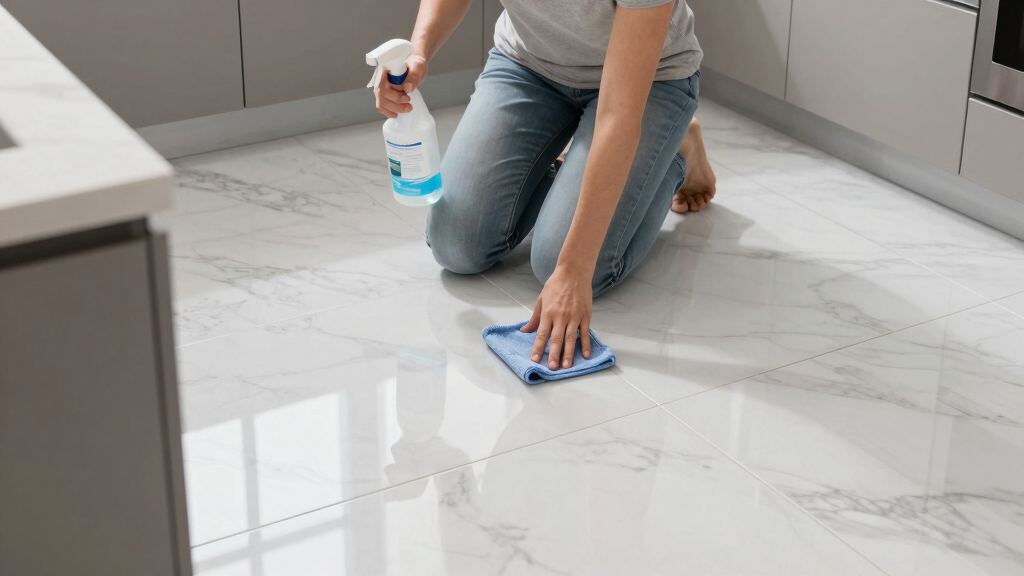
Finish each section with a clean microfiber cloth to remove water spots and restore clarity.
Microfiber wins because it cleans gently.
Glossy tile rewards low-friction cleaning. Abrasive tools may look effective in the moment, but the long-term cost is dullness from accumulated micro-scratches.
| Feature | Microfiber Cloths | Abrasive Tools | Best Practice |
|---|---|---|---|
| Cleaning efficiency | ✓ High; traps dust and fine grit | ~ May push debris across glaze | Dust first, then damp mop in sections. |
| Surface damage risk | ✓ Minimal on shiny finishes | ✗ Can cause visible micro-scratches | Avoid steel wool, rough pads, and hard brushes. |
| Streak control | ✓ Excellent when used dry for buffing | ✗ Often leaves haze or scuffing | Use one damp cloth and one dry cloth. |
| Long-term shine | ✓ Preserves reflectivity | ✗ Gradually reduces gloss | Choose soft tools for every routine clean. |
Where the shine is won or lost.
Most dullness comes from the wrong cleaner, trapped grit, or water left behind. These visual cues show which habits matter most for a glossy finish.
Shine Protection Impact
Cleaner Safety Spectrum
Stay near neutral. Acidic and alkaline cleaners can be useful in rare spot treatments, but repeated use risks haze and dullness.
Deep clean without dulling.
Steam cleaning and polishing can help, but only with restraint. Test first, keep heat gentle, avoid lingering in one spot, and polish lightly with products designed for glossy tile.
Maintenance rhythm
Consistency matters more than force. A light routine prevents the buildup that tempts aggressive scrubbing.
- Dust or sweep weekly to remove scratch-causing grit.
- Damp mop every one to two weeks with a mild cleaner.
- Dry immediately with a clean microfiber cloth.
- Seal grout periodically to reduce staining and moisture absorption.
- Deep clean monthly or as traffic and residue require.
Can I use vinegar or lemon juice?
Only diluted and sparingly. Acidic cleaners can dull gloss over time, so rinse well afterward.
Can I use a regular mop?
Yes, if the mop head is soft microfiber and only damp, not soaking wet.
How do I remove stubborn stains?
Use a soft cloth and pH-neutral cleaner. For scratches or deep stains, consider professional polishing.
What should I avoid completely?
Steel wool, abrasive brushes, bleach, ammonia, harsh degreasers, and repeated acidic cleaning.
From routine to mirror finish.
The best way to clean high-gloss tile is a connected system. Each step reduces the next risk, so the tile stays bright without aggressive products.
What makes cleaning high-gloss tile different from regular tile?
High-gloss tile has a smooth, reflective surface that shows every fingerprint, smudge, and water spot. Unlike matte or textured tiles, it needs extra gentle handling. Using harsh chemicals or abrasive tools can scratch or dull its shiny finish, making regular cleaning more delicate.
For example, a quick swipe with a steel scrub brush might seem effective but can leave micro-scratches that dull the surface over time. Instead, gentle techniques protect your investment and keep that mirror-like look intact.
Understanding this difference is crucial because high-gloss surfaces are more sensitive to damage. The tradeoff is that while they are visually stunning, they require a more mindful cleaning approach. Neglecting this can lead to irreversible scratches or dullness, diminishing their aesthetic appeal and potentially requiring costly refinishing.
microfiber cleaning cloths for tiles
As an affiliate, we earn on qualifying purchases.
As an affiliate, we earn on qualifying purchases.
How to clean high-gloss tile in 3 simple steps
- Start with dry dusting or sweeping to remove loose dirt and debris. Use a soft broom or microfiber duster. This prevents scratching when you mop.
- Mix a gentle, pH-neutral cleaner with warm water—about a few drops of mild dish soap in a bucket. Lightly dampen a microfiber mop or cloth, then clean the surface in sections.
- Dry the tiles immediately with a clean, soft microfiber cloth. This step prevents water spots and streaks, keeping your high-gloss shine crisp and clear.
Performing these steps carefully ensures that you remove dirt without risking damage. Skipping the drying step, for example, can lead to water spots that are difficult to remove later, dulling the surface over time. The choice of a pH-neutral cleaner is also critical; harsher chemicals can break down the surface seal or leave residues that cause dullness, so understanding the chemistry helps maintain that pristine finish.
As an affiliate, we earn on qualifying purchases.
Microfiber vs. traditional cleaning tools: Which is best?
| Feature | Microfiber Cloths | Abrasive Tools |
|---|---|---|
| Cleaning efficiency | High—traps dirt and dust effectively | Low—may scratch or dull surface |
| Surface damage risk | Minimal—gentle on shiny finishes | High—can cause micro-scratches and dullness |
| Ease of use | Simple—dry or damp for best results | Not recommended—potential for damage if used improperly |
Choosing microfiber tools isn’t just about convenience; it’s about protecting the delicate surface of high-gloss tiles. Microfiber’s fine fibers lift dirt efficiently while minimizing friction, which reduces micro-scratches that can accumulate and dull the shine over time. This is especially important because high-gloss surfaces are more prone to visible scratches, and once these are ingrained, they are often irreversible.
In contrast, abrasive tools like steel wool or rough scrub brushes can cause micro-scratches that diminish the reflective quality. The tradeoff here is that while abrasive tools might seem to clean more stubborn grime initially, they compromise the long-term appearance of your tiles, leading to dullness and the need for more intensive repairs.
As an affiliate, we earn on qualifying purchases.
The role of steam cleaning on high-gloss tiles
Steam cleaning offers a chemical-free way to sanitize and refresh high-gloss tiles. The hot vapor loosens dirt and kills germs without scratching or dulling the surface. Just ensure the steam mop is set to a gentle setting and avoid holding it in one spot too long.
For instance, a steam mop used carefully on a glossy kitchen backsplash can lift grease and grime, leaving a streak-free shine. However, always test a small area first to prevent any potential damage.
Steam cleaning is particularly effective because it penetrates into tiny pores and grout lines, removing embedded dirt that traditional mops might miss. This deep-cleaning capability helps maintain the tile’s luster over time, but overuse or high heat settings can risk warping or dulling the surface. Proper technique and moderation are key to leveraging its benefits without adverse effects.
As an affiliate, we earn on qualifying purchases.
How to restore shine if your tiles look dull
If your high-gloss tiles start looking cloudy or streaked, it’s time for a little polish. Use a dedicated tile polish or a microfiber cloth dampened with a small amount of water and buff gently. For stubborn spots, a mixture of water and a few drops of white vinegar can help, but use sparingly to avoid dulling the surface over time.
Buffing not only restores the surface’s luster but also realigns the reflective properties of the glaze, making the tile appear brighter and newer. It’s important to understand that dullness can result from a buildup of residues or minor surface scratches. Polishing corrects these issues by smoothing out the surface, but over-polishing or using harsh substances can strip protective layers, so moderation and proper technique are essential.
Imagine running your hand over a surface that’s lost its luster—buffing with a soft cloth can bring back that mirror-like gleam in seconds. For extra shine, consider applying a light, commercial tile polish designed for glossy surfaces, which can fill micro-scratches and enhance reflectivity, giving your tiles a freshly restored appearance.
Frequently Asked Questions
Can I use vinegar or lemon juice on high-gloss tiles?
While natural, acidic substances like vinegar or lemon juice can dull the gloss over time. Use them diluted and sparingly, and always rinse with water afterward to prevent residue buildup.
How often should I clean high-gloss tiles?
Weekly sweeping or dusting keeps dirt from scratching the surface. A damp mop every 1-2 weeks, plus occasional deep cleaning or buffing as needed, keeps the shine pristine.
What should I avoid when cleaning high-gloss tiles?
Avoid abrasive scrubbers, steel wool, bleach, ammonia, or harsh chemical cleaners. These can scratch, dull, or stain the surface, ruining the glossy finish.
Can I use a regular mop for high-gloss tile?
Yes, but make sure it’s a microfiber or soft cloth mop. Avoid rough, abrasive mops that can scratch the surface and reduce the tile’s shine over time.
How do I remove stubborn stains without damaging the finish?
Use a soft cloth with a mild, pH-neutral cleaner or a diluted vinegar solution. For scratches or deep stains, professional polishing may be needed, but always test first in an inconspicuous spot.
Conclusion
Keeping high-gloss tiles shining isn’t about heavy scrubbing or fancy chemicals. It’s about gentle, consistent care with the right tools and techniques. Think of your tiles as mirrors—treat them softly, and they’ll reflect your good taste for years.
Next time you clean, remember: a damp microfiber cloth and quick dry are your best friends. Your floors will thank you with a dazzling, streak-free shine that turns heads.
Fall Picks
fall essentials
As an affiliate, we earn on qualifying purchases.