TL;DR

Get cleaning gear delivered free with Prime
- Fast, free delivery on millions of items
- Prime Video, Amazon Music and more included
- Member-only deals all year
An Ideal Home writer reports that closing curtains around dusk helped keep rooms warmer in the evening, with a 2°C temperature difference measured across thermal curtains and blinds. An energy expert says curtains add insulation at windows, but the report provides no measured energy-bill savings; results depend on the home and window coverings.
An Ideal Home report says closing curtains shortly before sunset may help homes retain heat in the evening, with its writer measuring a 2°C difference across thermal curtains and blinds. The result is a temperature observation, not a calculation of energy or bill savings, which the report says cannot be stated as a fixed amount because homes and window coverings differ.
The writer said they had resumed closing curtains early and found their home felt warmer for longer, reducing the need, in their experience, to run central heating for another hour. They measured temperatures on either side of window coverings after sunset. Thermal curtains and blinds showed a difference of 2°C; wooden blinds showed just under 1°C, while standard curtains and fabric blinds showed about half a degree. These figures describe the writer’s home and test, not a controlled study or a typical result for all households.
Stuart Middleton, So Energy’s consumer energy expert, said windows can be a source of heat loss and that curtains create an additional insulating layer that slows heat escaping. He said thick, well-fitting or thermally lined curtains can be particularly effective. The report does not give a quantified reduction in heating use or costs, and its temperature readings alone do not establish how much energy a household would save.
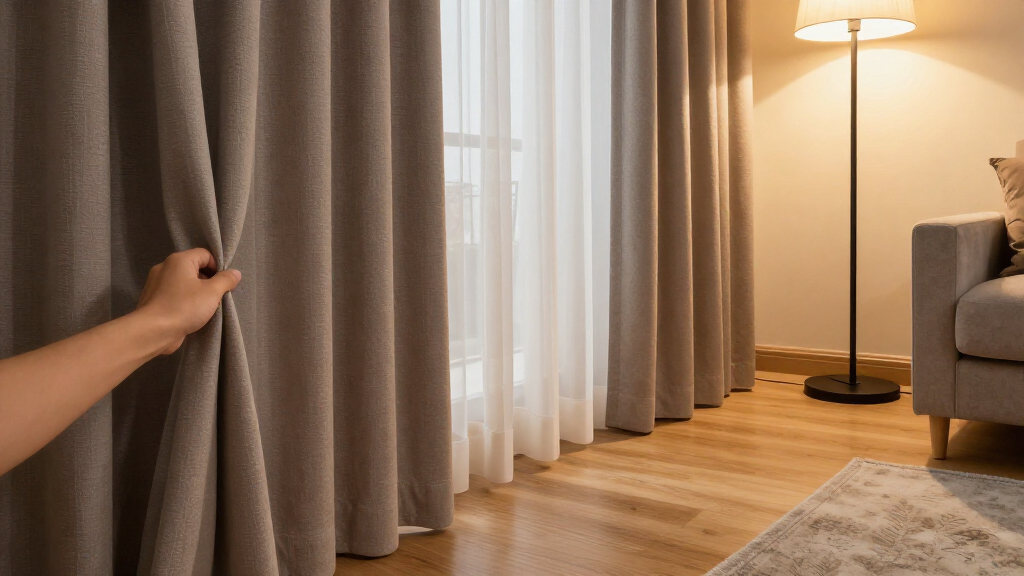
The report recommends closing curtains just before sunset, so daylight can warm rooms before coverings are drawn. Its writer gives a local example of setting a reminder for about 4:30 p.m. ahead of a 4:52 p.m. sunset, while noting that sunset times change through the season. The report also describes curtain motors and scheduling as options for people who are away at that time; these are products, not necessary parts of the no-cost habit.
Curtains May Reduce Evening Heat Loss
For households trying to limit heating use, closing curtains is a simple adjustment that requires no purchase if suitable coverings are already installed. If it helps a room stay comfortable, a household may choose to use heating for less time. That possible effect is the report’s rationale, rather than a measured outcome: it does not compare energy bills or heating consumption before and after the test.
The findings also show why the result may vary from room to room. Thermal curtains produced the largest temperature difference in the writer’s measurements, while standard curtains and fabric blinds produced smaller ones. The practical takeaway is to treat the habit as a potentially helpful supplement, not a substitute for insulation or a guaranteed way to lower bills.
thermal insulated curtains for windows
As an affiliate, we earn on qualifying purchases.
As an affiliate, we earn on qualifying purchases.
How the Home Test Was Conducted
The report was written as colder weather and earlier sunsets prompted the writer to revisit a familiar energy-saving tip: closing curtains when the sun goes down. It refers to advice from Martin Lewis to close curtains after sunset, but the supplied report does not include a direct statement from Lewis about this test or a quantified estimate of savings.
The writer compared temperatures in front of and behind different window coverings in their own home after sunset. The report does not specify the measuring equipment, exact testing conditions, number of readings or whether temperatures were recorded over multiple nights. Its results should be read as a household observation, alongside Middleton’s explanation of how window coverings can slow heat loss, rather than as a broad scientific assessment.
“Windows can be a source of heat loss, so drawing your curtains creates an additional layer of insulation that helps slow the rate at which heat escapes.”
— Stuart Middleton, So Energy’s consumer energy expert
thermal curtain liners for existing curtains
As an affiliate, we earn on qualifying purchases.
As an affiliate, we earn on qualifying purchases.
Energy Savings Remain Unquantified
The report does not establish how much energy or money closing curtains saves. It gives no bill comparison, heating-use data or controlled comparison with curtains left open. The writer’s readings come from one home, and the report does not detail the measurement method enough to determine how repeatable the results are.
Actual effects may depend on window type, drafts, existing insulation, curtain fit and fabric, as well as room conditions and heating settings. The supplied material also cites expected energy-price rises, but does not provide enough dated tariff information to verify those forecasts. Readers should not treat the reported temperature differences as a promise of lower bills.
draft proof window insulation film
As an affiliate, we earn on qualifying purchases.
As an affiliate, we earn on qualifying purchases.
A Habit to Test at Home
The report’s practical suggestion is to check local sunset time and close curtains shortly beforehand, then judge whether rooms stay comfortable for longer. Households can compare the habit across rooms with different coverings, while recognizing that a subjective change in comfort does not by itself measure energy use. No formal follow-up study or bill-savings assessment is announced in the source material.
People considering motorized curtains can set schedules or, with some devices, use light levels to trigger movement, but the report presents these as optional purchases. The next useful evidence would be a measured comparison of heating use and indoor temperatures over consistent periods, along with clearly described conditions. Until then, the supported conclusion is limited: curtains may slow heat loss, while the amount saved in any particular home remains unknown.
As an affiliate, we earn on qualifying purchases.
Key Questions
Does closing curtains early save energy?
The report says curtains can add insulation and slow heat loss through windows. It does not measure energy consumption or establish a specific saving, so the effect for an individual home is uncertain.
When should curtains be closed?
The report recommends closing them shortly before sunset. This allows daylight to enter during the day before curtains are drawn for the evening.
Which window coverings performed best in the report?
In the writer’s home, thermal curtains and blinds had the largest measured temperature difference, at 2°C. Wooden blinds showed just under 1°C, while standard curtains and fabric blinds showed about half a degree.
Do the reported temperature differences show how much money I could save?
No. The readings were taken in one home and do not quantify heating use or bills. The report says savings depend on factors including windows, curtain type and home insulation.
Source: rss
Fall Picks
fall essentials
As an affiliate, we earn on qualifying purchases.