
TL;DR

Get cleaning gear delivered free with Prime
- Fast, free delivery on millions of items
- Prime Video, Amazon Music and more included
- Member-only deals all year
You can often clean lightly soiled windows with plain water, a clean soft cloth, and a dry cloth for edges and touch-ups. Dust first, work on cool glass in overlapping strokes, and dry the edges before water evaporates; if hard water leaves spots, try distilled water. Check care instructions for coated or specialty glass, and use a targeted method only when water cannot remove grease or other residue.
Sunlight can make a clean window look like a map of every wipe you made. The fix usually isn’t a stronger cleaner. For lightly dirty glass, plain water and clean cloths can do the job when you control grit, water, and drying time.
This guide shows you how to clean windows with no streaks and no added cleaning products, from the dusty sill to the final check from across the room. You’ll learn why timing matters, what to do when tap water leaves spots, and how to handle grease or specialty glass without guessing.
Dust frames, sills, and screens before wetting glass so grit doesn’t become muddy streaks or scratch the pane.
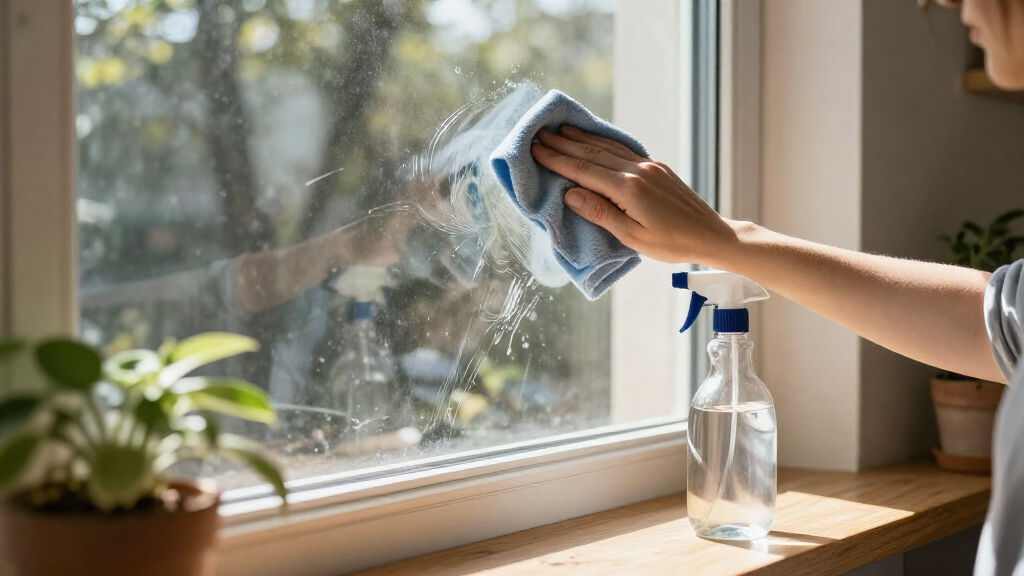
Use a lightly damp clean cloth, overlapping strokes, and a separate dry cloth for edges and corners.
Choose shade or a cool time of day so water doesn’t evaporate before you can wipe it away.
If tap water leaves pale spots, test distilled or demineralized water on a small area.
Check care instructions for specialty glass, and never lean out of an open window to reach a pane.
Streak-free windows with water and care
For lightly soiled glass, plain water and clean cloths can work without added cleaning products. Control grit, water, and drying time for a clearer finish.
A simple, careful routine
Follow the same order to prevent grit and excess water from leaving marks.
Clear loose dirt from frames, sills, and screens before wetting the glass.
Use a small amount of plain water; wring the cloth until it is damp, not dripping.
Use overlapping strokes, then dry edges and corners with a separate cloth.
Look for remaining marks from both sides before repeating a pass.
Choose the right conditions
Cool glass gives you time to wipe away water before it evaporates.
- Cloudy weather or shade
- Small, manageable sections
- Clean, soft, lint-free cloths
- Direct sun and hot glass
- Too much water or dirty tools
- Leaning out of an open window
Match the method to the mark
If streaks remain, check the cause before cleaning the whole pane again.
| What you notice | What to try |
|---|---|
| Pale spots after drying | Test distilled or demineralized water on a small area. |
| Greasy fingerprint | Try a fresh cloth and warm water; a little mild soap may help if needed. |
| Coated or specialty glass | Follow care instructions; avoid abrasive pads or scraping blades unless approved. |
Know what water can do
Start with water
Plain water can lift dust, pollen, and light smudges from ordinary glass.
Use care with buildup
Grease, adhesive, paint, and mineral deposits may need a targeted method suited to the glass.
Know what “no chemicals” means for window cleaning
For window cleaning, no chemicals is best understood as no added cleaning products: you use water without a detergent, vinegar, or commercial glass spray. Water is itself a chemical substance, so “chemical-free” would be misleading. For everyday dust, pollen, and light smudges, water may be all you need.
Think of a window like a plate with a thin film of dust: a clean damp cloth can lift the loose layer, but a greasy fingerprint may need more help. If you press harder instead of cleaning the cloth, you can spread that grease into a hazy patch. Start with water, then decide whether the mark actually needs a different approach.
For example, a bedroom window with a few dusty handprints may clear with a damp cloth and a dry follow-up. A kitchen window beside the stove can collect oily residue that plain water may not remove fully. In that case, a tiny amount of mild soap may help; rinse with clean water and dry the glass. That is an added product, so it no longer fits the water-only method.
Water-only cleaning also does not disinfect glass or dissolve every kind of deposit. Adhesive, paint, mineral spots, and heavy grease need care suited to the material. If you want to reduce fragrances, packaging, or irritating sprays, starting with plain water is a practical way to cut product use without promising more than it can do.
Products Worth Considering

Roborock RockMow X130H Wire-Free 4WD Robot Lawn Mower

Shark AI Ultra Robot Vacuum with Matrix Clean Navigation, Self-Empty Base, HEPA Filtration, Pet Hair Friendly, Wi‑Fi, Dark Grey

Arlo Essential Wireless Security Camera 2K (3rd Gen), 3-Camera Set with Yard Sign
As an affiliate, we earn on qualifying purchases.
Get streak-free results with five simple steps
To clean ordinary windows with no added products, remove loose dirt first, dampen a clean cloth with a small amount of water, wipe in overlapping strokes, then dry the edges and check the glass. This order keeps grit from scraping the surface and stops excess water from drying into marks. A second, dry cloth makes the final pass much easier.
- Dust the frame, sill, and screen. Use a dry cloth or brush so grit doesn’t turn to muddy streaks when it gets wet.
- Dampen a clean cloth. Wring it out until it is damp, not dripping. On a small window, a little water goes a long way.
- Wipe from top to bottom. Use overlapping strokes so you don’t leave narrow dry tracks between passes.
- Dry edges and corners. Use a separate dry cloth to pick up water where it collects around the frame.
- Check the glass from two angles. If marks remain, look at both sides before wiping the same spot again.
Imagine cleaning a living-room window after a windy afternoon. Dust the sill first, wipe the glass from the upper corner downward, then use the dry cloth along the bottom edge, where water tends to gather. Step back and shift your view toward the light. A small fingerprint you missed from straight on may show up from the side.
If you prefer a squeegee on a large pane, use smooth overlapping passes and wipe the blade between strokes. A blade carrying grit or dirty water can draw lines across the glass. Keep your tools clean and use gentle pressure; repeated force won’t rescue a cloth that has picked up dust.
Pick a cool time so the water doesn’t dry into streaks
Clean windows when the glass is cool, ideally on a cloudy day or when the pane sits in shade. Direct sun and hot glass speed evaporation, so water can disappear before you wipe it away. That leaves mineral spots or uneven traces behind, especially if you use more water than needed.
Picture a south-facing kitchen window at noon: you make one careful pass, reach for the dry cloth, and the first section has already dried. The same job in morning shade gives you time to wipe and dry the whole pane evenly. You don’t need perfect weather; moving to the shaded side of the house can be enough.
Work in manageable sections rather than wetting an entire picture window at once. On a wide pane, clean one portion, dry its edges, and move on. This keeps the surface from drying while you’re still working elsewhere. It also helps you see whether the problem comes from your technique or from the water itself.
Cold weather calls for a different check: make sure the water won’t freeze on the glass, and work in small areas so you can dry promptly. If the pane is icy, conditions are unsafe, or you would need to lean outside to reach it, wait or hire a professional. Clear glass can wait; a safe reach matters more.
Choose cloths and water that leave less behind
The best cloth is clean, soft, and lint-free, and the best water depends partly on what comes from your tap. A dedicated microfiber cloth is a common choice for ordinary glass, while cotton can work if you don’t mind a little extra drying. In hard-water areas, distilled or demineralized water can reduce mineral spots.
| Tool or water | What it does well | What to watch for |
|---|---|---|
| Clean microfiber | Lifts light dust and leaves little lint when used clean | Wash without fabric softener or dryer sheets, which can leave residue |
| Soft cotton cloth | Reusable option if you want to avoid microfiber | Some fabrics shed lint and need extra drying |
| Tap water | Convenient for routine cleaning | Hard water can leave mineral marks as it dries |
| Distilled or demineralized water | Can help where tap water leaves spots | It may be unnecessary if your tap water dries cleanly |
For instance, if you clean the same bathroom mirror with tap water and keep seeing pale dots after it dries, try a small test with distilled water on one corner. If the corner dries clearer, minerals may be part of the problem. If the haze stays, check whether the cloth is dirty or whether residue from an earlier cleaner remains.
Microfiber is synthetic and can release fibers during washing. If you use it, wash cloths according to their care instructions and keep window cloths separate from greasy kitchen rags. Whatever the fabric, don’t use a cloth that has picked up grit; a clean tool matters more than a particular label.
Find the cause when your windows still look streaky
Streaks usually point to dirty tools, excess water, fast drying, hard-water minerals, or old product residue. Before repeating the whole job, identify where the marks sit and what they look like. That saves time and helps you avoid rubbing a problem that needs a different fix.
- Cloudy or smeary patches: Rinse or switch to a clean cloth; the one in your hand may be carrying dirt or residue.
- Pale dots after drying: Try less water, dry sooner, or test distilled water if your tap water is hard.
- Lines at the edges: Use a dry cloth on corners and along the frame, where water tends to collect.
- Marks that return after wiping: Check the other side of the glass before doing the same side again.
Say you cleaned a front window, stepped back, and still see a cloudy arc. It may be outside pollen rather than a failed inside pass. Look across the pane from an angle, then wipe a small area on the other side if you can reach it safely. You’ll know which side needs attention before dampening the whole window again.
Old cleaner residue can make a water-only pass look streaky at first. Use a clean cloth, rinse it often, and try a small section before deciding the method failed. Don’t keep adding vinegar or stronger products by habit. Vinegar isn’t required for routine glass cleaning, and it can harm nearby natural stone or certain finishes if it drips or splashes.
Handle greasy fingerprints and stubborn spots without damaging glass
Plain water handles many everyday marks, but it may not lift grease, adhesive, paint, or mineral deposits. Match the next step to the residue and the glass. Scrubbing harder or reaching for a blade can scratch a surface, especially if the pane has a coating or you don’t know its care requirements.
For greasy fingerprints, start with a fresh cloth and warm water. If that leaves a film, a very small amount of mild soap can help; rinse the area with clean water and dry it well. For example, a child’s handprint near the patio door may come off with a second clean pass, while oily marks above a stove may need that small soap step.
Mineral deposits can cling to glass and may not lift with a water-only wipe. Avoid abrasive pads and strong acids unless the glass and frame instructions say they are safe. A method that works on plain glass could damage a nearby finish or specialty coating. Test a suitable approach in a small, inconspicuous area and follow the manufacturer’s guidance.
For tinted, coated, antique, or leaded glass, check the manufacturer’s care instructions before using any cleaner, pad, or scraper. Never lean out of an open window to reach an exterior pane. Use safe access equipment from the ground where possible, or hire a professional when the job requires a risky reach.
Keep the routine low-waste without trading away safety
A water-first routine can cut down on cleaner use and packaging while keeping the job simple. You need a small set of reusable cloths, a safe way to reach the glass, and a plan to wash dirty tools. The method also has limits: reusable microfiber is synthetic, and cotton may leave lint, so pick the trade-off that fits your household.
For a quick weekly touch-up, you might use one clean cloth for dusting frames and another damp cloth for a few fingerprints. Save a dry cloth for the final edges. If you wash these cloths with fabric softener, deposits can transfer back to the glass and create a hazy finish, so follow the cloth’s care label and skip softener for the window-cleaning load.
There’s no universal schedule for washing windows. A home beside a busy road may collect dust faster than one sheltered by trees; a screen can also trap pollen and debris. Clean when dirt, fingerprints, or weather marks noticeably reduce visibility. In winter, choose a safe day and avoid letting water freeze on the pane.
Don’t clean from a precarious ladder position or reach through an open window to finish a corner. If a second-floor pane is out of safe reach, leave it for someone with appropriate equipment. A practical routine should leave both the glass and you in good shape.
Frequently Asked Questions
Can I get streak-free windows with only water?
Often, yes, especially when the glass is lightly soiled and your cloth is clean. Use little water, dry the edges, and try distilled water if hard tap water leaves spots.
Why are my windows still streaky after I clean them?
Common causes include a dirty cloth, too much water, direct sun, hard-water minerals, or residue from an earlier cleaner. Try a fresh cloth, work in shade, and check whether the marks are on the other side of the pane.
Do I need vinegar to clean windows?
No. Plain water is a reasonable first try for light dirt and fingerprints. Vinegar is an added substance and can harm nearby materials such as natural stone or some finishes.
What should I use on greasy fingerprints?
Try a fresh cloth with warm water first. If the grease remains, a very small amount of mild soap may help; rinse the glass with clean water and dry it thoroughly.
Can I use newspaper instead of a cloth?
Results vary because paper and ink can leave lint or residue, and newspaper may feel rough on some surfaces. A clean, soft cloth is usually more predictable; check specialty-glass care guidance first.
Does water-only cleaning remove hard-water spots?
Not always. Mineral deposits can cling to glass and may need a method suited to that surface. Avoid abrasive scrubbing or strong acids unless the glass and frame instructions allow them.
Conclusion
Start with the simplest routine: dust first, use little water, and dry the edges while the glass is still damp. If marks remain, check your cloth, the water, and the other side of the pane before reaching for a stronger method.
When you step back and the afternoon light comes through cleanly, you’ll know the small details did the work.