
TL;DR

Get cleaning gear delivered free with Prime
- Fast, free delivery on millions of items
- Prime Video, Amazon Music and more included
- Member-only deals all year
Fragrance-free usually means a product has no added ingredients intended to give it a scent or mask another odor. It still contains chemicals, such as water, surfactants, preservatives, or oils, because chemicals make up ordinary matter and do the work of cleaning or protecting a product. Read the full ingredient list and follow medical advice if you have a known allergy or skin condition.
A fragrance-free cleaner can still smell faintly of soap, minerals, or the ingredients that help it cut through grease. That doesn’t mean the label is misleading: fragrance-free usually means the maker hasn’t added ingredients intended to give the product a scent or mask another odor.
The phrase chemical-free is a different story. Water, oils, minerals, and cleaning ingredients are all chemicals, so an ordinary household cleaner cannot literally contain no chemicals. In this guide, you’ll learn what fragrance and unscented labels can tell you, how to read beyond the front of the bottle, and what to do if you’re choosing products around a sensitivity.
“Fragrance-free” usually means no added ingredients intended to scent a product or mask another odor; a product may still have a base smell.
Ordinary cleaners contain chemicals such as water, surfactants, preservatives, or minerals, so “chemical-free” is not a literal scientific description.
“Unscented” and “fragrance-free” can mean different things; check the full label and account for local rules.
Natural extracts and essential oils can still irritate or trigger allergies in some people.
If you have a known sensitivity, check for your specific trigger and follow medical advice rather than relying on a broad label.
Fragrance-Free Isn’t Chemical-Free
Fragrance-free describes added scent, not the whole formula. A product can still smell like its ingredients and contain substances that matter to your skin.
What the label tells you
The useful distinction is added fragrance versus the ingredients that make the product work.
- Usually means no ingredients added to give a scent or mask another odor.
- Does not promise no smell.
- Can mean little or no noticeable smell.
- May not mean the same as fragrance-free.
Ingredients still do the work
Ordinary matter and everyday product ingredients are chemicals.
Surfactants
Help loosen oily soil and lift grime.
Water and oils
Carry ingredients or form part of a product’s base.
Preservatives
Help prevent microbial growth during storage.
A scent is not a safety verdict
Base ingredients can smell faintly of soap, minerals, or plant oils. Smell alone does not identify added fragrance or show whether a product will suit you.
Read beyond the front label
Rules vary by country and product category, so the ingredient list and directions give you more useful detail.
Decide whether you are avoiding added scent or a specific ingredient.
Look for substances you know you want to avoid.
Check the product directions and follow medical advice for a known allergy or skin condition.
What “fragrance-free” tells you about a cleaner
“Fragrance-free” usually means a product has no added ingredients intended to give it a scent or mask another odor; it does not mean the product has no smell or contains no chemicals. The distinction matters when you’re choosing a bathroom spray or laundry product: you can avoid added scent while still getting the ingredients that do the cleaning.
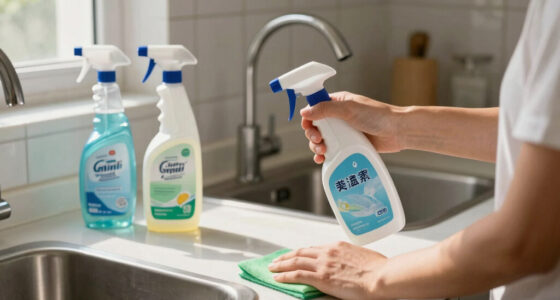
A cleanser might use surfactants to loosen oily soil from a counter, water to carry ingredients, and preservatives to help prevent microbial growth during storage. Those substances are chemicals, but their presence alone doesn’t tell you whether a product is safe or unsafe for your household. The label’s useful promise is narrower: it says something about added fragrance.
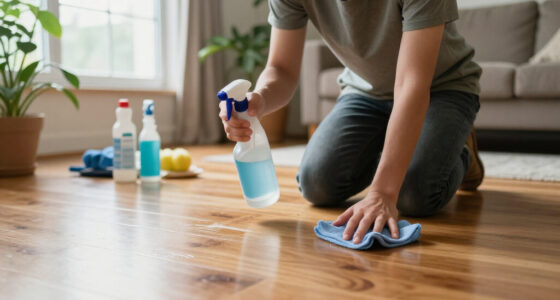
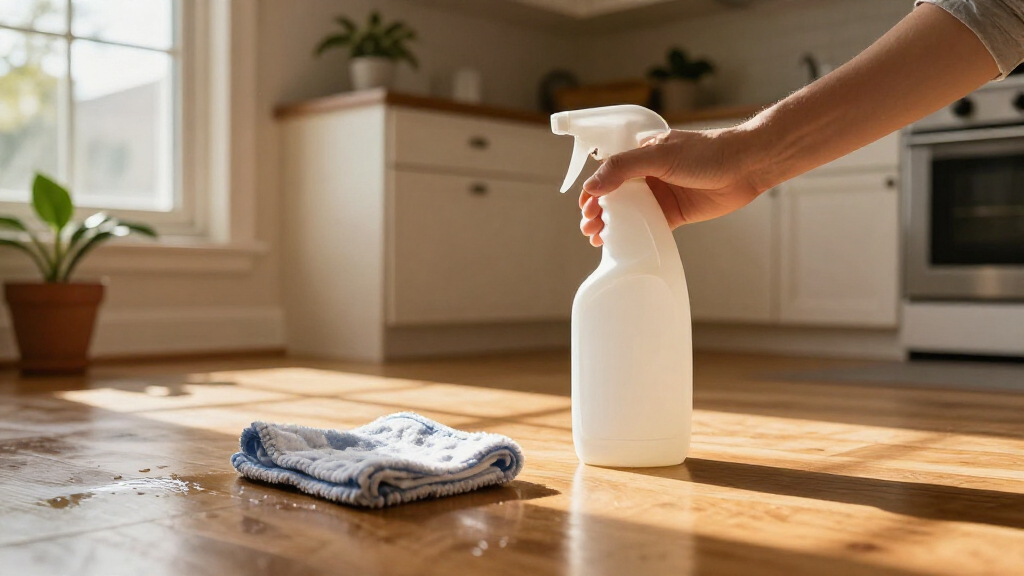
You might notice that a fragrance-free floor cleaner has a faint, sharp smell when you pour it into a bucket. That odor can come from its ingredients or the material you’re cleaning, rather than added perfume. Follow the product’s directions, ventilate the room as recommended, and check that the cleaner suits your floor finish.
Think of the label like a note about seasoning: “no added vanilla” doesn’t mean a cake contains no ingredients, and “fragrance-free” doesn’t mean a cleaner contains nothing but water. It describes one ingredient purpose, not the whole formula.
Products Worth Considering
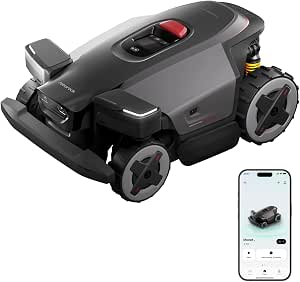
Roborock RockMow X130H Wire-Free 4WD Robot Lawn Mower

eufy C28 Robot Vacuum Cleaner and Mop with HydroJet Roller, 15,000 Pa Suction

Samsung 43-Inch M70H Series 4K Mini LED Smart TV (2026)
As an affiliate, we earn on qualifying purchases.
Why “chemical-free” can’t describe an ordinary cleaner
“Chemical-free” is not a scientifically meaningful description of an ordinary product, because water, oil, minerals, and the ingredients in a cleaner are all chemicals. The phrase often serves as shorthand for “free of ingredients I’m worried about,” but it doesn’t tell you which ingredients or concerns the seller means.
For example, if you’re cleaning sticky fingerprints from a kitchen cabinet, water and a surfactant may help lift the grime. If a product is a lotion, oils and emulsifiers can help its ingredients stay mixed. Removing every chemical would mean removing the product itself; the practical question is which substances it contains and how you’ll use it.
That’s why vague front-label claims can’t replace the ingredient list. “Chemical-free” doesn’t identify a particular allergen, describe a concentration, or explain whether an ingredient can irritate a person’s skin. A clearer choice starts with a specific need: perhaps you want to avoid added fragrance, or you already know you react to a named ingredient.
When you see the claim on a bottle, treat it as marketing language rather than a precise safety finding. Look for useful, specific information about the product’s ingredients and intended use. “Contains no chemicals” doesn’t literally describe a cleaner; the full formula is what gives you something concrete to evaluate.
How to read fragrance, unscented, and ingredient labels
“Fragrance-free” is generally the clearer label if you’re trying to avoid added fragrance, while “unscented” describes a product with little or no noticeable smell and may not mean the same thing. A product could use ingredients to mask another odor; naming rules also vary by country and product category, so check the actual ingredient list when the distinction matters to you.
Fragrance can be a blend. Depending on the product and applicable labeling rules, a label may use a term such as “fragrance” or “parfum” without listing every component separately. Some jurisdictions require individual disclosure of certain fragrance allergens under specified conditions. For instance, the EU Cosmetics Regulation sets requirements for certain allergens, and the European Commission adopted an expanded list in 2023 with transition periods. The exact rule that applies depends on the product and its market status, so avoid assuming every bottle follows the same timetable.
A simple label check can help when you’re shopping for a kitchen spray or body wash:
- Start with your reason. Are you avoiding added scent, or a specific ingredient you already know causes a reaction?
- Read the ingredient list. Look for terms you recognize, including any known personal triggers.
- Check the product category and local guidance. Cosmetic, medicine, and cleaning-product rules can differ.
- Follow the use directions. A product suitable for a washable surface may not suit stone, finished wood, or skin.
As a practical example, a fragrance-free laundry liquid may still have a noticeable base odor, but the absence of added perfume is the relevant clue if perfume bothers you. The list and directions help answer the next questions.
Why a fragrance-free product can still smell—or cause a reaction
A fragrance-free product can still smell because its base ingredients may have their own odor, and it can still cause irritation or an allergic reaction because fragrance is only one possible trigger. A scent-free label is not a guarantee that every ingredient will suit every person.
Imagine wiping a bathroom sink with an unscented cleaner. You may smell a mild mineral or soap-like note as you work, then notice it fade when you rinse the surface and air out the room. That smell alone doesn’t prove the product contains added fragrance, just as a pleasant herbal scent doesn’t prove a product is gentle.
“Natural,” “botanical,” and “essential-oil-based” also don’t mean non-irritating or allergy-safe. Plant oils and extracts can smell strong because they contain naturally occurring substances, and some people react to them. If you’re sensitive to a particular oil, a cleaner with that ingredient can be a poor fit even if the scent comes from a plant.
Irritation and allergy are different. Irritation can depend on concentration, how often you use a product, and the condition of your skin. Allergic contact dermatitis is an immune reaction to a specific substance. A rash after cleaning doesn’t establish which one is happening; a dermatologist can assess the symptoms and may recommend patch testing.
If a product seems to trigger a reaction, stop using it and seek medical advice for persistent or severe symptoms. Use cleaners as directed, and avoid putting a household cleaner on skin unless its label says it is made for that use.
How to choose a product when scent or skin sensitivity matters
Choose a fragrance-free product when your goal is to avoid added fragrance, then check the full ingredient list for anything you already know you need to avoid. If you have eczema, a diagnosed fragrance allergy, or another skin condition, your clinician’s advice matters more than a broad front-label claim.
For instance, suppose scented laundry detergent leaves you uncomfortable and you want to try a different option. Pick a product clearly labeled fragrance-free, check its ingredient information for known triggers, and use it according to the label. If the problem continues, changing products again and getting medical advice may be more useful than trying to guess from smell alone.
For household cleaning, also match the product to the surface. A fragrance-free bathroom cleaner still needs to be appropriate for the tile, grout, sealant, or stone you plan to clean. Test only as the manufacturer directs, and don’t mix cleaning products; follow the label’s ventilation and protective-equipment instructions, especially when the product warns about splashes or fumes.
- For scent avoidance: Look for “fragrance-free,” then inspect the ingredient information.
- For a known allergy: Check specifically for your diagnosed trigger and follow clinical advice.
- For a sensitive surface: Confirm that the cleaner is suitable for that material.
- For a reaction: Stop using the suspected product and seek advice if symptoms persist or are severe.
No single label answers every question. The right product depends on your sensitivity, the ingredients, and the job—whether you’re washing clothes, wiping a counter, or cleaning a tub.
What to remember before you trust a front-label claim
A front-label claim is a starting point, not a complete description of what is inside the bottle. “Fragrance-free” addresses added fragrance, while “chemical-free” doesn’t identify a real ingredient standard. If you need to avoid a particular substance, the ingredient list and reliable product guidance give you more to work with than a broad promise.
Consider a shopper comparing two cleaners for a small, windowless bathroom. One says “unscented,” the other says “fragrance-free,” and both list ingredients. If added scent is the concern, the second claim may be the clearer signal, but the shopper should still read the directions, check the product’s intended surfaces, and ventilate the room as instructed.
Claims like “clean,” “green,” or “hypoallergenic” can also have different meanings across markets and products. “Hypoallergenic” does not guarantee nobody will react, and “natural” does not automatically mean safer. If a health condition is involved, don’t use marketing language as a substitute for care from a qualified clinician.
Ingredient disclosure requirements can change and differ by jurisdiction. For current labeling questions, check the relevant regulator or product guidance for the country and product category involved. Ask what a claim actually promises, then compare that promise with your needs and the full label.
Frequently Asked Questions
Does fragrance-free mean there are no chemicals?
No. It usually means the product has no added ingredients intended to scent it or mask another odor. It still contains chemicals such as water and the ingredients that help it clean or stay stable.
Is unscented the same as fragrance-free?
Not necessarily. “Unscented” generally describes little or no noticeable smell, while “fragrance-free” more directly signals that fragrance has not been added. Labels and rules vary, so check the ingredient information if avoiding added fragrance matters to you.
Can a fragrance-free product still have a smell?
Yes. The base ingredients, or the surface you’re cleaning, may have an odor even when no fragrance has been added. A noticeable smell by itself doesn’t tell you the full formula.
Can a fragrance-free cleaner still cause irritation or a rash?
Yes. People can react to ingredients other than fragrance, and irritation does not by itself prove an allergy. Stop using a suspected product and ask a clinician about persistent or severe symptoms.
Are essential oils safe because they’re natural?
Not automatically. Essential oils are concentrated mixtures of chemicals, and some people find them irritating or develop an allergic reaction. If you know you react to a particular oil, check the ingredient information rather than relying on the word “natural.”
Does “hypoallergenic” mean a product cannot cause an allergy?
No. The term is not a guarantee that nobody will react, and its meaning and regulatory treatment can vary by market. If you have a diagnosed allergy, check for your specific trigger and follow your clinician’s advice.
Conclusion
Use “fragrance-free” as a clue about added scent, not as a promise about every ingredient or every person’s skin. Read the label for the substances you actually need to avoid, and follow product directions for the surface you’re cleaning.
A cleaner doesn’t need to be “chemical-free” to be a sensible choice. It needs to suit the job, your sensitivities, and the room you’re using it in—then the only smell left may be a freshly rinsed sink and an open window.