TL;DR

Get cleaning gear delivered free with Prime
- Fast, free delivery on millions of items
- Prime Video, Amazon Music and more included
- Member-only deals all year
Degreasing kitchen cabinets is straightforward with common household items like vinegar or dish soap. Regular cleaning prevents heavy grease buildup and keeps your kitchen looking fresh without harsh chemicals.
Use natural solutions like vinegar or dish soap for regular, safe cleaning.
Cleaning every 1-3 months prevents heavy grease buildup and saves effort.
Avoid harsh chemicals and abrasive scrubbers that can damage surfaces.
Steam cleaning offers a chemical-free, effective alternative for stubborn grease.
Maintain good ventilation and wipe down after cooking to keep grease at bay.
Why regular degreasing keeps your cabinets looking fresh
Grease buildup in kitchens is a common challenge. Over time, cooking oils, splatters, and dust settle on cabinet surfaces, dulling their appearance and inviting bacteria. Regularly cleaning with simple solutions not only keeps things looking sharp but also extends the life of your cabinets. When grease is allowed to accumulate, it can penetrate the surface, making it harder to clean later and potentially damaging the finish. Consistent maintenance prevents this buildup, ensuring your cabinets remain bright and durable. Think of it as an investment in your kitchen’s longevity, reducing the need for costly repairs or refinishing down the road. Moreover, a clean surface is less hospitable to bacteria and mold, contributing to a healthier environment.
According to home cleaning experts, maintaining a routine every 1-3 months prevents heavy grease buildup and reduces the need for harsh scrubbing later. Plus, it’s easier on your surfaces—especially if you use gentle, eco-friendly cleaners. Regular cleaning also makes your kitchen more inviting and easier to maintain, saving you time and effort in the long run.
As an affiliate, we earn on qualifying purchases.
Choose the right cleaning solution — no harsh chemicals needed
For degreasing kitchen cabinets, your best friend is a simple mixture of warm water and a mild cleaner. Think: dish soap, vinegar, or a combination of both. These natural options are safe, effective, and gentle on your finishes. The choice of cleaner matters because different surfaces require different care. For example, wood cabinets may be more sensitive to acidic solutions like vinegar if used excessively, so diluting properly is key. Meanwhile, laminate surfaces tend to be more resistant but still benefit from gentle cleaning to avoid scratches or damage. Using these natural solutions helps you strike a balance—powerful enough to break down grease but gentle enough to preserve your cabinet’s finish. This approach minimizes the risk of discoloration, warping, or stripping protective coatings, ensuring your cabinets stay beautiful over time.
Here’s what you can use:
- Warm water + dish soap: Cuts through grease without stripping paint or wood finish. Ideal for routine maintenance.
- Vinegar + water: A powerhouse for grease and grime, plus it’s natural and odor-free. Use diluted vinegar to avoid potential damage to sensitive surfaces.
- Baking soda paste: Good for stubborn spots—make a paste with water, apply, then scrub gently. Baking soda’s mild abrasiveness helps lift grime without scratching.
vinegar spray for kitchen cabinets
As an affiliate, we earn on qualifying purchases.
As an affiliate, we earn on qualifying purchases.
Step-by-step: How to degrease your kitchen cabinets in 5 simple steps
- Clear your cabinets: Remove all items, dishes, and shelf liners for easy access. Clearing the space prevents accidental spills and allows you to thoroughly clean every surface.
- Dust first: Use a dry cloth or duster to remove loose debris and dust. This step is crucial because wiping greasy surfaces over dust can spread dirt rather than remove it, making your cleaning less effective.
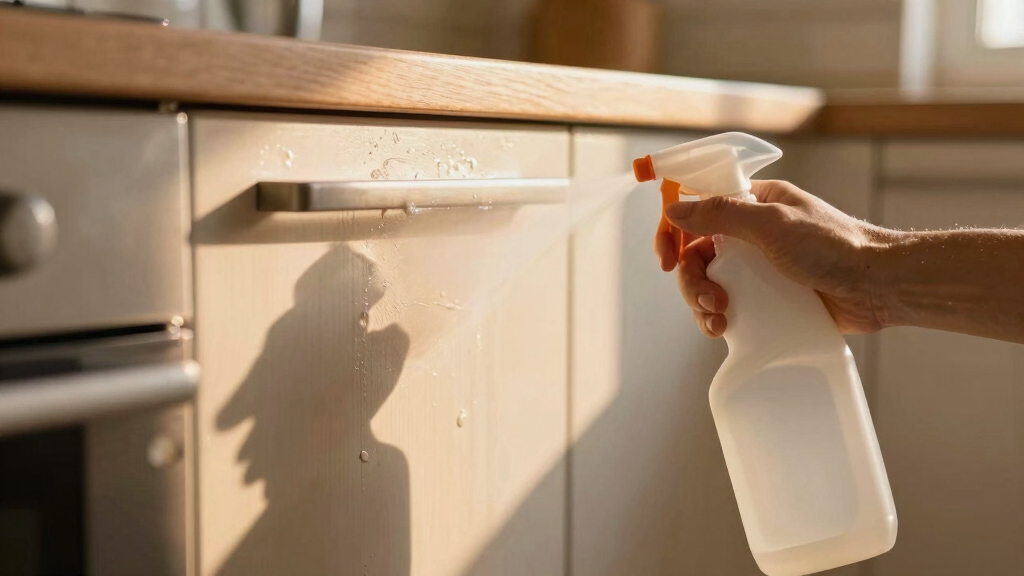
- Apply your cleaner: Spray or wipe your chosen solution onto the surfaces, focusing on greasy spots. Let it sit for a minute or two to loosen stubborn grease—this reduces scrubbing effort and minimizes surface damage.
- Gently scrub: Use a soft sponge or microfiber cloth. Avoid abrasive scrubbers that scratch or dull the finish. Gentle agitation helps lift grease without harming the surface.
- Rinse and dry: Wipe with a clean damp cloth to remove residue, then dry thoroughly with a towel. Proper drying prevents water spots and streaks, maintaining a polished look.
For example, after cooking a greasy stir-fry, a quick wipe with vinegar and a microfiber cloth restores the shine in minutes. Regular maintenance using these steps keeps grease from becoming a stubborn, time-consuming problem.
eco-friendly kitchen cabinet cleaner
As an affiliate, we earn on qualifying purchases.
As an affiliate, we earn on qualifying purchases.
Compare natural vs. commercial degreasers — what works best?
| Feature | Natural Cleaners | Commercial Degreasers |
|---|---|---|
| Effectiveness | Great for light to moderate grease | Stronger, better for heavy buildup |
| Safety | Non-toxic, environmentally friendly | May contain harsh chemicals, fumes |
| Cost | Cheap; uses common household ingredients | More expensive, store-bought |
| Surface safety | Gentle on most surfaces | Use with caution on delicate finishes |
steam cleaner for kitchen cabinets
As an affiliate, we earn on qualifying purchases.
As an affiliate, we earn on qualifying purchases.
Tips to keep grease from sneaking back in
- Wipe down cabinets weekly after cooking to catch splatters early.
- Use a range hood or exhaust fan to reduce airborne grease.
- Maintain good kitchen ventilation—open windows or run a fan.
- Apply a light protective coating or polish to resist future grease adhesion.
For instance, turning on your exhaust fan for 10 minutes while cooking can cut grease deposits by half over time. Additionally, choosing a polish with anti-static properties can help repel dust and grease, keeping surfaces cleaner longer. These preventive measures are crucial because they address the root causes of grease accumulation, making routine cleaning easier and less frequent. Over time, these habits can significantly extend the lifespan of your cabinets and keep your kitchen looking pristine with minimal effort.
Why steam cleaning is a game-changer for degreasing
Steam cleaning offers a chemical-free alternative that cuts through grease effortlessly. A handheld steam cleaner heats water to high temperatures, releasing powerful, hot vapor that loosens dirt without scrubbing. It’s gentle but effective, especially on laminate or painted cabinets. The high temperature breaks down grease molecules, making them easier to wipe away, while the steam’s moisture helps lift stubborn grime without harsh scrubbing or chemical residues. This method is especially valuable for those sensitive to chemical fumes or seeking an eco-friendly option. Proper technique involves holding the steam nozzle at a safe distance to avoid water damage and using smooth, consistent passes to ensure thorough cleaning. Regular steam cleaning can prolong the time between deep cleans and maintain a hygienic, shiny surface, making it a versatile addition to your cleaning toolkit.
For example, a quick 5-minute pass with steam on kitchen cabinet doors can remove months of grease, leaving surfaces shiny and sanitized. Just ensure you hold the steam at a safe distance to avoid water damage.
Frequently Asked Questions
What is the easiest way to remove grease from kitchen cabinets?
A mixture of warm water and dish soap or vinegar often does the trick. Apply, wipe gently, and rinse for a clean, grease-free surface.Are natural cleaners as effective as commercial degreasers?
Yes, especially for light to moderate grease. For heavy buildup, you might need a commercial product, but always test first to avoid damage.How often should I clean my kitchen cabinets?
Aim for every 1 to 3 months, depending on how much you cook and how quickly grease accumulates.Can I use bleach or harsh chemicals?
It’s best to avoid bleach on wood finishes. Harsh chemicals can damage surfaces and produce strong fumes that aren’t safe for your family.How do I prevent grease buildup in the future?
Wipe down cabinets after cooking, use a range hood, and ensure good kitchen airflow to keep grease from settling.Conclusion
A clean kitchen starts with simple, consistent habits. Regularly wiping down your cabinets with gentle solutions keeps grease from turning into stubborn grime. Think of it as giving your kitchen a fresh, bright smile—quick, easy, and worth the effort.Halloween Picks
halloween
As an affiliate, we earn on qualifying purchases.