
TL;DR

Get cleaning gear delivered free — and shop member deals
- Fast, free delivery on millions of items
- Access to Prime Big Deal Days deals on October 6–7
- Prime Video, Amazon Music and more included
Burnt food can be loosened and removed without scrubbing by soaking, boiling, or using natural agents like baking soda and vinegar. These methods save time, protect your cookware, and avoid harsh chemicals.
Use a vinegar and baking soda mixture to loosen burnt food without scrubbing.
Boiling water with vinegar can turn stubborn residues into flaky messes for easy removal.
Soaking pans in hot water with dish soap or baking soda for several hours softens burnt spots significantly.
Prevention is easier than cleaning—monitor heat levels and clean promptly after cooking.
Avoid metal tools on non-stick pans to prevent damage during cleaning.
Quick Fix: The Simple Trick to Loosen Burnt Food Fast
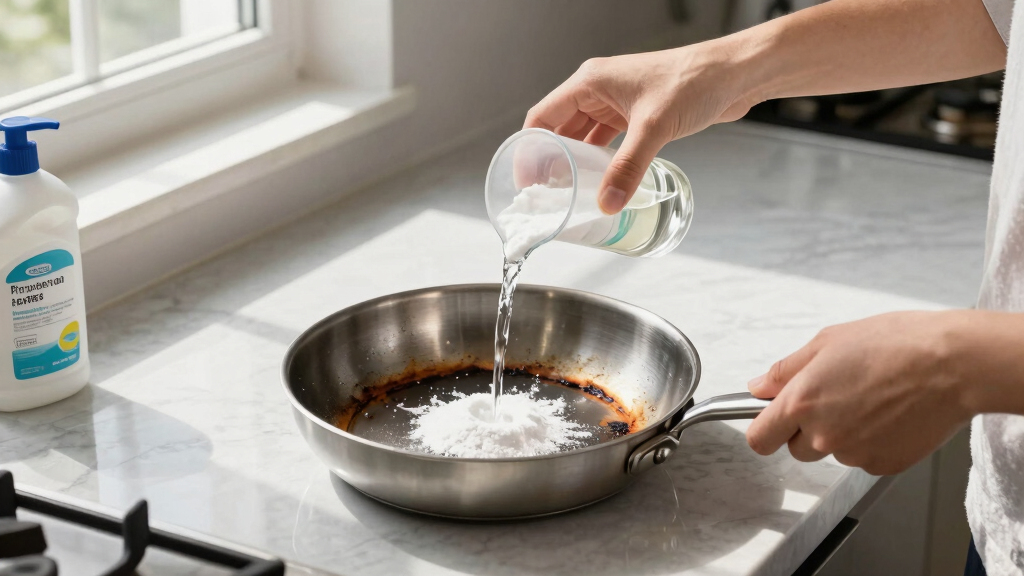
When burnt food clings stubbornly to your pan, the fastest way to start is with heat and a natural agent. Pour equal parts vinegar and water into the pan, then bring it to a gentle boil. The acidity of vinegar breaks down the burnt residue, softening it enough to lift away with minimal effort.
Imagine this: you’re cooking pasta, and the sauce bubbles over, burning onto the bottom. Instead of scrubbing, you turn on the stove, pour in half a cup of vinegar, add water, and let it simmer for 10 minutes. Once cooled, the burnt bits come loose easily.
As an affiliate, we earn on qualifying purchases.
Step-by-Step: How to Remove Burnt Food with Baking Soda and Vinegar
- Pour enough vinegar into the pan to cover the burnt area.
- Add 2-3 tablespoons of baking soda. Expect fizzing—this reaction helps lift burnt food.
- Let the mixture sit and fizz for 10-15 minutes.
- For stubborn spots, bring the mixture to a gentle boil for 5 minutes.
- Allow it to cool, then wipe away the loosened residue with a soft cloth or sponge.
This method turns burnt food into a flaky, crumbly mess you can easily wipe away—no scrubbing required.
baking soda and vinegar cleaning kit
As an affiliate, we earn on qualifying purchases.
As an affiliate, we earn on qualifying purchases.
Compare Natural Methods: Which Works Best for Your Pan?
| Method | Time Needed | Effectiveness | Best For |
|---|---|---|---|
| Boiling Vinegar Solution | 10-20 min | High | Burnt-on food, light to moderate |
| Baking Soda Paste | 15-30 min | Moderate | Stubborn spots, non-stick pans |
| Soaking in Hot Water & Dish Soap | Several hours | Moderate to High | Light burnt food, early stains |
As an affiliate, we earn on qualifying purchases.
How to Keep Burnt Food from Ruining Your Pan Again
Prevention starts with watching your heat and using enough oil. Staying attentive prevents your pan from reaching high temperatures that cause burning, which in turn reduces the risk of stubborn residues forming. Using cookware suited to your stove, like non-stick pans, can help resist burning and make cleaning easier, but it’s important to understand that even non-stick surfaces can degrade if subjected to high heat over time. After cooking, rinsing and wiping your pan promptly is crucial because burnt residues become much more difficult to remove once they set in. Developing this habit minimizes the buildup of stubborn stains, extending the life of your cookware and making future cleaning easier. Think of it as a proactive approach—addressing potential problems before they become tough cleaning tasks, saving you time and effort in the long run.
Imagine you’re frying eggs. Keep the heat medium, add a splash of oil, and stay nearby. When done, soak the pan briefly in warm water with a little dish soap. This simple routine not only prevents burnt spots but also keeps your pan in optimal condition, reducing the need for heavy cleaning later. Consistent, gentle care helps maintain the pan’s surface integrity and ensures your cookware remains non-stick and easy to clean over time.
As an affiliate, we earn on qualifying purchases.
Frequently Asked Questions
What is the easiest way to remove burnt food from a pan without scrubbing?
The easiest way is to pour vinegar and water into the pan, bring it to a gentle boil, then let it sit. The acidity and heat loosen the burnt bits, making them easy to wipe away without scrubbing.Can I use vinegar and baking soda together to clean burnt pans?
Yes, combining vinegar and baking soda creates a fizzing reaction that helps lift burnt food. Just add baking soda after pouring vinegar, then let it sit or simmer for best results.Are there safe methods for cleaning non-stick pans without damaging the coating?
Absolutely. Use gentle heat, natural agents like baking soda and vinegar, and avoid metal scrubbers. Soaking and boiling solutions are safe and effective for non-stick surfaces.How long should I soak my pan to loosen burnt food?
Soaking for 2-4 hours, or overnight for really stubborn spots, can soften burnt food enough for easy removal. For quick results, boiling vinegar solution for 10-15 minutes works well.What should I avoid when cleaning burnt pans?
Avoid metal scrapers on non-stick coatings, harsh chemical cleaners, and using cold water on hot pans—these can damage surfaces or cause warping.Conclusion
Next time burnt food threatens your cookware, remember: a little heat, patience, and natural agents go a long way. No scrubbing, no damage—just smart cleaning habits that keep your pans looking new. Your kitchen messes don’t stand a chance when you use these simple tricks—happy cooking and even happier cleaning.Halloween Picks
halloween
As an affiliate, we earn on qualifying purchases.