
TL;DR

Get cleaning gear delivered free with Prime
- Fast, free delivery on millions of items
- Prime Video, Amazon Music and more included
- Member-only deals all year
Kitchen drain odors mainly come from organic buildup, bacterial growth, or dry traps. Regular cleaning with natural solutions like baking soda and vinegar, plus preventative habits, can keep smells at bay. Recent innovations focus on eco-friendly methods and better trap designs.
That foul, musty smell wafting from your kitchen sink? It’s more common than you think. Often, it’s not just about leftover food or bad plumbing—it’s a sign that organic buildup, bacteria, or dry traps are turning your drain into a mini bio-reactor.
If you’ve ever opened your drain and smelled that sour, sewage-like scent, you know how disruptive it can be. Luckily, most odors are fixable with a few simple steps. No need for harsh chemicals or expensive repairs—just straightforward, practical tips that work.
Regularly flush drains with hot water and natural cleaners to prevent buildup.
Keep your P-trap filled with water—dry traps are prime odor escape routes.
Avoid pouring grease or oil down the drain to stop organic deposits from rotting.
Use baking soda and vinegar monthly for a safe, effective deodorizing routine.
Stay informed about new eco-friendly drain designs and smart sensors to make maintenance easier.
What really causes kitchen drain smells—and how to spot them
Kitchen drain odors spring from a mix of causes. Food debris, grease, soap scum, and bacteria create a slimy film that rots over time, releasing foul smells. A dry or cracked P-trap lets sewer gases escape, filling your kitchen with that unpleasant odor. Clogs or buildup block proper drainage, trapping organic matter that decomposes and causes smells.
Imagine a sink where the water doesn’t drain smoothly—this stagnation creates the perfect environment for bacteria and mold to thrive. If you notice gurgling sounds or slow draining, odors are usually nearby.
Check your P-trap—the U-shaped pipe under your sink. If it’s dry or cracked, odors can escape into your kitchen. Also, look for greasy buildup around the drain opening and along the pipes.
Understanding these causes is crucial because it helps you target your cleaning efforts effectively. Organic buildup and bacterial growth not only produce odors but can also lead to clogs and potential pipe damage over time. Addressing these issues early prevents more costly repairs and keeps your plumbing functioning smoothly.
eco-friendly drain odor eliminator
As an affiliate, we earn on qualifying purchases.
As an affiliate, we earn on qualifying purchases.
Simple steps to banish kitchen drain smells for good
- Flush with hot water: Pour boiling water down the drain weekly to melt grease and wash away debris. This prevents buildup that can harbor bacteria and cause odors, but be cautious with very hot water if you have PVC pipes, as excessive heat may weaken them over time.
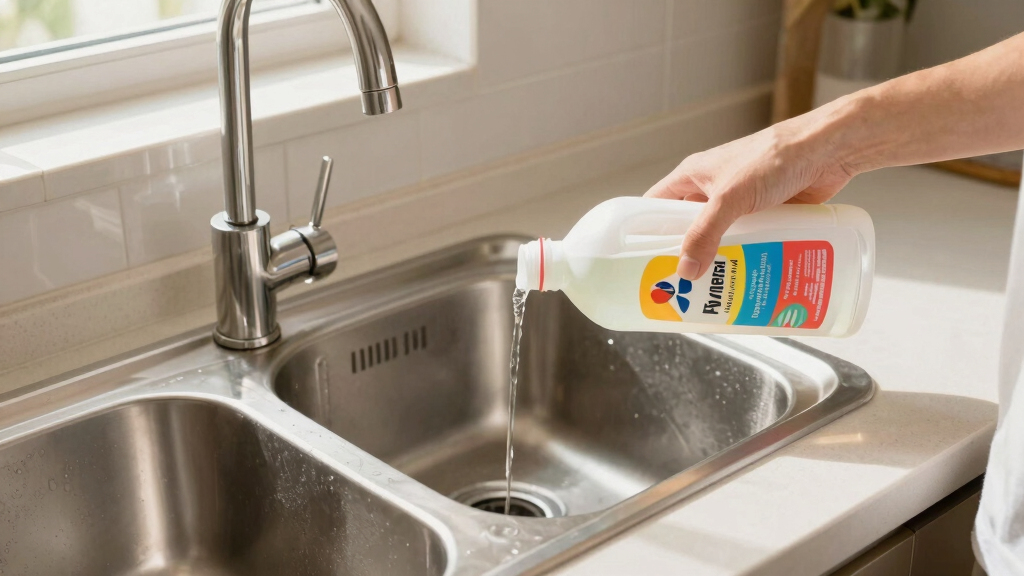
- Use baking soda and vinegar: Sprinkle ½ cup of baking soda followed by 1 cup of vinegar. Let it fizz and sit for 15-30 minutes before flushing with hot water. This combo not only neutralizes odors but also helps break down organic residue and soap scum that accumulate in pipes, reducing long-term smell issues.
- Clean the P-trap: Place a bucket underneath, unscrew the trap, and remove debris or buildup. Rinse thoroughly before reassembling. Regular cleaning prevents organic matter from decomposing within the trap, which is a prime source of persistent smells.
- Maintain with enzymatic cleaners: Use these organic cleaners monthly to break down organic matter without damaging pipes. They work by feeding on the organic residues that cause odors, making them an eco-friendly alternative to harsh chemicals and reducing the risk of clogs and foul smells.
- Prevent future smells: Run water during and after dishwashing, avoid pouring grease down the drain, and periodically use natural deodorizers. These habits maintain a water seal in your trap and minimize organic buildup, which are key to long-term odor control.
Imagine a routine where every week, a quick flush with boiling water, a sprinkle of baking soda, and a vinegar fizz keep your drain fresh. This approach not only clears existing odors but also prevents new ones from forming, extending the life of your plumbing and keeping your kitchen smelling clean.
As an affiliate, we earn on qualifying purchases.
Compare natural remedies versus chemical drain cleaners
| Feature | Natural Remedies | Chemical Drain Cleaners |
|---|---|---|
| Safety | Non-toxic, safe for pipes and environment | Potentially corrosive, can damage pipes over time |
| Effectiveness | Breaks down organic buildup gradually, promoting healthier pipes and fewer odors over time | Works quickly but may only mask odors temporarily and can weaken pipe materials if used excessively |
| Environmental Impact | Biodegradable, eco-friendly, reduces chemical runoff | Harmful chemicals that can pollute water sources and harm aquatic life |
| Cost | Low, using household items like baking soda and vinegar | Higher, with risks of pipe damage leading to costly repairs |
Natural solutions like baking soda and vinegar are safer and gentler, making them ideal for regular maintenance and preventing odors before they start. Chemical cleaners may seem faster, but their potential to corrode pipes and harm the environment means they should be used sparingly and only when necessary. Weighing these tradeoffs helps you choose options that prioritize safety, effectiveness, and eco-friendliness.
natural drain cleaner baking soda vinegar
As an affiliate, we earn on qualifying purchases.
As an affiliate, we earn on qualifying purchases.
Maintenance habits that keep odors from coming back
Prevention is your best friend. Regularly flushing with hot water keeps grease from solidifying and organic matter from accumulating. Using baking soda and vinegar monthly prevents organic buildup that feeds bacteria and causes foul smells. Running water during dishwashing and avoiding pouring fats down the drain stop the prime causes of odors and reduce the risk of clogs. Check your pipes for cracks or leaks—these can let sewer gases seep through and cause smells, and addressing them early prevents more serious issues.
Think of your drain as a tiny ecosystem—keeping the water flowing, the trap filled, and the pipes clean is like tending a garden. Small, consistent efforts prevent odors from becoming a persistent problem. For example, neglecting routine maintenance can lead to buildup and dry traps, which are common culprits for foul smells. Implementing simple habits, like weekly flushes and monthly natural deodorizers, can drastically reduce these risks and extend the lifespan of your plumbing system.
Set reminders. Make it a routine to pour hot water or natural deodorizers once a week. Regular inspections can catch small issues before they turn into costly repairs, ensuring your kitchen remains odor-free and your plumbing stays healthy.
kitchen drain odor removal products
As an affiliate, we earn on qualifying purchases.
As an affiliate, we earn on qualifying purchases.
Latest innovations and eco-friendly solutions for odor control
Newer plumbing fixtures now feature better seals, trap designs, and self-cleaning features to minimize odors. Sensors that detect smell buildup and alert you through smartphone apps are gaining popularity. Many homeowners now prefer biodegradable, enzymatic cleaners that actively break down organic matter without harsh chemicals. Additionally, some companies are developing smart drain systems with integrated sensors and automatic cleaning cycles, providing proactive odor management and reducing manual maintenance.
Imagine your drain equipped with a smart sensor—alerting you when it needs attention before odors become a problem. Green cleaning is not just trendy; it’s safer for your family and the planet. These innovations are making it easier and more effective to maintain a fresh-smelling kitchen without relying on chemical-heavy products, aligning convenience with environmental responsibility.
These advancements blend technology and eco-conscious practices, making drain maintenance more efficient and less intrusive. Investing in such solutions can save you money in the long run by preventing major clogs and repairs while keeping your home healthier and more sustainable.
Frequently Asked Questions
What is the fastest way to eliminate persistent kitchen drain odors?
The quickest fix is pouring a mixture of boiling water, baking soda, and vinegar down the drain. Let it fizz for 15-30 minutes, then flush with hot water. This dissolves organic buildup and neutralizes odors fast.
Are natural remedies like baking soda and vinegar really effective?
Yes, baking soda and vinegar are proven to break down organic matter and neutralize smells. They’re safer and gentler than chemical cleaners, making them ideal for regular maintenance.
How often should I clean my drain to prevent odors?
Once a week, flush with hot water. Monthly, sprinkle baking soda and vinegar. This routine keeps buildup at bay and prevents odors from forming.
Can a dry P-trap cause bad smells?
Absolutely. When your P-trap dries out—often after periods of disuse—sewer gases can escape, causing foul smells. Running water regularly keeps the trap sealed and odors locked out.
When should I call a professional plumber?
If odors persist despite your cleaning efforts, or if you notice leaks, cracks, or slow drainage, it’s time to bring in a pro. They can inspect for deeper issues or pipe damage that simple cleaning can’t fix.
Conclusion
Keeping your kitchen smelling fresh doesn’t require harsh chemicals or expensive fixes. A little routine maintenance, combined with natural cleaning methods, goes a long way. Your sink is a hardworking part of your home—treat it well, and it won’t betray you with foul odors.
Next time you notice that sour smell creeping in, remember: a simple flush, some baking soda, and a quick check can restore your kitchen’s freshness. It’s a small effort that makes a big difference—your nose will thank you.
Halloween Picks
halloween
As an affiliate, we earn on qualifying purchases.