
TL;DR

Get cleaning gear delivered free with Prime
- Fast, free delivery on millions of items
- Prime Video, Amazon Music and more included
- Member-only deals all year
Microwave smells come from hidden food residues and grease buildup. A quick steam with lemon or vinegar for just 2 minutes can neutralize odors and loosen grime, making your microwave smell fresh again.
Ever open your microwave and be greeted by a sour, burnt smell that lingers and spoils your appetite? That’s more common than you think. The good news is, you don’t need harsh chemicals or hours of scrubbing to fix it.
In this guide, you’ll learn what causes those stubborn odors, why they stick around even after cleaning, and how a quick 2-minute trick with natural ingredients can make your microwave smell fresh again. It’s simple, effective, and safe for your kitchen.
Food residues and grease are the main culprits behind persistent microwave smells.
A 2-minute steam treatment with lemon or vinegar can neutralize odors and loosen grime instantly.
Regularly covering food and wiping down the microwave prevents future smells.
Natural deodorizing agents are safe, eco-friendly, and cost-effective compared to chemical cleaners.
Consistent maintenance keeps your microwave smelling fresh and prolongs its lifespan.
Why Does My Microwave Still Smell After Cleaning?
Your microwave smells because food particles, grease, and moisture hide in tiny crevices and get absorbed into surfaces. Even if you wipe the inside, some residues cling stubbornly, especially in hard-to-reach spots. When you heat food, these residues release odors—loud enough to make your kitchen smell like last night’s dinner for days.
For example, a burnt popcorn scent can embed itself in the turntable or door seals, and a splash of pasta sauce might seep into the microwave’s nooks. No matter how thorough your wipe-down, these hidden spots keep the smell alive.
According to an anonymous researcher, regular cleaning prevents odor buildup, but deep cleaning with steam helps eliminate the smells that stubborn residues cause.
The reason this matters is that these lingering odors can affect the overall freshness of your kitchen environment and even impact the taste of food reheated later. Ignoring these residues can also lead to the buildup of bacteria or mold in damp, hidden areas, posing health risks. Therefore, understanding the cause highlights the importance of not just surface cleaning but deep, targeted cleaning methods like steaming that can reach and neutralize these hidden sources.
As an affiliate, we earn on qualifying purchases.
The 2-Minute Fix That Kicks Odors to the Curb
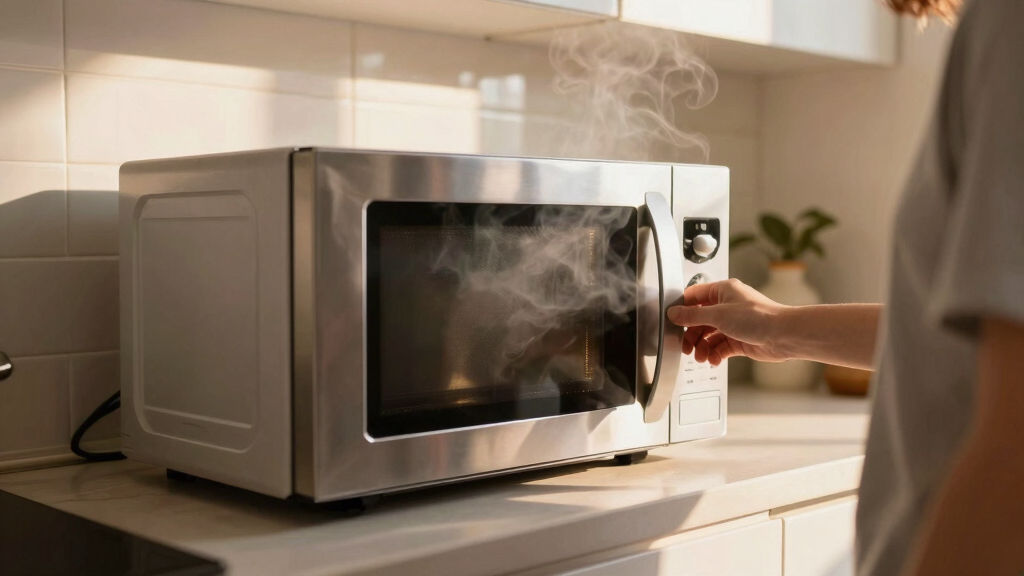
The quickest way to banish bad smells is a simple steam treatment using natural ingredients like lemon or vinegar. Here’s how:
- Fill a microwave-safe bowl with 1 cup of water.
- Add 2 tablespoons of lemon juice or a splash of vinegar for a natural deodorizer.
- Place the bowl inside and close the door.
- Heat on high for 2 minutes—listen for the steam to bubble and hiss.
- Let it sit for another minute to allow the steam to work its magic.
- Carefully remove the hot bowl and wipe the interior with a clean cloth.
This process is effective because the steam penetrates into tiny crevices and loosens grime, making it easier to wipe away residues that cause odors. The natural acids in lemon and vinegar not only neutralize the smell molecules but also break down grease and food deposits that contribute to persistent odors. This is crucial because odors are often linked to residue buildup that regular wiping does not completely eliminate. By addressing these residues through steaming, you’re effectively reducing the source of odors, leading to a fresher microwave and healthier kitchen environment.
As an affiliate, we earn on qualifying purchases.
Why Natural Deodorizers Like Lemon and Vinegar Work So Well
Natural ingredients like lemon and vinegar don’t just smell good—they actively break down odor-causing particles. Lemon’s citric acid cuts through grease and leaves a bright, fresh aroma. Vinegar’s acetic acid neutralizes alkaline odors and kills bacteria that could be lurking in damp corners.
For example, a lemon slice can turn a musty microwave into a citrus-scented haven in minutes. Vinegar, on the other hand, is a powerhouse for erasing stubborn fishy or spoiled smell residues.
Understanding the science behind these agents reveals their effectiveness. Citric acid in lemon acts as a natural solvent, breaking down fats and residues that trap odors. Vinegar’s acetic acid not only neutralizes alkaline odor molecules but also creates an inhospitable environment for bacteria and mold. This dual action makes them particularly effective for deodorizing, especially since they are safe and environmentally friendly. Their ability to chemically alter odor molecules rather than just mask them means the smell is permanently reduced, not temporarily covered up. This understanding underscores why they are preferred choices for natural, sustainable cleaning and deodorizing in your kitchen.
As an affiliate, we earn on qualifying purchases.
Quick Tips to Keep Your Microwave Smelling Fresh
- Cover food with a microwave-safe lid or paper towel to prevent splatters.
- Wipe down the interior weekly with a damp cloth and mild soap.
- Do a quick steam clean once a week using the lemon or vinegar method.
- Leave the door open for a few minutes after use to let moisture escape.
- Avoid heating overly greasy or strongly scented foods without covering.
Imagine a kitchen where the microwave smells like fresh lemon every time you peek inside. Regular cleaning and simple preventative steps make that a reality.
Consistent maintenance is key because it prevents the buildup of residues that cause odors. Covering foods prevents splatters that can seep into crevices. Wiping regularly removes surface grime, but the steam method targets hidden residues that are often the true culprits of persistent smells. Leaving the door open after use helps moisture escape, reducing damp environments conducive to bacterial growth. By combining these habits, you create an environment less hospitable to odor-causing bacteria and residues, ensuring your microwave stays fresh and odor-free over the long term.
As an affiliate, we earn on qualifying purchases.
Comparison: Natural Remedies vs Commercial Deodorizers
| Feature | Natural Remedies (Lemon, Vinegar) | Commercial Deodorizers |
|---|---|---|
| Effectiveness | Very effective for light to moderate odors | Varies; some stronger options available |
| Safety | Safe, non-toxic, environmentally friendly | Depends on ingredients; some may contain harsh chemicals |
| Cost | Low; uses common household ingredients | Moderate to high; specialty products |
| Ease of Use | Very simple, just steam and wipe | Often just spray or wipe, sometimes requiring multiple applications |
Choosing between natural remedies and commercial deodorizers depends on your priorities. Natural options are safer for your health and the environment, and they often cost less. They work by chemically neutralizing odor molecules and breaking down residues at a molecular level, which can lead to more permanent freshness. Commercial products may offer stronger or quicker results but sometimes rely on harsh chemicals that could pose health or environmental risks. Understanding these trade-offs helps you make an informed decision that aligns with your values and needs, ensuring your microwave stays fresh without compromising safety or sustainability.
Frequently Asked Questions
Why does my microwave smell even after cleaning?
Food particles and grease often hide in tiny crevices or absorb into surfaces, making them hard to see and harder to clean thoroughly. These residues release odors when heated, so a simple wipe isn’t enough. A steam treatment with natural ingredients helps reach those hidden spots and neutralize smells.
What’s the fastest way to get rid of microwave odors?
A quick 2-minute steam cycle using water mixed with lemon juice or vinegar is the fastest way. The steam loosens grime and destroys odor molecules, leaving your microwave smelling fresh in just a few minutes.
How often should I clean my microwave to keep it odor-free?
Wipe it down weekly with a damp cloth and do the steam treatment once a week or after cooking particularly pungent foods. Regular maintenance prevents odors from building up over time.
Are natural remedies like lemon and vinegar safe?
Yes, these ingredients are non-toxic, safe for most surfaces, and environmentally friendly. They’re a great alternative to chemical cleaners, especially if you’re sensitive to fumes or want a greener kitchen.
Can I use harsh chemicals inside my microwave?
It’s not recommended. Residues from harsh chemicals can be harmful, especially when heated. Stick to natural options like lemon or vinegar for a safe, effective clean.
Conclusion
That familiar smell in your microwave isn’t a lost cause. A quick, 2-minute steam with lemon or vinegar is all it takes to banish odors and refresh your appliance. It’s simple, safe, and effective — a small step for a cleaner kitchen.
Next time your microwave smells off, skip the harsh chemicals. Instead, grab a bowl, add a splash of citrus or vinegar, and give it a quick steam. Your nose—and your kitchen—will thank you.
Halloween Picks
halloween
As an affiliate, we earn on qualifying purchases.