TL;DR

Get cleaning gear delivered free with Prime
- Fast, free delivery on millions of items
- Prime Video, Amazon Music and more included
- Member-only deals all year
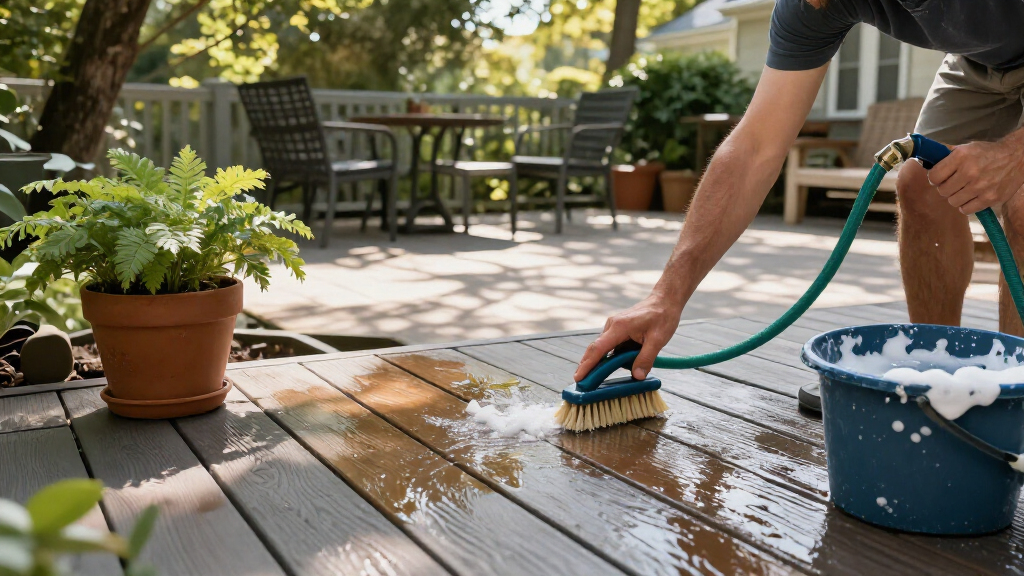
To clean a composite deck, sweep away leaves and dirt, rinse the boards, then scrub small sections with mild soap, water, and a soft-bristle brush. Rinse thoroughly and follow the manufacturer’s instructions before using stain removers, bleach, vinegar, abrasives, or a pressure washer, since composite finishes and care limits vary by product.
Last week’s pollen can turn a gray composite deck yellow, and a forgotten dinner spill can leave a greasy patch where you wanted to put your bare feet. Composite boards ask for less routine care than many wood decks, but rain and time do not sweep away every leaf, stain, or pocket of grime.
This guide shows you how to clean your deck with a surface-safe routine: remove debris, use mild soap and water, work in small sections, and rinse well. You’ll also learn what to check before reaching for a pressure washer or stain remover, and how to handle mildew, grease, sunscreen, and the damp leaves that collect on the board gaps.
One rule keeps the rest simple: care instructions vary by decking product. If your neighbor’s cleaner worked on their boards, that does not prove it is safe for yours. Check the manufacturer’s guide for your exact product, then let the deck’s material, finish, and condition set the pace.
Check the care guide for your exact boards before using a specialty cleaner, stain treatment, or pressure washer.
For routine dirt, sweep, pre-rinse, scrub small sections with mild soap and a soft-bristle brush, then rinse thoroughly.
Lift food, grease, oil, and sunscreen promptly; use only a stain method approved for your decking product.
Clear leaves and dirt from board gaps so water can drain and air can circulate.
Cleaning removes surface grime, but it cannot repair scratches or reverse fading.
Surface care · Practical guide
The Right Way to Clean a Composite Deck
A surface-safe routine starts with a sweep, mild soap, and a soft brush. Learn what to do about pollen, spills, mildew, and the product-specific limits that matter before using stronger cleaners or tools.
01 / Before you wash
Know the surface you’re cleaning
Composite decking has evolved from early uncapped boards to products with protective surface caps. Resistance to stains, fading, and moisture differs, so “composite” does not mean maintenance-free or stain-proof.
Find the product guide
Check the exact board line for approved cleaners, stain treatments, and any pressure-washer limits. Look at purchase records or ask the builder if the product is unknown.
Help water drain
Leaves and grit trapped between boards can hold moisture and block airflow. Sweep the surface, gaps, and edges around the deck.
Cleaning has limits
A wash removes surface grime, but it cannot repair scratches or reverse fading. Set-in stains may need a maker-approved treatment.
02 / The cleaning sequence
Five steps to a clean deck
Work along the board length or grain, and wash a few boards at a time. Choose a shaded, cooler period when possible so suds do not dry into a film.
Sweep
Remove leaves, pollen, grit, and loose dirt from boards and gaps.
Pre-rinse
Use a garden hose to loosen dust and surface debris.
Wash small areas
Scrub with mild soap and water using a soft-bristle brush.
Rinse well
Wash away soap and lifted grime before it can dry on the boards.
Check
Look across the wet surface. Follow the guide if a mark remains.
03 / Your routine
Respond to what the deck collects
There is no single schedule for every setting. Shade, weather, trees, foot traffic, and the manufacturer’s advice all affect how often cleaning is useful.
- Sweep when leaves and grit build up.
- Wash when visible dirt or pollen remains.
- Clear damp debris after storms and windy days.
- Clean spills promptly before they settle.
04 / Adjust to conditions
Let the setting set the pace
These bars show factors to consider, not a cleaning frequency or measured rating. A shady deck beneath trees may collect damp leaves faster than a sunny, open balcony. Follow the product guide and respond to what you see.
05 / Stains + stubborn spots
Blot first. Then use an approved method.
Food, grease, oil, and sunscreen are easier to treat before they set. Lift or blot excess material without spreading it, then check the care guide.
Food and grease
Pick up solids, blot oily residue, and wash with the product-approved method. Avoid rubbing dry crumbs across the boards.
Sunscreen
Blot pale handprints or lotion marks promptly. Do not assume a household degreaser is safe for decking.
Mildew
Remove leaves and dirt that can feed growth. Clean the area with a decking-approved product and rinse well; check drainage and airflow if it returns.
Set-in marks
If routine washing does not clear a spot, use the manufacturer’s stain guidance. Cleaning cannot promise to erase every stain.
06 / Tools + products
Pause before going stronger
Unapproved chemicals and aggressive tools can scratch, discolor, or otherwise damage some composite surfaces.
Only when permitted
Follow the exact pressure, tip, and distance limits in your product guide. If unavailable, use a hose and soft brush.
Check approval first
For grease, mildew, or stubborn stains, choose a cleaner specifically approved for your decking product.
Bleach, vinegar, abrasives
Do not assume these are safe. Strong or acidic cleaners and abrasive tools may affect color or finish.
Start with a hose, mild soap, and a soft-bristle brush. Confirm the board type and care instructions before using stain removers, bleach, vinegar, solvents, abrasives, or pressure washing.
The care logic
Keep the routine simple and surface-safe
A clear path from debris to a clean, well-rinsed surface—with the product guide setting the limits.
Sweep boards, gaps, and edges.
Pre-rinse dust and surface grime.
Work in small sections along the boards.
Remove residue and check for remaining marks.
Start With the Deck Maker’s Care Guide
Before you wash, check the care guide for your exact decking product; it identifies approved cleaners and any limits on pressure washing or stain treatment. Composite boards can differ by brand, age, and surface finish, so a method that worked on a friend’s deck may scratch or discolor yours. If you do not know the product name, look for old purchase records or ask the builder before using a specialty cleaner.
That check matters because composite decking has changed over time. Early uncapped boards and newer products with protective surface caps can have different finishes and care needs. A capped board may resist some stains better than an older uncapped surface, but “composite” does not mean stain-proof. A dark oil mark can still linger if it sits for days.
For example, imagine your neighbor rinses their deck with a pressure washer every spring and gets good results. Their boards might permit a specific pressure, nozzle, and distance; yours might not. The product guide, rather than the neighbor’s success, is the useful starting point.
Keep the instructions handy when cleaning. They can clarify which products and techniques the maker approves, and what to do if you find a stubborn stain or surface damage. If you cannot confirm the board type or recommended method, start with a hose, mild soap, and a soft brush, and avoid more aggressive treatment until you can check.
Products Worth Considering

Shark PowerDetect Corded Stick Vacuum, Self-Cleaning (Eggplant, HZ4002)

Ring Alarm 8-Piece Kit (2nd Gen) Home Security System

TCL QM64L 85-Inch QD-Mini LED 4K Smart Fire TV
As an affiliate, we earn on qualifying purchases.
Follow a Gentle Soap-and-Water Routine
To clean a composite deck, sweep debris away, rinse the surface, scrub small areas with mild soap and water, and rinse again. Use a soft-bristle brush and work along the board length or grain, following the product guide. This basic routine loosens routine dirt without making a stronger chemical or abrasive tool your first move.
- Sweep first. Remove leaves, grit, and loose dirt from boards and gaps.
- Pre-rinse. Wet the area with a garden hose to loosen surface dust.
- Wash a small section. Use mild soap in water and a soft-bristle brush, following the board length.
- Rinse thoroughly. Wash away soap and the dirt it lifted before moving to the next section.
- Check your work. Look across the wet boards for missed grime and follow the guide if a mark remains.
Work in manageable sections—perhaps a few boards at a time—so suds do not dry into a film under the sun. A patch of dried soap can look like cloudy dirt and leave you wondering whether you made the deck cleaner or merely shinier. A shaded morning is often easier than scrubbing a hot surface at midday.
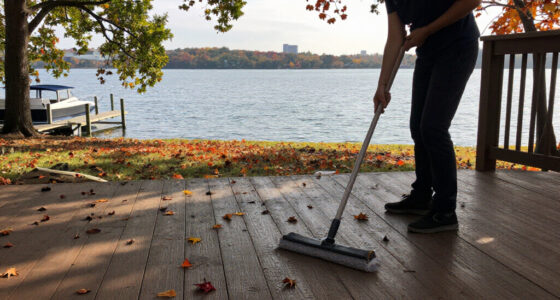
Picture a deck after a windy afternoon: dry leaves, fine grit, and yellow pollen sit in the board grooves. Sweeping first keeps that grit from turning into a scratchy paste when the brush gets wet. The routine may take longer than spraying everything at once, but you can see where the grime is going and rinse it away as you work.
Choose a Cleaning Schedule That Fits Your Deck
Sweep your composite deck as debris builds up, then wash it when visible dirt, pollen, or spills call for more than a broom. The right schedule depends on shade, weather, nearby trees, foot traffic, and the manufacturer’s advice. A sunny deck beside a lawn may need less frequent attention than a shaded corner beneath a dripping maple.
Leaves and dirt can collect on the gaps between boards, where they hold moisture and block drainage or airflow. In autumn, a quick sweep every few days may be easier than tackling a damp, matted layer after a week of rain. After a storm, look for twigs and wet leaves caught against the railing or packed into the spaces between boards.
Think of the deck outside a kitchen: crumbs, grease mist, and muddy shoe prints arrive more often than they do on a quiet balcony. Sweep after a busy weekend, and give the boards a soap-and-water wash when the grime stays visible. You do not need to scrub a clean deck by the calendar just to meet an invented monthly target.
Regular cleaning means responding to what your deck collects, not using a harsh product on a fixed timetable. Watch for slippery-looking films, persistent spots, or damp debris around the edges. If your maker recommends a particular cleaning interval or seasonal routine, follow that guidance; local weather and shade can make one household’s schedule a poor fit for another’s.
Lift Food, Grease, and Sunscreen Before They Set
Clean spills promptly because food, grease, oil, and sunscreen are easier to remove before they settle into the surface. First lift or blot excess material without rubbing it outward, then use the cleaner and method approved for your decking. A quick response can spare you from treating a large, sticky patch later.
Say a burger slips off a plate during a backyard lunch. Pick up the solid bits, blot the oily spot with a clean cloth or paper towel, and wash the area using the product-approved method. Scrubbing dry crumbs across the board can leave grit behind; rubbing an oily stain can spread it into a wider, faintly shiny mark.
Sunscreen deserves the same prompt attention. A child may leave pale handprints beside the steps, or an adult may track lotion from a pool chair onto the boards. Blot first, then check the care guide before using a dedicated cleaner. Do not assume a household degreaser is safe simply because it cuts grease on a kitchen stove.
Some marks may remain after routine washing, especially if they sat through hot weather. In that case, check the decking maker’s stain guidance rather than escalating straight to bleach, solvents, or abrasive scrubbing. Cleaning can remove surface grime; it cannot promise to erase every set-in stain. If the approved method does not clear the mark, ask the manufacturer about the next safe option.
Clear Mildew by Removing What Feeds It
If mildew appears on a composite deck, remove the leaves and dirt around it, then clean the affected area with a product approved for your boards. Organic debris and damp grime can provide material that supports growth, so treating the visible spot without clearing nearby buildup may leave the conditions that brought it back. Rinse well after cleaning and check the surrounding area for trapped debris.
A shaded corner below a planter is a common trouble spot: water drips, leaves gather, and the boards stay damp longer than the open deck. Move the planter carefully, sweep out the grit beneath it, and make sure water can drain through the gaps. If the area dries more readily afterward, you have addressed more than the mark on top.
Strong cleaners can harm some finishes, nearby plants, or other materials. Do not assume bleach or vinegar is safe because it is familiar from another cleaning job. Check the manufacturer’s approved products and dilution instructions, and never combine cleaning chemicals. A soft brush and the approved solution are a better first choice than a wire brush that may scratch the surface.
If mildew returns, look for lingering dampness and debris. The dark mark may be visible, but the reason it returns can be leaves in the gaps, poor drainage, or limited airflow beneath a bench.
If the growth covers a broad area or persists after you follow the approved method, consult the deck maker for guidance. You can also check whether nearby gutters or downspouts keep the boards wet. A clean surface has a better chance of staying clean when water and air can move freely.
Use a Pressure Washer Only When Your Product Allows It
Use a pressure washer on composite decking only if the manufacturer permits it and gives instructions for the pressure, nozzle, and distance. Too much force or a nozzle held too close can mark or damage boards. If the care guide does not give clear limits, a garden hose and soft-bristle brush are the safer route.
Pressure washers can make a dirty surface look as if it needs only one quick pass. But a narrow stream can hit the board with enough force to change the finish, even when the damage does not show until the deck dries. A broad fan and a steady distance may be required for products that permit pressure washing; use the exact instructions for your deck rather than guessing a universal setting.
For instance, you might find a pressure setting online that someone says worked on a different composite deck. That number tells you little without the other details: the board line, nozzle, distance, angle, and surface condition. A method safe for one product can be too aggressive for another.
Before any pressure wash, sweep and pre-rinse so loose grit does not get driven across the boards. Test the approved method in a small, inconspicuous area if the maker recommends doing so. Keep people and pets away from the spray, and wear eye protection if the equipment’s instructions call for it. Never trade the manufacturer’s care limits for speed; a hose may take longer, but it avoids a guess that could leave a permanent stripe.
Avoid Tools and Chemicals That Can Mark the Finish
Skip abrasive tools and unapproved chemicals unless the decking manufacturer specifically approves a method for your product. Metal or wire brushes, sanding, strong cleaners, bleach, and solvents can scratch, discolor, or otherwise affect some composite surfaces. When routine dirt resists a soft brush, check the care guide before turning to a more forceful treatment.
A wire brush may seem like a sensible fix for dried mud in a groove, but its stiff metal bristles can leave marks on a surface designed for gentler care. Sanding can also alter the finish or color. A scouring pad that works on a metal sink has no automatic place on a deck.
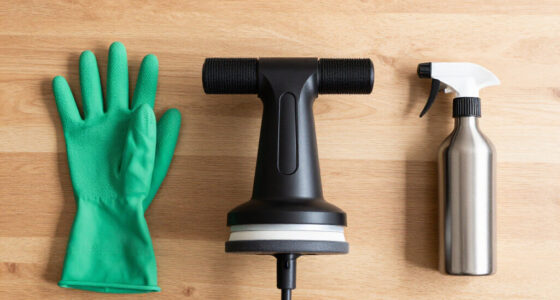
Keep a small cleaning kit with a soft-bristle brush, a bucket, mild soap, a hose, and clean cloths for lifting spills. That kit can handle ordinary pollen, muddy footprints, and a fresh drink spill without bringing strong chemistry onto the boards. Store it away from the deck, too, so detergent does not spill and dry in one concentrated spot.
When a stubborn stain calls for a specialty product, check whether the maker names an approved cleaner and how to use it. Read the label for surface directions, dilution, and rinsing requirements, and protect nearby plants as the instructions specify. “Green” or “natural” on a label does not by itself confirm compatibility; surface safety depends on the product and the deck finish together.
Know What Cleaning Can—and Cannot—Fix
Cleaning removes dirt, pollen, and many fresh spills; it does not repair scratches or reverse age-related fading. If the boards still look different after they are clean and dry, the change may come from wear or surface damage rather than residue. Check the manufacturer’s repair advice before applying a restorative product or attempting a fix.
For example, a chair dragged across a board may leave a pale line that remains after washing. A soft wash can remove the dusty film around it, making the scratch stand out more clearly. Scrubbing harder will not make the board new again, and sanding could change the surrounding finish.
Composite decking can be designed to need less upkeep than wood, but it still needs regular cleaning and sensible care. Product lines differ in their resistance to stains, fading, and moisture; none of those differences make every board immune to the weather or daily use. An older uncapped deck may show wear differently from a newer capped product.
Take a photo of a mark after cleaning and compare it with the maker’s care or repair information. If you are unsure whether you are seeing a stain, scratch, or color change, describe the board type and the mark to the manufacturer. Use cleaning to remove what sits on the deck, not to promise away what has changed in its surface.
Frequently Asked Questions
How often should I clean a composite deck?
Sweep as needed and wash when dirt, pollen, or spills build up. Shade, nearby trees, foot traffic, and weather all affect how quickly your deck gets dirty, so follow the maker’s guidance and the conditions you see at home.
Can I use a pressure washer on composite decking?
Only if the manufacturer allows it for your exact product. Follow its pressure, nozzle, and distance limits; if you cannot find those details, use a hose and soft brush.
What cleaner should I use on a composite deck?
For ordinary dirt, start with mild soap and water. For grease, mildew, or a stubborn stain, check the decking care guide for an approved cleaner and its directions.
Can I use bleach or vinegar to clean composite decking?
Do not assume bleach or vinegar is safe for your boards. Strong or acidic cleaners may affect some finishes or nearby materials, so check the manufacturer’s approved products and dilution instructions first.
How do I stop mildew from returning?
Remove leaves and dirt, clean the area with an approved product, and rinse well. If mildew comes back, look for damp debris, blocked drainage, or limited airflow near planters, furniture, and deck edges.
Can I use a wire brush or sand scratches off the boards?
Avoid wire brushes and sanding unless the manufacturer gives instructions for that specific product. Abrasive tools can scratch or alter the finish; cleaning can remove grime, but it will not repair a physical scratch.
Conclusion
For most routine cleaning, start with a broom, mild soap, water, and a soft-bristle brush. Work along the boards in small sections, rinse thoroughly, and check your product’s care guide before using stronger cleaners or pressure.
Then sweep away the damp leaves in the gaps. A clear path for water and air is a small job that helps your deck greet the next sunny afternoon looking ready for bare feet.