TL;DR

Get cleaning gear delivered free with Prime
- Fast, free delivery on millions of items
- Prime Video, Amazon Music and more included
- Member-only deals all year
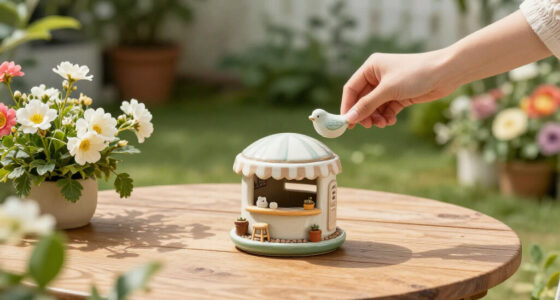
A Hunker report describes a DIY project by Facebook creator She’s So CraftDee that turns two Dollar Tree Clear Flared Bowls and glass taper candleholders into vintage-style planters. The project uses paint or primer and antique wax for its finish; the report lists prices for some materials and suggests adding a real or faux cutting.
Hunker has reported a Dollar Tree DIY that turns a two-pack of Clear Flared Bowls into two vintage-style planters by attaching glass taper candleholders and applying paint or primer followed by antique wax. The project, designed by Facebook creator She’s So CraftDee, is presented as a low-cost decorative option.
The listed materials include a two-pack of Carters Corner Clear Flared Bowls, priced at $2 in the report, and three glass taper candleholders at $1.25 each. The maker also uses a hot glue gun, a paint sponge, antique wax, and a choice of primer, acrylic paint, or chalk paint. The report identifies a 13-ounce can of Bulls Eye 1-2-3 Plus spray primer, priced at $11 at Home Depot, as the creator’s choice, while noting that other paint options can be used.
To make the smaller planter, the creator applies hot glue to the rim of one candleholder and presses a bowl onto it. For the taller design, she glues the openings of the remaining two candleholders together, then attaches the second bowl to the base of one candleholder. The pieces are coated evenly with the chosen primer or paint, with additional coats if needed, and put aside to dry.
The finishing step is to sponge a light layer of antique wax over the painted surface and wipe it with a paper towel. Hunker says the creator opted for Waverly Inspirations Chalk Paint Wax, available from Walmart for $7.27. The article describes uneven or patchy wax as part of the intended rustic appearance. It gives about 30 minutes to dry for the named spray primer, but does not specify drying times for every material or the assembled pieces.
A Low-Cost Decorative Makeover
The project presents a DIY alternative to buying planters, using bowls and candleholders to create two planters of different heights. Hunker suggests placing planters on a shelf, mantel, or windowsill.
The report lists prices for some materials, including primer and wax, but does not give a complete project total. Its instructions also offer paint or primer options and describe applying antique wax for a vintage-style finish.
Hunker suggests filling the finished pieces with a real or faux cutting. The article does not describe drainage or water exposure.
Products Worth Considering

Dyson Car+Boat Cordless Handheld Vacuum

Dyson Airwrap i.d. Multi-Styler for Straight and Wavy Hair

Bose SoundLink Flex (2nd Gen) Portable Bluetooth Speaker
As an affiliate, we earn on qualifying purchases.
How the Two Planters Differ
The instructions use the same two bowls to make a smaller planter and a taller one. One bowl sits on a single candleholder; the other is raised on two candleholders joined at their openings.
Hunker presents the design as a beginner-friendly craft and credits She’s So CraftDee with the project. The article describes coating the pieces with primer or paint, then applying wax lightly and wiping it off. It says patchiness is acceptable for a rustic look. The article lists primer, acrylic, and chalk paint as options.
“The construction process is simple”
— Hunker, describing the project
Water Use and Assembly Durability
The report does not discuss testing the hot-glued joints or describe their performance with repeated handling, heat, or moisture. It also gives no details about drainage, protective liners, or whether the paint and wax prevent water from reaching the bowls or glued connections.
Hunker suggests filling the pieces with a real or faux cutting, but does not provide further instructions for using live plants. The report lists prices for some materials.
Choose a Plant and Use
The next step for anyone following the project is to select a paint or primer, allow each coat and the pieces to dry, then apply and wipe back the antique wax. Hunker suggests adding a real or faux cutting after the pieces have dried. The source does not give a total project time or a drying schedule for the wax, so users should follow the instructions on the products they choose.
The report does not describe a setup for live plants or provide information about the long-term performance of the glued pieces. The prices it lists are those provided in the source.
Key Questions
What materials does the project use?
Hunker lists two fluted clear bowls, three glass taper candleholders, a hot glue gun, a paint sponge, antique wax, and primer or paint. Its example uses spray primer and Waverly Inspirations Chalk Paint Wax.
How are the two planter shapes made?
One bowl is glued to a single candleholder. For the taller version, two candleholders are joined opening to opening, and the second bowl is attached to the base of one of them.
What makes the planters look vintage?
After painting or priming, the maker applies antique wax with a sponge and wipes it back with a paper towel. Hunker says a patchy, uneven finish is intentional.
Can the finished pieces hold live plants?
The report suggests using a real or faux cutting but does not confirm that the pieces are waterproof or have drainage. For live plants, a separate inner pot may help keep water away from the glued decorative assembly.
How much does the project cost?
The report lists the bowl pack at $2 and candleholders at $1.25 each, alongside primer at $11 and wax at $7.27. Those listed prices do not guarantee current availability or represent a universal total; costs depend on the products already on hand and local pricing.
Source: hunker.com