TL;DR

Get cleaning gear delivered free with Prime
- Fast, free delivery on millions of items
- Prime Video, Amazon Music and more included
- Member-only deals all year
Wash sheets and pillowcases about once a week, using water at 130°F (54.4°C) or hotter only when the care label allows; laundering at a lower safe temperature can still remove many allergens. Encase mattresses and pillows in intact allergen-impermeable covers, keep indoor humidity below 50% if practical, and clean nearby dust reservoirs. These steps reduce exposure, though they cannot remove every mite or allergen from a home.
Wash sheets and pillowcases about once a week; use 130°F (54.4°C) water only when the care label allows.
Laundering at a lower safe temperature can still remove many allergens, so keep washing delicate bedding according to its label.
Use zippered, allergen-impermeable encasements that fully cover mattresses and pillows, and check for damage.
Aim for indoor relative humidity below 50% if practical, using a hygrometer to guide ventilation, air conditioning, or dehumidification.
Clean nearby dust reservoirs and seek medical advice for persistent allergy symptoms, wheezing, suspected asthma, or a concerning rash.
Bedroom Allergy Guide · Practical Routine
How to Get Rid of Dust Mites in Bedding
Reduce exposure with a steady routine: wash bedding, fully enclose mattresses and pillows, keep humidity in check, and clean nearby dust reservoirs. The goal is less allergen exposure—not a mite-free home.
A manageable bed routine
Dust mites feed mainly on shed skin flakes. They do not bite, and their presence is not a sign that a home is dirty. Mite waste and body fragments can trigger allergy or asthma symptoms.
Wash bedding weekly
Wash sheets and pillowcases about once a week. Use 130°F (54.4°C) only when the care label permits; a lower safe wash still helps remove allergens.
Close the barrier
Choose zippered, allergen-impermeable covers that fully enclose mattresses and pillows. Check seams, fabric, and zippers for damage.
Track indoor humidity
A hygrometer helps you aim below 50% relative humidity when practical. Ventilation, air conditioning, or a dehumidifier may help.
Check care labels
Separate items by washing and drying limits.
Wash safely
Use the warmest setting each fabric permits.
Dry completely
Follow the maker’s safe drying instructions.
Make it routine
Wash bed layers regularly; clean soiled items sooner.
Room conditions · Measure, then adjust
Keep humidity below 50% when you can
Dust mites thrive in humid conditions. A lower indoor reading makes the room less favorable to them, but it does not remove mites or allergens already in bedding.
Use the number as a guide: check a hygrometer, adjust ordinary ventilation or cooling as appropriate, then recheck. Weather and building conditions affect results.
Relative humidity scale
Aim for under 50% if practical
Clean the reservoirs around the bed
Sheets are one part of the room. Dust and shed skin can collect in nearby soft furnishings and on surfaces, so add simple cleaning where it will matter most.
When hot washing is not an option
Protect the fabric while continuing to reduce allergens. Do not risk shrinking, melting, or damaging an item to reach a specific temperature.
| Item or situation | Practical approach | Keep in mind |
|---|---|---|
| Hot-wash safe sheets | Wash at 130°F (54.4°C) or hotter if the label permits. | Dry thoroughly using an approved setting. |
| Delicate bedding | Use the warmest safe wash and follow the care label. | Lower-temperature laundering still removes many allergens. |
| Item that cannot be washed | Follow manufacturer cleaning guidance; consider professional cleaning if advised. | Freezing may kill mites in some items, but does not remove allergens. Clean afterward if possible. |
| Persistent symptoms | Talk with a clinician about allergy symptoms, wheezing, or suspected asthma. | Cleaning steps reduce exposure; they are not a diagnosis or a cure. |
Build the layers of protection
Each step addresses a different source or condition. Together, they make exposure reduction practical and repeatable.
Washable bedding
Remove many allergens on a regular schedule.
Intact encasements
Reduce exposure from covered mattresses and pillows.
Lower humidity
Make bedroom conditions less favorable when feasible.
Nearby cleaning
Address floors, furniture, curtains, and surfaces.
Get medical advice for persistent allergy symptoms, wheezing, suspected asthma, or a concerning rash. Consumer sprays and specialty products vary in evidence and should not replace established exposure-reduction steps.
Reduce exposure · Keep it practicalWash bedding weekly to remove mites and allergens
Wash sheets, pillowcases, and blankets about once a week to reduce dust mite allergens in bedding. A wash at 130°F (54.4°C) or hotter can kill dust mites if the fabric care label permits it; a lower safe-temperature wash can still remove many allergens. Dry bedding thoroughly using a setting the manufacturer allows. For example, if your cotton sheets tolerate hot water but a patterned duvet cover does not, wash each according to its own label instead of treating the whole bed as one load. A useful weekly routine is simple:- Strip sheets and pillowcases and check labels for washing and drying limits.
- Wash with the warmest water the fabric permits. Use 130°F (54.4°C) or hotter only when allowed.
- Dry the items completely using a safe setting, then put them back on the bed.
- Wash blankets or other washable bed layers on a regular schedule, and clean them sooner if they are visibly soiled.
Products Worth Considering

Philips Hue Festavia 130-Foot Indoor/Outdoor Smart String Lights, 500 LEDs

Bose SoundLink Flex (2nd Gen) Portable Bluetooth Speaker

Shark Rotator Lift-Away Vacuum with DuoClean PowerFins (LA555) – Dark Grey
As an affiliate, we earn on qualifying purchases.
Use covers that block allergens from your mattress and pillows
Zippered, allergen-impermeable encasements can reduce your exposure to dust mite allergens released from a mattress or pillow. A fitted cover that wraps only the top of a mattress does not enclose the whole item, so choose a product designed to encase it and check that the zipper closes fully. Covers reduce exposure from the covered bedding; they do not remove allergens from blankets, carpets, curtains, or other bedroom surfaces. Think of an encasement as a barrier around a dusty book: it helps keep what is inside from reaching you, but it does not clean the shelf around it. For a practical example, someone with an older mattress can cover it, encase the pillows, then continue washing sheets weekly. The layers work together. Washable pillow protectors and pillowcases can also make regular cleaning easier, provided their care labels allow the planned laundering. Check covers periodically for tears, broken seams, or a zipper that no longer closes. A small rip can compromise the barrier, so follow the manufacturer’s repair or replacement guidance. Covers are not a cure and do not make every other cleaning step unnecessary. They are most useful as part of a bedroom routine that also addresses washable bedding and dust reservoirs nearby.Keep bedroom humidity below 50% when you can
Dust mites thrive in humid conditions, so keeping indoor relative humidity below 50% can make the bedroom less favorable to them. A dehumidifier, air conditioning, or ventilation may help, depending on your home and climate. A small hygrometer gives you a reading instead of asking you to guess from how damp the air feels. For instance, if your bedroom humidity stays around 60% on muggy summer mornings, running air conditioning or a dehumidifier may help bring it down. Recheck the reading after changing your routine, because weather and building conditions affect the result. In a dry winter climate, you may already be below the target without running equipment. The aim is a practical indoor level, not an uncomfortable room or a device that runs without purpose. Lower humidity does not remove mites or allergens already in your sheets, mattress, or pillows. It supports the other steps: wash bedding, use intact encasements, and clean the room. If a window or ventilation change would affect a gas appliance or electrical system, follow the equipment maker’s instructions and use a licensed professional for work that requires one. A humidity reading can guide ordinary household adjustments; it does not diagnose allergy or asthma.Clean the bedroom’s dust reservoirs around the bed
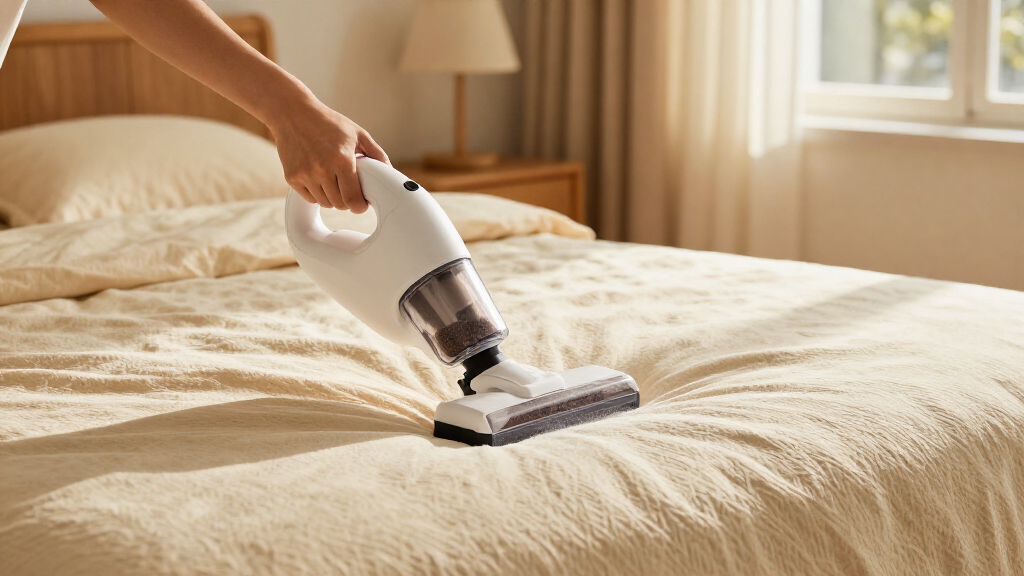
To reduce dust mite exposure, clean the places near bedding where dust and shed skin can collect, including floors, upholstered furniture, curtains, and cluttered surfaces. Wash or replace items that are difficult to clean when feasible, and choose washable materials for blankets and other bed layers. A HEPA-filter vacuum can help limit airborne particles during cleaning, though it will not remove every allergen from a room. Picture a bed beside a thick rug, a fabric headboard, and a chair draped with spare blankets. Washing the sheets alone leaves those nearby reservoirs in place. You might start by removing the blanket from the chair, washing it if its label allows, and vacuuming the floor with appropriate equipment. Wipe reachable hard surfaces with a damp cloth so dust does not simply billow into the air as you clean. You do not need to strip the bedroom of every soft object. Start with items that collect dust and are hard to wash, especially close to the bed. A tidy, washable room is easier to maintain than a perfect-looking room filled with textiles you cannot clean. If cleaning stirs up symptoms, consider wearing a suitable mask, ventilating when conditions allow, or asking someone else to vacuum; follow the vacuum manufacturer’s instructions for filter care.Handle bedding that cannot take a hot wash safely
If bedding cannot tolerate a hot wash, follow its care label and use the warmest safe cleaning method; do not risk shrinking, melting, or damaging the fabric. Lower-temperature laundering can still remove many allergens. Freezing may kill mites in some items, but it does not remove allergen particles, so wash or clean the item afterward if possible.| Item or situation | Practical approach | What to keep in mind |
|---|---|---|
| Sheets labeled for hot washing | Wash at 130°F (54.4°C) or hotter if the label permits. | Use a safe drying setting and dry fully. |
| Delicate or heat-sensitive bedding | Launder at the warmest temperature allowed or follow professional cleaning guidance on the label. | Do not assume high heat is safe because the item is bedding. |
| Small item that cannot be washed right away | Freezing may kill mites in some items; clean it afterward when possible. | Freezing does not remove allergens. |
Skip mite sprays as a substitute for the basics
Anti-mite sprays, essential oils, specialty bedding, and air purifiers are marketed with varied claims, and their evidence and effectiveness vary. They should not replace regular laundering, intact allergen-impermeable encasements, humidity control, and cleaning dust reservoirs. Some sprays or scented oils can irritate skin or airways, so read product safety information and follow its directions if you choose to use one. For example, spraying a mattress may feel like a quick fix after a night of sneezing, but it does not wash allergens out of sheets or seal the mattress. A more dependable first move is to change the bedding, check whether the pillow and mattress are fully encased, and review bedroom humidity. If you use an air purifier, treat it as one part of a larger routine rather than a guarantee of a mite-free room. There is no need to buy a pile of specialty products before trying the established steps. Focus on changes you can keep doing: a weekly laundry reminder, a cover that fits and stays intact, and cleaning that suits the room’s surfaces. If you are considering a product around a child, a person with asthma, or a sensitive pet, check its label and ask a clinician or veterinarian when appropriate. Strong marketing language is not proof that a product treats allergy symptoms.Know when symptoms call for medical advice
Dust mites do not bite people, but their waste particles and body fragments can trigger allergy symptoms in people who are sensitive to them. Sneezing, congestion, itchy eyes, or asthma symptoms that worsen indoors may fit an allergy pattern, but symptoms alone cannot confirm the cause. A healthcare professional can assess the problem and discuss testing or treatment. Imagine someone who wakes with a stuffy nose most mornings and feels better after spending the day outside. That pattern is useful to describe to a clinician, but it does not prove dust mites are responsible; pollen, pets, mold, and other triggers can also matter. Keep notes on when symptoms occur, bedroom conditions, and any changes after laundering or using covers. This gives a clinician a clearer picture than guessing from a rash or a dusty mattress. Seek medical advice for persistent symptoms, wheezing, suspected asthma, or a rash that worries you. A rash can have many causes, and dust mite allergy is not the same as a bite reaction. Cleaning can reduce exposure in your home, but it cannot diagnose an allergy or replace medical care. If breathing feels seriously difficult, seek urgent care. Practical home steps and professional guidance can work side by side.Frequently Asked Questions
What temperature kills dust mites in bedding?
Washing at 130°F (54.4°C) or hotter can kill dust mites when the care label permits that temperature. If the fabric cannot take hot water, use its warmest safe setting; laundering can still remove many allergens.
How often should I wash sheets and pillowcases?
Wash sheets and pillowcases about once a week, especially if someone in the home has a dust mite allergy. Wash them sooner if they are visibly soiled, and follow the fabric’s care instructions.
Do dust mites bite people?
No, dust mites do not bite. Their waste particles and body fragments can trigger allergy symptoms, but an itchy mark or rash has many possible causes and may need medical assessment.
Does freezing bedding get rid of dust mites?
Freezing may kill mites in some items, but it does not remove the allergens they leave behind. Wash or clean the item afterward if its care instructions allow.
Will a dehumidifier get rid of dust mites in bedding?
A dehumidifier can lower humidity and make conditions less favorable for dust mites; aim for below 50% relative humidity if practical. It does not remove mites or allergens already in bedding, so pair humidity control with laundering and covers.
How can I tell whether I have a dust mite allergy?
Sneezing, congestion, itchy eyes, or asthma symptoms that worsen indoors may be consistent with an allergy, but symptoms alone cannot confirm dust mites as the cause. A healthcare professional can assess your symptoms and discuss testing.