TL;DR

Get cleaning gear delivered free with Prime
- Fast, free delivery on millions of items
- Prime Video, Amazon Music and more included
- Member-only deals all year
Ultrasonic humidifiers use a rapidly vibrating piezoelectric plate to break water into a fine mist, often making them quiet and energy-efficient. They can ease discomfort from dry indoor air, but minerals and microbes in the tank may enter the air, so follow the manual, clean the unit regularly, and keep room humidity around 30% to 50%.
Ultrasonic models use a vibrating plate to create mist and are often quieter and less energy-intensive than many warm-mist options.
Minerals in tap water can become airborne and leave white dust; distilled or demineralized water may reduce it.
Keep room humidity around 30% to 50%, and turn output down if you see condensation or persistent dampness.
Empty, dry, and clean the unit according to its manual; a sensor, cartridge, or UV feature does not replace cleaning.
Use essential oils only when the manufacturer explicitly allows them, usually in a separate aroma tray.
How ultrasonic humidifiers turn water into a quiet mist
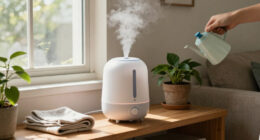
An ultrasonic humidifier uses a rapidly vibrating piezoelectric plate to break water into tiny droplets that form a cool mist. A small fan may help push that mist into the room, though some models rely more on natural airflow. Because the device does not need to boil water, it can operate quietly and usually uses less electricity than many warm-mist units. Inside the base, the plate vibrates too quickly for you to see. You might hear a soft hum, or mostly notice the plume curling above the outlet. An evaporative humidifier works differently: a fan draws air through a wet wick, and water evaporates into the room. That wick catches many minerals, while an ultrasonic unit can send minerals in its water into the air along with the mist. Most ultrasonic models produce cool mist. A hybrid model may add a separate heating element, but the ultrasonic mist itself is not hot. That distinction matters if you’re comparing warmth, energy use, or placement around children. Check the manual for the unit’s actual design and instructions rather than assuming all misting devices work alike. [1]Products Worth Considering

Philips Hue Secure Starter Kit with Contact Sensors, Motion Sensor, Bridge, and Color Smart Bulbs

Ring Alarm 14-Piece Kit

Philips Hue Essential Starter Kit with Bridge and 4 E26 Smart Bulbs
As an affiliate, we earn on qualifying purchases.
What ultrasonic humidifiers can do for dry-air discomfort
Ultrasonic humidifiers add moisture to indoor air and may ease symptoms linked to dryness, such as a dry throat, irritated nasal passages, or flaky skin. They do not treat the underlying cause of a respiratory illness, and evidence that humidifiers prevent infections is limited. Think comfort, not cure. For example, if you wake with a scratchy throat after the heating has run all night, moderate added humidity may make the bedroom feel less harsh. But if your symptoms continue, worsen, or include breathing trouble, a humidifier is not a substitute for medical advice. People with asthma or allergies should pay attention to how the room feels and ask a clinician about their own situation. Aim for a room relative humidity of roughly 30% to 50%, a commonly recommended range. A hygrometer gives you a reading instead of relying on the fog in the air or the tightness of your skin. If condensation beads on the window or a wall feels damp, turn the output down or off. More moisture can feed mold and dust mites, so a misty room is not automatically a healthier one. [2]Choose between ultrasonic and evaporative models with your room in mind
Ultrasonic humidifiers are often quieter and use less electricity, while evaporative models generally leave more minerals behind in the wick. The better fit depends on your tolerance for noise, your water, room size, and willingness to maintain replaceable parts. Neither design removes the need for cleaning. Imagine you need a bedside unit for a light sleeper. A quiet ultrasonic model may suit that room, but hard tap water could leave pale dust on the nightstand. In a busy family room, you might prefer an evaporative model if mineral residue is a concern and you can manage wick changes. Check each manufacturer’s guidance: room coverage ratings and maintenance needs vary by product.| Feature | Ultrasonic | Evaporative |
|---|---|---|
| How it adds moisture | Vibrating plate creates mist | Fan moves air through a wet wick |
| Typical sound | Often quiet | Fan noise can be noticeable |
| Mineral residue | Can disperse minerals as white dust | Wick tends to retain minerals |
| Ongoing care | Tank cleaning; cartridges on some models | Tank cleaning and wick replacement |
Set it up to avoid white dust, damp furniture, and excess humidity
Use the water and placement instructions in your model’s manual, then monitor the room instead of guessing. Tap water often works, but its dissolved minerals can travel with ultrasonic mist and settle as white dust. Distilled or demineralized water can reduce that residue, though compatible cartridges and their replacement schedules differ. Try this setup in a bedroom: place the unit on a stable, water-resistant surface with open space around the outlet. Keep the mist away from walls, electronics, bedding, and wood furniture; a direct plume can leave surfaces damp. Start at a low output and check the hygrometer after the room has had time to respond. A large tank does not automatically mean the unit suits a large room.- Read the manual for approved water, clearance, and operating instructions.
- Choose a stable spot where mist can disperse without landing on nearby surfaces.
- Measure relative humidity, aiming for about 30% to 50%.
- Lower output or switch the unit off if you see window condensation or persistent dampness.
Keep the tank clean so the mist stays part of your routine
Standing water and a dirty tank can support microbial growth, and an ultrasonic humidifier can send tank contents into the air as mist. Emptying, drying, and cleaning the unit matter as much as choosing a quiet model. Follow the manufacturer’s method and schedule; cleaning products and removable parts vary, so do not improvise with chemicals the manual does not approve. A simple routine might mean emptying the tank each morning when you stop using the humidifier, letting it dry, and cleaning it on the schedule in the instructions. Public-health recommendations often advise daily emptying and drying for portable humidifiers, with cleaning every few days; the product’s directions take priority. If you leave on Friday for the weekend, do not leave a tank of water sitting unused until Monday. Avoid adding essential oils to a standard water tank unless the manufacturer explicitly allows them. Oils can damage some units or create unwanted airborne exposure; some models provide a separate aroma tray for approved use. Smart sensors, UV components, and antimicrobial claims do not remove the need for basic tank care. If the unit smells musty, has visible buildup, or is hard to clean, stop and consult its instructions before using it again. [3]Shop for easy cleaning and controls you’ll actually use
A useful ultrasonic humidifier matches the room, has a tank you can clean, and offers clear operating instructions. Start with the manufacturer’s rated room coverage and output rather than tank size alone. Then check whether the unit has automatic shutoff, an adjustable mist setting, or a humidistat that helps you avoid running it too hard. Picture shopping for a small nursery: a wide tank opening may matter more over time than app scheduling, because you’ll need to reach inside for routine care. For a desk, indicator lights and fan noise may affect whether you can work comfortably. Look at the ongoing cost of cartridges or filters and check whether the manufacturer recommends distilled water. Reviews can flag usability details, but product claims about health benefits deserve skepticism. Smart controls and schedules can make operation convenient, yet an app cannot tell you whether the unit is clean unless you inspect it. Likewise, a demineralization cartridge may reduce mineral residue, but its performance and replacement needs vary. Choose clear care instructions over a long feature list. If a model does not explain cleaning, water guidance, or placement, that missing information is a practical reason to keep shopping. [4]Frequently Asked Questions
Are ultrasonic humidifiers safe to use every day?
They can be used regularly when you follow the manual, keep the tank clean, and avoid excessive humidity. Monitor the room and reduce output if condensation or persistent dampness appears.
Can I use tap water in an ultrasonic humidifier?
Many models can use tap water, but its minerals may disperse with the mist and leave white dust or buildup. Check the manual; distilled or demineralized water can reduce mineral residue.
How often should I clean an ultrasonic humidifier?
Follow the schedule and method in your model’s instructions. Public-health recommendations often advise emptying and drying portable units daily and cleaning every few days, but product directions take priority.
What humidity level should I aim for?
A commonly recommended indoor relative-humidity range is 30% to 50%. A hygrometer can help you track it; turn the unit down if windows fog or surfaces stay damp.
Why is there white dust around my humidifier?
It is usually mineral residue carried into the air with ultrasonic mist. Try distilled water or a compatible demineralization cartridge, following the manufacturer’s guidance.
Can I put essential oils in the water tank?
Only if the manufacturer explicitly says the tank is designed for oils. Otherwise, oils may damage the unit or create unwanted airborne exposure; use a separate aroma tray only when the product permits it.
Will a humidifier help with a cold, allergies, or asthma?
Added humidity may ease dryness for some people, but a humidifier does not cure a cold or treat allergies or asthma. Poor maintenance or too much humidity may worsen indoor-air problems, so follow care instructions and seek medical advice for persistent symptoms.