
TL;DR

Get cleaning gear delivered free — and shop member deals
- Fast, free delivery on millions of items
- Access to Prime Big Deal Days deals on October 6–7
- Prime Video, Amazon Music and more included
Robot vacuums get stuck mainly due to obstacles, sensor limitations, and navigation flaws. Upgrading sensors, decluttering, and home adjustments can drastically reduce these problems.
Ever watched your robot vacuum grind to a halt in the middle of your living room, unable to move forward? That frustrating moment isn’t random. It’s often caused by simple, fixable issues that trip up even the smartest little cleaning robots.
If you want your robot to glide smoothly around furniture, cords, and thresholds—without getting caught or trapped—you need to understand what causes these stumbles. In this guide, I’ll walk you through the main reasons your vacuum gets stuck and, more importantly, how to fix or prevent those problems. You’ll learn practical tips to keep your floors clean without constant babysitting.
Regularly clear the floor of small objects and clutter to prevent obstacles.
Keep sensors clean and firmware updated for reliable obstacle detection.
Adjust thresholds and rearrange furniture to create smoother transitions between surfaces.
Use virtual barriers and no-go zones to keep the robot away from problem areas.
Maintenance of wheels and brushes prevents mechanical jams that cause getting stuck.
What makes your robot vacuum get caught on furniture or clutter?
Robots rely on sensors to detect obstacles, but these sensors aren’t perfect. Small objects like shoes, loose cables, or tiny toys are invisible to some models or can confuse their sensors. For example, a stray sock can be mistaken for a wall or an obstacle, causing the robot to stop or back up repeatedly.
Clear pathways are key. Think of your robot like a toddler learning to walk—if the way is cluttered with toys or cables, it trips and gets stuck. Regularly picking up small items and keeping floors tidy can make a huge difference.
Pro tip: Use virtual barriers or no-go zones to keep the robot away from problem areas like cords or pet bowls.
As an affiliate, we earn on qualifying purchases.
Why do floor transitions or thresholds trip up your robot?
Floor changes—like moving from tile to carpet or crossing thresholds—can be tricky for some models. A threshold that’s too high (more than 1 inch) can cause the robot to get stuck or tip over. But beyond just height, uneven surfaces or soft thresholds can also confuse the robot’s climbing sensors, leading to inefficient navigation or accidental entrapment. These issues matter because they directly impact the robot’s ability to cover your entire floor space effectively. If thresholds are too high or uneven, the robot may repeatedly attempt to climb or get stuck, wasting battery life and reducing cleaning coverage.
Imagine trying to walk over a steep curb with a small cart—if it’s too tall or uneven, you’re likely to trip. Similarly, your robot needs smooth, manageable transitions to navigate seamlessly.
Solution: Raise or smooth out thresholds, or choose a model with better obstacle detection and climbing ability.
As an affiliate, we earn on qualifying purchases.
How do sensors and mapping mistakes cause repeated getting stuck?
Many robot vacuums use sensors to detect obstacles and create maps of your home. If sensors are dirty, misaligned, or reflect light poorly, they can send false signals. This often causes the robot to perceive obstacles where none exist, leading it to stop or back up unnecessarily, or to repeatedly bump into the same objects. Such inaccuracies can create a cycle where the robot gets trapped trying to navigate around perceived barriers, which aren’t actually there. This impacts efficiency because the robot wastes time and battery on false alarms, and may miss cleaning entire areas if it gets stuck in loops. The implications are significant: without accurate sensing, the robot’s ability to plan efficient routes diminishes, reducing overall cleaning effectiveness.
For example, reflective glass tables or shiny floors can confuse sensors, leading your robot to get trapped or keep bumping the same furniture.
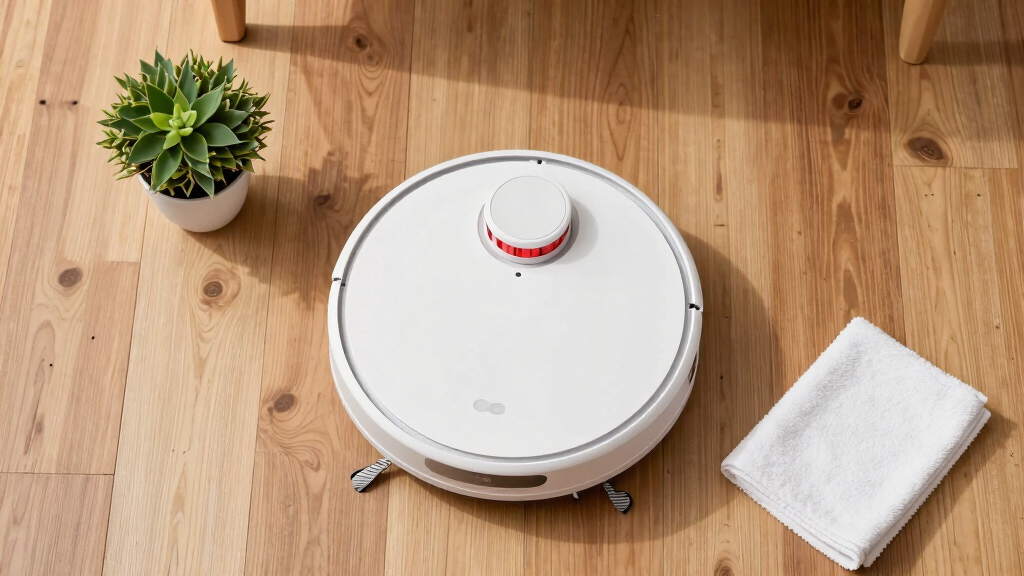
Quick fix: Regularly clean sensors with a soft cloth, and update your robot’s firmware if available. For models with mapping features, recalibrating can help improve accuracy.
As an affiliate, we earn on qualifying purchases.
Older or less advanced models often lack real-time mapping, causing them to wander aimlessly or repeatedly bump into the same spots. Without proper navigation, the robot can get stuck in tight corners or behind furniture, wasting energy and time, and leaving some areas uncleaned. Understanding this helps you see why investing in smarter navigation systems makes a difference—not just for convenience, but for thorough cleaning. Modern robots with advanced mapping can plan efficient routes, avoid known obstacles, and remember problem areas, which minimizes the chance of getting stuck and maximizes cleaning coverage. This technological edge means less manual intervention and more consistent cleaning performance.
Tip: Consider a model with advanced mapping and real-time route planning to keep your robot moving smoothly.
robot vacuum floor transition strip
As an affiliate, we earn on qualifying purchases.
As an affiliate, we earn on qualifying purchases.
How mechanical wear and design flaws cause trapped robot vacuums
Worn wheels, broken brushes, or damaged bumpers can impair your robot’s ability to move freely. For example, if a wheel is slipping or a brush is jammed, the robot may spin in place or get caught on uneven surfaces or rug edges. These mechanical issues are often overlooked but are critical because they directly hinder movement and navigation. If wheels don’t turn properly, the robot cannot follow its planned route, leading to missed spots or repeated attempts to navigate the same obstacle. Damaged bumpers or brushes can also cause the robot to misjudge its environment, increasing the likelihood of getting stuck or causing further damage. Regular maintenance—like cleaning brushes and checking wheels—can prevent many mechanical jams and extend your robot’s lifespan, ensuring consistent performance and fewer stuck incidents.
Picture a car with a flat tire—it can’t go anywhere. Similarly, a robot with mechanical issues will struggle to navigate your home effectively.
What recent tech updates are reducing robot stuck incidents?
Newer models now come with laser-based LIDAR sensors and AI-powered obstacle recognition. These tools give robots a more accurate view of their environment, significantly reducing the chances of getting stuck—by over 50%, according to an anonymous researcher. The improved mapping and obstacle detection mean the robot can better interpret its surroundings, plan routes more intelligently, and avoid known trouble spots proactively. Mapping is now faster and more reliable, with some robots learning your home’s layout after just a few passes, which reduces repeated errors. Virtual barriers, customizable no-go zones, and smarter bumpers also help the robot avoid areas where it previously got stuck, enhancing overall efficiency. Keeping firmware updated is crucial—new features and bug fixes continually improve navigation and reduce incidents of getting trapped.
This technological evolution means less manual intervention, more thorough cleaning, and fewer frustrations from stuck robots.
How to prevent your robot from getting stuck in the first place
- Declutter your floors. Remove cords, toys, and loose items.
- Create clear pathways. Rearrange furniture if needed to avoid tight corners.
- Use virtual barriers or no-go zones for tricky spots.
- Maintain sensors. Regularly clean them with a soft cloth.
- Update your robot’s software. Stay current with firmware upgrades.
Think of your home as a mini race track—wide, open, and obstacle-free. This setup allows your robot to navigate freely without unnecessary stops or detours. A cluttered space not only increases the risk of getting stuck but also forces the robot to spend more energy trying to navigate around obstacles, which can shorten battery life and reduce cleaning coverage. Creating a tidy, open environment maximizes the robot’s efficiency and minimizes the chances of it encountering problems that cause it to get trapped. These simple adjustments are investments in smarter, more reliable cleaning performance.
Frequently Asked Questions
Why does my robot vacuum keep getting stuck under furniture?
This often happens because the vacuum’s sensors can’t detect low-clearance spaces or it confuses furniture legs with obstacles. Clearing clutter and choosing a model with better obstacle detection can help prevent this problem.
How can I stop my robot from getting caught on cords or cables?
Use virtual barriers or designate specific zones free of cords. Organize cables with clips or covers to keep them out of the robot’s path. Regularly check for loose cables that might be in the way.
What should I do if my robot keeps getting stuck in the same spot?
Remove any nearby obstacles, clean sensors, and update firmware. You can also manually block or mark that area as a no-go zone if your model supports it.
Are certain floor types more prone to causing issues?
Yes. Thick carpets, uneven surfaces, and high thresholds are common trouble spots. Upgrading to a model with better climbing ability or smoothing thresholds can help.
Keep sensors clean, update software regularly, and consider models with advanced mapping. Reorganizing your home to create open pathways also makes navigation easier.
Conclusion
Preventing your robot vacuum from getting stuck boils down to a mix of home environment tweaks and regular maintenance. Think of your home as the robot’s playground—keep it spacious, obstacle-free, and well-maintained. With these simple steps, your little cleaner will smoothly dance around your home, leaving floors spotless without a hitch.
Next time your robot hesitates, remember: a quick tidy-up and sensor check could save you hours of frustration. Your floors—and your patience—will thank you.
Halloween Picks
halloween
As an affiliate, we earn on qualifying purchases.