
TL;DR
Open a free Amazon Business account
Business pricing, bulk buying and tax-exempt orders.
Create a free accountAs an affiliate, we earn on qualifying purchases.
Cleaning ceiling fans without making a mess is simple with the right tools and techniques. Using methods like the pillowcase trick traps dust, keeping your home tidy and dust-free.
Use the pillowcase method to trap dust and prevent it from spreading in the air.
Cover furniture and floors with plastic sheets before cleaning to contain messes.
Choose eco-friendly, mild solutions to clean without fumes or damage.
Always prioritize safety—use sturdy ladders and extendable tools for high fans.
Clean fans regularly, every 1-2 months, to maintain air quality and fan efficiency.
How to Prepare for a Mess-Free Fan Clean
Before you start, turn off the fan and let the blades stop completely. Safety is key—use a sturdy ladder or step stool to reach high blades comfortably. If dust is heavy or you’re sensitive, wear goggles and a mask. Cover nearby furniture and floors with drop cloths or plastic sheets to catch falling dust, turning a messy job into a clean one. This prep work sets the stage for a quick, tidy cleaning session that leaves your space fresh and dust-free.
As an affiliate, we earn on qualifying purchases.
Choosing the Right Tools to Keep Dust in Check
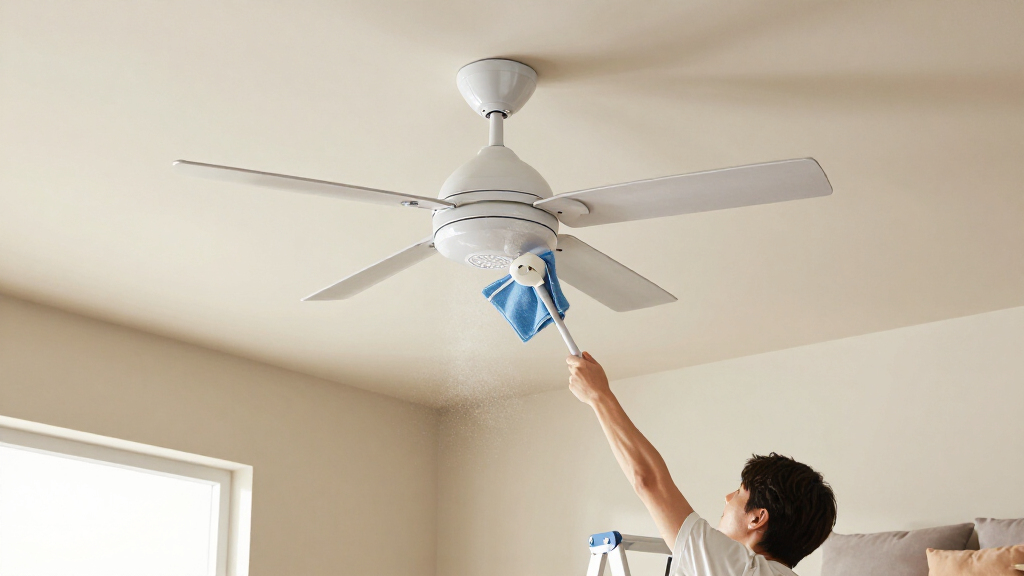
Use microfiber or dusting cloths—they trap dust better than old rags. An extendable duster or a ceiling fan cleaning tool cuts down on reaching awkward spots. A pillowcase or plastic bag is your secret weapon for trapping dust inside as you wipe. For light cleaning, a slightly damp microfiber cloth works wonders without making blades slippery or wet. Picking the right tools means less mess, less effort, and a sparkling clean fan every time.
extendable ceiling fan cleaning brush
As an affiliate, we earn on qualifying purchases.
As an affiliate, we earn on qualifying purchases.
Step-by-Step: Clean Ceiling Fans Without Spreading Dust Everywhere
- Turn off the fan and wait until blades are completely still.
- Cover nearby furniture or floors with plastic sheets or old sheets.
- Slip a pillowcase over each blade, gently pull it back to trap dust inside, then wipe the blade with a microfiber cloth if needed.
- If dust is stubborn, lightly dampen the cloth—never soaking it—to wipe blades clean.
- Vacuum around the fan with a brush attachment to pick up any loose dust or debris.
- Wipe down light fixtures or nearby surfaces to catch any falling dust.
- Remove coverings, clean your tools, and turn the fan back on to check that blades are dry and dust-free.
pillowcase dust trap for ceiling fans
As an affiliate, we earn on qualifying purchases.
As an affiliate, we earn on qualifying purchases.
How the Pillowcase Method Traps Dust Better Than Wiping
The pillowcase method is a game-changer because it addresses the core issue of airborne dust during cleaning. When you slide an old pillowcase over each blade and gently pull it back, you are physically containing the dust within the fabric. This prevents dust particles from becoming airborne and settling on other surfaces or floating in the air, which can aggravate allergies or respiratory issues. The technique reduces dust dispersal by up to 80%, significantly improving indoor air quality. It’s especially advantageous for households with allergy sufferers or pets, as it minimizes the spread of dust mites and pet dander, leading to a healthier living environment. The tradeoff, however, is that it requires a bit more manual effort and patience, but the benefits of cleaner air and less mess are well worth it.
As an affiliate, we earn on qualifying purchases.
Eco-Friendly and Safe Cleaning Tips for Ceiling Fans
Choose natural solutions like vinegar diluted with water or baking soda paste for sticky spots. These are non-toxic, safe for most surfaces, and won’t leave chemical fumes behind. Always dampen your cloth slightly—never soak it—to avoid drips that could damage light fixtures or wiring. Regularly cleaning with gentle, eco-friendly products keeps your fan working efficiently and your home healthier.
Safety Tips When Reaching High or Hard-to-Access Fans
Always use a sturdy ladder or extendable cleaning tools. Before climbing, check that your ladder is stable and on an even surface. Keep your hands free—use a tool holder if possible—and don’t overreach. If you’re uncomfortable or the fan is very high, consider hiring a professional. Safety first keeps your cleaning routine productive and accident-free.
Dealing with Dust Falling on Furniture or Floors
Prevention is easier than cleanup. Cover furniture with plastic or old sheets before you start. After cleaning, remove coverings and vacuum or wipe down surfaces immediately. If dust does settle, a quick sweep or vacuum will restore your space. Taking these small steps saves time and keeps your home looking tidy.
Post-Cleaning Checks and Maintenance Tips
Once you finish, wipe down light fixtures and any nearby surfaces to remove residual dust. Turn the fan on briefly to see if blades are dry and dust-free. Regular cleaning—every 1-2 months—prevents heavy dust buildup that complicates future chores. Maintaining a clean fan not only improves air quality but also extends its lifespan by preventing dust from gumming up moving parts or causing imbalance. Consistent upkeep reduces the likelihood of needing more intensive repairs later, saving you money and effort in the long run.
Frequently Asked Questions
How often should I clean my ceiling fan?
Most experts recommend every 1-2 months, especially if you have pets or live in a dusty environment. Regular cleaning prevents the build-up of allergens and keeps your air fresh.
What’s the easiest way to prevent dust from falling onto furniture during cleaning?
Cover furniture and floors with plastic sheets or old sheets before you start. This simple step catches dust and keeps your space tidy. Remove the coverings immediately afterward for quick cleanup.
Can I use commercial cleaning sprays on ceiling fan blades?
Yes, but choose mild, eco-friendly options. Avoid harsh chemicals that could damage finishes or leave fumes. A damp microfiber cloth with a bit of vinegar or gentle soap usually does the trick.
Is it safe to clean high ceiling fans alone?
Yes, if you use a sturdy ladder or extendable tools and follow safety precautions. If you’re uncomfortable or the fan is too high, consider hiring a professional for safe, thorough cleaning.
What should I do if dust falls onto my furniture during cleaning?
Cover your furniture with plastic or old sheets beforehand. After cleaning, remove the coverings and vacuum or wipe down the surfaces to restore your space’s tidiness quickly.
Conclusion
A clean ceiling fan doesn’t have to mean a dusty mess. With the right tools, a little prep, and a steady hand, you can keep your fans spotless without spreading dust everywhere. Next time, think of that pillowcase trick—your secret weapon for dust-free, hassle-free ceiling fan cleaning. Your home will look better, breathe easier, and stay fresher longer.NFL season / tailgating Picks
team gear
As an affiliate, we earn on qualifying purchases.