TL;DR

Get cleaning gear delivered free — and shop member deals
- Fast, free delivery on millions of items
- Access to Prime Big Deal Days deals on October 6–7
- Prime Video, Amazon Music and more included
The safest homemade floor cleaner combines just warm water and a small amount of fragrance-free dish soap. Avoid acids, essential oils, and harsh chemicals. Always test first and keep pets and children away until floors dry.
A simple mixture of warm water and a tiny amount of fragrance-free dish soap is the safest, most effective homemade floor cleaner.
Always test your cleaner in a small, hidden area first and let floors dry completely before re-entry.
Avoid acids, essential oils, and strong disinfectants that can damage floors or harm pets and children.
Different flooring types require tailored cleaning methods—know your floor’s material and follow manufacturer guidance.
Safety practices like proper storage, ventilation, and immediate spill cleanup protect your home and loved ones.
How to Make a Floor Cleaner That’s Safe for Kids and Pets
A spotless floor doesn’t have to come with health risks. Many DIY cleaners promise “natural” safety, but ingredients like vinegar, essential oils, or strong detergents can cause more harm than good. Here’s the simple, tested formula that cleans effectively without irritating little noses or sensitive paws.
“A simple water and mild, fragrance-free soap mixture is the lowest-risk, most universally safe recipe for homes with kids and pets.”
The Simplest Safe Formula You Can Make in Minutes
For most sealed floors, a basic homemade cleaner is as easy as mixing warm water with a tiny splash of mild, fragrance-free dish soap — a gentle rinse that cuts through dirt without leaving residues or fumes.
-
1
Mix
Combine 1 gallon (4 L) of warm water with 1 teaspoon of unscented liquid castile or fragrance-free dish soap.
-
2
Mop
Use a well-wrung mop, squeezing out excess water. Never soak the floor or leave standing puddles.
-
3
Test & Dry
Test in a hidden area first, following manufacturer guidance. Dry floors promptly before anyone walks over them.
Sticky floor afterward? Cut back on the soap or do a quick water-only wipe. Less is always more with this formula.
Tailoring Your Cleaner to Different Flooring Types
Not all floors are created equal. Improper cleaning can lead to etched stone, swollen wood, or permanently damaged laminate — so your method should adapt to the material.
Sealed Tile, Vinyl & Linoleum
Highly diluted mild soap works well. Avoid standing water near seams and edges — it can harbor mold or damage adhesives. Steam cleaning may distort vinyl planks.
Hardwood & Engineered Wood
Use very little moisture and finish-approved cleaners. Water in joints causes swelling, cupping, and discoloration. Vinegar’s acidity can dull finishes over time.
Laminate
Barely damp microfiber mop only, dried quickly. No soaking, steam, wax, oils, or abrasives — moisture in seams permanently swells the fiberboard core.
Natural Stone
Marble, limestone, and travertine are etched by vinegar and lemon juice. Use only pH-neutral cleaners labeled specifically for natural stone.
Unsealed or Waxed Floors
Water-based DIY formulas may stain, swell, or strip these surfaces. Consult your installer or a flooring professional before trying any recipe.
Why It Matters
Acidic cleaners on stone increase porosity and staining. Excess moisture under hardwood can cause warping or hidden mold. Match the method to protect your investment.
Ingredients to Avoid — What Can Actually Harm Your Home and Pets
“Natural” doesn’t mean safe. Essential oils are concentrated chemicals; cats metabolize certain compounds poorly. A homemade cleaner labeled “pet-safe” often isn’t guaranteed unless it meets safety standards.
| Ingredient | Verdict | Why It’s a Problem |
|---|---|---|
| Essential Oils | ✗ AVOID | Concentrated chemicals — tea tree, eucalyptus, peppermint, pine, citrus, and cinnamon oils are especially harmful to cats; also affect dogs via licking, inhalation, and skin contact. |
| Bleach + Ammonia Mix | ✗ NEVER | Mixing bleach with ammonia, vinegar, acids, or alcohol produces dangerous gases. Never combine cleaning products. |
| Strong Disinfectants | ✗ AVOID | Bleach, ammonia, and Windex-type products are dangerous if mishandled and should never be in DIY recipes. |
| Vinegar | ~ CAUTION | Not a universal cleaner: etches natural stone, weakens sealants, degrades some wood finishes, and isn’t a registered disinfectant. |
| Baking Soda | ~ CAUTION | Mildly abrasive — can leave a white film or scratch and dull delicate finishes, especially as a dry powder or paste. |
| Borax & Washing Soda | ~ CAUTION | Can irritate eyes, skin, and the digestive system. Homemade does not automatically mean child- or pet-safe. |
| Fragrance-Free Dish Soap | ✓ SAFE | When heavily diluted in warm water, this is the lowest-risk, most universally safe base for homes with kids and pets. |
Cleaning vs. Disinfecting: What You Really Need to Know
Most routine floor care is about removing dirt and germs, not killing every pathogen. Homemade vinegar or essential oil mixes are not proven disinfectants — knowing when each approach applies prevents unnecessary chemical exposure.
Cleaning
- Soap and mechanical wiping reduce germs effectively for daily safety
- Sufficient for routine maintenance in most homes
- Removes dirt, dust, and grime without chemical buildup
- Lowest-risk approach for children and pets
Disinfecting
- Necessary after raw meat spills, sewage contact, or illness outbreaks
- Use a registered disinfectant approved for your floor type
- Follow label contact time and ventilate properly
- Overuse risks chemical resistance, skin irritation, and respiratory issues
Relative Risk of Common DIY Cleaner Ingredients Around Pets & Kids
Safety Rules to Keep Your Home and Family Protected
These practices minimize accidental ingestion, prevent poisoning risks, and keep everyone safe from mixing through to a fully dry floor.
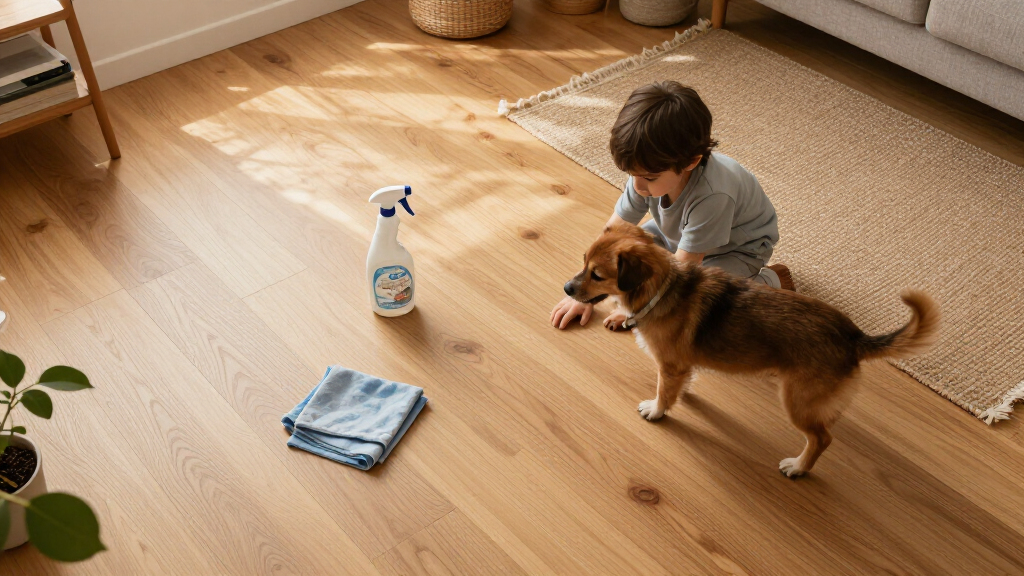
Keep them out. Children and pets stay out of the area while you mix or mop, and until floors are completely dry.
Store smart. Keep ingredients and mixes in labeled, child-proof containers — never in food or beverage bottles.
Small batches only. Mix what you’ll use to avoid waste or spoilage; discard anything that looks or smells off.
Never mix products. Combining different cleaners can trigger dangerous chemical reactions.
Ventilate. Open windows even with low-odor ingredients to clear fumes and help floors dry faster.
Clean spills fast. Prevent animals from licking mop water or wet floors; rinse food-prep and pet areas after cleaning.
If exposure occurs, contact a vet or poison control immediately — do not induce vomiting unless instructed.
Test first, always. Try any homemade cleaner in a small hidden area and follow your flooring manufacturer’s guidance.
The simplest safe formula you can make in minutes
For most sealed floors, a basic homemade cleaner is as easy as mixing warm water with a tiny splash of mild, fragrance-free dish soap. Think of it as a gentle rinse that cuts through dirt without leaving residues or fumes. Simply combine 1 gallon (4 liters) of warm water with 1 teaspoon of unscented liquid castile soap. Mop with a well-wrung mop, squeezing out excess water. If the floor feels sticky afterward, cut back on the soap or do a quick water-only wipe. Always dry floors promptly before kids or pets walk over, and test in a small area first, following your flooring manufacturer’s advice.
fragrance-free dish soap for cleaning
As an affiliate, we earn on qualifying purchases.
As an affiliate, we earn on qualifying purchases.
Tailoring your cleaner to different flooring types
Not all floors are created equal, so your cleaning method should adapt. For example, sealed tile, vinyl, and linoleum love diluted soap solutions. Just avoid leaving puddles or standing water, especially near seams, which can harbor mold or cause damage. Hardwood and engineered wood floors are more delicate; use very little moisture and always opt for cleaners approved for your finish. Too much water can cause swelling or discoloration. Laminate floors are even more sensitive — a barely damp microfiber mop and quick drying keep them safe. Natural stone like marble and travertine hate acids like vinegar or lemon juice. Instead, choose pH-neutral cleaners specifically meant for stone. Unsealed or waxed floors? They often require special care, so check with your flooring professional before trying DIY recipes.
Understanding these distinctions is crucial because improper cleaning can lead to long-term damage, costly repairs, or health issues. For example, using acidic cleaners on natural stone can etch the surface, making it more porous and prone to staining. Excessive moisture on hardwood can cause swelling, warping, or mold growth underneath the finish. Recognizing your floor type helps you choose a method that preserves its integrity, ensuring your investment lasts and remains safe for your family.
As an affiliate, we earn on qualifying purchases.
Ingredients to avoid—what can actually harm your home and pets
Some common household ingredients sound safe but can be risky. Essential oils, for example, are concentrated chemicals that can harm pets—especially cats, who metabolize certain oils poorly. Oils like tea tree, eucalyptus, peppermint, and citrus are best avoided in homemade cleaners for homes with animals. Vinegar, while natural, isn’t a universal solution; it can damage natural stone or some finishes and isn’t a registered disinfectant. Baking soda can leave a white film or scratch delicate surfaces if used improperly. Strong disinfectants like bleach, ammonia, or Windex are dangerous if mixed or mishandled, and should never be in DIY recipes. Remember, a homemade cleaner labeled ‘pet-safe’ often isn’t guaranteed unless approved by safety standards.
Beyond immediate toxicity, these ingredients can cause subtle, long-term health issues or damage to surfaces. For instance, essential oils may seem harmless but can trigger allergic reactions or respiratory irritation in sensitive individuals and pets. Vinegar’s acidity can weaken sealants or etch stone surfaces, leading to increased porosity and staining over time. Using these substances without understanding their implications might seem safe initially but can result in costly repairs or health concerns down the line. Always consider the tradeoffs: safety for pets and family versus potential surface damage or health risks. Opting for simpler, tested ingredients minimizes these risks and keeps your home healthier in the long run.
pet and kid safe floor cleaning solution
As an affiliate, we earn on qualifying purchases.
As an affiliate, we earn on qualifying purchases.
Cleaning vs. disinfecting: What you really need to know
Most routine floor cleaning is about removing dirt and germs, not killing every single pathogen. Soap and mechanical wiping do a good job of reducing germs, which is usually sufficient for everyday safety. Disinfection becomes necessary only after specific exposures—like raw meat spills, sewage contact, or illness outbreaks—where the presence of harmful pathogens is higher. It’s important to understand that homemade vinegar or essential oil mixes are not proven disinfectants and won’t reliably kill bacteria or viruses. Using a registered disinfectant approved for your floor type, following the label instructions for contact time and proper ventilation, provides a more reliable level of safety. Recognizing this distinction helps prevent overusing harsh chemicals unnecessarily and reduces exposure to potentially harmful substances. It also ensures you’re effectively protecting your family without risking surface damage or chemical buildup from unnecessary disinfectants.
Understanding when disinfection is truly necessary helps you balance safety and health. Overuse of disinfectants can lead to chemical resistance, skin irritation, or respiratory issues, especially in children and pets. Conversely, underestimating the importance of proper cleaning after contamination can leave harmful germs behind. The key is to assess the situation carefully, using soap and thorough wiping for daily maintenance, and reserving stronger disinfectants for specific, high-risk scenarios. This approach supports a healthier home environment without unnecessary chemical exposure.
natural floor cleaner for hardwood and tile
As an affiliate, we earn on qualifying purchases.
As an affiliate, we earn on qualifying purchases.
Safety rules to keep your home and family protected
- Always keep children and pets out of the area while mixing or mopping.
- Let floors dry completely before allowing anyone back on them.
- Store all ingredients and homemade cleaners in labeled, child-proof containers.
- Never pour cleaning solutions into food or beverage bottles.
- Mix only small batches to avoid waste or spoilage; discard if anything looks or smells off.
- Avoid mixing different cleaning products—dangerous reactions can occur.
- Ventilate well, even with low-odor ingredients, to clear fumes and dry the air.
- Clean spills immediately and prevent animals from licking mop water or wet floors.
- Rinse food prep or pet areas if needed after cleaning.
- If exposure occurs, contact a vet or poison control—do not induce vomiting unless instructed.
Following these safety practices is vital because it minimizes accidental ingestion or contact with potentially harmful substances. Proper storage prevents children and pets from accessing dangerous chemicals, reducing poisoning risks. Ensuring floors are dry before use prevents slips and ingestion of residual cleaning agents. Ventilation helps disperse any fumes that could cause respiratory irritation. Immediate spill cleanup and restricting pet access protect against accidental ingestion of wet or contaminated surfaces. These steps collectively create a safer environment, especially in households with vulnerable children and animals, and help prevent emergencies that could have serious health implications.
Latest trends making green cleaning safer and easier
Today’s cleaning scene favors transparency and simplicity. Many brands now offer fragrance-free, non-toxic products with clear ingredient lists. Certification programs like EPA Safer Choice help identify truly safe options. Veterinary experts warn that essential oils and diffusers can expose pets to respiratory risks, pushing brands to reformulate. Modern flooring options, from waterproof vinyl to engineered wood, demand careful ingredient choices. Plus, cleaning is shifting focus from disinfecting every surface to routine dirt removal, reducing unnecessary chemical use. These trends make it easier than ever to keep your home clean and safe without sacrificing health or convenience.
These advancements matter because they reflect a growing awareness of chemical sensitivities and environmental impact. Fragrance-free, non-toxic products reduce the risk of allergic reactions or respiratory issues, especially for vulnerable populations. Certification labels provide transparency, helping consumers make informed choices. The move away from aggressive disinfectants toward routine cleaning aligns with a healthier, more sustainable lifestyle. For flooring, safer ingredients mean less risk of damage or long-term degradation. Overall, these trends support a future where cleaning is effective, safer, and more aligned with eco-conscious values, making it easier for families to maintain a healthy home environment without compromise.
Frequently Asked Questions
Is vinegar safe for children and pets?
Diluted vinegar is relatively low in toxicity, but it can still irritate eyes, skin, or airways. More importantly, it can damage natural stone and delicate finishes. Keep children and pets away until the floor is fully dry after cleaning to prevent contact.
Can I add essential oils for fragrance?
It’s better to avoid essential oils in homes with pets—especially cats—because they can cause respiratory irritation or poisoning. Fragrance isn’t necessary for cleaning and can often be replaced with a simple, scent-free routine.
Is dish soap safe for floors?
Yes, a small amount of mild, fragrance-free dish soap is generally safe on sealed, water-tolerant surfaces. Just avoid using too much—excess soap can leave a sticky or slippery film, especially on wood, laminate, or stone floors.
Must I rinse after mopping?
Rinse if the floor feels sticky, if your manufacturer recommends it, or if children and pets frequently touch or lick the surfaces. Usually, proper dilution means little to no rinsing is needed, but a quick water wipe can help reduce residues.
How long should pets and children stay off the floor?
Wait until the floor is completely dry and the room is ventilated. If you used a registered disinfectant, follow the product’s re-entry instructions. For routine cleaning, just ensure the surface is dry and safe before allowing access.
Conclusion
Making a safe, effective floor cleaner at home isn’t complicated. Focus on simple ingredients, follow your floor’s care instructions, and always prioritize safety. A clean home that’s safe for everyone — that’s the real goal. Keep it simple, keep it safe, and enjoy your sparkling, healthy floors.Fall Picks
fall essentials
As an affiliate, we earn on qualifying purchases.