TL;DR

Get cleaning gear delivered free — and shop member deals
- Fast, free delivery on millions of items
- Access to Prime Big Deal Days deals on October 6–7
- Prime Video, Amazon Music and more included
The best way to clean polished concrete involves regular sweeping, damp mopping with neutral pH cleaners, and timely sealing. Avoid harsh chemicals and abrasive tools to preserve the shine and durability. Proper care extends your floor’s lifespan and beauty.
Imagine walking into a space where the floors gleam like a mirror, reflecting every light and color around you. That’s the beauty of polished concrete—durable, sleek, and surprisingly easy to maintain. But keeping that shine requires more than just a quick sweep.
Here’s the truth: the secret to long-lasting, polished concrete lies in simple, routine care. You don’t need fancy tools or harsh chemicals—just a few smart steps that protect the surface and keep it looking its best. Ready to learn how? This guide will walk you through the best ways to keep your polished concrete floors spotless, shiny, and lasting for decades.
Routine sweeping and damp mopping with neutral pH cleaners keep polished concrete floors shiny and protected.
Avoid acidic or abrasive cleaners that can etch or scratch the surface, reducing lifespan and gloss.
Sealing every 1-3 years is key to stain resistance and preserving that high-gloss finish.
Modern sealers and eco-friendly cleaners make maintenance safer and easier than ever.
Professional help is best for stubborn stains, deep restoration, or re-sealing when regular care isn’t enough.
Why Regular Cleaning Matters for Polished Concrete
Polished concrete is durable, but its shine depends on routine care. Dust and dirt can scratch the surface over time, dulling that mirror-like finish. Regular cleaning removes debris that could embed or cause surface wear.
Imagine a busy kitchen floor—crumbs, dust, and grime settle in. Without frequent sweeping and damp mopping, those particles act like tiny sandpaper, slowly erasing your floor’s gloss. Regular cleaning isn’t just about looks; it’s about preserving the concrete’s integrity for years to come. Neglecting proper maintenance can lead to scratches, surface dullness, and even the eventual need for costly restorative treatments. Conversely, consistent cleaning minimizes abrasive buildup and helps maintain the high-gloss appearance, thereby prolonging the visual appeal and structural longevity of your floors.
As an affiliate, we earn on qualifying purchases.
Step-by-Step: The Perfect Routine to Clean Polished Concrete
- Sweep or dust mop daily. Use a soft-bristle broom or microfiber dust mop to pick up loose dirt, dust, and hair. This prevents scratching and keeps the surface clear. Regular removal of surface debris is crucial because even tiny particles can act as abrasives over time, especially under foot traffic or furniture movement. This initial step preserves the floor’s gloss and prevents micro-scratches that could dull the surface.
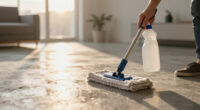
- Damp mop weekly. Mix a neutral pH cleaner with warm water—about 1 ounce per gallon. Mop in small sections, rinsing your mop often. Using a neutral pH cleaner is vital because it balances cleaning power with surface safety, avoiding etching or dulling that acidic or alkaline cleaners can cause. Rinsing regularly prevents residue buildup, which can attract dirt or create a film that diminishes shine. The frequency of damp mopping depends on foot traffic, but weekly is a good standard to prevent grime accumulation that can compromise the surface’s smoothness and reflectivity.
- Spot-clean stains immediately. For spills like wine or citrus, blot quickly with a soft cloth, then clean with a neutral cleaner. Prompt action prevents stains from penetrating or bonding with the surface, which can be difficult to remove later. This proactive approach helps maintain the uniform appearance and high-gloss finish, avoiding the need for restorative treatments that can be costly and disruptive.
- Seal every 1-3 years. Apply a penetrating or topical sealer to boost stain resistance and shine. Follow manufacturer instructions carefully. Sealing creates a protective barrier that reduces the absorption of liquids and contaminants, which is especially critical in high-traffic or spill-prone areas. Regular reapplication ensures the surface remains resistant to staining and retains its reflective qualities. Over time, wear and cleaning can erode the sealer, so timely re-sealing is essential for ongoing protection and aesthetic appeal.
For example, if you spill red wine on your living room floor, blot it immediately. Then clean with a damp cloth and neutral cleaner. Avoid scrubbing harshly—gentle is better. This careful approach prevents the stain from setting and preserves the polished look, illustrating how consistent, thoughtful cleaning extends the beauty and lifespan of your floors.
As an affiliate, we earn on qualifying purchases.
Avoid These Common Mistakes That Damage Polished Concrete
Using harsh chemicals or abrasive tools can dull or scratch your polished floors. Acidic cleaners like vinegar and bleach can etch the surface, causing permanent damage. Scrubbing with steel wool or rough pads also risks scratching that glossy finish.
Imagine trying to clean a delicate mirror with steel wool—it’s a recipe for scratches. Your polished concrete needs gentle, pH-neutral cleaners and soft tools. Think of it as giving your floors a spa treatment, not a rough scrubbing session. The tradeoff here is between aggressive cleaning methods that might seem effective in the short term but cause long-term harm, versus gentle, consistent care that preserves the surface’s integrity. Choosing the right cleaning approach ensures your floors stay shiny and scratch-free for decades, avoiding costly repairs or refinishing.
As an affiliate, we earn on qualifying purchases.
How Sealers Protect Your Floor and When to Reapply
Sealants act like a shield, locking out stains, dirt, and moisture. They are essential for maintaining the floor’s high shine and preventing surface wear. Modern sealers last between 1-3 years, depending on foot traffic and cleaning habits.
For instance, a busy entryway might need resealing every year, while a low-traffic basement floor could go longer. Signs you need a new coat include increased staining, loss of gloss, or surface dullness. Applying sealer is straightforward—clean thoroughly first, then follow the manufacturer’s instructions. Recognizing these signs early helps prevent permanent staining or surface degradation, which can be costly and labor-intensive to repair. Proper reapplication maintains the protective barrier, ensuring your floors continue to resist damage and retain their stunning appearance over time.
As an affiliate, we earn on qualifying purchases.
Latest Innovations Making Cleaning Easier and Safer
Eco-friendly cleaning products are now more effective than ever, combining safety with cleaning power. Newer sealers with nanotechnology offer longer-lasting stain and scratch resistance, reducing how often you need to re-seal.
Robotic scrubbers designed for polished concrete are also gaining popularity. They save time and keep floors consistent. Imagine a small robot gently sweeping and mopping your floors every night—clean, shiny, and effortless.
Recent advances mean you can maintain your floors with less chemicals and less effort, all while protecting your investment. These innovations not only simplify routine maintenance but also reduce environmental impact, making it easier for homeowners to keep their floors pristine without sacrificing safety or sustainability.
Quick Comparison: Cleaning Options for Polished Concrete
| Method | Pros | Cons |
|---|---|---|
| Sweeping/Dust Mopping | Fast, easy, daily debris removal | Doesn’t remove stains or deep dirt |
| Damp Mopping with Neutral Cleaner | Preserves shine, removes grime | Requires regular replenishment of cleaner |
| Deep Cleaning with Professional Equipment | Removes embedded dirt, restores gloss | More costly, less frequent |
| Sealing | Protects surface, prolongs shine | Needs reapplication every 1-3 years |
When and Why to Call in a Pro
If stubborn stains or dullness persist despite regular cleaning, professional help can restore your polished concrete’s luster. Experts use specialized equipment and products to deep clean and reseal the surface, extending its life.
For example, a commercial space with high foot traffic might need professional polishing and sealing every few years. Think of it as a spa treatment for your floors—sometimes, only the pros can bring back that perfect shine.
Remember, attempting complex repairs or deep cleaning without experience can cause more harm than good. When in doubt, consult a flooring professional.
Frequently Asked Questions
Can I use vinegar or bleach to clean polished concrete?
No, acidic cleaners like vinegar can etch the surface, causing permanent dullness or damage. Bleach can discolor or weaken the finish. Stick to neutral pH cleaners for safe, effective cleaning.
How often should I reseal my polished concrete?
Most floors benefit from resealing every 1-3 years. Signs you need a new seal include increased staining, loss of gloss, or surface dullness. Regular inspections help determine the best timing.
Is steam cleaning safe for polished concrete?
Yes, but ensure the steam pressure and temperature are appropriate. High heat or pressure can damage the surface, so use a gentle setting and follow manufacturer instructions.
What’s the best way to remove stubborn stains?
Use a pH-neutral cleaner with a soft brush or cloth. For tough stains, gently scrub without abrasive tools. If stains persist, consider professional cleaning or resealing.
Can I use a robotic mop on polished concrete?
Yes, many robotic cleaners are safe if they’re designed for hard floors. Check that the device uses gentle cleaning modes and avoid overly aggressive brushes or pads.
Conclusion
Keeping polished concrete looking like new is simple when you stick to gentle, routine care. Regular sweeping, damp mopping with the right cleaners, and timely sealing protect your floors from damage and dullness.
Think of your polished concrete as a fine piece of jewelry—care and attention keep it shining for decades. With these straightforward steps, your floors will stay stunning and durable, ready to impress every time someone walks in.
Halloween Picks
halloween
As an affiliate, we earn on qualifying purchases.